🇰🇷 Magic in South Korea
14 entries from South Korea, best known first, across 4 places of magic.
Korean folk belief centers on a polytheistic network of gods and ancestral spirits that coexists alongside Buddhism, Confucianism, and Daoism. Practitioners rely on ritual specialists to offer food, music, and dance to these entities. The tradition operates without a central doctrine or hierarchy, adapting freely to local customs and individual spiritual paths.
- Mudang serve as mediators between people and supernatural beings.
- Gut rituals involve offerings, song, dance, and sometimes spirit possession.
- The tradition split into god-descended and hereditary specialist types.
- Joseon rulers taxed and restricted mudang practices for centuries.
- Over two hundred thousand practitioners remain active in South Korea today.
Overview
This tradition functions as an oral folk practice rather than an organized church. It shares the Korean landscape with Buddhist temples, Confucian ancestor rites, and Daoist cosmology, yet maintains its own distinct rituals and spirit world. Believers hold that invisible forces shape daily life, requiring careful negotiation through offerings and ceremonies. The system lacks a single holy book or governing body, allowing communities to blend local customs with broader East Asian spiritual ideas. Scholars note that many Koreans participate in multiple religious streams simultaneously, dividing ceremonial duties among different traditions while keeping everyday spiritual concerns within this native framework.
Practices and beliefs
Specialists communicate with gwisin, a broad category covering both nature spirits and human ancestors. Each worker maintains a personal collection of deities known as chusin, which grows throughout their career. They also claim a private guardian figure called a momju. Clients seek guidance for health, family harmony, and financial stability. The workers use storytelling, singing, and rhythmic movement to entertain the visiting entities. Some practitioners read signs or enter trance states to receive messages, though methods vary widely across families and districts.
Rites and charms
The core ceremony is called gut. It usually happens inside a home or at a mountain shrine known as a guttang. The specialist prepares tables with food and drink to welcome the spirits. Music and dance fill the space while the worker narrates tales that please the guests. In one branch of the tradition, the specialist allows a deity to take control of their body during the event. Another branch relies on steady conversation with the spirits instead of full possession. Both approaches aim to restore balance and secure blessings for the household.
Who practises
Most workers are women, though men also serve in the role. They go by several names, including mudang, mu, and posal, though some avoid the first term because it carries social stigma. Selection typically follows family lines, but other candidates emerge after sudden illness or vivid dreams that signal a calling from the spirit world. Trained elders teach them the songs, steps, and proper etiquette for hosting guests from the unseen realm. Public opinion often views them with suspicion, yet they remain essential guides for those navigating daily uncertainties.
Regions and communities
Customs shift noticeably across the peninsula. Northern and central areas historically favored specialists who welcomed full spirit possession, while southern districts preferred steady mediumship without bodily takeover. Jeju Island workers carry a unique title recorded since the fifteenth century, and communities in Jeolla Province use another local name. These geographic splits reflect older migration patterns and isolated island traditions. Even within a single province, neighboring villages may honor different guardian figures or adjust the order of ceremonial steps to match local history.
Law and the state
Confucian officials once imposed heavy taxes and legal barriers to limit these ceremonies, labeling them improper. Later reformers and missionaries grouped the practice under a word meaning superstition and backed further restrictions. Government campaigns in the mid twentieth century targeted workers in both the north and south. Attitudes shifted gradually after the late seventies, when activists linked the tradition to democratic struggles and national pride. Modern law permits open practice, though social stigma persists, particularly among Christian communities who still view the work with distrust.
Today
More than two hundred thousand workers operate in South Korea today, with smaller groups living overseas. European followers sometimes blend the old songs and steps with contemporary wellness trends. The practice survives despite lingering public skepticism, sustained by community demand and renewed academic interest. Younger generations increasingly study the oral histories and ceremonial costumes, treating the tradition as a living piece of cultural heritage rather than a fading relic.
The facts in this overview come from the Wikipedia article "Korean shamanism", written by its contributors and used under the CC BY-SA 4.0 licence. EveryJaadu rewrote the text in its own words, with AI assistance, and compares every page with the article to make sure no passage is copied. It may be reused under the same CC BY-SA 4.0 licence with a link back.
Places of magic in South Korea
 🇧🇷 Brazil and 5 moreAmethyst
A violet quartz variety used in jewelry and historically believed to ward off intoxicationSubstance · Protection · Luck and prosperity Living
🇨🇳 China and 3 moreQi氣 / 气
A vital force in Chinese philosophy and medicine, believed to flow through all living things.Substance · Healing · Power and authority Living
🇧🇷 Brazil and 5 moreAmethyst
A violet quartz variety used in jewelry and historically believed to ward off intoxicationSubstance · Protection · Luck and prosperity Living
🇨🇳 China and 3 moreQi氣 / 气
A vital force in Chinese philosophy and medicine, believed to flow through all living things.Substance · Healing · Power and authority Living
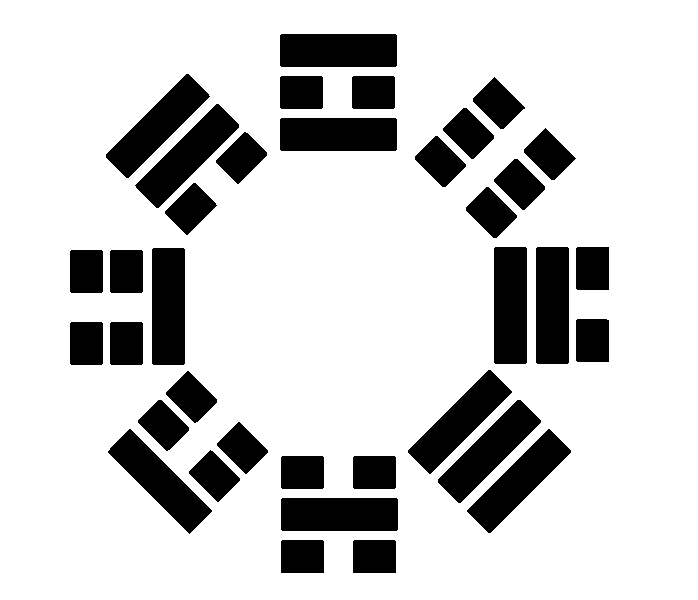 🇨🇳 China and 1 moreBagua八卦
A set of eight trigram symbols from China used in divination, cosmology, and feng shui.Tradition · Seeing and foretelling · Protection Living
🇨🇳 China and 1 moreBagua八卦
A set of eight trigram symbols from China used in divination, cosmology, and feng shui.Tradition · Seeing and foretelling · Protection Living
 🇰🇷 South Korea and 1 moreKorean shamanismKorean shamanism (Korean: Korean shamanism)
A traditional practice of ritual specialists who mediate between the human and spirit worlds.Tradition · Healing · Protection Living
🇰🇷 South Korea and 1 moreKorean shamanismKorean shamanism (Korean: Korean shamanism)
A traditional practice of ritual specialists who mediate between the human and spirit worlds.Tradition · Healing · Protection Living
 🇰🇷 South Korea and 3 moreKorean shamanism무속
A Korean folk religion centered on ritual specialists who mediate between humans and spiritsTradition · Protection · Healing Living
🇰🇷 South Korea and 3 moreKorean shamanism무속
A Korean folk religion centered on ritual specialists who mediate between humans and spiritsTradition · Protection · Healing Living
 🇨🇳 China and 5 moreTetraphobia
The avoidance of the number four due to its similarity to the word for death in East Asian languagesBelief · Luck and prosperity Living
🇨🇳 China and 5 moreTetraphobia
The avoidance of the number four due to its similarity to the word for death in East Asian languagesBelief · Luck and prosperity Living
 🇨🇳 China and 2 moreXiezhi獬豸
A one-horned beast from East Asia that separates the guilty from the innocentBeing · Cursing and harm · Protection Legendary
🇨🇳 China and 2 moreXiezhi獬豸
A one-horned beast from East Asia that separates the guilty from the innocentBeing · Cursing and harm · Protection Legendary
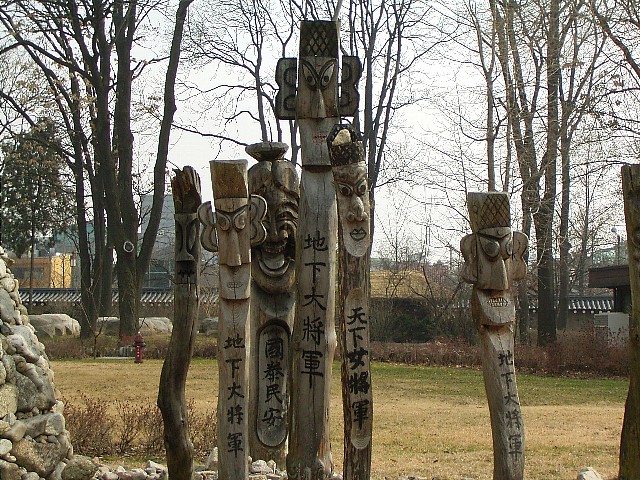 🇰🇷 South Korea and 1 moreJangseung장승
Wooden or stone poles that guard Korean villages and temples from evil spiritsTradition · Protection · Speaking with spirits and the dead Living
🇰🇷 South Korea and 1 moreJangseung장승
Wooden or stone poles that guard Korean villages and temples from evil spiritsTradition · Protection · Speaking with spirits and the dead Living
 🇨🇳 China and 3 moreQilin麒麟
A legendary chimerical creature from Chinese mythology that signals the arrival or death of a sage.Being · Power and authority Legendary
🇨🇳 China and 3 moreQilin麒麟
A legendary chimerical creature from Chinese mythology that signals the arrival or death of a sage.Being · Power and authority Legendary
 🇰🇷 South KoreaJeoseung Saja저승사자
A Korean psychopomp who escorts the dead to the afterlife.Being · Speaking with spirits and the dead Living
🇰🇷 South KoreaJeoseung Saja저승사자
A Korean psychopomp who escorts the dead to the afterlife.Being · Speaking with spirits and the dead Living
 🇨🇳 China and 3 moreFenghuang鳳凰 (fènghuáng)
A mythological bird symbolizing virtue and imperial harmony in East Asian cultureBeing · Power and authority · Love and attraction Legendary
🇨🇳 China and 3 moreFenghuang鳳凰 (fènghuáng)
A mythological bird symbolizing virtue and imperial harmony in East Asian cultureBeing · Power and authority · Love and attraction Legendary
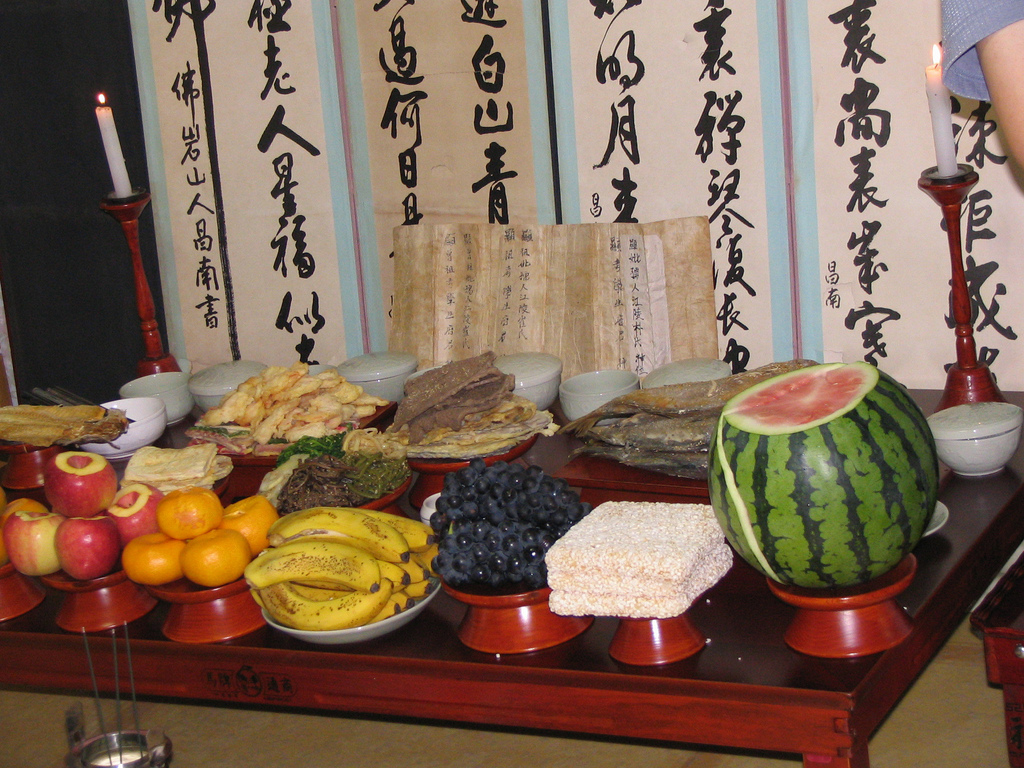 🇰🇷 South Korea and 1 moreChuseok추석 (Chuseok), 한가위 (Hangawi)
A Korean autumn harvest festival marked by ancestral rites and feasting on the full moon.Tradition · Speaking with spirits and the dead · Luck and prosperity Living
🇰🇷 South Korea and 1 moreChuseok추석 (Chuseok), 한가위 (Hangawi)
A Korean autumn harvest festival marked by ancestral rites and feasting on the full moon.Tradition · Speaking with spirits and the dead · Luck and prosperity Living
 🇰🇷 South Korea and 1 moreDaeboreum대보름
A Korean lunar holiday marking the first full moon with nut-cracking and field firesTradition · Protection · Luck and prosperity Living
🇰🇷 South KoreaJesa제사
A Korean ancestral memorial rite involving food offerings and ritual bowsRite · Speaking with spirits and the dead · Luck and prosperity Living
🇰🇷 South Korea and 1 moreDaeboreum대보름
A Korean lunar holiday marking the first full moon with nut-cracking and field firesTradition · Protection · Luck and prosperity Living
🇰🇷 South KoreaJesa제사
A Korean ancestral memorial rite involving food offerings and ritual bowsRite · Speaking with spirits and the dead · Luck and prosperity Living
Photo credits on this page
The small pictures above come from Wikimedia Commons under free licences. Some are cropped to fit.
- Chuseok: by Joseph Steinberg (Baltimoron in Korea) at Flickr, CC BY-SA 2.0, source
- Qilin: Unknown author, Public domain, source
- Amethyst: JJ Harrison ( https://jjharrison.com.au/ ), CC BY-SA 3.0, source
- Bagua: TarcísioTS at Portuguese Wikipedia, Public domain, source
- Korean shamanism: Hyewon Shin Yun-bok (申潤福: 1758-early 19th century) (혜원 신윤복 (申潤福: 1758-, Public domain, source
- Korean shamanism: Steve46814, CC BY-SA 4.0, source
- Tetraphobia: Halowand, CC BY-SA 3.0, source
- Xiezhi: Carty239 at English Wikipedia, Public domain, source
- Jangseung: Yoshiaki Sano, CC BY-SA 2.0, source
- Jeoseung Saja: National Folk Museum of Korea, CC BY 4.0, source
- Fenghuang: Supremo Editor, CC BY-SA 4.0, source
- Daeboreum: hojusaram, CC BY-SA 2.0, source
The weekly digest
Every Monday: seven entries you may not know, what is on the calendar this week, and one rite drawn step by step.