
Bangsatap
In its own language: 방사탑
from Korean bang (prevent) satap (tower)
A stone cairn on Jeju Island believed to shield communities from harm and disease.
Bangsatap are traditional ritual cairns found on Jeju Island in South Korea. Locals built these stone piles to protect villages from evil spirits, illness, and fire, while also promoting safety at sea and the well-being of children.
- Dry-stone basalt cairns on Jeju Island
- Built to block evil spirits and disease
- 17 protected as Folklore Heritage since 1995
- Locals used many names like dap and tap
- 49 pre-modern examples remain today
What it is
These structures are dry-stone cairns located across Jeju Island in South Korea. They serve as protective markers for local communities. Residents believe the piles block malevolent forces, stop diseases, and prevent fires. They also offer blessings for safe voyages and healthy childbirth. Today, they stand as recognized cultural symbols of the region rather than active religious sites.
Where it comes from
The exact start date for these cairns is unknown. Historical place-name studies suggest most settlements once held at least one pile. Some larger areas may have kept up to five. The practice declined sharply during the late twentieth century due to the Jeju uprising and modern redevelopment. Many original stones were destroyed during this period of turmoil and urbanization.
How it is done
Builders stacked basalt rocks without mortar to create conical or trapezoidal shapes. Workers often buried a rice paddle or pot beneath the foundation to symbolize wealth and resilience against fire. Communities usually built them together in vulnerable village zones. Participants who could not help physically sometimes paid grain or money instead.
Tools and materials
The primary material is volcanic basalt rock. Builders sometimes placed carved wooden or stone birds on top. These figures might represent crows or hawks. One theory suggests birds peck away bad luck. A round stone sometimes caps the structure. Rice vessels served as symbolic underground offerings during construction.
Bangsatap, drawn and placed
- Living
- Revived
- Fading
- Historical
- Legendary
- Performed
- Lineage
- Korean shamanism
- Timing
- during village construction or crisis events
What it is for
Villagers erected these piles to ward off evil spirits and dangerous events. They aimed to ensure community safety and prosperity. People placed them near sites of past tragedies or losses. Families sought protection for newborns and safe returns for sailors. The stones acted as spiritual anchors for the settlement.
Who does it
Local residents constructed these cairns as a shared community duty. Neighbors worked together to stack the heavy stones. Those unable to join the labor contributed resources instead. Individual artisans might carve the decorative bird figures placed atop the mounds. The work required collective effort rather than specialized priesthood.
Peoples and places
Jeju natives created these structures using various regional names. Scholars use the term bangsatap for research, but locals called them dap, tap, or geoukdae. Some groups distinguished placement by direction, putting certain types in the north and others in the south. The forms varied slightly between different parts of the island.
At a glance: who, where and when
Who does it
Peoples
Belief worlds
Occasions

What people believe
The practice stems from indigenous beliefs about spiritual geography. Villagers used principles similar to feng shui to locate vulnerable spots. They believed evil spirits targeted specific areas. The stones acted as barriers against these forces. Rice symbolism reinforced ideas of abundance and survival. Birds represented the removal of negative energy.
When it is done
Construction occurred when villages felt threatened or needed protection. Some piles appeared after tragic events like drownings or outbreaks. A yearly memorial ceremony happens on April first at the Sinsan Park site. This event honors victims of the Jeju uprising and promotes reconciliation among families.
How scholars and sceptics see it
Researchers note that locals used many different names for the piles. Academics standardized the term bangsatap for study. Place-name analysis indicates widespread historical presence. Surveys recorded thirty-nine surviving pre-modern examples in nineteen ninety-seven. Later reports listed forty-nine remaining structures across the province.
Cautions and what is closed
The Jeju uprising caused significant destruction of these heritage sites. Modern development further reduced their numbers. Some piles now sit partially submerged or in poor condition. The practice faced near extinction before government protection began. Surviving sites require careful maintenance against weathering.
Compare and confuse
These cairns differ from simple boundary markers by their ritual purpose. Similar stone piles exist elsewhere, but Jeju versions have unique names and shapes. The term bangsatap is an academic label rather than a common local word. Other regional names include gamagwi and hareubang.
Law and persecution
The Jeju provincial government protects designated sites as Folklore Heritage. Seventeen cairns received this status in nineteen ninety-five. Eleven lie in Jeju City and six in Seogwipo. Additional piles hold other cultural property designations. Local authorities oversee their preservation and maintenance.
Today
New constructions appear as cultural displays rather than functional magic. A large memorial tower stands in Sinsan Park with a time capsule buried below. Visitors see these stones as icons of local identity. The tradition survives through preserved examples and modern commemorative projects.
Questions people ask about Bangsatap
What is a bangsatap?
It is a traditional stone cairn on Jeju Island. Villagers built these piles to protect their homes from evil spirits, illness, and fire. They also sought safety for sailors and healthy births.
Where do they come from?
They originate from indigenous practices on Jeju Island in South Korea. Most settlements likely had at least one pile historically. The practice declined due to mid-twentieth-century conflicts and modernization.
Why are they called bangsatap?
Scholars use this name for research. It translates to protective tower. Locals actually used many different terms like dap, tap, or geoukdae depending on their specific village area.
How were they built?
Workers stacked volcanic basalt rocks without mortar. They often buried rice paddles underneath for good luck. Communities built them together, though some paid grain if they could not help physically.
Are they still used for magic?
No longer for ritual purposes. New ones are built as cultural symbols. Old ones are protected as heritage sites. They now represent Jeju's history rather than active spiritual barriers.
Good reading and sources
- Bangsatap on WikipediaEncyclopedia
- More photos on Wikimedia CommonsPhotos and video
- Wikidata recordOpen data
The facts on this page come from the Wikipedia article "Bangsatap", written by its contributors and used under the CC BY-SA 4.0 licence, and from its Wikidata record (CC0). EveryJaadu rewrote the text in its own words, with AI assistance, and compares every page with the article to make sure no passage is copied. It may be reused under the same CC BY-SA 4.0 licence with a link back.
It may contain mistakes. Names and customs differ from one community to the next, and some knowledge is closed to outsiders and left out here. This page describes belief and practice. It does not say that any of it works, it is not a how-to, and it is not medical advice. If something is wrong, tell us. Last refreshed 2026-10-12.
More from South Korea
All the entries from South Korea 🇰🇷 South Korea and 3 moreKorean shamanism무속
A Korean folk religion centered on ritual specialists who mediate between humans and spiritsTradition · Protection · Healing Living
🇰🇷 South Korea and 3 moreKorean shamanism무속
A Korean folk religion centered on ritual specialists who mediate between humans and spiritsTradition · Protection · Healing Living
 🇰🇷 South Korea and 1 moreKorean shamanismKorean shamanism (Korean: Korean shamanism)
A traditional practice of ritual specialists who mediate between the human and spirit worlds.Tradition · Healing · Protection Living
🇰🇷 South Korea and 1 moreKorean shamanismKorean shamanism (Korean: Korean shamanism)
A traditional practice of ritual specialists who mediate between the human and spirit worlds.Tradition · Healing · Protection Living
 🇨🇳 China and 1 moreBagua八卦
A set of eight trigram symbols from China used in divination, cosmology, and feng shui.Tradition · Seeing and foretelling · Protection Living
🇨🇳 China and 1 moreBagua八卦
A set of eight trigram symbols from China used in divination, cosmology, and feng shui.Tradition · Seeing and foretelling · Protection Living
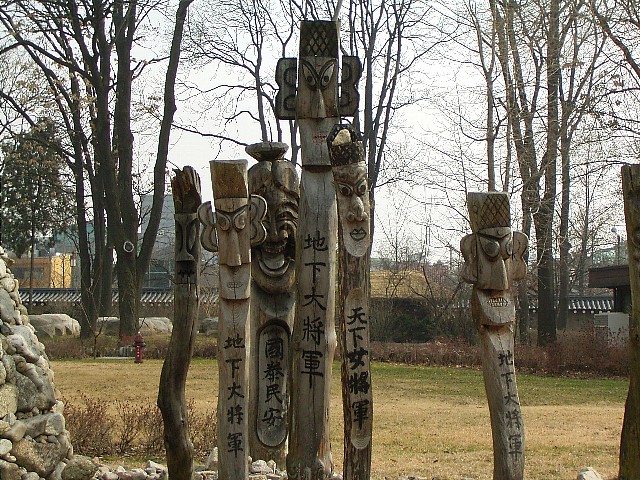 🇰🇷 South Korea and 1 moreJangseung장승
Wooden or stone poles that guard Korean villages and temples from evil spiritsTradition · Protection · Speaking with spirits and the dead Living
🇰🇷 South Korea and 1 moreJangseung장승
Wooden or stone poles that guard Korean villages and temples from evil spiritsTradition · Protection · Speaking with spirits and the dead Living
Related elsewhere
All tradition 🇮🇳 India and 1 moreNavagrahaनवग्रह
A group of nine celestial deities in Hinduism that govern fate and astrologyTradition · Protection · Luck and prosperity Living
🇮🇳 India and 1 moreNavagrahaनवग्रह
A group of nine celestial deities in Hinduism that govern fate and astrologyTradition · Protection · Luck and prosperity Living
 🇺🇸 United States and 2 moreLouisiana Voodoo
An African diasporic religion practiced in Louisiana from the 18th to early 20th centuriesTradition · Healing · Protection Historical
🇧🇷 Brazil and 1 moreQuimbanda
An Afro-Brazilian religion focused on male and female street spirits for worldly mattersTradition · Protection · Luck and prosperity Living
🇺🇸 United States and 2 moreLouisiana Voodoo
An African diasporic religion practiced in Louisiana from the 18th to early 20th centuriesTradition · Healing · Protection Historical
🇧🇷 Brazil and 1 moreQuimbanda
An Afro-Brazilian religion focused on male and female street spirits for worldly mattersTradition · Protection · Luck and prosperity Living
 🇲🇽 Mexico and 2 moreAluxaluxo'ob
A small Maya spirit believed to guard fields and cause mischief if offended.Being · Protection · Luck and prosperity Living
🇲🇽 Mexico and 2 moreAluxaluxo'ob
A small Maya spirit believed to guard fields and cause mischief if offended.Being · Protection · Luck and prosperity Living