
Luopan
In its own language: 罗盘 (luó pán)
from Chinese luo pan, meaning grid plate
A Chinese magnetic compass with concentric rings for feng shui practice
The luopan is a specialized magnetic compass used in Chinese geomancy. Practitioners use it to determine the precise direction of structures and items based on complex formulas.
- Contains up to 40 concentric formula rings
- Magnetic needle points to the south pole
- Derived from ancient divination boards
- Used by feng shui practitioners
- Features a red crosshair alignment line
What it is
The luopan serves as a directional tool within Chinese geomancy. It functions as a magnetic compass but includes up to forty concentric rings containing specific formulas. These rings allow practitioners to align structures with cosmic patterns. The device maps spatial relationships using traditional Chinese cosmological models.
Where it comes from
Its roots lie in ancient divination boards called shi pan. These lacquered boards date back to the third century BCE. Early versions featured astronomical sightlines and geometric diagrams. The magnetic needle was later integrated into this design. This combination created the modern luopan used today.
How it is done
Users align the red cross line with the structure being assessed. The rotating heaven dial sits atop a stationary earth plate. The magnetic needle points toward the south magnetic pole. Practitioners read the overlapping rings to determine auspicious orientations. Each ring corresponds to different cosmological systems.
Tools and materials
The main components include a wooden or metal heaven dial and an earth plate. A red thread forms a crosshair across the center. The magnetic needle indicates direction. Rings display twenty-four directions and hexagrams. Some designs add English labels for international students.
Luopan, drawn and placed
- Living
- Revived
- Fading
- Historical
- Legendary
- Performed
- Lineage
- Feng shui
- Timing
- during site assessment
What it is for
It helps locate favorable positions for buildings and graves. Users seek harmony between human spaces and natural forces. The tool translates abstract cosmic principles into measurable angles. This alignment is believed to influence fortune and health.
Who does it
Feng shui masters operate the device. Training involves memorizing numerous formula rings. Different schools prefer specific types like San He or San Yuan. Mastery requires understanding both geometry and cosmology. Apprentices learn through direct instruction from senior teachers.
Peoples and places
The practice originates in China. It remains active among Chinese communities worldwide. Singapore hosts publications dedicated to its study. Regional variations exist in ring configurations. Some modern versions simplify traditional markings for beginners.
At a glance: who, where and when


What people believe
The instrument reflects a worldview where space and time are interconnected. Markings correspond to celestial movements and earthly energies. The twenty-four directions mirror solar terms. Each degree approximates a day in the solar year. This system links human activity to cosmic cycles.
Questions people ask about Luopan
What is a luopan?
It is a Chinese geomantic compass used to determine precise directions for structures. The device features multiple concentric rings containing complex formulas for feng shui analysis.
Where did the luopan originate?
It evolved from ancient divination boards called shi pan dating to 278 BCE. These early tools combined astronomical sightlines with geometric diagrams before incorporating magnetic needles.
How does it differ from a regular compass?
Unlike standard compasses, it contains dozens of formula rings. The needle points south rather than north. It maps complex cosmological systems beyond simple cardinal directions.
Who uses a luopan?
Feng shui practitioners use it to assess sites. Masters train extensively to interpret the overlapping rings. Students learn these techniques through apprenticeship programs.
Good reading and sources
- Luopan on WikipediaEncyclopedia
- More photos on Wikimedia CommonsPhotos and video
- Wikidata recordOpen data
The facts on this page come from the Wikipedia article "Luopan", written by its contributors and used under the CC BY-SA 4.0 licence, and from its Wikidata record (CC0). EveryJaadu rewrote the text in its own words, with AI assistance, and compares every page with the article to make sure no passage is copied. It may be reused under the same CC BY-SA 4.0 licence with a link back.
It may contain mistakes. Names and customs differ from one community to the next, and some knowledge is closed to outsiders and left out here. This page describes belief and practice. It does not say that any of it works, it is not a how-to, and it is not medical advice. If something is wrong, tell us. Last refreshed 2026-10-11.
More from China
All the entries from China 🇨🇳 China and 5 moreChinese guardian lions石獅 (shíshī)
Stone lion pairs placed at entrances to ward off harm and welcome fortuneCharm · Protection · Luck and prosperity Living
🇨🇳 China and 5 moreChinese guardian lions石獅 (shíshī)
Stone lion pairs placed at entrances to ward off harm and welcome fortuneCharm · Protection · Luck and prosperity Living
 🇨🇳 China and 5 moreJoss paper金紙
Paper burned as money and goods for ancestors, gods and the deadCharm · Speaking with spirits and the dead · Luck and prosperity Living
🇨🇳 China and 5 moreJoss paper金紙
Paper burned as money and goods for ancestors, gods and the deadCharm · Speaking with spirits and the dead · Luck and prosperity Living
 🇨🇳 China and 1 moreFulu符籙
Taoist talismans with cryptic symbols used for healing and protectionCharm · Healing · Protection Living
🇨🇳 China and 1 moreFulu符籙
Taoist talismans with cryptic symbols used for healing and protectionCharm · Healing · Protection Living
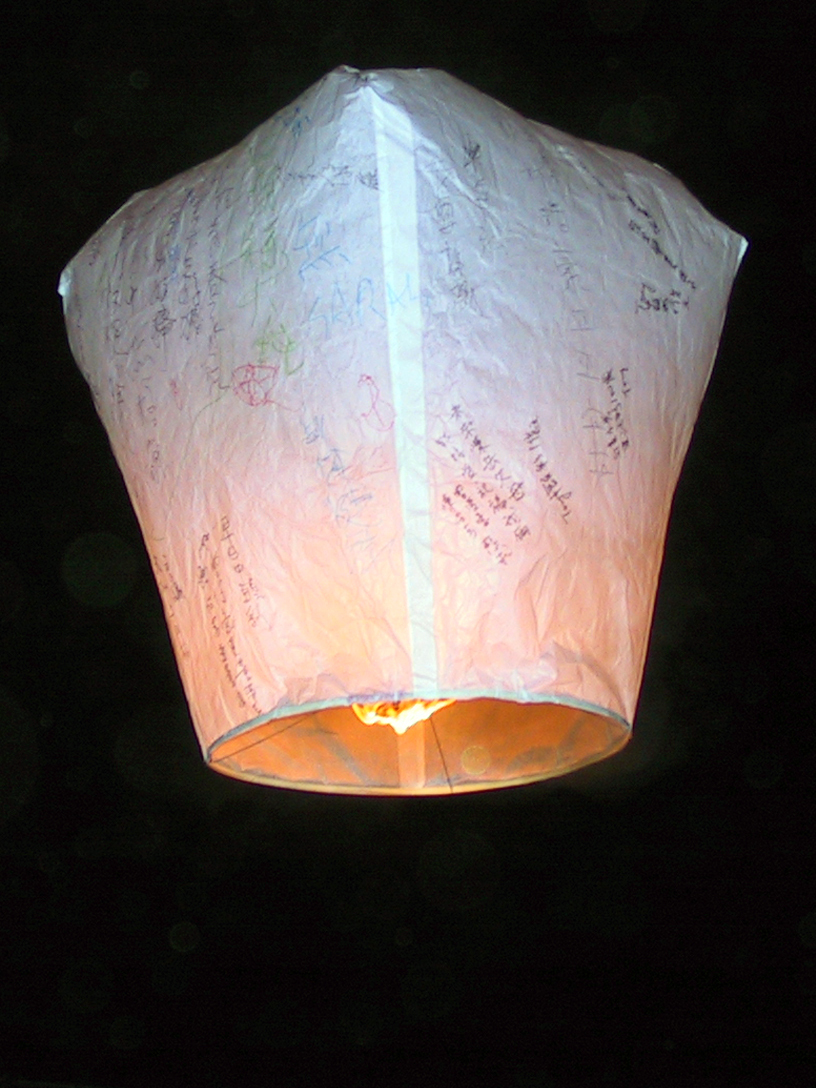 🇨🇳 China and 5 moreSky lantern天燈
A paper hot air balloon lifted by flame to carry wishes and blessingsRite · Luck and prosperity · Protection Living
🇨🇳 China and 5 moreSky lantern天燈
A paper hot air balloon lifted by flame to carry wishes and blessingsRite · Luck and prosperity · Protection Living
Related elsewhere
All charm 🇮🇳 India and 5 moreAstrology
A divinatory practice that reads human fate through the positions of celestial bodies.Belief · Seeing and foretelling · Luck and prosperity Living
🇮🇳 India and 5 moreAstrology
A divinatory practice that reads human fate through the positions of celestial bodies.Belief · Seeing and foretelling · Luck and prosperity Living
 🇫🇷 France and 2 moreKing ArthurBrenin Arthur
A legendary British king and folk hero of medieval literature and Welsh mythologyFigure · Power and authority · Wonder and entertainment Legendary
🇫🇷 France and 2 moreKing ArthurBrenin Arthur
A legendary British king and folk hero of medieval literature and Welsh mythologyFigure · Power and authority · Wonder and entertainment Legendary
 🇫🇷 FranceHoly GrailSaint Graal
A cup or stone from Arthurian tales that grants healing and eternal lifeFigure · Healing · Luck and prosperity Legendary
🇫🇷 FranceHoly GrailSaint Graal
A cup or stone from Arthurian tales that grants healing and eternal lifeFigure · Healing · Luck and prosperity Legendary
 🇮🇳 India and 2 morePalmistry
A divination method that interprets the lines and shapes of the hand to predict fate or reveal character.Oracle · Seeing and foretelling · Power and authority Living
🇮🇳 India and 2 morePalmistry
A divination method that interprets the lines and shapes of the hand to predict fate or reveal character.Oracle · Seeing and foretelling · Power and authority Living