Docham
In its own language: 도참
A Korean system of prophecy and omens guiding political fate and temple placement
Docham is the Korean tradition of reading signs to predict the rise or fall of kingdoms. Practitioners used secret texts and geomancy to guide rulers during times of crisis.
- Docham uses geomancy to predict dynastic rises and falls
- Monk Doseon attributed several prophetic books to himself
- The Jeonggamnok was a banned collection of secret texts
- Temples were built only on sites chosen by geomancers
- Prophecies arrived from China during the Three Kingdoms period
What it is
Docham refers to a body of Korean prophetic knowledge focused on the destiny of states. It combines omens with geomantic principles to forecast dynastic changes. The practice relies on written records known as bigi or secret formulas. These texts were consulted when the nation faced instability. They offered interpretations of current events through a lens of future prediction.
Where it comes from
Prophetic writings arrived in Korea from China during the Three Kingdoms period. This transmission included yin-yang theory and divination methods. An early text was the Goguryeo bigi. Historical accounts claim it predicted the kingdom's destruction by an old general. Scholars doubt this specific story because it aligns with Tang victory narratives. The reliability of these early claims remains uncertain.
How it is done
Rulers and advisors read land features to choose sacred sites. Temples were built only where geomancers like Doseon indicated virtue. This practice aimed to strengthen the dynasty's foundation. Prophecies were also studied to understand political shifts. Secret books circulated among elites and commoners alike. These texts provided reasons to reject corrupt leadership.
Tools and materials
The primary tools are textual records called bigi. Geomantic analysis of terrain serves as another key element. Specific locations such as Songak and Hanyang were evaluated. Texts like the Jeonggamnok listed places of refuge. These documents contained dozens of prophetic passages.
Docham, drawn and placed
- Living
- Revived
- Fading
- Historical
- Legendary
- Performed
What it is for
The tradition sought to legitimize new rulers and warn against bad decisions. It helped justify the construction of temples on specific lands. Common people used these prophecies to cope with decline. The texts offered hope for a savior during chaotic times. They validated the idea that a dynasty's time had ended.
Who does it
Buddhist monks like Doseon were central figures in this tradition. Monarchs such as Wang Geon and Yi Seong-gye relied on these predictions. Scholars attribute several books to Doseon. The practice required expertise in both religion and landscape reading. Later kings honored those who provided accurate foresight.
Peoples and places
This tradition is distinct to Korean history. It evolved from Chinese influences but developed local characteristics. The Goryeo and Joseon dynasties utilized these methods extensively. The Jeonggamnok became a widely known but banned text. Different periods saw varying levels of reliance on these omens.
At a glance: who, where and when
Who does it
Peoples
Belief worlds
Occasions
What people believe
The worldview holds that land possesses virtue that affects governance. Building temples incorrectly could weaken the state. Prophets believed they could see the end of ages. The Ten Injunctions mandated strict adherence to geomantic choices. This belief linked spiritual harmony with political stability.
How scholars and sceptics see it
Historians question the accuracy of early prophecies. The story of Goguryeo's fall may be fabricated to favor Tang accounts. Researchers note that docham texts often appeared during national decline. Scholars analyze these works as political tools rather than literal predictions.
Cautions and what is closed
Many prophetic books were banned for their anti-dynastic content. The Jeonggamnok was passed in secret due to its radical nature. Authorities suppressed texts that encouraged rebellion. Readers risked punishment for possessing forbidden literature.
Compare and confuse
Docham shares roots with Chinese divination and yin-yang theory. It differs from general fortune-telling by focusing on state fate. Similar traditions exist in other East Asian cultures but with unique Korean emphases on geomancy.
Questions people ask about Docham
What is Docham?
It is a Korean tradition of prophecy and omens used to predict the fate of kingdoms and guide political decisions through geomancy and secret texts.
Where did Docham originate?
It originated from Chinese prophetic writings and yin-yang theory that reached Korea during the Three Kingdoms period, evolving into a distinct local practice.
Who used Docham?
Korean monarchs like Wang Geon and Yi Seong-gye used it to legitimize rule. Buddhist monks like Doseon were key practitioners who interpreted land and texts.
Good reading and sources
The facts on this page come from the Wikipedia article "Docham", written by its contributors and used under the CC BY-SA 4.0 licence, and from its Wikidata record (CC0). EveryJaadu rewrote the text in its own words, with AI assistance, and compares every page with the article to make sure no passage is copied. It may be reused under the same CC BY-SA 4.0 licence with a link back.
It may contain mistakes. Names and customs differ from one community to the next, and some knowledge is closed to outsiders and left out here. This page describes belief and practice. It does not say that any of it works, it is not a how-to, and it is not medical advice. If something is wrong, tell us. Last refreshed 2026-11-16.
More from South Korea
All the entries from South Korea 🇰🇷 South Korea and 1 moreDaeboreum대보름
A Korean lunar holiday marking the first full moon with nut-cracking and field firesTradition · Protection · Luck and prosperity Living
 🇰🇷 South Korea and 1 moreChuseok추석 (Chuseok), 한가위 (Hangawi)
A Korean autumn harvest festival marked by ancestral rites and feasting on the full moon.Tradition · Speaking with spirits and the dead · Luck and prosperity Living
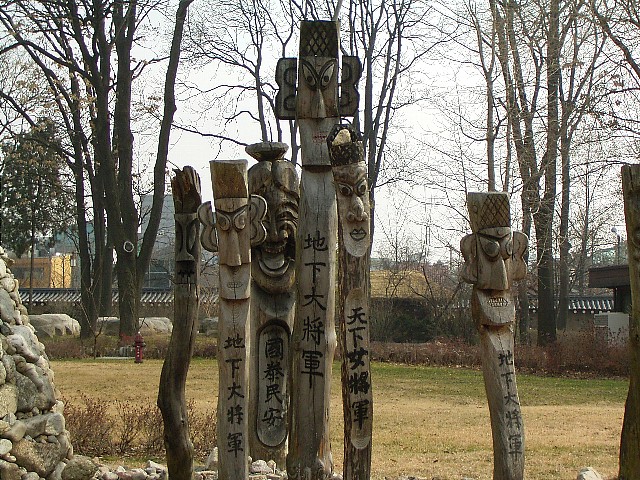 🇰🇷 South Korea and 1 moreJangseung장승
Wooden or stone poles that guard Korean villages and temples from evil spiritsTradition · Protection · Speaking with spirits and the dead Living
🇰🇷 South KoreaJesa제사
A Korean ancestral memorial rite involving food offerings and ritual bowsRite · Speaking with spirits and the dead · Luck and prosperity Living
Related elsewhere
All tradition 🇮🇶 Iraq and 4 moreAstrology
A system of divination that links human affairs to the positions of celestial bodiesTradition · Seeing and foretelling · Luck and prosperity Living
 🇦🇫 Afghanistan and 2 moreAbu Ma'shar al-Balkhiابومَعْشَر جعفر بن محمد بن عمر بلخی
A Persian astrologer whose manuals shaped medieval European and Islamic celestial studiesText · Seeing and foretelling · Power and authority Historical
 🇪🇸 Spain and 5 moreAlfonso X of Castileel Sabio
A medieval king who sponsored astronomical tables and translated works on magic and astrology.Text · Power and authority · Seeing and foretelling Historical
 🇬🇷 Greece and 5 moreNecromancy
A form of divination that seeks to speak with the dead for hidden knowledge.Tradition · Seeing and foretelling · Power and authority Historical