Dokkaebi
In its own language: 도깨비
from Korean dokkak (one-legged) and gwi (ghost or demon)
A one-legged supernatural being from Korean folklore, often linked to household objects and magical items.
The dokkaebi is a class of spirits in Korean folklore that inhabit inanimate objects like brooms or inkstones. The dokkakgwi is a specific one-legged form of this spirit, with roots in early Chinese mythology about mountain beasts.
- The dokkakgwi is a one-legged dokkaebi from Korean folklore.
- It inhabits old household objects like brooms and inkstones.
- Its origins link to the Chinese one-legged mountain spirit Kui.
- It carries a magical club that produces gold or food when struck.
- Folktales use it to teach lessons about greed and kindness.
What it is
The dokkaebi is a type of supernatural being found in Korean folklore. Unlike ghosts, which are the souls of the dead, these spirits are believed to inhabit old household objects such as brooms, inkstones, and tools stained with blood. The dokkakgwi is a specific variant known for having only one leg. It is considered a legendary figure rather than a living religious practice.
Where it comes from
The concept likely originated in early Chinese mythology. The Classic of Mountains and Seas describes Kui, a one-legged mountain spirit. Another Chinese entity, the One-legged Wutong, lived in mountains and could bring storms or crop blessings. After the Six Dynasties period, this figure evolved to represent wealth or lechery. These traditions influenced Korean beliefs, where the term dokkakgwi specifically denotes the one-legged form.
How it is done
Folktales describe interactions with the dokkakgwi through storytelling rather than ritual. In one tale, a kind man joins a dokkaebi celebration and is rewarded by having a chin bump removed. A greedy neighbor tries to copy him but receives two bumps instead. Another story involves a man defeating the creature in wrestling by targeting its single leg, after which the spirit may become a friend or flee.
Tools and materials
The dokkakgwi is often depicted wearing a satgat, a conical bamboo hat, and a dorongi, a straw raincoat. It carries a magical club called the dokkaebi bangmangi. Striking this club on the ground can produce gold or food. Folklore also mentions an invisible cap, the dokkaebi gamtu, which grants invisibility to its wearer.
Dokkaebi, drawn and placed
- Living
- Revived
- Fading
- Historical
- Legendary
- Performed
- Lineage
- Korean folklore
- Timing
- on dark or rainy days
What it is for
These stories serve as moral lessons, often warning against greed or praising kindness. The dokkakgwi may play tricks on people or challenge travelers to ssireum, traditional Korean wrestling. While sometimes portrayed as mischievous or dangerous, it is not always evil. Its association with magical items suggests a link to prosperity or hidden power.
Who does it
The dokkakgwi is a figure of legend studied by scholars of folklore. It does not have active practitioners who perform rituals to summon it. Modern depictions of dokkaebi, often showing two-legged horned creatures, are influenced by Japanese oni imagery rather than traditional Korean descriptions of the one-legged spirit.
Peoples and places
The dokkakgwi is central to Korean folklore, distinguishing itself from other dokkaebi forms by its single leg. Its origins trace back to Chinese myths about mountain spirits. The Han people's migration and changes in mountainous lifestyles may have shaped the creature's evolving traits, linking it to both disaster and blessing in rural communities.
At a glance: who, where and when
Peoples
Belief worlds
What people believe
In Korean belief, dokkaebi are spirits attached to objects that have aged or absorbed human energy. The dokkakgwi represents a specific manifestation of this phenomenon. It differs from gwisin, which are restless human souls. The creature's ability to grant wishes via its magical club reflects a belief in objects holding latent power.
When it is done
The dokkakgwi is said to appear on dark or rainy days. No specific festivals or calendar dates are tied to its appearance in the provided sources. Its presence is associated with weather conditions rather than seasonal cycles or holy days.
How scholars and sceptics see it
Anthropologists and historians view the dokkaebi as part of East Asian folk tradition. The connection between Chinese mountain spirits and Korean household demons illustrates cultural exchange. Scholars note that modern pop culture images of dokkaebi differ significantly from traditional literary descriptions of the one-legged, hat-wearing spirit.
Cautions and what is closed
As a legendary figure, the dokkakgwi poses no physical risk. However, folklore warns that interacting with such beings can lead to trouble if one acts with greed or disrespect. The stories emphasize that kindness is rewarded while selfishness is punished, serving as social guidance rather than literal danger.
Compare and confuse
The dokkakgwi is related to the Chinese Dujiaogui and the Japanese Sansei, another one-legged yōkai. It is distinct from the modern popular image of the dokkaebi, which resembles the Japanese oni. This comparison highlights how foreign influences can alter the visual representation of indigenous spirits over time.
Law and persecution
There is no legal status associated with the dokkakgwi as it is a mythological entity. It exists within the realm of folklore and literature. No laws regulate its worship or depiction, as it is not part of an organized religion or contemporary practice.
Questions people ask about Dokkaebi
What is a dokkakgwi?
It is a one-legged supernatural being from Korean folklore, a specific type of dokkaebi spirit that lives in old household objects.
Where did the dokkakgwi originate?
It likely originated from early Chinese mythology, specifically the one-legged mountain spirit Kui described in the Classic of Mountains and Seas.
What magical items does it carry?
It is said to carry a magical club that creates gold or food when hit, and wears an invisible cap that makes the wearer unseen.
Is the dokkakgwi always evil?
No, it is not always evil. It may play tricks or challenge people to wrestling, and can reward kindness while punishing greed in folktales.
Good reading and sources
The facts on this page come from the Wikipedia article "Dokkakgwi", written by its contributors and used under the CC BY-SA 4.0 licence, and from its Wikidata record (CC0). EveryJaadu rewrote the text in its own words, with AI assistance, and compares every page with the article to make sure no passage is copied. It may be reused under the same CC BY-SA 4.0 licence with a link back.
It may contain mistakes. Names and customs differ from one community to the next, and some knowledge is closed to outsiders and left out here. This page describes belief and practice. It does not say that any of it works, it is not a how-to, and it is not medical advice. If something is wrong, tell us. Last refreshed 2026-10-06.
More from South Korea
All the entries from South Korea 🇨🇳 China and 3 moreQilin麒麟
A legendary chimerical creature from Chinese mythology that signals the arrival or death of a sage.Being · Power and authority Legendary
🇨🇳 China and 3 moreQilin麒麟
A legendary chimerical creature from Chinese mythology that signals the arrival or death of a sage.Being · Power and authority Legendary
 🇰🇷 South KoreaJeoseung Saja저승사자
A Korean psychopomp who escorts the dead to the afterlife.Being · Speaking with spirits and the dead Living
🇰🇷 South KoreaJeoseung Saja저승사자
A Korean psychopomp who escorts the dead to the afterlife.Being · Speaking with spirits and the dead Living
 🇨🇳 China and 2 moreXiezhi獬豸
A one-horned beast from East Asia that separates the guilty from the innocentBeing · Cursing and harm · Protection Legendary
🇨🇳 China and 2 moreXiezhi獬豸
A one-horned beast from East Asia that separates the guilty from the innocentBeing · Cursing and harm · Protection Legendary
 🇨🇳 China and 3 moreFenghuang鳳凰 (fènghuáng)
A mythological bird symbolizing virtue and imperial harmony in East Asian cultureBeing · Power and authority · Love and attraction Legendary
🇨🇳 China and 3 moreFenghuang鳳凰 (fènghuáng)
A mythological bird symbolizing virtue and imperial harmony in East Asian cultureBeing · Power and authority · Love and attraction Legendary
Related elsewhere
All being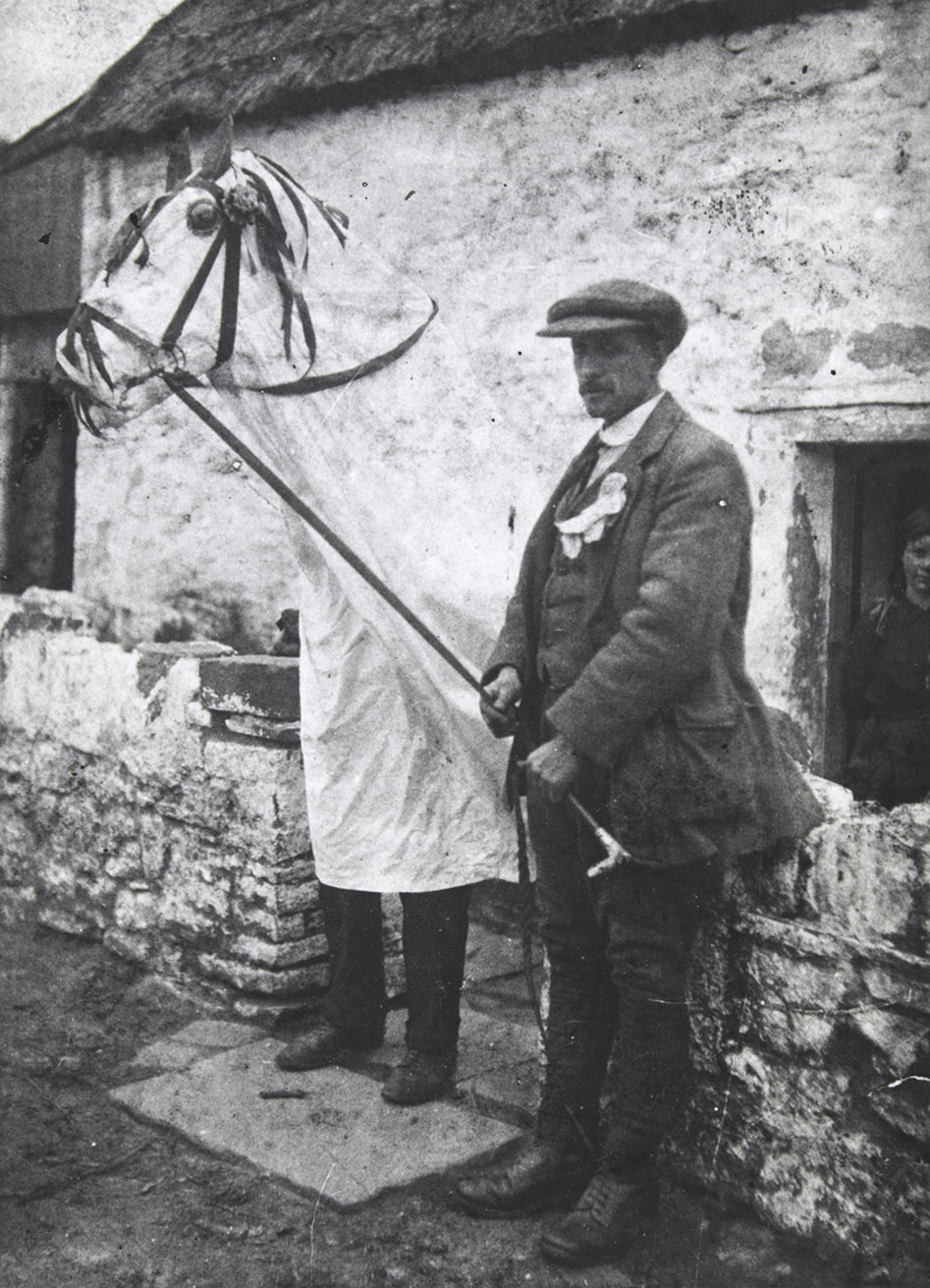 🇬🇧 United KingdomMari LwydY Fari Lwyd
A Welsh winter custom featuring a horse skull carried through villages for song and hospitality.Rite · Luck and prosperity · Wonder and entertainment Revived
🇬🇧 United KingdomMari LwydY Fari Lwyd
A Welsh winter custom featuring a horse skull carried through villages for song and hospitality.Rite · Luck and prosperity · Wonder and entertainment Revived
 🇮🇪 Ireland and 5 moreCairn
A human-made stack of stones used as a marker, memorial, or religious symbol across many cultures.Tradition · Protection · Speaking with spirits and the dead Living
🇮🇪 Ireland and 5 moreCairn
A human-made stack of stones used as a marker, memorial, or religious symbol across many cultures.Tradition · Protection · Speaking with spirits and the dead Living
 🇷🇺 Russia and 3 moreFirebird
A glowing bird of Slavic folklore that brings both fortune and peril to those who seek itFigure · Wonder and entertainment · Luck and prosperity Legendary
🇷🇺 Russia and 3 moreFirebird
A glowing bird of Slavic folklore that brings both fortune and peril to those who seek itFigure · Wonder and entertainment · Luck and prosperity Legendary
 🇩🇪 Germany and 5 moreStraw bearStrohbär
A carnival figure wrapped in straw that visits homes for gifts and marks the turning of seasons.Tradition · Luck and prosperity · Cursing and harm Living
🇩🇪 Germany and 5 moreStraw bearStrohbär
A carnival figure wrapped in straw that visits homes for gifts and marks the turning of seasons.Tradition · Luck and prosperity · Cursing and harm Living