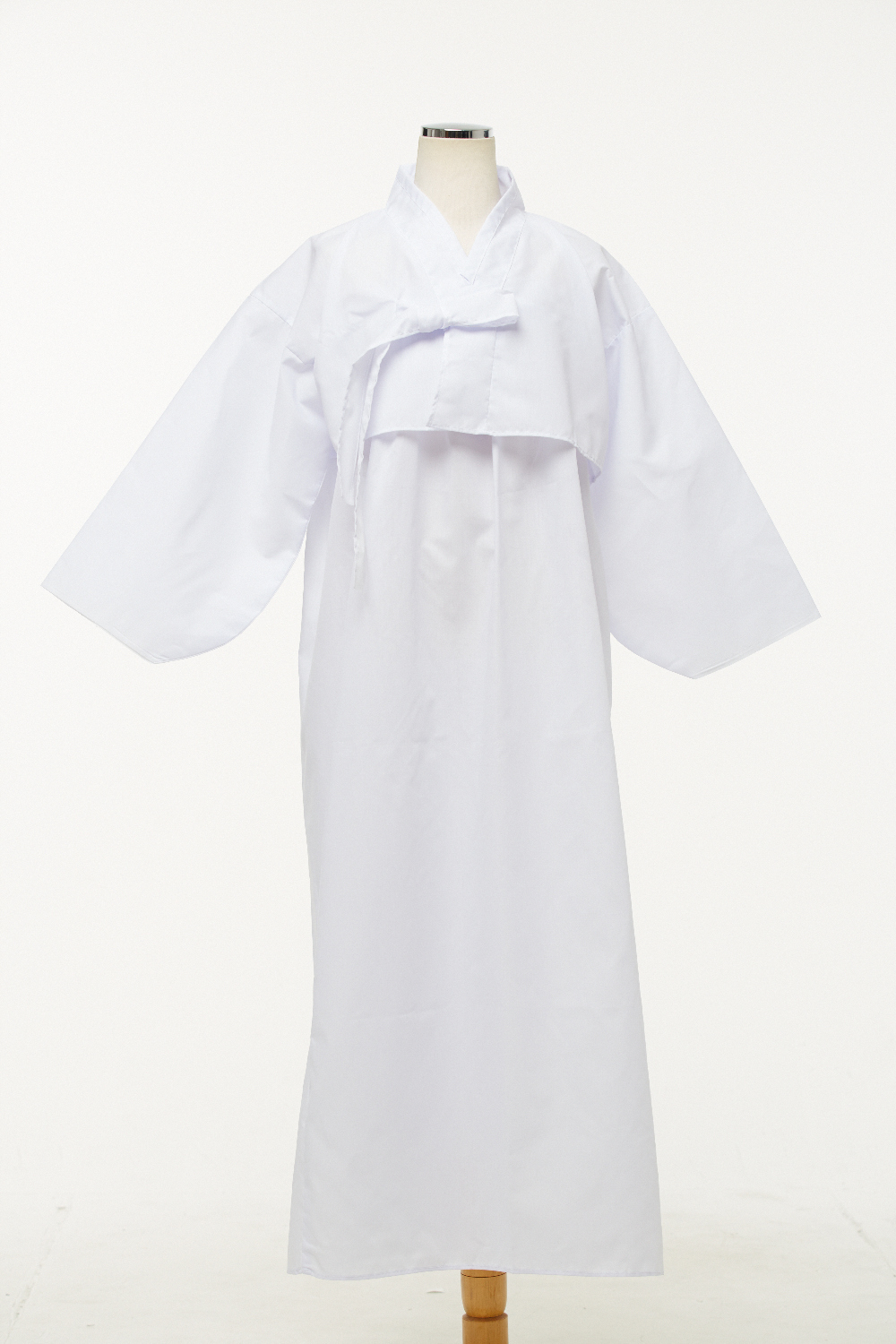
Korean virgin ghost
In its own language: 처녀귀신 (cheonyeo-gwisin)
A spirit of an unmarried woman who died with resentment in Korean folklore.
The cheonyeo-gwisin is a restless spirit from Korean tradition. She is the ghost of a young woman who died before marriage and could not fulfill her duties to her family.
- She wears a white hanbok with loose hair.
- Soul weddings join her with a bachelor ghost.
- Phallic statues help her reach the afterlife.
- Coffins were once buried upside down to trap her.
- She haunts abandoned buildings and dark roads.
What it is
The cheonyeo-gwisin is a spirit in Korean folklore. It is the ghost of a young woman who died while unmarried. Tradition holds that she carries deep resentment because she could not serve her father, husband, or children. This unfinished duty traps her spirit. She is often called a malmyeong or sonmalmyeong. The spirit is said to haunt places like abandoned hospitals, schools, and dark roads. She appears around midnight until dawn. Her presence brings illness, accidents, and fear to those nearby.
Where it comes from
In early traditional Korea, women were expected to dedicate their lives to serving their families. Dying before marriage was seen as a meaningless end. This failure to complete her role caused the woman to become a vengeful spirit. The ghost attaches to young girls of her age. She may also ruin families. To manage this anger, households sometimes enshrined her on a small shelf or in a door gap. This practice turned her into a household vassal rather than a wandering threat.
How it is done
Exorcism rituals are used to calm the spirit. A soul wedding, known as yeonghongyeolhonsig, joins the virgin ghost with a bachelor ghost. This union allows both souls to rest in peace. Another method involves erecting phallic statues. These carvings are placed at shrines to help the spirit move to the afterlife. Annual rites offer food and drink to these souls. In the past, people buried coffins upside down with thorns to block the ghost from rising.
Tools and materials
The spirit wears a white hanbok called sobok. This is traditional mourning attire. Her hair hangs loose, unlike married women who tie theirs up. She has a pale face with dark circles. Blood often drips from her mouth or eyes. In rituals, practitioners use wooden boxes for enshrinement. Straw dolls representing men are placed in coffins. These items aim to comfort the spirit or physically trap her energy.
Korean virgin ghost, drawn and placed
- Living
- Revived
- Fading
- Historical
- Legendary
- Performed
What it is for
People fear the cheonyeo-gwisin will cause harm. She brings sickness and bad luck. Some believe possession leads to an inability to marry. Others think she harbors strong resentment. Communities perform rituals to neutralize this danger. The goal is to stop her from harassing the living. Soul weddings provide a peaceful exit for the trapped spirit. Offerings at shrines seek to keep her content and away from villages.
Who does it
Shamans and folk healers conduct exorcisms. They perform soul weddings to bind the spirits together. Households may manage the ghost through simple enshrinements. These practices reflect a deep cultural fear. People historically took extreme measures to prevent a virgin death. Burying coffins upside down shows the intensity of this anxiety. Ritual specialists guide the restless dead toward peace.
Peoples and places
This belief is central to Korean folklore. It reflects historical gender roles where women served male relatives. The concept extends to the chonggakgwishin, or bachelor ghost. Both spirits require similar ritual interventions. The legend persists in urban stories and modern media. It remains a key part of Korean supernatural tradition. The fear of the virgin ghost influenced burial customs for centuries.
At a glance: who, where and when

What people believe
Korean tradition views the spirit world as active and reactive. Unfinished business creates powerful hauntings. The ghost is not inherently evil but driven by unresolved duty. She seeks recognition or completion of her life's path. The soul wedding resolves this conflict by providing a symbolic partner. Phallic symbols represent masculine connection she missed in life. These beliefs explain misfortunes as spiritual imbalances needing correction.
When it is done
Rituals occur when a haunting is reported. Soul weddings are held whenever necessary to pacify the spirit. Annual rites take place at specific shrines like Haesindang Park. These events involve offering food and drink. There are no fixed calendar dates for general hauntings. The ghost appears nightly between midnight and dawn during her activity.
How scholars and sceptics see it
Anthropologists study the cheonyeo-gwisin as a reflection of patriarchal structures. The spirit embodies the trauma of unfulfilled social expectations. Folklorists trace her evolution from historical tales to modern horror films. Scholars note how the legend adapts to contemporary anxieties about gender and duty. The figure serves as a cautionary tale within Korean cultural history.
Cautions and what is closed
Possession is believed to cause severe psychological distress. The spirit brings physical illness and accidents. Historical burial practices involved disturbing the dead to prevent haunting. These methods reflect intense community fear rather than medical advice. Modern interpretations focus on the psychological impact of repressed grief. No physical remedies exist; only ritual interventions are recognized.
Compare and confuse
The white lady ghost appears in many Western traditions. Both figures are women who died under tragic circumstances. The Korean version emphasizes social duty over romantic loss. The chonggakgwishin is the male counterpart requiring joint rituals. Unlike Western vampires, the cheonyeo-gwisin seeks resolution through ceremony rather than blood.
Law and persecution
No specific laws govern the cheonyeo-gwisin. The belief exists within cultural tradition and folklore. Shrines at sites like Haesindang Park are protected cultural spaces. Exorcism practices are considered folk religion rather than illegal acts. The state does not regulate these spiritual beliefs. They remain part of the intangible cultural heritage of Korea.
Today
The legend thrives in Korean popular culture. Horror films and television dramas frequently feature the virgin ghost. Series like Oh My Ghost and Arang and the Magistrate adapt the myth. Modern audiences view the figure through a lens of tragedy and romance. The historical fear has transformed into entertainment. Yet the core belief in unresolved spiritual duty remains intact in folklore.
Questions people ask about Korean virgin ghost
What is a Korean virgin ghost?
It is a spirit from Korean folklore. The cheonyeo-gwisin is the ghost of a young woman who died unmarried. She carries resentment for failing to serve her family.
Why do they become ghosts?
Tradition says women must serve their families. Dying before marriage leaves duties unfinished. This unresolved responsibility traps the spirit in the mortal realm.
How do you stop a virgin ghost?
Practitioners perform soul weddings. This ritual joins the ghost with a bachelor spirit. The union allows both souls to find peace and leave the living world.
Where can you see shrines for them?
Shrines are found at sites like Haesindang Park in Samcheok. These locations feature phallic carvings. Annual rites offer food to the spirits there.
What does she look like?
She wears white mourning clothes called sobok. Her hair hangs loose down her back. Her face is pale with dark circles. Blood may drip from her mouth or eyes.
Good reading and sources
The facts on this page come from the Wikipedia article "Korean virgin ghost", written by its contributors and used under the CC BY-SA 4.0 licence, and from its Wikidata record (CC0). EveryJaadu rewrote the text in its own words, with AI assistance, and compares every page with the article to make sure no passage is copied. It may be reused under the same CC BY-SA 4.0 licence with a link back.
It may contain mistakes. Names and customs differ from one community to the next, and some knowledge is closed to outsiders and left out here. This page describes belief and practice. It does not say that any of it works, it is not a how-to, and it is not medical advice. If something is wrong, tell us. Last refreshed 2026-10-06.
More from South Korea
All the entries from South Korea 🇨🇳 China and 3 moreQilin麒麟
A legendary chimerical creature from Chinese mythology that signals the arrival or death of a sage.Being · Power and authority Legendary
🇨🇳 China and 3 moreQilin麒麟
A legendary chimerical creature from Chinese mythology that signals the arrival or death of a sage.Being · Power and authority Legendary
 🇰🇷 South KoreaJeoseung Saja저승사자
A Korean psychopomp who escorts the dead to the afterlife.Being · Speaking with spirits and the dead Living
🇰🇷 South KoreaJeoseung Saja저승사자
A Korean psychopomp who escorts the dead to the afterlife.Being · Speaking with spirits and the dead Living
 🇨🇳 China and 2 moreXiezhi獬豸
A one-horned beast from East Asia that separates the guilty from the innocentBeing · Cursing and harm · Protection Legendary
🇨🇳 China and 2 moreXiezhi獬豸
A one-horned beast from East Asia that separates the guilty from the innocentBeing · Cursing and harm · Protection Legendary
 🇨🇳 China and 3 moreFenghuang鳳凰 (fènghuáng)
A mythological bird symbolizing virtue and imperial harmony in East Asian cultureBeing · Power and authority · Love and attraction Legendary
🇨🇳 China and 3 moreFenghuang鳳凰 (fènghuáng)
A mythological bird symbolizing virtue and imperial harmony in East Asian cultureBeing · Power and authority · Love and attraction Legendary
Related elsewhere
All being 🇳🇬 Nigeria and 4 moreJuju
A West African spiritual belief system involving charms and ritualsTradition · Healing · Luck and prosperity Living
🇳🇬 Nigeria and 4 moreJuju
A West African spiritual belief system involving charms and ritualsTradition · Healing · Luck and prosperity Living
 🇨🇬 Republic of the CongoNkisi
Spirit containers and power figures from the Congo Basin used for justice and healingCharm · Protection · Healing Living
🇨🇬 Republic of the CongoNkisi
Spirit containers and power figures from the Congo Basin used for justice and healingCharm · Protection · Healing Living
 🇵🇹 Portugal and 5 moreCocoCoca
A monster used to frighten children into obedience across the Iberian world and Latin America.Figure · Cursing and harm · Binding and oaths Living
🇵🇹 Portugal and 5 moreCocoCoca
A monster used to frighten children into obedience across the Iberian world and Latin America.Figure · Cursing and harm · Binding and oaths Living
 🇬🇷 Greece and 2 moreCurse tabletκατάδεσμος
A lead sheet inscribed with a binding curse in the Greco-Roman worldCharm · Cursing and harm · Love and attraction Historical
🇬🇷 Greece and 2 moreCurse tabletκατάδεσμος
A lead sheet inscribed with a binding curse in the Greco-Roman worldCharm · Cursing and harm · Love and attraction Historical