Jangseung
In its own language: 장승
from the Korean word for the pole itself
Wooden or stone poles that guard Korean villages and temples from evil spirits
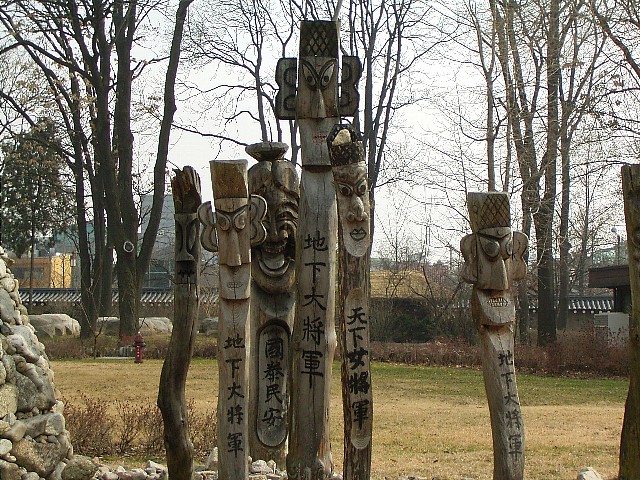
A jangseung is a carved wooden or stone pole used in Korean folk religion to protect communities. Placed at boundaries, these figures are worshipped as tutelary deities that ward off demons and ensure safety.
- King Jeongjo ordered poles erected in the 18th century to block evil spirits.
- Male poles are titled Great General of All Under Heaven.
- Female poles are titled Female General of the Underworld.
- In Japan, they are known as Shōgunhyō and ward off evil.
- Stone versions in Jeolla resemble Jeju Island's dol hareubangs.
What it is
The jangseung stands as a physical marker of spiritual protection within Korean folk practice. Carved from wood or stone, these poles serve as homes for village tutelary deities. They are not merely statues but active guardians believed to repel harmful ghosts and evil spirits. Communities view them as essential boundary markers that define the safe space of the settlement against external dangers.
Where it comes from
Historical records link the formal erection of these poles to the Joseon Dynasty. King Jeongjo ordered their placement near Sangdo-dong in Seoul during an 18th-century royal procession to Suwon. The goal was to block evil spirits from interfering with the journey to his father's tomb. This specific location later became known as Jangseungbaegi, a name preserved in modern subway stations. The tradition likely evolved from earlier shamanic customs of marking sacred spaces.
How it is done
Poles are positioned at the edges of settlements, temple grounds, or along public roads. They often appear in pairs representing male and female figures. Male poles feature elaborate headpieces resembling aristocratic hats and bear inscriptions like 'Great General of All Under Heaven.' Female poles wear simpler headgear and carry titles such as 'Female General of the Underworld.' Inscriptions describe their specific persona and protective role.
Tools and materials
Artisans use local timber or stone blocks to shape the figures. Stone versions in the Jeolla region resemble the dol hareubangs of Jeju Island. The poles are adorned with painted or carved inscriptions in Hanja or Hangul characters. These texts identify the spirit inhabiting the pole, distinguishing between heavenly and underworld generals to cover all directions of protection.
Jangseung, drawn and placed
- Living
- Revived
- Fading
- Historical
- Legendary
- Performed
- Lineage
- Korean shamanism
- Timing
- at village boundaries
What it is for
People erect these markers to establish a defensive perimeter around their homes. The primary intent is to frighten away demons and prevent fire or misfortune from entering the village. Temple guardians protect sacred grounds from invisible evils. Public guardians act as mileposts that ensure the safety of travelers on roads and sea routes. Communities also seek happiness and general well-being through their presence.
Who does it
Local shamans, known as beopsu or beoksu in southern regions, oversee the spiritual aspects of these guardians. Ordinary households and village elders participate in maintaining the poles. The figures are treated with respect as living entities rather than simple art objects. In Japan, Korean immigrants incorporated similar totems, called Shōgunhyō, into temple architecture to maintain spiritual continuity.
Peoples and places
The practice is deeply rooted in Korean culture, particularly in the Jeolla, Chungcheong, and Gyeongsang provinces. Regional variations exist, with some areas preferring stone over wood. The tradition spread to Japan through Korean immigrants, where it influenced local shrine aesthetics. While distinct from the Sotdae of northern Korea, the jangseung shares the same fundamental purpose of boundary marking and spiritual protection.
At a glance: who, where and when
Who does it
Peoples
Belief worlds


What people believe
Korean shamanism holds that spirits inhabit these carved forms. The poles act as anchors for tutelary deities who monitor the community. The duality of male and female generals represents a complete cosmic balance, covering both celestial and subterranean threats. Evil spirits are believed to fear the fierce expressions and authoritative titles carved onto the wood or stone.
When it is done
There are no specific annual festivals dedicated solely to the jangseung. Their presence is constant, marking the permanent boundary of the village. However, they were historically erected during significant events, such as royal processions or the founding of new settlements. Maintenance occurs as needed when the wood decays or the stone cracks.
How scholars and sceptics see it
Anthropologists study jangseungs as examples of indigenous Korean religious expression. Historians trace their development through Joseon Dynasty records and colonial-era documentation. Scholars note the influence of Korean shamanism on neighboring cultures, particularly in Japan. The poles are viewed as important folk icons that reflect pre-modern community organization and spiritual anxiety.
Cautions and what is closed
No specific cautions are recorded regarding the handling of these poles. They are respected as sacred objects rather than tools for dangerous rituals. Damage to a jangseung is seen as a loss of protection for the community. There are no reports of harm associated with their worship or placement.
Compare and confuse
The jangseung is similar to the Sotdae, another Korean boundary pole, though regional styles differ significantly. It shares functions with Japanese Shōgunhyō, which were brought by Korean immigrants. Unlike Western totem poles, these figures do not depict clan histories but serve purely as spiritual guardians. The term 'village guardian' accurately describes its function without implying a specific mythological narrative.
Law and persecution
No laws specifically govern the erection or removal of jangseungs. They are protected as cultural heritage sites in some districts. Modern urbanization has threatened some traditional poles, leading to preservation efforts. The Jangseungbaegi station in Seoul serves as a reminder of their historical importance in city planning.
Questions people ask about Jangseung
What is a jangseung?
It is a wooden or stone pole carved with a face and inscriptions. Villagers place it at boundaries to mark territory and house a protective spirit that wards off demons.
Where does the tradition come from?
It originates in Korean shamanism. Historical records show King Jeongjo ordering their placement in the 18th century to protect a royal procession route.
Why are there male and female poles?
They represent a cosmic balance. Male poles guard the heavens while female poles guard the underworld. Together they provide complete protection for the village.
Are they found outside Korea?
Yes, Korean immigrants brought the tradition to Japan. There they are called Shōgunhyō and are used to protect temples and sacred places from evil spirits.
Good reading and sources
- Jangseung on WikipediaEncyclopedia
- More photos on Wikimedia CommonsPhotos and video
- Wikidata recordOpen data
The facts on this page come from the Wikipedia article "Jangseung", written by its contributors and used under the CC BY-SA 4.0 licence, and from its Wikidata record (CC0). EveryJaadu rewrote the text in its own words, with AI assistance, and compares every page with the article to make sure no passage is copied. It may be reused under the same CC BY-SA 4.0 licence with a link back.
It may contain mistakes. Names and customs differ from one community to the next, and some knowledge is closed to outsiders and left out here. This page describes belief and practice. It does not say that any of it works, it is not a how-to, and it is not medical advice. If something is wrong, tell us. Last refreshed 2026-10-05.
More from South Korea
All the entries from South Korea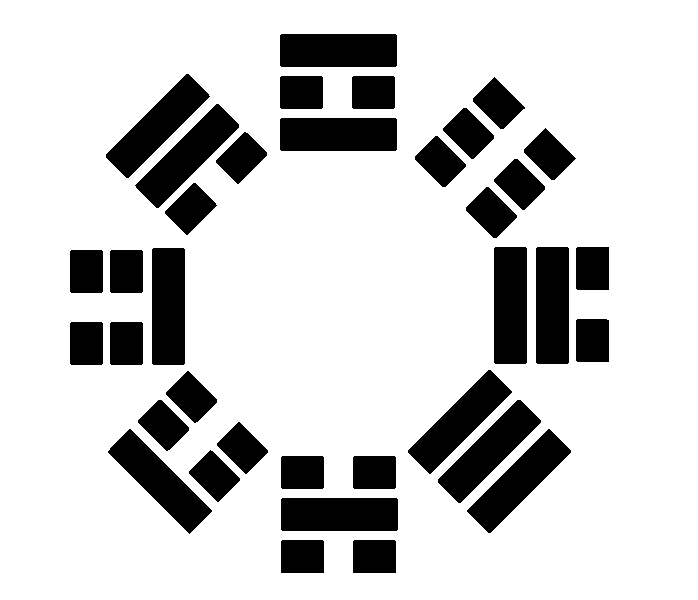 🇨🇳 China and 1 moreBagua八卦
A set of eight trigram symbols from China used in divination, cosmology, and feng shui.Tradition · Seeing and foretelling · Protection Living
🇨🇳 China and 1 moreBagua八卦
A set of eight trigram symbols from China used in divination, cosmology, and feng shui.Tradition · Seeing and foretelling · Protection Living
 🇰🇷 South Korea and 1 moreKorean shamanismKorean shamanism (Korean: Korean shamanism)
A traditional practice of ritual specialists who mediate between the human and spirit worlds.Tradition · Healing · Protection Living
🇰🇷 South Korea and 1 moreKorean shamanismKorean shamanism (Korean: Korean shamanism)
A traditional practice of ritual specialists who mediate between the human and spirit worlds.Tradition · Healing · Protection Living
 🇰🇷 South Korea and 3 moreKorean shamanism무속
A Korean folk religion centered on ritual specialists who mediate between humans and spiritsTradition · Protection · Healing Living
🇰🇷 South Korea and 3 moreKorean shamanism무속
A Korean folk religion centered on ritual specialists who mediate between humans and spiritsTradition · Protection · Healing Living
Related elsewhere
All tradition 🇪🇸 Spain and 5 moreSt John's Eve
A Christian vigil marked by bonfires and plant gathering on the summer solstice eveRite · Protection · Speaking with spirits and the dead Living
🇪🇸 Spain and 5 moreSt John's Eve
A Christian vigil marked by bonfires and plant gathering on the summer solstice eveRite · Protection · Speaking with spirits and the dead Living
 🇮🇳 India and 2 moreHomaहोम
A fire ritual found across Asian religions where offerings are burned as a votive exchange with the divine.Rite · Protection · Speaking with spirits and the dead Living
🇮🇳 India and 2 moreHomaहोम
A fire ritual found across Asian religions where offerings are burned as a votive exchange with the divine.Rite · Protection · Speaking with spirits and the dead Living
 🇵🇸 Palestine and 1 moreRachel's TombQever Raḥel; Qabr Rāḥīl
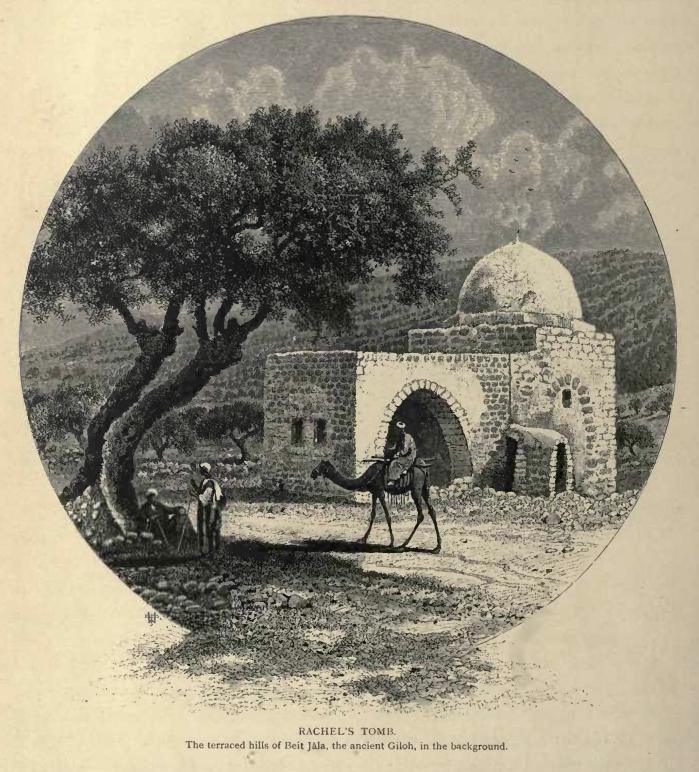
A shared holy site near Bethlehem revered by Jews, Christians, and MuslimsTradition · Speaking with spirits and the dead · Protection Living
🇳🇿 New ZealandKarakia
Māori recitations used for spiritual guidance, protection, and formal greetingsTradition · Protection · Speaking with spirits and the dead Living
🇵🇸 Palestine and 1 moreRachel's TombQever Raḥel; Qabr Rāḥīl
A shared holy site near Bethlehem revered by Jews, Christians, and MuslimsTradition · Speaking with spirits and the dead · Protection Living
🇳🇿 New ZealandKarakia
Māori recitations used for spiritual guidance, protection, and formal greetingsTradition · Protection · Speaking with spirits and the dead Living