Wonder and entertainment
Illusion, sleight of hand and the pleasure of being fooled.
Wonder and entertainment is the aim of the stage magician: to astonish an audience who knows it is being fooled. Conjuring, illusion, mentalism and street magic belong here, from the cups and balls of ancient Rome to Robert-Houdin, Houdini, Harry Kellar, P. C. Sorcar of India, Siegfried and Roy, and David Copperfield. This page covers the art, its history and its ethics, and does not reveal how any trick is done.
The art of the honest lie
A magician promises a trick and delivers astonishment. The pleasure comes from the gap between what is seen and what is known. Performers speak of misdirection, timing, patter and showmanship. Magicians also keep an informal rule not to expose methods, so that audiences can keep the pleasure and the craft keeps its livelihood. This is the most open part of the subject, in which no one is asked to believe.
Where it is performed
Magic has always had a street and a stage. In India, P. C. Sorcar Sr. (1913 to 1971) toured the world and became a national name. In China and Japan, conjuring was part of variety theatre and a distinct craft. In the Arab world and the Ottoman empire, performers worked in coffee houses and fairs. In the West, the music hall, the television special and the Las Vegas show carried the art into mass entertainment.
Who is welcome
For much of its history, the profession was dominated by men, with women as assistants, though performers such as Adelaide Herrmann broke the pattern. Racial stereotypes shaped acts: Western performers played Chinese or Indian magicians in costume, and Chung Ling Soo's disguise was a famous case. Today, magicians from many countries and women performers are widely visible. Magicians from Egypt, Lebanon, Iran and Nigeria now work on global stages and in festivals, and a few have become well known beyond their borders.
Entertainers against fraud
Houdini and James Randi spent years exposing mediums and faith healers who claimed real powers, arguing that honest conjurers protect the public. Scholars of the mind use magic to study attention, memory and belief. The boundary matters: claiming genuine supernatural power for a trick and charging for it is fraud, not entertainment. As the code puts it, the trick can be admired and enjoyed without the secret being known, and children and adults alike keep that pleasure.
Wonder and entertainment on EveryJaadu
The entries written up so far, best known first.
 🇨🇳 ChinaLan Caihe藍采和
An ambiguous Taoist immortal known for a flower basket and wandering songsBeing · Wonder and entertainment Legendary
🇨🇳 ChinaLan Caihe藍采和
An ambiguous Taoist immortal known for a flower basket and wandering songsBeing · Wonder and entertainment Legendary
 🇯🇵 JapanNurarihyon滑瓢 or ぬらりひょん
A slippery Japanese monster that slips away and haunts homes in folklore and pop culture.Being · Wonder and entertainment Legendary
🇨🇳 ChinaNian年兽 (Nián shòu)
A mythical creature linked to Chinese New Year customs and the lion danceFigure · Cursing and harm · Wonder and entertainment Legendary
🇯🇵 JapanNurarihyon滑瓢 or ぬらりひょん
A slippery Japanese monster that slips away and haunts homes in folklore and pop culture.Being · Wonder and entertainment Legendary
🇨🇳 ChinaNian年兽 (Nián shòu)
A mythical creature linked to Chinese New Year customs and the lion danceFigure · Cursing and harm · Wonder and entertainment Legendary
 🇯🇵 Japan and 2 moreTanabataたなばた (七夕)
A Japanese celebration of star-crossed lovers and written wishesTradition · Luck and prosperity · Wonder and entertainment Living
🇯🇵 Japan and 2 moreTanabataたなばた (七夕)
A Japanese celebration of star-crossed lovers and written wishesTradition · Luck and prosperity · Wonder and entertainment Living
 🇨🇳 ChinaNüwa女媧
A Chinese mother goddess who created humanity and repaired the skyFigure · Wonder and entertainment Legendary
🇨🇳 ChinaNüwa女媧
A Chinese mother goddess who created humanity and repaired the skyFigure · Wonder and entertainment Legendary
 🇨🇳 China and 1 moreLuoshu Square洛書
An ancient Chinese three-by-three magic square linked to geomancy and numerologyTradition · Power and authority · Wonder and entertainment Historical
🇨🇳 China and 1 moreLuoshu Square洛書
An ancient Chinese three-by-three magic square linked to geomancy and numerologyTradition · Power and authority · Wonder and entertainment Historical
 🇯🇵 JapanKitsuneきつね
A Japanese fox spirit known for shapeshifting and trickeryBeing · Cursing and harm · Protection Legendary
🇯🇵 JapanKitsuneきつね
A Japanese fox spirit known for shapeshifting and trickeryBeing · Cursing and harm · Protection Legendary
 🇯🇵 JapanKappa河童
A river-dwelling yōkai known for its head dish and love of cucumbersBeing · Cursing and harm · Wonder and entertainment Legendary
🇨🇳 China and 1 moreChing Ling Foo金陵福 (Jīn Língfú)
A Chinese stage magician who toured the United States and Europe in the late nineteenth centuryIllusion · Wonder and entertainment Historical
🇯🇵 JapanKappa河童
A river-dwelling yōkai known for its head dish and love of cucumbersBeing · Cursing and harm · Wonder and entertainment Legendary
🇨🇳 China and 1 moreChing Ling Foo金陵福 (Jīn Língfú)
A Chinese stage magician who toured the United States and Europe in the late nineteenth centuryIllusion · Wonder and entertainment Historical
 🇯🇵 JapanKitsunebi狐火
Atmospheric ghost lights in Japanese folklore, often linked to foxes and natural phenomena.Belief · Wonder and entertainment · Luck and prosperity Historical
🇯🇵 JapanKitsunebi狐火
Atmospheric ghost lights in Japanese folklore, often linked to foxes and natural phenomena.Belief · Wonder and entertainment · Luck and prosperity Historical
 🇯🇵 JapanAbe no Seimei安倍 晴明
A historical court official turned legendary Japanese onmyōji and folk heroFigure · Protection · Seeing and foretelling Legendary
🇯🇵 JapanAbe no Seimei安倍 晴明
A historical court official turned legendary Japanese onmyōji and folk heroFigure · Protection · Seeing and foretelling Legendary
 🇯🇵 JapanGazu Hyakki Yagyō画図百鬼夜行
A 1776 Japanese woodblock book of yōkai illustrations by Toriyama SekienText · Wonder and entertainment Historical
🇯🇵 JapanGazu Hyakki Yagyō画図百鬼夜行
A 1776 Japanese woodblock book of yōkai illustrations by Toriyama SekienText · Wonder and entertainment Historical
 🇨🇳 ChinaHe Xiangu何仙姑
A female immortal from Chinese Taoist legend known for divination and lotus magicFigure · Seeing and foretelling · Healing Legendary
🇨🇳 ChinaHe Xiangu何仙姑
A female immortal from Chinese Taoist legend known for divination and lotus magicFigure · Seeing and foretelling · Healing Legendary
 🇨🇳 ChinaHundun混沌
A faceless being and the primordial void in Chinese cosmology and myth.Being · Wonder and entertainment Legendary
🇨🇳 ChinaHundun混沌
A faceless being and the primordial void in Chinese cosmology and myth.Being · Wonder and entertainment Legendary
 🇯🇵 JapanNoppera-bōのっぺらぼう
A faceless spirit from Japanese folklore that mimics human appearanceBeing · Cursing and harm · Wonder and entertainment Historical
🇯🇵 JapanNoppera-bōのっぺらぼう
A faceless spirit from Japanese folklore that mimics human appearanceBeing · Cursing and harm · Wonder and entertainment Historical
 🇯🇵 JapanHyakumonogatari Kaidankai百物語怪談会
An Edo period Japanese parlour game where ghost stories extinguish candles one by oneRite · Cursing and harm · Wonder and entertainment Historical
🇯🇵 JapanHyakumonogatari Kaidankai百物語怪談会
An Edo period Japanese parlour game where ghost stories extinguish candles one by oneRite · Cursing and harm · Wonder and entertainment Historical
 🇨🇳 ChinaElemental
Mythic beings linked to earth, water, air, and fire in Renaissance occultism.Being · Wonder and entertainment Historical
🇨🇳 ChinaElemental
Mythic beings linked to earth, water, air, and fire in Renaissance occultism.Being · Wonder and entertainment Historical
 🇨🇳 China and 1 moreHorse coin馬錢 (mǎ qián)
A Chinese numismatic charm depicting horses, used as game pieces or gambling tokensCharm · Luck and prosperity · Wonder and entertainment Historical
🇨🇳 China and 1 moreHorse coin馬錢 (mǎ qián)
A Chinese numismatic charm depicting horses, used as game pieces or gambling tokensCharm · Luck and prosperity · Wonder and entertainment Historical
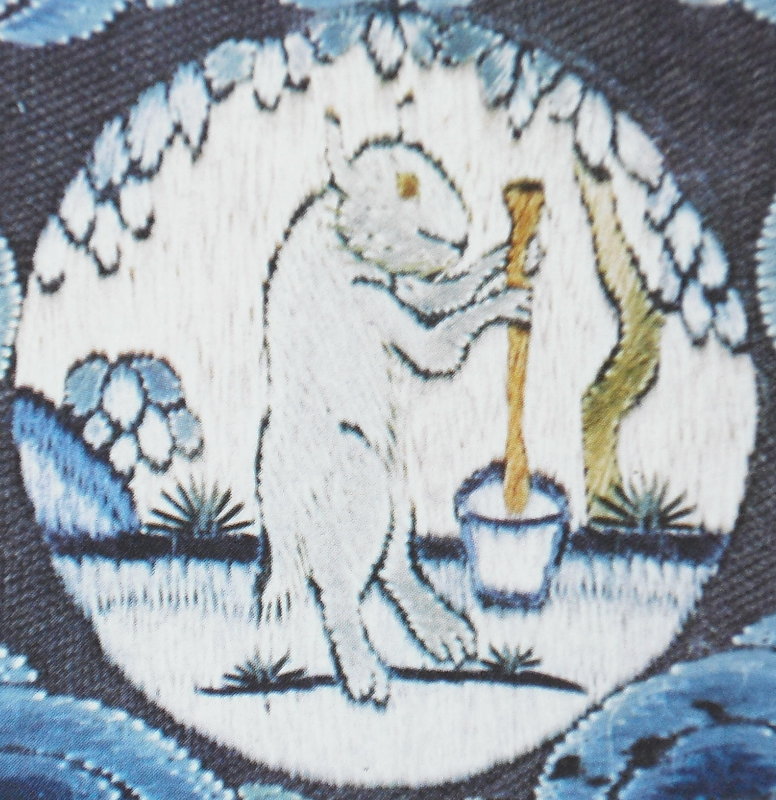 🇨🇳 China and 5 moreMoon rabbit月兔 (yuètù)
A mythical figure seen in lunar markings, pounding elixirs or rice cakes across Asia and the Americas.Being · Wonder and entertainment Living
🇨🇳 China and 5 moreMoon rabbit月兔 (yuètù)
A mythical figure seen in lunar markings, pounding elixirs or rice cakes across Asia and the Americas.Being · Wonder and entertainment Living
 🇨🇳 ChinaYeren野人
A Chinese cryptid apeman reported in remote mountains since ancient timesBelief · Wonder and entertainment Legendary
🇨🇳 ChinaYeren野人
A Chinese cryptid apeman reported in remote mountains since ancient timesBelief · Wonder and entertainment Legendary
 🇯🇵 JapanAosaginohi青鷺火
A Japanese will-o'-the-wisp attributed to the glowing flight of herons at nightBelief · Wonder and entertainment Historical
🇨🇳 China and 2 moreShen蜃
A sea creature from Chinese mythology said to create mirages through shape-shiftingBeing · Wonder and entertainment Legendary
🇯🇵 JapanAosaginohi青鷺火
A Japanese will-o'-the-wisp attributed to the glowing flight of herons at nightBelief · Wonder and entertainment Historical
🇨🇳 China and 2 moreShen蜃
A sea creature from Chinese mythology said to create mirages through shape-shiftingBeing · Wonder and entertainment Legendary
 🇨🇳 ChinaKui夔 (kuí)
A one-legged mountain spirit and ancient music master from Chinese mythologyBeing · Power and authority · Wonder and entertainment Legendary
🇨🇳 ChinaKui夔 (kuí)
A one-legged mountain spirit and ancient music master from Chinese mythologyBeing · Power and authority · Wonder and entertainment Legendary
 🇨🇳 China and 1 moreFengli风狸 / 風狸
A legendary flying mammal from Chinese lore, said to carry a magic wand and resist death.Figure · Wonder and entertainment Legendary
🇨🇳 China and 1 moreFengli风狸 / 風狸
A legendary flying mammal from Chinese lore, said to carry a magic wand and resist death.Figure · Wonder and entertainment Legendary
 🇨🇳 China and 1 moreShuihu水虎
A legendary water creature from Chinese folklore, later adopted into Japanese myth.Being · Wonder and entertainment Legendary
🇨🇳 China and 4 moreHuoshu火鼠
A legendary fire-resistant rat from Chinese folklore said to yield self-cleaning cloth.Being · Wonder and entertainment Legendary
🇰🇷 South Korea and 1 moreDokkaebi도깨비
A one-legged supernatural being from Korean folklore, often linked to household objects and magical items.Being · Wonder and entertainment · Luck and prosperity Legendary
🇯🇵 JapanShiranui不知火
Atmospheric ghost lights of the Yatsushiro and Ariake Seas in JapanBelief · Wonder and entertainment · Luck and prosperity Historical
🇨🇳 ChinaChinese creation myths
A collection of ancient Chinese stories explaining how the universe and humanity beganBelief · Wonder and entertainment Historical
🇨🇳 China and 1 moreShuihu水虎
A legendary water creature from Chinese folklore, later adopted into Japanese myth.Being · Wonder and entertainment Legendary
🇨🇳 China and 4 moreHuoshu火鼠
A legendary fire-resistant rat from Chinese folklore said to yield self-cleaning cloth.Being · Wonder and entertainment Legendary
🇰🇷 South Korea and 1 moreDokkaebi도깨비
A one-legged supernatural being from Korean folklore, often linked to household objects and magical items.Being · Wonder and entertainment · Luck and prosperity Legendary
🇯🇵 JapanShiranui不知火
Atmospheric ghost lights of the Yatsushiro and Ariake Seas in JapanBelief · Wonder and entertainment · Luck and prosperity Historical
🇨🇳 ChinaChinese creation myths
A collection of ancient Chinese stories explaining how the universe and humanity beganBelief · Wonder and entertainment Historical
 🇨🇳 ChinaAo鰲
A colossal sea turtle of Chinese myth whose legs support the skyBeing · Protection · Wonder and entertainment Legendary
🇯🇵 JapanIkuchiゐくち
A legendary sea serpent from Japanese folklore that leaves oil on shipsBeing · Wonder and entertainment Legendary
🇯🇵 JapanTōfu-kozō豆腐小僧
A Japanese yōkai depicted as a child carrying a tray of tofu, popular in Edo period literature.Being · Wonder and entertainment Historical
🇨🇳 ChinaAo鰲
A colossal sea turtle of Chinese myth whose legs support the skyBeing · Protection · Wonder and entertainment Legendary
🇯🇵 JapanIkuchiゐくち
A legendary sea serpent from Japanese folklore that leaves oil on shipsBeing · Wonder and entertainment Legendary
🇯🇵 JapanTōfu-kozō豆腐小僧
A Japanese yōkai depicted as a child carrying a tray of tofu, popular in Edo period literature.Being · Wonder and entertainment Historical
 🇯🇵 JapanBanchō Sarayashiki番町皿屋敷
A Japanese ghost story about a servant who dies unjustly and haunts her murderer by counting plates.Figure · Cursing and harm · Wonder and entertainment Legendary
🇯🇵 JapanBanchō Sarayashiki番町皿屋敷
A Japanese ghost story about a servant who dies unjustly and haunts her murderer by counting plates.Figure · Cursing and harm · Wonder and entertainment Legendary
 🇨🇳 ChinaLuduan甪端
A mythical Chinese creature said to speak every language and travel vast distances in a single dayBeing · Wonder and entertainment Legendary
🇯🇵 JapanTsuchinokoツチノコ
A snake-like cryptid from Japanese folklore said to roll like a wheelBeing · Wonder and entertainment Legendary
🇰🇷 South KoreaMago Halmi마고할미
A giant creator goddess in Korean mythology associated with hemp weaving and the separation of heaven and earth.Figure · Wonder and entertainment Legendary
🇯🇵 JapanKyōka Hyaku Monogatari狂歌百物語
An 1853 Japanese picture book pairing yōkai illustrations with humorous kyōka poetryText · Wonder and entertainment Historical
🇰🇷 South KoreaSeolmundae Halmang설문대할망
A giant creator figure from Jeju Island who shaped the land and its volcanoes.Figure · Wonder and entertainment Historical
🇯🇵 Japan and 3 moreThoughtography念写
A claimed psychic ability to imprint mental images directly onto photographic film.Belief · Wonder and entertainment Historical
🇯🇵 JapanTosa Obake Zōshi土佐お化け草紙
An Edo-period illustrated scroll of yōkai tales from Tosa ProvinceText · Wonder and entertainment Historical
🇨🇳 ChinaLuduan甪端
A mythical Chinese creature said to speak every language and travel vast distances in a single dayBeing · Wonder and entertainment Legendary
🇯🇵 JapanTsuchinokoツチノコ
A snake-like cryptid from Japanese folklore said to roll like a wheelBeing · Wonder and entertainment Legendary
🇰🇷 South KoreaMago Halmi마고할미
A giant creator goddess in Korean mythology associated with hemp weaving and the separation of heaven and earth.Figure · Wonder and entertainment Legendary
🇯🇵 JapanKyōka Hyaku Monogatari狂歌百物語
An 1853 Japanese picture book pairing yōkai illustrations with humorous kyōka poetryText · Wonder and entertainment Historical
🇰🇷 South KoreaSeolmundae Halmang설문대할망
A giant creator figure from Jeju Island who shaped the land and its volcanoes.Figure · Wonder and entertainment Historical
🇯🇵 Japan and 3 moreThoughtography念写
A claimed psychic ability to imprint mental images directly onto photographic film.Belief · Wonder and entertainment Historical
🇯🇵 JapanTosa Obake Zōshi土佐お化け草紙
An Edo-period illustrated scroll of yōkai tales from Tosa ProvinceText · Wonder and entertainment Historical
 🇯🇵 Japan and 1 moreBake-danuki化け狸
A shape-shifting raccoon dog spirit from Japanese folklore known for pranks and illusions.Being · Cursing and harm · Luck and prosperity Legendary
🇯🇵 JapanTaka-Onna高女
A Japanese yokai of a tall woman said to spy on brothels from above.Being · Wonder and entertainment Historical
🇯🇵 Japan and 1 moreBake-danuki化け狸
A shape-shifting raccoon dog spirit from Japanese folklore known for pranks and illusions.Being · Cursing and harm · Luck and prosperity Legendary
🇯🇵 JapanTaka-Onna高女
A Japanese yokai of a tall woman said to spy on brothels from above.Being · Wonder and entertainment Historical
 🇯🇵 JapanKuzunoha葛の葉
A kitsune spirit and mother of the famous onmyōji Abe no Seimei in Japanese folkloreFigure · Wonder and entertainment Legendary
🇹🇼 TaiwanLui-kong-tsiau雷公鳥
A Taiwanese thunder-creature said to summon storms from treetopsBeing · Wonder and entertainment Legendary
🇯🇵 JapanKuzunoha葛の葉
A kitsune spirit and mother of the famous onmyōji Abe no Seimei in Japanese folkloreFigure · Wonder and entertainment Legendary
🇹🇼 TaiwanLui-kong-tsiau雷公鳥
A Taiwanese thunder-creature said to summon storms from treetopsBeing · Wonder and entertainment Legendary
Photo credits on this page
The small pictures above come from Wikimedia Commons under free licences. Some are cropped to fit.
- Elemental: No machine-readable author provided. Ragesoss assumed (based on copyri, Public domain, source
- Lan Caihe: Internet Archive Book Images, No restrictions, source
- Gazu Hyakki Yagyō: Toriyama Sekien, Public domain, source
- Aosaginohi: Koikawa Harumachi ja:恋川春町 (1744-1789), Public domain, source
- Fengli: Anonymous (1603), Public domain, source
- Ao: David Jackson, CC BY-SA 2.0 uk, source
- Onmyōdō: Unknown author, Public domain, source
- He Xiangu: Zhang Lu, Public domain, source
- Hundun: Oldie~commonswiki, CC BY-SA 3.0, source
- Horse coin: Etnografiska museet, CC BY 2.5, source
- Nurarihyon: Brigham Young University, CC BY-SA 4.0, source
- Tanabata: Laika ac, CC BY-SA 2.0, source
- Nüwa: 山胖z, CC BY 3.0, source
- Kitsune: Yoshitoshi, Public domain, source
- Kappa: Unknown author, CC0, source
- Kitsunebi: Abasaa, Public domain, source
- Moon rabbit: An artist, Public domain, source
- Yeren: Rolf Müller, CC BY-SA 3.0, source
- Kui: Dave Pape, Public domain, source
- Shuihu: Author: b. 1654, Public domain, source
- Banchō Sarayashiki: Tsukioka Yoshitoshi, Okiku ,, Public domain, source
- Luduan: Gisling, CC BY 2.5, source
- Noppera-bō: 芥川龍之介, Public domain, source
- Hyakumonogatari Kaidankai: Katsushika Hokusai, Public domain, source
- Bake-danuki: Poposhka at English Wikipedia, Public domain, source
- Luoshu Square: An unknown Tibetan artist, Public domain, source
- Kuzunoha: Print artist: Utagawa Kuniyoshi (歌川国芳) Print artist: Utagawa Hiroshige, Public domain, source