Huoshu
In its own language: 火鼠
from Chinese huǒshǔ, meaning 'fire rat' or 'fire mouse'
A legendary fire-resistant rat from Chinese folklore said to yield self-cleaning cloth.
The huoshu is a legendary creature from Chinese tradition described as a large, fire-resistant rat or mouse that dwells within burning trees on volcanic mountains. Its hair was believed to be woven into fire-laundered cloth, which cleans itself when burnt. The legend spread to Japan and influenced medieval European tales of the salamander.
- The huoshu is a legendary fire-resistant rat from Chinese folklore.
- Its hair was believed to weave into cloth that cleanses itself in fire.
- Accounts place the creature in volcanic mountains and fire-proof trees.
- The legend parallels the European tale of the salamander and asbestos.
- Japanese literature features the beast as the hinezumi in The Tale of the Bamboo Cutter.
What it is
The huoshu, or fire rat, is a legendary creature from Chinese folklore. It is depicted as a large rodent, sometimes weighing up to a thousand catties, covered in fine white hair. The beast is said to inhabit volcanic mountains where trees burn continuously without being consumed. Its primary attribute is its resistance to fire; it dies only if water is poured upon it. The creature is most famous for its hair, which was believed to be woven into a special fabric known as fire-laundered cloth. This material was thought to clean itself when exposed to flames, dropping dirt and turning snow-white. The legend appears in various classical texts, including the Shenyi jing and Ge Hong’s Baopuzi.
Where it comes from
Attributed to the Han period, the earliest accounts appear in the Shenyi jing, describing fire mountains in southern China inhabited by the beast. Later texts like the Soushen ji linked these mountains to the mythic Kunlun range. Other records, such as the Wu li, placed the creature in the Rinan commandery, located in modern-day Vietnam. By the Sui dynasty, envoys returning from the Sogdian city-state of Kesh (present-day Uzbekistan) reportedly brought back fire rat fur, expanding the legend's geographic scope. The creature also appears in early Japanese literature under names like hinezumi and kaso.
How it is done
No ritual method is described for the huoshu itself, as it is a mythical entity rather than a tool for practice. However, the text details how its hair was processed into cloth. According to accounts, the hair was woven into fabric that could withstand high heat. When the cloth became soiled, it was tossed into a fire. Some sources mention that the cloth might change color during this process, turning pearl-colored or retaining its original hue depending on the weave.
Tools and materials
The primary materials associated with the huoshu are its own hair and the trees it inhabits. These trees are described as unincineratable or ashless, burning day and night without producing ash. The resulting product is the fire-laundered cloth, made from the creature's fine white hair. In some accounts, the bark and skins of these fire-proof plants were also woven into similar fabrics. The mineral asbestos is widely considered by modern scholars to be the real-world substance behind these descriptions, though ancient writers often confused it with animal fiber or plant matter.
Huoshu, drawn and placed
- Living
- Revived
- Fading
- Historical
- Legendary
- Performed
- Lineage
- Chinese mythology
What it is for
The huoshu serves as a source of wonder and exotic tribute in historical records. Its hair was sought after to create the fire-laundered cloth, a prized item presented as tribute to Chinese emperors and kings. For instance, King Mu of Zhou reportedly received such cloth from western barbarians, and later rulers like Emperor Fujian of Former Han accepted gifts of the fabric from Indian polities. The cloth was valued for its perceived magical property of self-cleaning through fire, making it a symbol of durability and purity in ancient trade and courtly exchanges.
Who does it
The huoshu is primarily a subject of scholarly and literary interest rather than active practice. Historical figures like Li Shizhen, compiler of the Bencao Gangmu, analyzed the creature's existence, categorizing the ashless wood as a mineral rather than a plant. Scholars such as Joseph Needham and Berthold Laufer have debated the transmission of the legend, comparing it to Western tales of the salamander and asbestos. In Japanese literature, the creature features prominently in classical works like The Tale of the Bamboo Cutter, where suitors attempt to obtain its pelt robe for Princess Kaguya.
Peoples and places
The legend originates in China, appearing in texts from the Han, Wei, Jin, and Sui dynasties. It spread to Japan, where it was adapted into local folklore and literature, retaining its association with fire and precious cloth. The narrative also reached the Middle East, where Arab and Persian writers reimagined the creature as a bird or rat linked to phoenix lore. Greco-Roman traditions developed a parallel figure in the salamander, associating it with asbestos and fire resistance. These cross-cultural exchanges highlight how the core idea of a fire-proof animal fiber traveled along trade routes between Asia and Europe.
At a glance: who, where and when
Belief worlds
What people believe
The huoshu embodies ancient beliefs about the relationship between animals, minerals, and elemental forces. Ancient observers noted that certain fibrous materials could survive fire without turning to ash, leading to the conclusion that they must come from a supernatural creature living in flames. The creature's immunity to fire and death by water reflect a worldview where extreme opposites define magical properties. The confusion between asbestos, plant fibers, and animal hair illustrates how natural phenomena were interpreted through the lens of myth and wonder before modern scientific classification.
When it is done
No specific festivals or calendar days are tied to the huoshu. However, the creature is associated with seasonal cycles in some accounts. Ge Hong’s Baopuzi describes a volcanic hill that ignites in spring and extinguishes in autumn, suggesting a seasonal rhythm to the fires that house the beast. The gathering of its hair or the presentation of the cloth likely occurred during tribute missions or diplomatic exchanges rather than fixed religious holidays.
How scholars and sceptics see it
Modern researchers view the huoshu as a mythological explanation for naturally occurring asbestos. Berthold Laufer argued that knowledge of asbestos originated in the West and spread to China, while Joseph Needham contested this, citing earlier Chinese references. Li Shizhen recognized the mineral nature of ashless wood, distinguishing it from plant matter. The comparison with the European salamander highlights how different cultures independently or through exchange created similar myths to explain fire-resistant materials, often attributing them to mythical beasts or birds.
Cautions and what is closed
The huoshu is a fictional creature, so there are no physical dangers associated with it. However, the real-world mineral asbestos, which inspired the legend, is known to cause severe health issues when inhaled. The text does not discuss any risks related to the mythical beast itself, nor does it mention any rituals involving harm. The legend remains a literary and historical curiosity, with no living practices or communities relying on the creature for spiritual or practical purposes.
Compare and confuse
The huoshu is frequently compared to the European salamander, another mythical creature associated with fire and asbestos. While the Chinese fire rat is a rodent, the Western salamander is typically depicted as a lizard-like amphibian. Both legends share the core idea of an animal that survives fire and yields incombustible fiber. In the Middle East, the concept evolved further, with some writers identifying the creature as a phoenix or bird. These variations demonstrate how a single natural phenomenon can spawn diverse mythologies across different cultures.
Law and persecution
There are no legal restrictions or persecutions mentioned regarding the huoshu, as it is a legendary entity. The text focuses on historical accounts of tribute and literary references rather than legal status. The creature exists within the realm of folklore and classical literature, with no connection to modern laws or regulations. Its legacy persists through academic study and cultural heritage, particularly in Chinese and Japanese literary traditions.
Today
The huoshu survives today as a subject of interest in classical literature and comparative mythology. It appears in studies of East Asian folklore and the history of science, particularly in discussions about ancient perceptions of asbestos. The creature's influence extends to popular culture, where it may inspire fantasy works and artistic depictions of mythical beasts. Academic research continues to explore the transmission of the legend along Silk Road trade routes, highlighting the interconnectedness of ancient mythologies.
Questions people ask about Huoshu
What is the huoshu?
The huoshu, or fire rat, is a mythical creature from Chinese tradition described as a large, fire-immune rodent dwelling in burning trees.
Where does the huoshu live?
Legends place the creature in volcanic mountains in southern China, the mythic Kunlun range, and regions extending to Vietnam and Central Asia.
What is special about the huoshu's hair?
Its hair is said to be woven into fire-laundered cloth, a fabric that burns away dirt and turns snow-white when exposed to flames.
How does the huoshu relate to the salamander?
The huoshu is often compared to the European salamander, as both are mythical animals linked to fire resistance and the production of asbestos-like cloth.
Is the huoshu a real animal?
No, the huoshu is a legendary beast. The legend likely originated from ancient observations of asbestos, which was mistaken for animal fiber.
Good reading and sources
The facts on this page come from the Wikipedia article "Huoshu", written by its contributors and used under the CC BY-SA 4.0 licence, and from its Wikidata record (CC0). EveryJaadu rewrote the text in its own words, with AI assistance, and compares every page with the article to make sure no passage is copied. It may be reused under the same CC BY-SA 4.0 licence with a link back.
It may contain mistakes. Names and customs differ from one community to the next, and some knowledge is closed to outsiders and left out here. This page describes belief and practice. It does not say that any of it works, it is not a how-to, and it is not medical advice. If something is wrong, tell us. Last refreshed 2026-10-06.
More from China
All the entries from China 🇨🇳 China and 3 moreChinese dragon龍
A legendary water deity and imperial symbol in East Asian cultureBeing · Protection · Luck and prosperity Historical
🇨🇳 China and 3 moreChinese dragon龍
A legendary water deity and imperial symbol in East Asian cultureBeing · Protection · Luck and prosperity Historical
 🇨🇳 ChinaLan Caihe藍采和
An ambiguous Taoist immortal known for a flower basket and wandering songsBeing · Wonder and entertainment Legendary
🇨🇳 ChinaLan Caihe藍采和
An ambiguous Taoist immortal known for a flower basket and wandering songsBeing · Wonder and entertainment Legendary
 🇨🇳 China and 2 moreXiezhi獬豸
A one-horned beast from East Asia that separates the guilty from the innocentBeing · Cursing and harm · Protection Legendary
🇨🇳 China and 2 moreXiezhi獬豸
A one-horned beast from East Asia that separates the guilty from the innocentBeing · Cursing and harm · Protection Legendary
 🇨🇳 China and 2 moreEight Immortals八仙
Eight legendary Taoist figures of China, each with a power and a vesselFigure · Protection · Healing Living
🇨🇳 China and 2 moreEight Immortals八仙
Eight legendary Taoist figures of China, each with a power and a vesselFigure · Protection · Healing Living
Related elsewhere
All being 🇬🇧 United Kingdom and 2 moreKing ArthurBrenin Arthur
A legendary British king and folk hero of medieval literature and Welsh mythologyFigure · Power and authority · Wonder and entertainment Legendary
🇬🇧 United Kingdom and 2 moreKing ArthurBrenin Arthur
A legendary British king and folk hero of medieval literature and Welsh mythologyFigure · Power and authority · Wonder and entertainment Legendary
 🇪🇬 Egypt and 1 moreSphinx
A mythical hybrid with a human head and lion body, serving as guardian or riddler in Egyptian and Greek traditions.Being · Protection · Wonder and entertainment Legendary
🇪🇬 Egypt and 1 moreSphinx
A mythical hybrid with a human head and lion body, serving as guardian or riddler in Egyptian and Greek traditions.Being · Protection · Wonder and entertainment Legendary
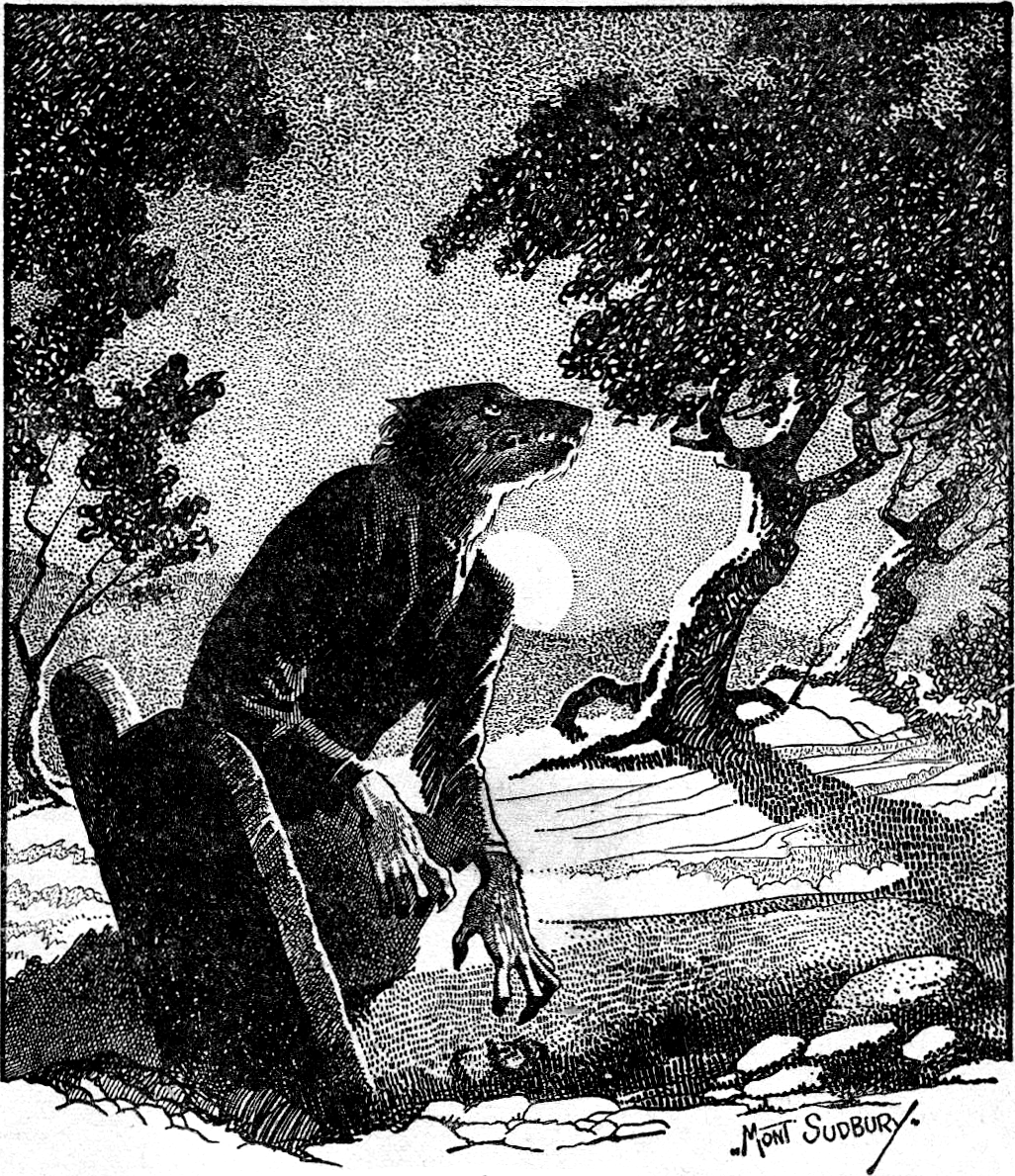 🇫🇷 France and 5 moreWerewolf
A mythical shapeshifter that turns into a wolf, central to European witch-hunts and Gothic horror.Being · Cursing and harm · Wonder and entertainment Legendary
🇫🇷 France and 5 moreWerewolf
A mythical shapeshifter that turns into a wolf, central to European witch-hunts and Gothic horror.Being · Cursing and harm · Wonder and entertainment Legendary
 🇪🇸 Spain and 5 moreSt John's Eve
A Christian vigil marked by bonfires and plant gathering on the summer solstice eveRite · Protection · Speaking with spirits and the dead Living
🇪🇸 Spain and 5 moreSt John's Eve
A Christian vigil marked by bonfires and plant gathering on the summer solstice eveRite · Protection · Speaking with spirits and the dead Living