Chinese creation myths
from Chinese terms for cosmogony and origin
A collection of ancient Chinese stories explaining how the universe and humanity began
These are symbolic narratives from China about the origins of the earth and life. They differ from monotheistic traditions by lacking a single authorized version or creator deity.
- Qi is the basic element of Chinese cosmology
- Nüwa mended the sky with five-colored stones
- Pangu's body became the landscape
- Tao Te Ching predates the fourth century BCE
- Creation is linked to Chinese New Year
What it is
The term creation myth is often replaced by cosmogonic myth in scholarly contexts. This shift reflects the nature of the stories. Very few accounts involve a divine will or a specific creator god. The narratives focus on natural processes and cosmic forces. They describe how order emerged from chaos. These stories form a core part of Chinese mythology. They offer explanations for the existence of the world. The tales vary significantly across different periods. Contradictions between versions are common. This stands in contrast to religious texts with fixed canons.
Where it comes from
The oldest surviving references appear in classical texts. The Tao Te Ching dates to before the fourth century BCE. The Songs of Chu also originates from this era. Its Heavenly Questions section asks catechistic queries about beginnings. Scholars believe these texts draw on older oral traditions. The Daoyuan manuscript was found in Mawangdui. It dates to around the same time as the Songs of Chu. Later texts like the Huainanzi expanded on these ideas. Zhang Heng wrote the Lingxian in the second century CE. Each period added new layers to the cosmological understanding.
How it is done
These myths do not describe a ritual method. They are narrative explanations of cosmic events. Some stories involve deities shaping the world. Nüwa mended the sky with colored stones. She repaired pillars that held up the heavens. Pangu’s body parts became the landscape. Other accounts describe spontaneous differentiation. Qi separated into yin and yang energies. Heaven and Earth formed from pure and turbid vapors. Humans emerged from refined vital energy. The process is depicted as organic and gradual.
Tools and materials
Qi serves as the fundamental substance. It is described as breath or air. This energy governs matter and space. Misty vapor acts as the creative force. Five-colored stones were used by Nüwa. Turtle legs served as structural supports. Reeds and cinders helped stop floods. The concepts of yin and yang structure the cosmos. Hard and soft matter result from qi division. These elements represent binary oppositions.
Chinese creation myths, drawn and placed
- Living
- Revived
- Fading
- Historical
- Legendary
- Performed
- Lineage
- Chinese mythology
What it is for
The myths explain the structure of reality. They account for the four seasons. They describe the relationship between heaven and earth. Traditional beliefs link creation to Chinese New Year. The festival spans fifteen days. Animals and people are said to be created during this time. The stories provide a framework for understanding existence. They connect human life to cosmic cycles. Deities maintain harmony through their actions.
Who does it
Scholars study these texts as historical documents. Anthropologists analyze them as cultural symbols. No specific priesthood performs these narratives. They are part of general folklore and philosophy. Taoist thinkers interpreted the philosophical implications. Confucianists integrated them into cosmology. The myths are transmitted through literature. They are taught in academic settings.
Peoples and places
The narratives belong primarily to Chinese culture. They influenced neighboring regions like Japan. Themes resemble those in other mythologies. Creation from chaos appears in Hawaiian stories. Dismembered corpse myths exist in Indo-European traditions. However, the concept of qi is distinctively Chinese. Mesopotamian and Egyptian myths focused on water. Chinese cosmology centered on vital energy. The duality of yin and yang is unique to this tradition.
At a glance: who, where and when
What people believe
The worldview relies on natural forces rather than gods. The Tao represents the underlying principle. Wuji signifies the formless state before creation. Taiji marks the emergence of unity. Yin and yang create balance through opposition. Heaven is associated with movement and purity. Earth is linked to stillness and heaviness. The universe evolves through stages of differentiation. Spirits and humans arise from the same source. Harmony is achieved through neutralizing vapors.
When it is done
Chinese New Year is traditionally linked to creation. The holiday lasts for fifteen days. This period commemorates the formation of the world. Deities, animals, and humans were made during these days. The calendar reflects the cyclical nature of time. Seasons are governed by yin and yang essences. Spring and summer relate to yang energy. Autumn and winter involve yin restraint. Life events are aligned with cosmic rhythms.
How scholars and sceptics see it
Researchers view these myths as symbolic narratives. They are not literal historical accounts. Anne Birrell analyzed the textual evidence. She highlighted the value of the Songs of Chu. Scholars note the rationalization of earlier myths. The Huainanzi reduced divine agency. Philosophical texts replaced anthropomorphic gods. Sceptics see no supernatural element. Psychologists interpret the imagery as archetypal. The stories reflect ancient attempts to order chaos.
Cautions and what is closed
No physical risks are associated with the myths. They are stories, not instructions. Misinterpretation can lead to confusion. Some modern readings impose external frameworks. Colonial views often mislabeled indigenous beliefs. These myths are part of a broader cultural heritage. They are respected as literary achievements. There is no danger in studying them.
Compare and confuse
The term creation myth is sometimes debated. Cosmogonic myth is considered more accurate. Monotheistic traditions have single creation stories. Chinese myths are numerous and varied. Similar themes exist in global mythology. World parent myths appear in Japanese lore. Dualistic cosmology resembles Zoroastrian beliefs. However, the emphasis on qi remains unique. The lack of a creator deity distinguishes it.
Days linked to Chinese creation myths
Questions people ask about Chinese creation myths
What is the main difference between Chinese creation myths and Western ones?
Chinese myths rarely feature a creator god. They focus on natural processes and cosmic energy. Western traditions often involve a divine will creating the world.
Who created humans in Chinese mythology?
Nüwa fashioned humans from loess and mud. In later versions, she procreated with Fuxi. Pangu’s body also gave rise to people through mites.
What is the role of Qi in these myths?
Qi is the vital energy governing matter and space. It differentiates into yin and yang. This separation leads to the formation of heaven and earth.
When is the world said to have been created?
Traditionally, creation is associated with Chinese New Year. The fifteen-day festival commemorates the formation of the world.
Good reading and sources
The facts on this page come from the Wikipedia article "Chinese creation myths", written by its contributors and used under the CC BY-SA 4.0 licence, and from its Wikidata record (CC0). EveryJaadu rewrote the text in its own words, with AI assistance, and compares every page with the article to make sure no passage is copied. It may be reused under the same CC BY-SA 4.0 licence with a link back.
It may contain mistakes. Names and customs differ from one community to the next, and some knowledge is closed to outsiders and left out here. This page describes belief and practice. It does not say that any of it works, it is not a how-to, and it is not medical advice. If something is wrong, tell us. Last refreshed 2026-10-09.
More from China
All the entries from China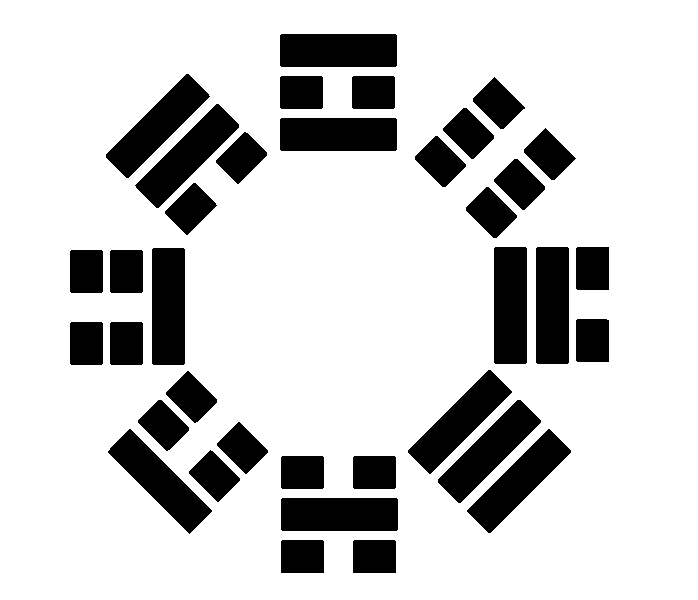 🇨🇳 China and 1 moreBagua八卦
A set of eight trigram symbols from China used in divination, cosmology, and feng shui.Tradition · Seeing and foretelling · Protection Living
🇨🇳 China and 1 moreBagua八卦
A set of eight trigram symbols from China used in divination, cosmology, and feng shui.Tradition · Seeing and foretelling · Protection Living
 🇨🇳 China and 1 moreAncestor veneration in China中國傳統宗法性宗教
Rites for dead kin who are thought to watch over the familyTradition · Protection · Speaking with spirits and the dead Living
🇨🇳 China and 1 moreAncestor veneration in China中國傳統宗法性宗教
Rites for dead kin who are thought to watch over the familyTradition · Protection · Speaking with spirits and the dead Living
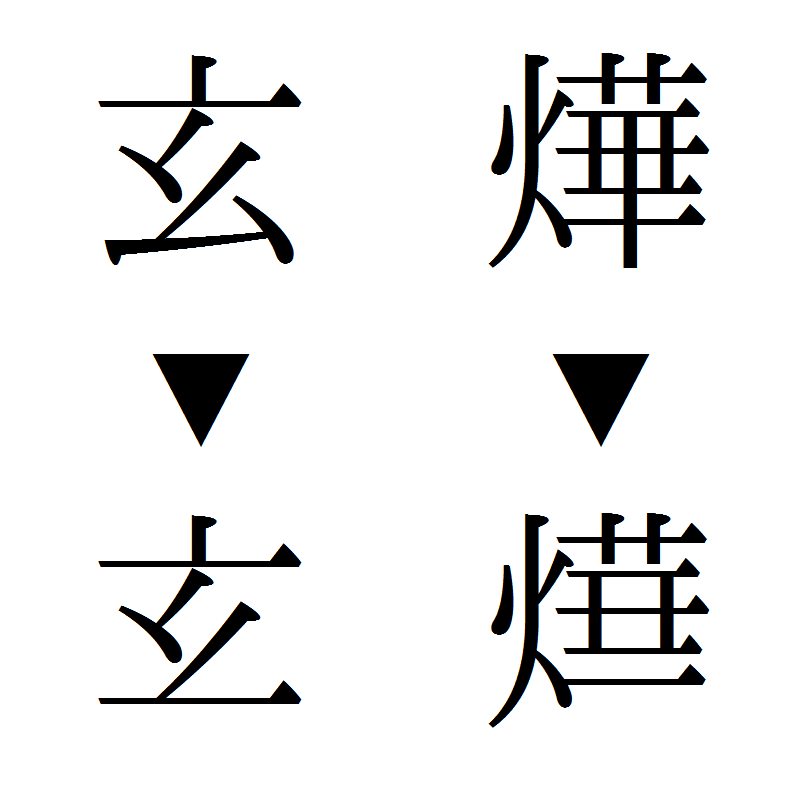 🇨🇳 China and 2 moreNaming taboo避諱
A cultural rule against speaking or writing the names of rulers and ancestors in East AsiaBelief · Protection Historical
🇨🇳 China and 2 moreNaming taboo避諱
A cultural rule against speaking or writing the names of rulers and ancestors in East AsiaBelief · Protection Historical
Related elsewhere
All belief 🇬🇧 United Kingdom and 2 moreKing ArthurBrenin Arthur
A legendary British king and folk hero of medieval literature and Welsh mythologyFigure · Power and authority · Wonder and entertainment Legendary
🇬🇧 United Kingdom and 2 moreKing ArthurBrenin Arthur
A legendary British king and folk hero of medieval literature and Welsh mythologyFigure · Power and authority · Wonder and entertainment Legendary
 🇪🇬 Egypt and 1 moreSphinx
A mythical hybrid with a human head and lion body, serving as guardian or riddler in Egyptian and Greek traditions.Being · Protection · Wonder and entertainment Legendary
🇪🇬 Egypt and 1 moreSphinx
A mythical hybrid with a human head and lion body, serving as guardian or riddler in Egyptian and Greek traditions.Being · Protection · Wonder and entertainment Legendary
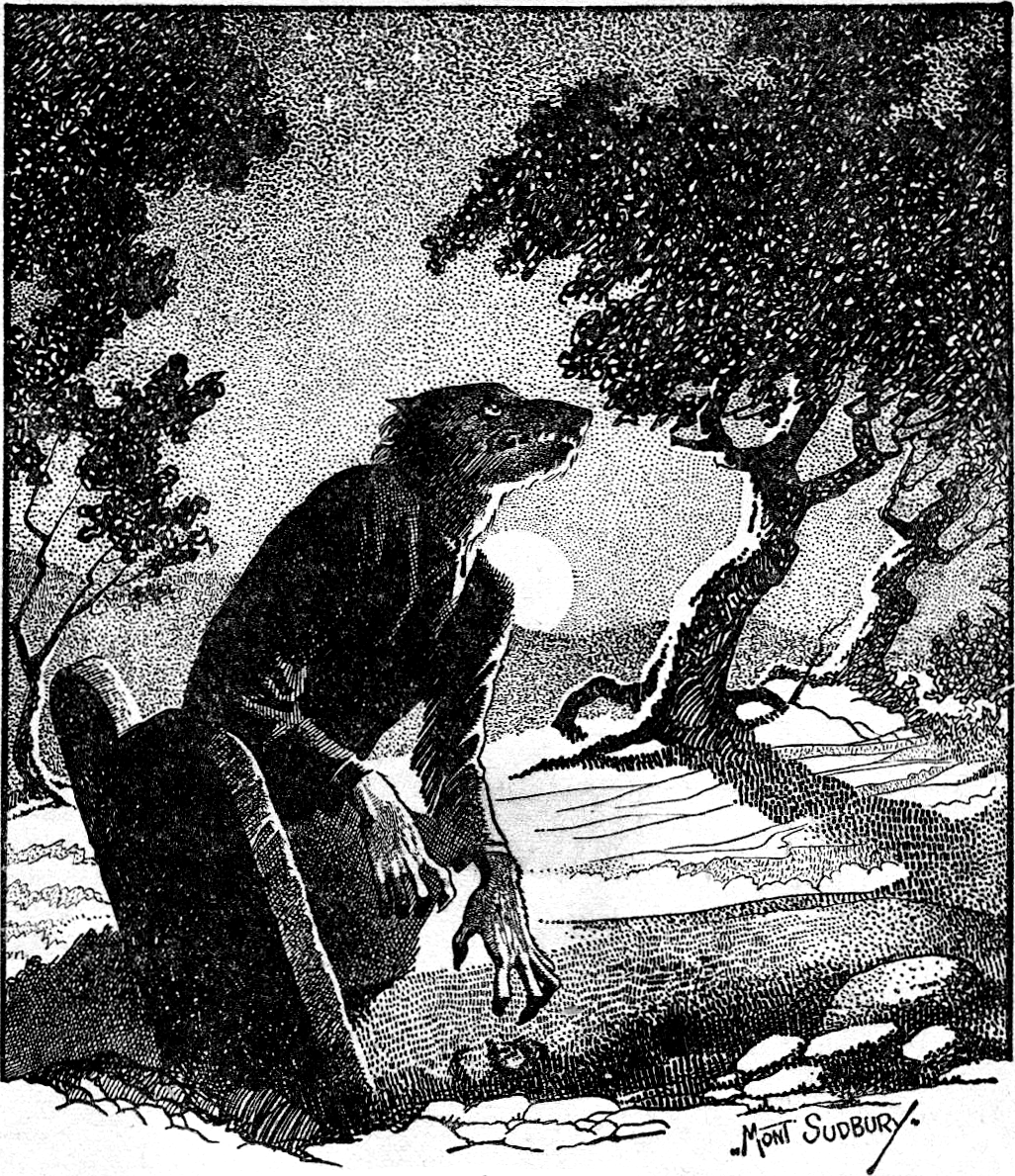 🇫🇷 France and 5 moreWerewolf
A mythical shapeshifter that turns into a wolf, central to European witch-hunts and Gothic horror.Being · Cursing and harm · Wonder and entertainment Legendary
🇬🇧 United Kingdom and 1 moreMetamorphosis
A stage illusion where a magician and assistant instantly swap places inside a locked container.Illusion · Wonder and entertainment Living
🇫🇷 France and 5 moreWerewolf
A mythical shapeshifter that turns into a wolf, central to European witch-hunts and Gothic horror.Being · Cursing and harm · Wonder and entertainment Legendary
🇬🇧 United Kingdom and 1 moreMetamorphosis
A stage illusion where a magician and assistant instantly swap places inside a locked container.Illusion · Wonder and entertainment Living