Thoughtography
In its own language: 念写
from Greek roots meaning thought and writing
A claimed psychic ability to imprint mental images directly onto photographic film.
Thoughtography is the alleged capacity to transfer visual scenes from a person's mind onto light-sensitive surfaces without a camera. Practitioners and believers hold that this parapsychic force burns or projects these pictures onto plates or film. Skeptics and professional photographers consistently attribute such results to fraud, chemical errors, or optical flaws.
- Tomokichi Fukurai coined the term in early 1900s Japan
- Eva Carrière used magazine cutouts for ectoplasm faces
- Ted Serios used sleight of hand with Polaroid cameras
- Masuaki Kiyota confessed to fraud in 1984
- Uri Geller claimed mental projection using covered lenses
What it is
Thoughtography describes the supposed power to burn or project an image from the human brain onto a physical medium like photographic paper or glass plate. This concept emerged in the late nineteenth century as a variation of spirit photography, though researchers distinguished it from spiritualist practices. The term entered English usage around 1913. Later, the phrase projected thermography gained popularity through cinema. Believers argue that mental focus can physically alter light-sensitive chemicals. Critics maintain that no such biological mechanism exists and that all reported instances involve deception or technical mistakes.
Where it comes from
The idea appeared in the late 1800s alongside early experiments in psychical research. Arthur Brunel Chatwood discussed retinal impressions on photographic plates in his 1896 book The New Photography. His claims faced immediate criticism from scientific journals. Tomokichi Fukurai introduced the specific term thoughtography at the start of the twentieth century during Japanese interest in spiritualism. He conducted experiments with university students who allegedly imprinted images on plates. These early studies lacked rigorous controls and were eventually dismissed by academic peers.
How it is done
Proponents claim the subject focuses intensely on a specific scene while holding unexposed film or plates near their head. They assert that mental energy transfers the visual data directly to the emulsion. In some cases, mediums used ectoplasm to form shapes that resembled faces or objects. Investigators observed that subjects often handled the film privately before testing. Some claimed success only when they had exclusive access to the materials for extended periods. The process requires no visible camera or lens during the exposure phase.
Tools and materials
The primary tools are standard photographic supplies including silver halide films, glass plates, and instant cameras. Subjects sometimes use simple household items like combs, gauze, or handkerchiefs to create fake ectoplasm. Magicians have demonstrated how ordinary props can replicate the alleged effects. Investigators look for chemical stains, double exposures, and physical marks left by pins or cutouts. Professional critics emphasize that standard camera equipment often produces the same anomalies through normal mechanical failure.
Thoughtography, drawn and placed
- Living
- Revived
- Fading
- Historical
- Legendary
- Performed
- Lineage
- parapsychology
What it is for
Enthusiasts seek proof of consciousness extending beyond the physical body. Researchers in parapsychology study these claims to understand potential extrasensory perception. Historians examine the phenomenon to trace the development of early psychological theories. The practice serves as a cultural artifact of the spiritualist era. It reflects a desire to visualize the invisible forces believed to govern human experience. Modern audiences encounter the concept primarily through horror fiction and historical archives.
Who does it
Early practitioners included university professors and psychology assistants in Japan. Mediums like Eva Carrière performed séances where they produced materialized forms. Hotel staff and television personalities later claimed similar abilities in the twentieth century. Psychical researchers documented these cases but often concluded they involved trickery. Professional photographers and magicians serve as skeptical practitioners who expose the methods behind the illusions. Scholars analyze the historical context rather than validating the supernatural claims.
Peoples and places
The practice originated in Japan during a period of fascination with Western spiritualism. Researchers in Europe, particularly Germany and Austria, investigated European mediums claiming similar powers. American investigators examined cases involving hotel workers and television personalities. The phenomenon spread globally through publications and media coverage. Different cultures adapted the concept to fit local interests in parapsychology. The Japanese term nensha remains distinct from Western variations of the belief.
At a glance: who, where and when
Who does it
Belief worlds
What people believe
The underlying worldview suggests that the mind possesses a direct influence on matter. Proponents believe thoughts carry a physical charge capable of altering chemical reactions. This view aligns with broader parapsychological theories about telepathy and psychokinesis. Skeptics argue that the brain emits no known radiation capable of exposing film. They point out that optical physics does not support mental projection. The belief persists as a fringe theory within paranormal studies despite lack of empirical evidence.
When it is done
Events related to thoughtography occurred sporadically throughout the late nineteenth and twentieth centuries. Major investigations took place during peaks of spiritualist interest in the early nineteen hundreds. Media coverage surged in the nineteen sixties with television appearances. The concept resurfaced in popular culture through late twentieth-century horror films. There are no specific religious festivals or seasonal rituals associated with the practice.
How scholars and sceptics see it
Anthropologists and historians view thoughtography as a product of its time, reflecting anxieties about technology and consciousness. Psychical researchers like Hereward Carrington documented both fraudulent and genuine-sounding cases but ultimately highlighted widespread deception. Professional photographers identify common errors like lens flares and chemical mishandling as alternative explanations. Magicians demonstrate how easily the effects can be replicated using sleight of hand. Academic consensus rejects the supernatural explanation in favor of psychological and mechanical factors.
Cautions and what is closed
Many individuals suffered reputational damage after their methods were exposed as fraudulent. Some subjects faced public ridicule and professional ruin when investigators revealed their tricks. Legal and ethical concerns arise when people claim psychic powers for financial gain. Fraudulent healers and psychics often exploit vulnerable populations using similar tactics. The practice has been linked to serious accusations of deception in both academic and public spheres.
Compare and confuse
Thoughtography is often confused with optography, which involves retaining images on the retina after death. It shares similarities with kirlian photography, which captures electrical fields around objects. Kilner screens were used to detect alleged etheric bodies, another pseudoscientific concept. Spirit photography predates thoughtography and involves capturing images of deceased relatives. Modern stage magic uses similar misdirection techniques but openly acknowledges the artificial nature of the effects.
Questions people ask about Thoughtography
What is thoughtography?
It is the claimed ability to burn or project images from the mind onto photographic film or plates without using a camera. Believers say mental focus transfers visual data directly to the light-sensitive surface.
Where did the concept originate?
The idea emerged in the late nineteenth century alongside spirit photography. The specific term was introduced by Tomokichi Fukurai in Japan around 1910 during a period of interest in parapsychology.
Is there any scientific proof it works?
No. Professional photographers and skeptics attribute all reported cases to fraud, chemical errors, or optical flaws. Investigations consistently reveal methods like double exposure or pre-exposed film.
Who are famous figures associated with it?
Notable figures include Tomokichi Fukurai, Eva Carrière, Ted Serios, Masuaki Kiyota, and Uri Geller. Most were exposed using simple tricks or admitted to deception.
Good reading and sources
- Thoughtography on WikipediaEncyclopedia
- More photos on Wikimedia CommonsPhotos and video
- Wikidata recordOpen data
The facts on this page come from the Wikipedia article "Thoughtography", written by its contributors and used under the CC BY-SA 4.0 licence, and from its Wikidata record (CC0). EveryJaadu rewrote the text in its own words, with AI assistance, and compares every page with the article to make sure no passage is copied. It may be reused under the same CC BY-SA 4.0 licence with a link back.
It may contain mistakes. Names and customs differ from one community to the next, and some knowledge is closed to outsiders and left out here. This page describes belief and practice. It does not say that any of it works, it is not a how-to, and it is not medical advice. If something is wrong, tell us. Last refreshed 2026-10-07.
More from Japan
All the entries from Japan 🇨🇳 China and 2 moreNaming taboo避諱
A cultural rule against speaking or writing the names of rulers and ancestors in East AsiaBelief · Protection Historical
🇨🇳 China and 3 moreQi氣 / 气
A vital force in Chinese philosophy and medicine, believed to flow through all living things.Substance · Healing · Power and authority Living
🇨🇳 China and 2 moreNaming taboo避諱
A cultural rule against speaking or writing the names of rulers and ancestors in East AsiaBelief · Protection Historical
🇨🇳 China and 3 moreQi氣 / 气
A vital force in Chinese philosophy and medicine, believed to flow through all living things.Substance · Healing · Power and authority Living
 🇯🇵 JapanKitsunebi狐火
Atmospheric ghost lights in Japanese folklore, often linked to foxes and natural phenomena.Belief · Wonder and entertainment · Luck and prosperity Historical
🇯🇵 JapanKitsunebi狐火
Atmospheric ghost lights in Japanese folklore, often linked to foxes and natural phenomena.Belief · Wonder and entertainment · Luck and prosperity Historical
Related elsewhere
All belief 🇬🇧 United Kingdom and 2 moreKing ArthurBrenin Arthur
A legendary British king and folk hero of medieval literature and Welsh mythologyFigure · Power and authority · Wonder and entertainment Legendary
🇬🇧 United Kingdom and 2 moreKing ArthurBrenin Arthur
A legendary British king and folk hero of medieval literature and Welsh mythologyFigure · Power and authority · Wonder and entertainment Legendary
 🇪🇬 Egypt and 1 moreSphinx
A mythical hybrid with a human head and lion body, serving as guardian or riddler in Egyptian and Greek traditions.Being · Protection · Wonder and entertainment Legendary
🇪🇬 Egypt and 1 moreSphinx
A mythical hybrid with a human head and lion body, serving as guardian or riddler in Egyptian and Greek traditions.Being · Protection · Wonder and entertainment Legendary
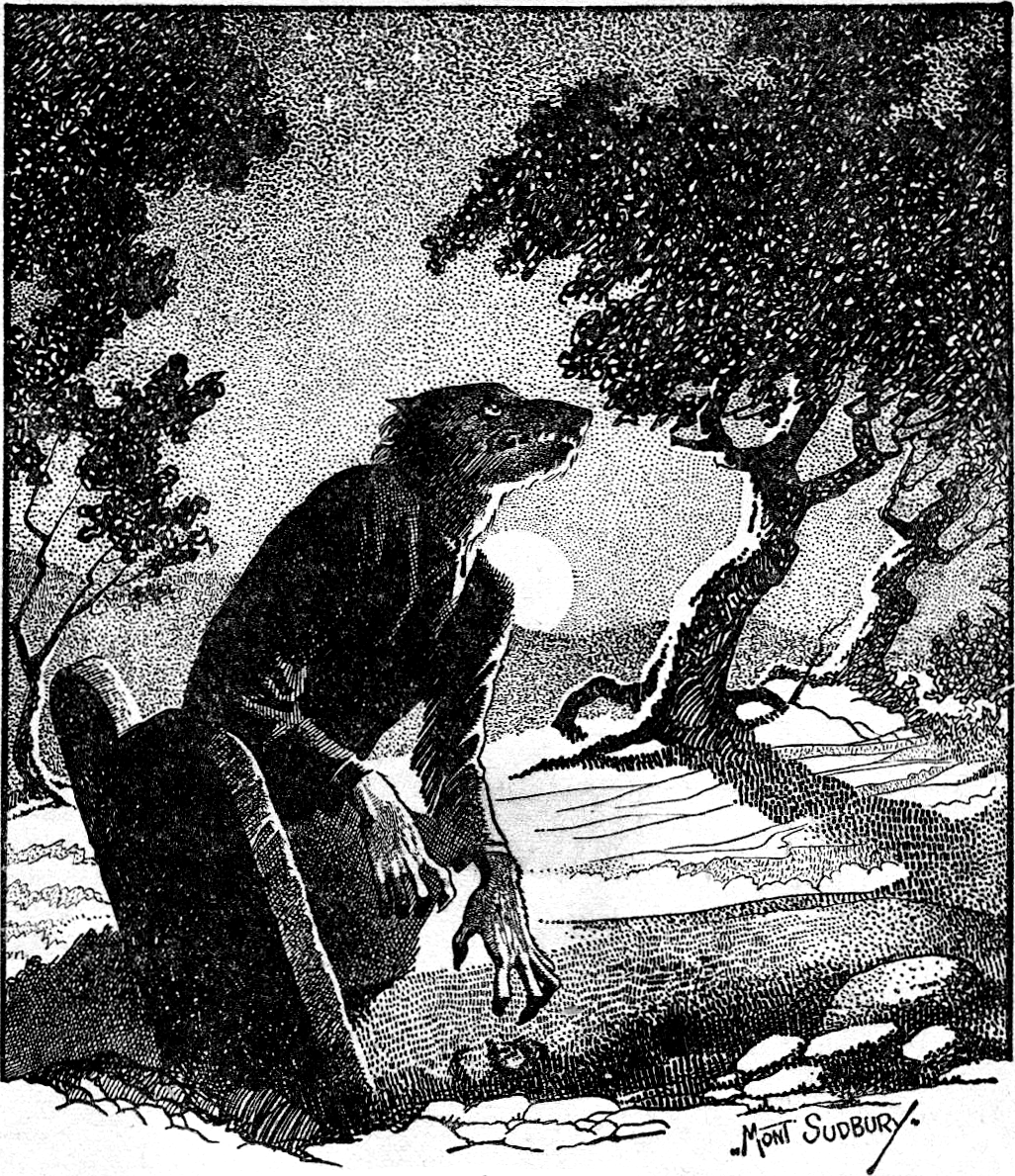 🇫🇷 France and 5 moreWerewolf
A mythical shapeshifter that turns into a wolf, central to European witch-hunts and Gothic horror.Being · Cursing and harm · Wonder and entertainment Legendary
🇫🇷 France and 5 moreWerewolf
A mythical shapeshifter that turns into a wolf, central to European witch-hunts and Gothic horror.Being · Cursing and harm · Wonder and entertainment Legendary
 🇪🇸 Spain and 5 moreSt John's Eve
A Christian vigil marked by bonfires and plant gathering on the summer solstice eveRite · Protection · Speaking with spirits and the dead Living
🇪🇸 Spain and 5 moreSt John's Eve
A Christian vigil marked by bonfires and plant gathering on the summer solstice eveRite · Protection · Speaking with spirits and the dead Living