Hindu and Tantric: magic in this belief world
Mantra, yantra, tantra, puja and the folk goddess cults of India and Nepal.
Hindu practice holds a very large range of ritual: Vedic fire offerings, mantra and yantra, tantra, temple puja, astrology, and the village goddess cults of India and Nepal. Many Hindus would call this worship, not magic, while scholars note that charms, spells and rites of power run through the tradition from the Atharvaveda onward. This page covers the range and the tensions inside it. Hindu communities live in every continent, and their rites differ by language and household.
Mantra, yantra and tantra
A mantra is a sacred sound or phrase, a yantra a diagram, and tantra a family of ritual traditions that use both. Tantric practice is varied: some is household devotion, some is initiatory work under a guru, and some has been sensationalised abroad as sex magic, a picture most practitioners reject. Knowledge is passed through initiation, and many texts are closed to outsiders. Initiation into a mantra is usually given by a guru or family teacher, and the same sound may be said to work only when received in the right way.
Folk and village practice
Beyond the temple, villages have healers, exorcists and mediums who work with goddesses and spirits. Practices against the evil eye include the lemon and chillies, black dots and a rite of waving salt and chillies before a child. Jyotisha, Indian astrology, is consulted for weddings, names and business, and is taught in some universities, which scientists have criticised. Healers and goddess shrines, such as those of Sitala for smallpox and fever and of Bhagavati in Kerala, draw crowds who seek relief and protection.
Gender, caste and law
Access follows caste and gender. Priesthood is largely male and Brahmin, though women lead some rites, and low-caste and Dalit practitioners lead many village cults. Accusations of witchcraft, in India often called dayan or dain, have killed people in states such as Jharkhand and Assam, and several states have passed laws against witch-hunting. Maharashtra and Karnataka have anti-superstition laws. Hindu reformers have also attacked such practice: the Arya Samaj, founded in 1875, opposed idol worship and ritual excess, and rationalist groups in India campaign against godmen who claim miracles.
Diaspora and commerce
Overseas, communities keep household rites and temple worship, and pandits conduct weddings by video. Yoga and tantra are now global industries, and Western teachers have sold forms far from their roots, while Indian reformers and some Hindus object. Scholars point to centuries of overlap between Hindu, Buddhist, Jain and Islamic traditions of charms and healing. Hindu temples in Britain, North America and Southeast Asia now host priests trained in India, and some rites have been adapted to the calendar of working life.
Hindu and Tantric on EveryJaadu
The entries written up so far, best known first.
 🇮🇳 India and 5 moreAstrology
A divinatory practice that reads human fate through the positions of celestial bodies.Belief · Seeing and foretelling · Luck and prosperity Living
🇮🇳 India and 5 moreAstrology
A divinatory practice that reads human fate through the positions of celestial bodies.Belief · Seeing and foretelling · Luck and prosperity Living
 🇪🇬 EgyptCurse
A spoken wish for misfortune to befall a person or placeBelief · Cursing and harm · Luck and prosperity Historical
🇪🇬 EgyptCurse
A spoken wish for misfortune to befall a person or placeBelief · Cursing and harm · Luck and prosperity Historical
 🇮🇳 IndiaChakraचक्र
Meditation points in the subtle body used in Hindu and Buddhist yogaTradition · Speaking with spirits and the dead · Change and initiation Living
🇮🇳 IndiaChakraचक्र
Meditation points in the subtle body used in Hindu and Buddhist yogaTradition · Speaking with spirits and the dead · Change and initiation Living
 🇪🇬 Egypt and 3 moreAmulet
A portable object worn or carried to ward off harm and invite fortuneCharm · Protection · Luck and prosperity Living
🇮🇳 IndiaPashupata Shaivismपाशुपत
An early Hindu ascetic school focused on liberation through ritual and devotion to ShivaTradition · Cursing and harm · Power and authority Historical
🇪🇬 Egypt and 3 moreAmulet
A portable object worn or carried to ward off harm and invite fortuneCharm · Protection · Luck and prosperity Living
🇮🇳 IndiaPashupata Shaivismपाशुपत
An early Hindu ascetic school focused on liberation through ritual and devotion to ShivaTradition · Cursing and harm · Power and authority Historical
 🇮🇳 India and 1 moreYoginiयोगिनी
A female master of yoga and tantra, or a fierce goddess aspect in Indian temples.Tradition · Power and authority · Protection Historical
🇮🇳 India and 1 moreYoginiयोगिनी
A female master of yoga and tantra, or a fierce goddess aspect in Indian temples.Tradition · Power and authority · Protection Historical
 🇮🇩 IndonesiaRangdaᬭᬗ᭄ᬤ
A Balinese demon queen who leads witches in an eternal battle against good.Figure · Cursing and harm · Wonder and entertainment Legendary
🇮🇩 IndonesiaRangdaᬭᬗ᭄ᬤ
A Balinese demon queen who leads witches in an eternal battle against good.Figure · Cursing and harm · Wonder and entertainment Legendary
 🇯🇵 JapanOni鬼(おに)
A horned demon of Japanese folklore known for strength and evil deedsBeing · Cursing and harm · Luck and prosperity Legendary
🇯🇵 JapanOni鬼(おに)
A horned demon of Japanese folklore known for strength and evil deedsBeing · Cursing and harm · Luck and prosperity Legendary
 🇮🇳 India and 5 moreKolamகோலம்
A daily geometric floor drawing made with rice flour at the home entrance in South IndiaTradition · Protection · Luck and prosperity Living
🇮🇳 India and 5 moreKolamகோலம்
A daily geometric floor drawing made with rice flour at the home entrance in South IndiaTradition · Protection · Luck and prosperity Living
 🇮🇳 India and 2 moreHomaहोम
A fire ritual found across Asian religions where offerings are burned as a votive exchange with the divine.Rite · Protection · Speaking with spirits and the dead Living
🇮🇳 India and 2 moreHomaहोम
A fire ritual found across Asian religions where offerings are burned as a votive exchange with the divine.Rite · Protection · Speaking with spirits and the dead Living
 🇲🇦 Morocco and 5 moreWild rueاسپند
A desert plant whose seeds hold psychoactive alkaloids and serve as incense in the Middle East.Substance · Protection · Speaking with spirits and the dead Living
🇮🇳 IndiaPanchagavya
A fermented mixture of five cow products used in Hindu rituals and Ayurvedic traditions.Substance · Cleansing and purification · Healing Living
🇲🇦 Morocco and 5 moreWild rueاسپند
A desert plant whose seeds hold psychoactive alkaloids and serve as incense in the Middle East.Substance · Protection · Speaking with spirits and the dead Living
🇮🇳 IndiaPanchagavya
A fermented mixture of five cow products used in Hindu rituals and Ayurvedic traditions.Substance · Cleansing and purification · Healing Living
 🇮🇳 India and 1 moreMantraमन्त्रम्
A sacred sound or phrase repeated to focus the mind and invoke spiritual powerText · Speaking with spirits and the dead · Power and authority Living
🇮🇳 India and 1 moreMantraमन्त्रम्
A sacred sound or phrase repeated to focus the mind and invoke spiritual powerText · Speaking with spirits and the dead · Power and authority Living
 🇺🇦 Ukraine and 5 moreMugwortчорнобиль (chornóbyl')
An aromatic herb used in folk medicine, cooking, and magical protection across Eurasia.Substance · Protection · Healing Living
🇺🇦 Ukraine and 5 moreMugwortчорнобиль (chornóbyl')
An aromatic herb used in folk medicine, cooking, and magical protection across Eurasia.Substance · Protection · Healing Living
 🇮🇹 Italy and 5 morePrecious coral
A marine skeleton harvested for jewelry and worn as a protective charm in several culturesSubstance · Protection · Healing Living
🇮🇹 Italy and 5 morePrecious coral
A marine skeleton harvested for jewelry and worn as a protective charm in several culturesSubstance · Protection · Healing Living
 🇹🇭 Thailand and 7 moreSpirit house
A small roofed shrine that shelters a place's protective spiritCharm · Protection Living
🇹🇭 Thailand and 7 moreSpirit house
A small roofed shrine that shelters a place's protective spiritCharm · Protection Living
 🇮🇳 India and 1 moreAshtamangalaअष्टमङ्गल
A set of eight sacred symbols used in Indian religions to mark auspicious occasions and teach spiritual truths.Tradition · Power and authority · Wonder and entertainment Living
🇮🇳 India and 1 moreAshtamangalaअष्टमङ्गल
A set of eight sacred symbols used in Indian religions to mark auspicious occasions and teach spiritual truths.Tradition · Power and authority · Wonder and entertainment Living
 🇮🇳 India and 5 morePretaप्रेत
A suffering spirit of insatiable hunger found in Asian religious traditionsBeing · Speaking with spirits and the dead Living
🇮🇳 India and 5 morePretaप्रेत
A suffering spirit of insatiable hunger found in Asian religious traditionsBeing · Speaking with spirits and the dead Living
 🇸🇩 Sudan and 5 moreIncense
Aromatic plant materials burned to release fragrant smoke for ritual, scent, or timekeeping.Substance · Protection · Speaking with spirits and the dead Living
🇸🇩 Sudan and 5 moreIncense
Aromatic plant materials burned to release fragrant smoke for ritual, scent, or timekeeping.Substance · Protection · Speaking with spirits and the dead Living
 🇮🇩 IndonesiaNyepiᬜᬾᬧᬶ
A Balinese day of total silence, fasting, and self-reflection to mark the new year.Rite · Cleansing and purification · Speaking with spirits and the dead Living
🇮🇩 IndonesiaNyepiᬜᬾᬧᬶ
A Balinese day of total silence, fasting, and self-reflection to mark the new year.Rite · Cleansing and purification · Speaking with spirits and the dead Living
 🇰🇭 Cambodia and 3 moreSak Yantសាក់យ័ន្ត
A Southeast Asian tattoo tradition using sacred geometry for protection and powerTradition · Protection · Luck and prosperity Living
🇰🇭 Cambodia and 3 moreSak Yantសាក់យ័ន្ត
A Southeast Asian tattoo tradition using sacred geometry for protection and powerTradition · Protection · Luck and prosperity Living
 🇮🇳 IndiaTheyyam
A ritual dance from Kerala where performers embody deities through elaborate costume and songRite · Speaking with spirits and the dead · Protection Living
🇮🇳 IndiaAlakshmiदेवी अलक्ष्मी
A Hindu goddess of misfortune and the shadow opposite to LakshmiBeing · Cursing and harm Living
🇮🇳 IndiaTheyyam
A ritual dance from Kerala where performers embody deities through elaborate costume and songRite · Speaking with spirits and the dead · Protection Living
🇮🇳 IndiaAlakshmiदेवी अलक्ष्मी
A Hindu goddess of misfortune and the shadow opposite to LakshmiBeing · Cursing and harm Living
 🇮🇩 IndonesiaOgoh-ogohᬳᭀᬕᭀᬄ ᬳᭀᬕᭀᬄ
Balinese sculptures paraded and burned to cleanse the environment before NyepiTradition · Cursing and harm · Cleansing and purification Living
🇮🇩 IndonesiaOgoh-ogohᬳᭀᬕᭀᬄ ᬳᭀᬕᭀᬄ
Balinese sculptures paraded and burned to cleanse the environment before NyepiTradition · Cursing and harm · Cleansing and purification Living
 🇮🇳 India and 4 moreTantraतन्त्र
An esoteric yogic tradition from India focusing on ritual, mantra, and body-based spiritual practices.Tradition · Power and authority · Change and initiation Living
🇮🇳 India and 4 moreTantraतन्त्र
An esoteric yogic tradition from India focusing on ritual, mantra, and body-based spiritual practices.Tradition · Power and authority · Change and initiation Living
 🇮🇳 IndiaKavu
Sacred forest patches in South India that protect local deities and wildlifeTradition · Protection · Speaking with spirits and the dead Living
🇮🇳 IndiaKavu
Sacred forest patches in South India that protect local deities and wildlifeTradition · Protection · Speaking with spirits and the dead Living
 🇮🇳 IndiaHindu astrologyज्योतिष (Jyotiṣa)
A traditional Hindu system of astrology and timekeeping rooted in the VedasTradition · Seeing and foretelling · Luck and prosperity Living
🇮🇳 IndiaHindu astrologyज्योतिष (Jyotiṣa)
A traditional Hindu system of astrology and timekeeping rooted in the VedasTradition · Seeing and foretelling · Luck and prosperity Living
 🇮🇳 India and 1 moreNavagrahaनवग्रह
A group of nine celestial deities in Hinduism that govern fate and astrologyTradition · Protection · Luck and prosperity Living
🇮🇳 India and 1 moreNavagrahaनवग्रह
A group of nine celestial deities in Hinduism that govern fate and astrologyTradition · Protection · Luck and prosperity Living
 🇳🇵 Nepal and 1 moreMatsyendranathMacchindranāth, Mīnanātha
A yogi and rain deity revered across Hindu and Buddhist traditions in South Asia.Figure · Speaking with spirits and the dead · Power and authority Living
🇳🇵 Nepal and 1 moreMatsyendranathMacchindranāth, Mīnanātha
A yogi and rain deity revered across Hindu and Buddhist traditions in South Asia.Figure · Speaking with spirits and the dead · Power and authority Living
 🇫🇷 France and 3 moreReliquary
A container for sacred remains or objects, crafted across many faithsCharm · Protection · Speaking with spirits and the dead Living
🇫🇷 France and 3 moreReliquary
A container for sacred remains or objects, crafted across many faithsCharm · Protection · Speaking with spirits and the dead Living
 🇮🇹 Italy and 5 moreRelic
An object or body part kept to honor a holy person and mark their connection to the divineCharm · Protection · Healing Living
🇮🇹 Italy and 5 moreRelic
An object or body part kept to honor a holy person and mark their connection to the divineCharm · Protection · Healing Living
 🇨🇳 China and 5 moreGhost FestivalZhongyuan Festival; Yulanpen Festival
A festival to feed wandering spirits and guide them home during the seventh lunar month.Tradition · Speaking with spirits and the dead · Protection Living
🇮🇷 Iran and 2 moreHaoma
A divine plant and spirit in Zoroastrianism, linked to healing and ancient rituals.Substance · Healing · Speaking with spirits and the dead Living
🇨🇳 China and 5 moreGhost FestivalZhongyuan Festival; Yulanpen Festival
A festival to feed wandering spirits and guide them home during the seventh lunar month.Tradition · Speaking with spirits and the dead · Protection Living
🇮🇷 Iran and 2 moreHaoma
A divine plant and spirit in Zoroastrianism, linked to healing and ancient rituals.Substance · Healing · Speaking with spirits and the dead Living
 🇮🇳 India and 1 moreAmritaअमृत (Sanskrit)
A Sanskrit concept of immortality and the nectar that grants it across Indian religionsBelief · Healing · Power and authority Living
🇮🇳 India and 1 moreAmritaअमृत (Sanskrit)
A Sanskrit concept of immortality and the nectar that grants it across Indian religionsBelief · Healing · Power and authority Living
 🇮🇳 IndiaBhuta KolaBhūta Kōla
A Tulu folk dance and ritual where spirits are channelled into human performersTradition · Protection · Speaking with spirits and the dead Living
🇮🇳 IndiaBhuta KolaBhūta Kōla
A Tulu folk dance and ritual where spirits are channelled into human performersTradition · Protection · Speaking with spirits and the dead Living
 🇮🇳 India and 1 moreRangoliरंगोली
Floor art made with coloured powders and flowers to welcome guests and deitiesTradition · Protection · Luck and prosperity Living
🇮🇳 India and 1 moreRangoliरंगोली
Floor art made with coloured powders and flowers to welcome guests and deitiesTradition · Protection · Luck and prosperity Living
 🇮🇳 India and 1 moreLakshmiलक्ष्मी
A Hindu goddess of wealth, prosperity, and beauty, worshipped as the consort of Vishnu.Being · Luck and prosperity · Power and authority Living
🇮🇳 India and 1 moreLakshmiलक्ष्मी
A Hindu goddess of wealth, prosperity, and beauty, worshipped as the consort of Vishnu.Being · Luck and prosperity · Power and authority Living
 🇮🇳 India and 2 moreYantraयन्त्र
A geometric diagram from Indian traditions used for worship and meditationTradition · Protection · Speaking with spirits and the dead Living
🇮🇳 India and 2 moreYantraयन्त्र
A geometric diagram from Indian traditions used for worship and meditationTradition · Protection · Speaking with spirits and the dead Living
 🇮🇳 India and 5 moreSpirit possession
A global belief that spirits or demons can take control of a person's body and mindBelief · Cursing and harm · Power and authority Living
🇨🇳 China and 3 moreQi氣 / 气
A vital force in Chinese philosophy and medicine, believed to flow through all living things.Substance · Healing · Power and authority Living
🇮🇳 India and 5 moreSpirit possession
A global belief that spirits or demons can take control of a person's body and mindBelief · Cursing and harm · Power and authority Living
🇨🇳 China and 3 moreQi氣 / 气
A vital force in Chinese philosophy and medicine, believed to flow through all living things.Substance · Healing · Power and authority Living
 🇵🇭 PhilippinesPhilippine mythology
The indigenous myths and spirits of the Philippines, shaped by centuries of trade and colonial contact.Tradition · Speaking with spirits and the dead · Power and authority Living
🇵🇭 PhilippinesPhilippine mythology
The indigenous myths and spirits of the Philippines, shaped by centuries of trade and colonial contact.Tradition · Speaking with spirits and the dead · Power and authority Living
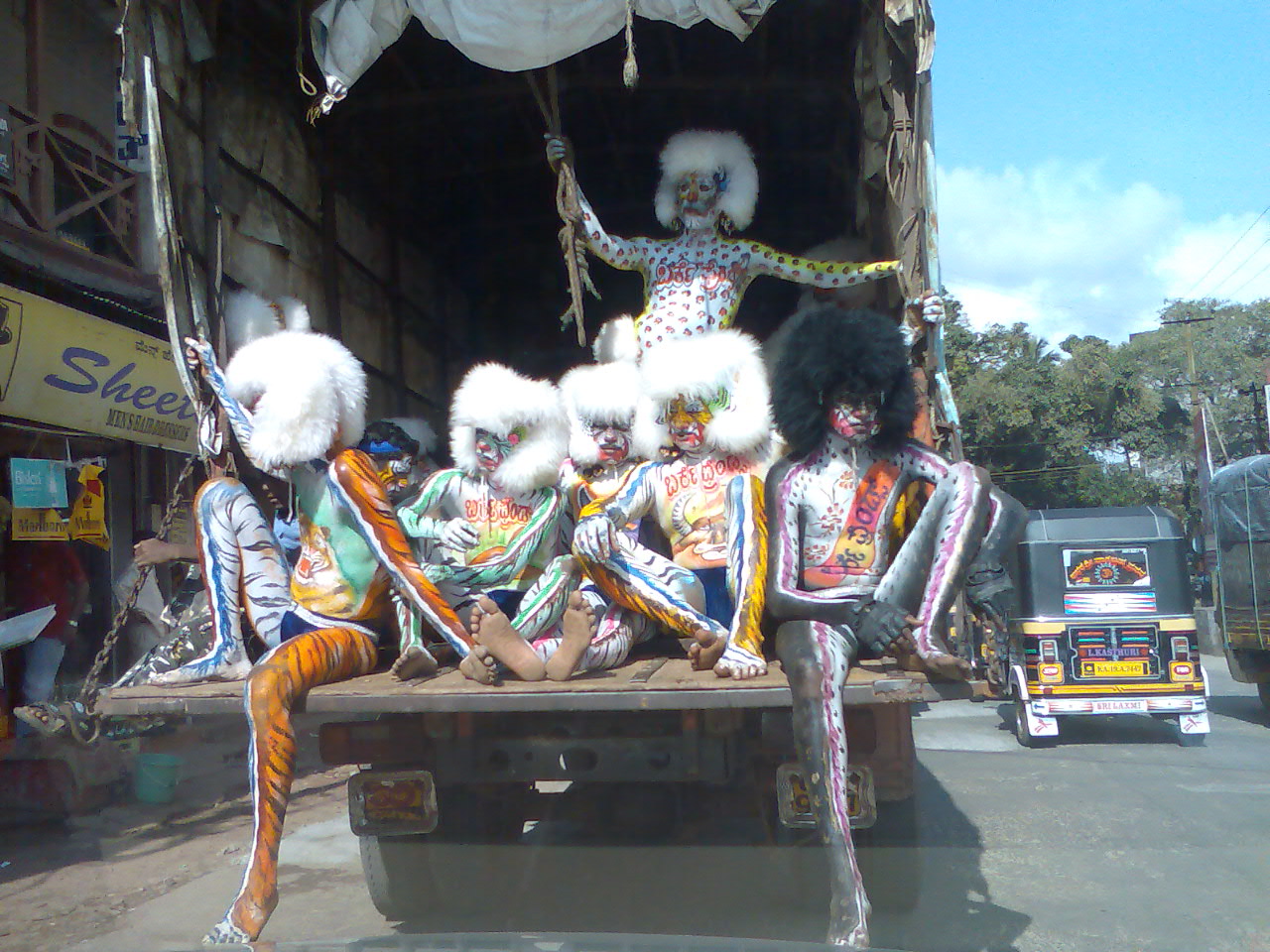 🇮🇳 IndiaPili Yesaಪಿಲಿವೇಷ
A coastal Karnataka folk dance where performers paint themselves as tigers to honour the Goddess DurgaIllusion · Protection · Power and authority Living
🇮🇳 IndiaSiddhiसिद्धि
Magical powers and spiritual attainments in Indian religionsBelief · Power and authority · Speaking with spirits and the dead Living
🇮🇳 IndiaPili Yesaಪಿಲಿವೇಷ
A coastal Karnataka folk dance where performers paint themselves as tigers to honour the Goddess DurgaIllusion · Protection · Power and authority Living
🇮🇳 IndiaSiddhiसिद्धि
Magical powers and spiritual attainments in Indian religionsBelief · Power and authority · Speaking with spirits and the dead Living
 🇩🇲 Dominica and 1 morePrayer beads
Beaded strings used to count prayers and mantras across many world religionsSubstance · Speaking with spirits and the dead Living
🇩🇲 Dominica and 1 morePrayer beads
Beaded strings used to count prayers and mantras across many world religionsSubstance · Speaking with spirits and the dead Living
 🇮🇳 IndiaKundaliniकुण्डलिनी
A dormant energy in Hinduism believed to rise through the spine for spiritual liberationBelief Living
🇮🇳 IndiaKundaliniकुण्डलिनी
A dormant energy in Hinduism believed to rise through the spine for spiritual liberationBelief Living
 🇮🇳 India and 5 moreBindiबिंदी
A dot worn on the forehead to mark spiritual focus and cultural identityCharm · Protection · Power and authority Living
🇮🇳 India and 5 moreBindiबिंदी
A dot worn on the forehead to mark spiritual focus and cultural identityCharm · Protection · Power and authority Living
 🇮🇳 IndiaKumkumकुङ्कुमम्
A red powder made from turmeric and lime, used in Hindu markings and ritualsSubstance · Protection · Luck and prosperity Living
🇮🇳 India and 1 moreDaayanदायन
A vengeful female spirit from Indian folklore, often blamed for misfortune and witchcraft accusations.Being · Cursing and harm · Luck and prosperity Living
🇮🇳 IndiaKumkumकुङ्कुमम्
A red powder made from turmeric and lime, used in Hindu markings and ritualsSubstance · Protection · Luck and prosperity Living
🇮🇳 India and 1 moreDaayanदायन
A vengeful female spirit from Indian folklore, often blamed for misfortune and witchcraft accusations.Being · Cursing and harm · Luck and prosperity Living
Photo credits on this page
The small pictures above come from Wikimedia Commons under free licences. Some are cropped to fit.
- Kolam: mckaysavage, CC BY 2.0, source
- Homa: Vyacheslav Argenberg, CC BY 4.0, source
- Wild rue: Yuriy75, CC BY-SA 3.0, source
- Mantra: Markrosenrosen, CC BY-SA 3.0, source
- Mugwort: Prahlad balaji, CC BY-SA 4.0, source
- Precious coral: Géry PARENT, CC BY-SA 3.0, source
- Chakra: Unknown author, Public domain, source
- Amulet: Anonymous ( Egypt ) Unknown author, Public domain, source
- Spirit house: Chainwit., CC BY-SA 4.0, source
- Ashtamangala: Redtigerxyz, CC BY-SA 3.0, source
- Preta: Temple, Richard Carnac, Sir, Public domain, source
- Astrology: Wilfredor, CC0, source
- Incense: nakimusi, CC BY 2.0, source
- Nyepi: Matt Croxson, Public domain, source
- Sak Yant: Mikhailovich, CC BY 3.0, source
- Theyyam: Shagil Kannur, CC BY-SA 4.0, source
- Ogoh-ogoh: Simondodit, CC BY-SA 4.0, source
- Tantra: William Clark, Public domain, source
- Kavu: Ashwin.appus, CC BY-SA 4.0, source
- Hindu astrology: Unknown author, CC BY 4.0, source
- Navagraha: Kiran891, CC BY-SA 4.0, source
- Matsyendranath: Unknown author, Public domain, source
- Reliquary: Attributed to Jean de Toul, also written Jehan de Touyl in one source, CC0, source
- Relic: MathieuGuy, CC BY-SA 3.0, source
- Ghost Festival: Chong Fat, CC BY-SA 3.0, source
- Amrita: http://picasaweb.google.com/injamaven, CC BY 3.0, source
- Bhuta Kola: Unknown author, Public domain, source
- Rangda: Boy Lawson, CC BY-SA 3.0, source
- Rangoli: SreeramKalyan, CC0, source
- Lakshmi: Raja Ravi Varma, Public domain, source
- Curse: Katsushika Hokusai, Public domain, source
- Yantra: Photo by Daniel Conrad (Chromacon), artwork by Daniel Conrad under dir, Public domain, source
- Spirit possession: Unknown author, CC BY 4.0, source
- Philippine mythology: The original uploader was Rodsan18 at English Wikipedia . ( Original t, CC BY 2.5, source
- Oni: Katsushika Hokusai 葛飾北斎 (1760-1849), Public domain, source
- Pili Yesa: Premnath Kudva, CC BY 3.0, source
- Yogini: Soumendra Barik, CC BY-SA 3.0, source
- Prayer beads: ja:利用者:pack372sd, CC BY-SA 3.0, source
- Kundalini: Pierjasi at Dutch Wikipedia, CC BY-SA 3.0, source
- Bindi: Vinay Sahay, CC BY-SA 4.0, source
- Kumkum: Thamizhpparithi Maari, CC BY-SA 3.0, source