
Shiva
In its own language: शिव
from Sanskrit śiva meaning 'auspicious' or 'benign'
A principal Hindu deity of destruction and yoga, worshipped across South and Southeast Asia
Shiva is a central figure in Hinduism, known as the destroyer within the Trimurti and the supreme being in Shaivism. He embodies both benevolent yogic asceticism and fierce protective power, revered from India to Indonesia.
- Shiva is the destroyer in the Hindu Trimurti alongside Brahma and Vishnu.
- He is the supreme being in the Shaivite tradition of Hinduism.
- His name means 'auspicious' or 'benign' in Sanskrit.
- He is worshipped in the aniconic form of the lingam.
- Major festivals include Maha Shivaratri and Monday observances.
What it is
Shiva stands as one of the primary deities in Hinduism, serving as the Supreme Being within the Shaivite tradition. He forms part of the Trimurti, the holy trinity that includes Brahma and Vishnu, where he holds the role of the destroyer or transformer of the universe. His nature is dual, presenting both a gentle household aspect with his family and a fierce, ascetic yogic side. Devotees view him as the patron of yoga, meditation, and the arts, often depicting him as an omniscient sage living on Mount Kailasa.
Where it comes from
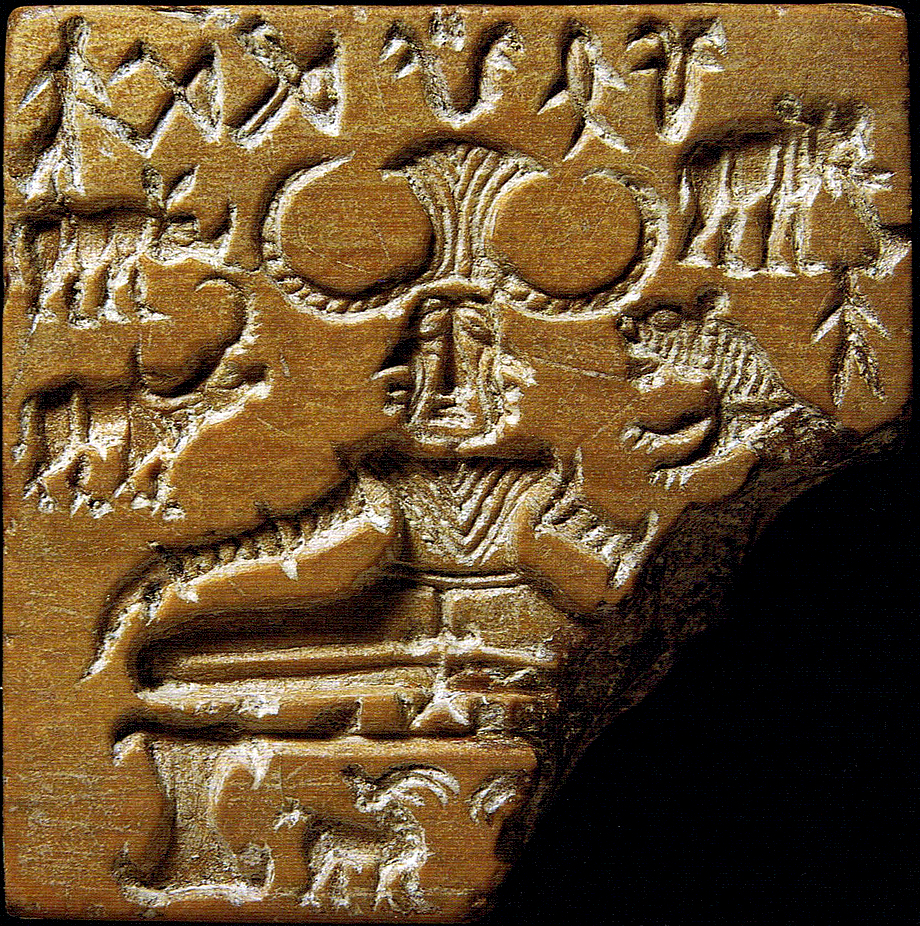
The figure of Shiva likely emerged from a blend of various older traditions rather than a single source. Scholars suggest he may have roots in non-Vedic tribal cultures, later merging with the Vedic storm god Rudra. This process of Sanskritization helped absorb local cults and deities into his expanding persona. While some link him to prehistoric art or the Indus Valley Pashupati seal, these connections remain debated among historians and archaeologists.
How it is done
Worship of Shiva frequently involves offerings to the lingam, an aniconic symbol representing his formless nature. Devotees often perform rituals on Mondays, a day sacred to him, and observe fasting during specific periods. The chanting of mantras such as Om Namah Shivaya is common practice. Temples dedicated to him feature shrines where priests conduct daily ceremonies, invoking his presence through hymns and symbolic gestures.
Tools and materials
Key symbols associated with Shiva include the trishula, a three-pronged spear representing his control over past, present, and future. The damaru, a small drum, signifies the rhythm of creation. He is often shown with a crescent moon in his matted hair and the serpent Vasuki around his neck. The third eye on his forehead symbolizes spiritual wisdom and the power to destroy ignorance.
Shiva, drawn and placed
- Living
- Revived
- Fading
- Historical
- Legendary
- Performed
- Lineage
- Shaivism
- Timing
- on Mondays and during festivals like Maha Shivaratri
What it is for
Devotees seek Shiva’s blessings for liberation from the cycle of rebirth and for protection against evil forces. He is invoked for strength, courage, and the removal of obstacles. As the lord of yogis, practitioners look to him for guidance in spiritual disciplines and mental focus. His destructive aspect is not seen as malicious but as necessary for clearing away old structures to allow new growth.
Who does it
Priests in Shaivite temples lead formal worship services, reciting scriptures and performing abhisheka rituals. Household devotees maintain personal altars where they offer water, milk, and bilva leaves. Ascetics and yogis revere him as Adiyogi, the first teacher of yoga, following his example of renunciation. Both men and women participate in his veneration across diverse social strata.
Peoples and places
Shiva is widely revered throughout the Indian subcontinent, including India, Nepal, Sri Lanka, and Bangladesh. His worship extends into Southeast Asia, particularly in Indonesia, where ancient temples reflect his influence. Different regions emphasize various aspects of his personality, from the domestic father figure to the wild mountain ascetic, adapting his mythology to local cultural contexts while maintaining core theological tenets.
At a glance: who, where and when
Belief worlds
Occasions



What people believe
In Shaivism, Shiva is the ultimate reality, Parabrahman, beyond all attributes yet containing all powers. He exists in harmony with Shakti, the divine feminine energy, representing the union of consciousness and creativity. The universe is viewed as a manifestation of his dance, Nataraja, where creation and destruction are continuous cycles. His silence and stillness represent the transcendental state beyond worldly illusion.
When it is done
Maha Shivaratri is the most significant festival dedicated to Shiva, observed with night-long vigils and prayers. Mondays are considered auspicious for his worship, with many followers observing fasts. The month of Shravana also holds special importance, marked by ritual bathing and offerings. Other occasions include Pradosha, a twilight period dedicated to him, and Teej, a festival celebrating his union with Parvati.
How scholars and sceptics see it
Anthropologists and historians view Shiva as a composite deity who absorbed diverse regional beliefs over centuries. Some researchers note parallels between Shiva and Greek Dionysus, suggesting possible Indo-European links or lateral cultural exchanges. Others argue for indigenous origins, pointing to pre-Vedic elements in his iconography. The debate continues regarding the exact historical evolution of his worship from early tribal practices to mainstream Hindu theology.
Cautions and what is closed
Shiva’s fierce forms, such as Bhairava, are sometimes feared for their capacity to inflict punishment. Rituals involving animal sacrifice occur in certain traditional contexts, though this is not universal. Misinterpretations of his destructive nature can lead to fear rather than reverence. Sacred knowledge regarding specific tantric practices is often restricted to initiated disciples, keeping detailed rites closed to outsiders.
Compare and confuse
Shiva is sometimes confused with other Hindu gods due to shared attributes or syncretic practices. His role as destroyer differs from Vishnu’s preserver function, though both are part of the same trinity. In some traditions, he is equated with Rudra, emphasizing his storm-related origins. Outside India, similar archetypes of the wild man or horned god appear in European mythology, reflecting broader Indo-European themes.
Days linked to Shiva
Questions people ask about Shiva
Who is Shiva in Hinduism?
Shiva is a principal deity in Hinduism, known as the destroyer within the Trimurti. He is the Supreme Being in Shaivism and represents transformation, yoga, and the arts.
What does the name Shiva mean?
The name comes from Sanskrit śiva, meaning 'auspicious,' 'propitious,' or 'benign.' It reflects his role as a gracious and kind deity who removes obstacles.
Where is Shiva worshipped?
He is revered across India, Nepal, Sri Lanka, and Bangladesh. His worship also extends to Southeast Asia, particularly in Indonesia, especially in Java and Bali.
What are Shiva's main symbols?
Common symbols include the trishula (trident), the damaru (drum), the crescent moon, the serpent Vasuki, and the lingam. These represent his power, rhythm, and cosmic role.
Good reading and sources
- Encyclopaedia BritannicaArticle
- Tubers are the veggies of choice to celebrate ThiruvathiraThe Hindu, Article
- Shiva on WikipediaEncyclopedia
- More photos on Wikimedia CommonsPhotos and video
- Wikidata recordOpen data
The facts on this page come from the Wikipedia article "Shiva", written by its contributors and used under the CC BY-SA 4.0 licence, and from its Wikidata record (CC0). EveryJaadu rewrote the text in its own words, with AI assistance, and compares every page with the article to make sure no passage is copied. It may be reused under the same CC BY-SA 4.0 licence with a link back.
It may contain mistakes. Names and customs differ from one community to the next, and some knowledge is closed to outsiders and left out here. This page describes belief and practice. It does not say that any of it works, it is not a how-to, and it is not medical advice. If something is wrong, tell us. Last refreshed 2026-10-05.
More from India
All the entries from India 🇮🇳 India and 5 morePretaप्रेत
A suffering spirit of insatiable hunger found in Asian religious traditionsBeing · Speaking with spirits and the dead Living
🇮🇳 IndiaAlakshmiदेवी अलक्ष्मी
A Hindu goddess of misfortune and the shadow opposite to LakshmiBeing · Cursing and harm Living
🇮🇳 India and 5 morePretaप्रेत
A suffering spirit of insatiable hunger found in Asian religious traditionsBeing · Speaking with spirits and the dead Living
🇮🇳 IndiaAlakshmiदेवी अलक्ष्मी
A Hindu goddess of misfortune and the shadow opposite to LakshmiBeing · Cursing and harm Living
 🇮🇳 IndiaTaraतारा (Sanskrit), তারা (Bengali)
A fierce Hindu goddess of protection and wisdom, central to the Mahavidya tradition.Being · Protection · Power and authority Living
🇮🇳 IndiaTaraतारा (Sanskrit), তারা (Bengali)
A fierce Hindu goddess of protection and wisdom, central to the Mahavidya tradition.Being · Protection · Power and authority Living
 🇮🇳 India and 1 moreLakshmiलक्ष्मी
A Hindu goddess of wealth, prosperity, and beauty, worshipped as the consort of Vishnu.Being · Luck and prosperity · Power and authority Living
🇮🇳 India and 1 moreLakshmiलक्ष्मी
A Hindu goddess of wealth, prosperity, and beauty, worshipped as the consort of Vishnu.Being · Luck and prosperity · Power and authority Living
Related elsewhere
All being 🇬🇧 United Kingdom and 5 moreAleister Crowley
English occultist and founder of the religion of ThelemaText · Power and authority · Change and initiation Living
🇨🇳 China and 3 moreQi氣 / 气
A vital force in Chinese philosophy and medicine, believed to flow through all living things.Substance · Healing · Power and authority Living
🇬🇧 United Kingdom and 1 moreChaos magic
A modern magical system that treats belief as a flexible tool rather than a fixed truth.Tradition · Change and initiation · Power and authority Living
🇬🇧 United Kingdom and 5 moreAleister Crowley
English occultist and founder of the religion of ThelemaText · Power and authority · Change and initiation Living
🇨🇳 China and 3 moreQi氣 / 气
A vital force in Chinese philosophy and medicine, believed to flow through all living things.Substance · Healing · Power and authority Living
🇬🇧 United Kingdom and 1 moreChaos magic
A modern magical system that treats belief as a flexible tool rather than a fixed truth.Tradition · Change and initiation · Power and authority Living
 🇪🇬 Egypt and 5 moreHermetica
A collection of ancient texts attributed to Hermes Trismegistus, covering magic, alchemy and philosophy.Text · Seeing and foretelling · Change and initiation Historical
🇪🇬 Egypt and 5 moreHermetica
A collection of ancient texts attributed to Hermes Trismegistus, covering magic, alchemy and philosophy.Text · Seeing and foretelling · Change and initiation Historical