
Incense
from Latin incendere, meaning to burn
Aromatic plant materials burned to release fragrant smoke for ritual, scent, or timekeeping.
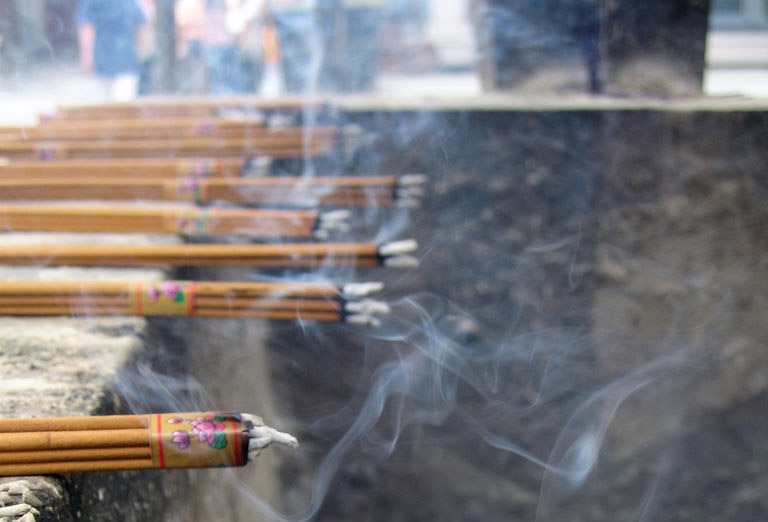
Incense consists of aromatic biotic substances that produce a scented plume when heated. People across Asia, Africa, and the Mediterranean have used it for thousands of years in religious rites, meditation, and daily life to mask odors or repel insects. The practice evolved from ancient resin offerings into diverse forms like sticks, coils, and powders.
- Earliest burner found in Sudan dates to 3300 BCE
- Latin word incendere means to burn
- Direct-burning incense was invented in Japan in the 1800s
- Frankincense and myrrh are key indirect-burning resins
- Used in Ayurveda and Vedic texts for medicinal purposes
What it is
Incense is an aromatic substance designed to release fragrance through heat. It serves multiple purposes, ranging from religious worship and meditation to simple deodorizing and insect repellent. Cultures worldwide have developed distinct methods for creating and using these scented plumes, adapting them to local traditions and technological advances over millennia.
Where it comes from
The earliest evidence of incense use comes from ancient Nubia in present-day Sudan. Excavations at Qustul revealed a ceramic burner dating to the A-Group culture around 3300 BCE. This artifact suggests incense held political and ritual significance long before its widespread adoption in Egypt. From there, the practice spread to Mesopotamia, Greece, and Rome, becoming integral to Babylonian prayers and Egyptian funerary rites.
How it is done
Incense falls into two main categories: direct and indirect burning. Direct-burning types are lit by flame and smolder on their own, releasing smoke as they consume. Indirect-burning varieties require a separate heat source, typically charcoal embers. The choice between these methods depends on cultural preference and the specific properties of the aromatic materials used.
Tools and materials
Direct-burning incense relies on a combustible base to sustain a slow, even ember. Common binders include natural gums like makko or xiangnan pi, which hold fragrant powders together while burning cleanly. Indirect incense often uses pure resins like frankincense or myrrh, placed on hot coals.
Incense, drawn and placed
- Living
- Revived
- Fading
- Historical
- Legendary
- Performed
- Lineage
- global aromatic tradition
- Timing
- during rituals, meditation, or daily purification
What it is for
People use incense to create sacred atmospheres, mark time, and purify spaces. In religious contexts, it acts as an offering to deities or a means to commune with spirits. Historically, it also served practical roles, such as masking unpleasant odors or repelling insects. In Japan, the appreciation of fine incense became a refined court art, while in China and India, it remains central to temple worship and folk rituals honoring local gods and ancestors.
Who does it
Incense is handled by a wide range of individuals, from priests conducting formal temple rites to households performing daily purification. In East Asia, specialized artisans craft high-quality sticks and cones, while in the Middle East, families may prepare kneaded pastes. The practice requires knowledge of material properties to ensure safe and effective burning. Monks and scholars have historically documented its use, preserving techniques across generations.
Peoples and places
Nubians and Egyptians were among the first to institutionalize incense use in ritual and burial practices. Indian traditions incorporated it into Ayurvedic medicine and Vedic ceremonies. Chinese culture developed complex incense arts, including dedicated buildings for ceremonies during the Song dynasty. Japan adopted these practices via Korean monks, evolving them into the refined art of kōdō. Southeast Asian communities continue to burn joss sticks at village shrines and homes.
At a glance: who, where and when



What people believe
Many cultures view incense smoke as a vehicle for prayers to rise to the heavens. In Christianity, frankincense symbolizes purity and is used in liturgical services. Hindu and Buddhist traditions associate the scent with spiritual clarity and divine presence. Some beliefs hold that incense can ward off malevolent spirits or cleanse negative energy from a space. The quality of the smoke is often seen as reflecting the sincerity of the offering.
When it is done
Incense is used throughout the year but peaks during festivals, weddings, and funerals. In Japan, specific scents are associated with seasonal changes and court ceremonies. Chinese communities burn incense during Lunar New Year and ancestor worship days. Daily use is common in households for purification. Monastic schedules often include fixed times for incense burning to mark meditation periods or prayer cycles.
How scholars and sceptics see it
Anthropologists study incense as a marker of trade routes, particularly the Incense Route and Silk Road exchanges. Historians note its role in diplomatic gifts and economic power. Researchers examine how different binders affect combustion temperatures and scent release. Skeptics view some claims about spiritual efficacy as psychological comfort rather than physical reality. Scholars also analyze the linguistic evolution of terms like 'joss' and 'incense' across cultures.
Cautions and what is closed
Improper handling of incense can pose fire risks, especially with direct-burning types left unattended. Some individuals may experience respiratory irritation from dense smoke. Commercial products sometimes contain synthetic additives that produce harsh fumes. Traditional practitioners warn against using low-quality materials that may not burn evenly or could emit toxic byproducts. Proper ventilation is recommended for regular use.
Compare and confuse
Incense is often confused with moxibustion, which uses mugwort for therapeutic heat rather than fragrance. While both involve burning plant matter, moxa is a medical treatment, whereas incense is primarily aromatic or ritualistic. Different cultures name similar practices differently; for example, 'joss sticks' in China versus 'dhoop' in India. The term 'incense' broadly covers all these variations despite distinct local methods.
Rites that involve Incense
Questions people ask about Incense
What is incense made from?
It is composed of aromatic plant materials, resins, and essential oils bound together with combustible bases like gum arabic or charcoal powder. The specific ingredients vary by region and intended use.
Where did incense originate?
The earliest known incense burner was discovered in Qustul, Sudan, dating to the A-Group culture around 3300 BCE. It later spread to Egypt, Mesopotamia, and beyond.
What are the two main types of incense?
Direct-burning incense is lit by flame and smolders on its own. Indirect-burning incense requires a separate heat source like charcoal and does not ignite directly.
Why do people use incense?
It is used for religious worship, meditation, and purification. It also serves practical purposes like masking odors, repelling insects, and marking time in traditional societies.
Good reading and sources
- Incense on WikipediaEncyclopedia
- More photos on Wikimedia CommonsPhotos and video
- Wikidata recordOpen data
The facts on this page come from the Wikipedia article "Incense", written by its contributors and used under the CC BY-SA 4.0 licence, and from its Wikidata record (CC0). EveryJaadu rewrote the text in its own words, with AI assistance, and compares every page with the article to make sure no passage is copied. It may be reused under the same CC BY-SA 4.0 licence with a link back.
It may contain mistakes. Names and customs differ from one community to the next, and some knowledge is closed to outsiders and left out here. This page describes belief and practice. It does not say that any of it works, it is not a how-to, and it is not medical advice. If something is wrong, tell us. Last refreshed 2026-10-05.
More from Sudan
All the entries from Sudan 🇸🇦 Saudi Arabia and 5 moreIslamic exorcismرقية
A rite to expel spirits through Quranic recitation and negotiationRite · Healing · Cleansing and purification Living
🇸🇦 Saudi Arabia and 5 moreIslamic exorcismرقية
A rite to expel spirits through Quranic recitation and negotiationRite · Healing · Cleansing and purification Living
 🇸🇴 Somalia and 5 moreFrankincense
An aromatic tree resin harvested for incense, perfume, and religious ritualSubstance · Speaking with spirits and the dead · Power and authority Living
🇸🇴 Somalia and 5 moreFrankincense
An aromatic tree resin harvested for incense, perfume, and religious ritualSubstance · Speaking with spirits and the dead · Power and authority Living
 🇪🇬 Egypt and 5 moreZārزار
A spirit possession tradition and healing ritual in the Horn of Africa and Middle EastTradition · Healing · Speaking with spirits and the dead Living
🇸🇸 South Sudan and 1 moreDinka religion
The traditional animist and creator-based faith of the Dinka people of South SudanTradition · Protection · Healing Living
🇪🇬 Egypt and 5 moreZārزار
A spirit possession tradition and healing ritual in the Horn of Africa and Middle EastTradition · Healing · Speaking with spirits and the dead Living
🇸🇸 South Sudan and 1 moreDinka religion
The traditional animist and creator-based faith of the Dinka people of South SudanTradition · Protection · Healing Living
Related elsewhere
All substance 🇮🇳 India and 2 moreYantraयन्त्र
A geometric diagram from Indian traditions used for worship and meditationTradition · Protection · Speaking with spirits and the dead Living
🇮🇳 India and 2 moreYantraयन्त्र
A geometric diagram from Indian traditions used for worship and meditationTradition · Protection · Speaking with spirits and the dead Living
 🇪🇸 Spain and 5 moreSt John's Eve
A Christian vigil marked by bonfires and plant gathering on the summer solstice eveRite · Protection · Speaking with spirits and the dead Living
🇪🇸 Spain and 5 moreSt John's Eve
A Christian vigil marked by bonfires and plant gathering on the summer solstice eveRite · Protection · Speaking with spirits and the dead Living
 🇮🇪 Ireland and 5 moreCairn
A human-made stack of stones used as a marker, memorial, or religious symbol across many cultures.Tradition · Protection · Speaking with spirits and the dead Living
🇮🇪 Ireland and 5 moreCairn
A human-made stack of stones used as a marker, memorial, or religious symbol across many cultures.Tradition · Protection · Speaking with spirits and the dead Living
 🇯🇵 JapanOfudaお札/御札 (ofuda)
Paper and wooden talismans from Japanese Shinto shrines and Buddhist templesCharm · Protection · Cleansing and purification Living
🇯🇵 JapanOfudaお札/御札 (ofuda)
Paper and wooden talismans from Japanese Shinto shrines and Buddhist templesCharm · Protection · Cleansing and purification Living