
Wadjet
In its own language: wꜢḏyt
from wꜢḏ meaning blue or green
The green cobra goddess who protected Lower Egypt and the pharaohs.
Wadjet is an ancient Egyptian deity originally worshipped in the city of Buto. She served as the local patron of Lower Egypt before becoming a universal protector for the unified kingdom and its rulers.
- Worshipped originally in the city of Buto in Lower Egypt.
- Depicted as a rearing cobra or a woman with a snake's head.
- The uraeus on royal crowns represents her protective power.
- Amulets of her eye were worn for fertility and safety.
- Myths describe her as the daughter of Ra and nurse to Horus.
What it is
Wadjet stands as a primary figure in the ancient Egyptian pantheon, recognized by her association with the color green and the symbol of the cobra. She began as a regional guardian for the Nile Delta area but grew into a central protective force for the entire nation. Her image appears on royal crowns and household charms alike. Believers viewed her as a fierce defender against all manner of danger.
Where it comes from
Her worship traces back to the Predynastic period in the settlement of Buto. This location held significant religious weight long before the unification of the country. Over centuries, her status expanded from a local town deity to the official patron of Lower Egypt. Later traditions merged her role with that of Nekhbet to represent the whole land.
How it is done
Artists depicted Wadjet primarily as a rearing cobra or a woman with a serpent’s head. The uraeus, a stylized upright snake, was placed on the foreheads of kings and gods to signify her active protection. Amulets shaped like her eye were worn to ensure safety and fertility. These objects served as tangible links to her divine power.
Tools and materials
The cobra is her defining tool, representing both venomous threat and vigilant defense. The papyrus plant often appears entwined with her form, marking her dominion over the delta. Blue and green pigments were used in ceramics and jewelry to reflect her name. The uraeus crown piece acted as a permanent emblem of her authority.
Wadjet, drawn and placed
- Living
- Revived
- Fading
- Historical
- Legendary
- Performed
- Lineage
- Ancient Egyptian religion
What it is for
People sought her aid to ward off enemies and ensure safe childbirth. Kings relied on her presence to legitimize their rule over the delta. Families kept eye-shaped amulets in their homes for general protection. She was also seen as a nurse who sustained the divine nature of deceased rulers in the afterlife.
Who does it
No single priestly class controlled her worship exclusively, though temple staff tended her shrines. The general populace engaged with her through personal amulets and home rituals. Royal artisans crafted her image for state ceremonies and tomb decorations. Her influence permeated both public and private spheres.
Peoples and places
The ancient Egyptians of the Nile Delta revered her most deeply. As Egypt unified, her cult spread to become a national symbol. Greek observers later identified her with their own deities under names like Buto and Uto. Her imagery influenced neighboring cultures through trade and artistic exchange.
At a glance: who, where and when

![Outer corridor, north-east corner, emperor [Marc Aurel] offers [udjat eyes] to Haroeris [and Tasenetneferet], in-between the cupboard with medical instruments, Double temple of Kom Ombo, Egypt](https://upload.wikimedia.org/wikipedia/commons/a/a5/KomOmboMedic-PM228-229.jpg)


What people believe
She was understood as a daughter of Ra, tasked with guarding him from chaos. Myths describe her striking foes with her venom to protect the sun god. She was also credited with nursing the infant Horus away from his enemies. This dual role as fierce warrior and nurturing mother defined her spiritual character.
When it is done
Specific festival dates are not detailed in the available records. Her presence was constant rather than seasonal. She appeared in daily life through jewelry and on the heads of statues. Her oracle at Buto provided guidance whenever seekers visited the temple.
How scholars and sceptics see it
Historians trace her evolution from a local delta spirit to a national protector. Archaeologists find her images in tombs and temple reliefs across Egypt. Researchers note her frequent pairing with Nekhbet to symbolize political unity. The connection between her eye and medical tools suggests a link to healing practices.
Cautions and what is closed
Some bronze statues once thought to be Wadjet are now debated as representations of Sekhmet. Forensic analysis of animal remains in certain artifacts remains inconclusive. Modern media sometimes misinterprets her symbols, placing them in contexts unrelated to their original religious meaning.
Compare and confuse
She is often paired with Nekhbet, the vulture goddess of Upper Egypt. Together they form the Two Ladies, a title for the royal titulary. Her eye symbol shares visual traits with the Eye of Ra, though scholars debate which specific aspect she represents. Greek writers confused her identity with Leto.
Questions people ask about Wadjet
What does the name Wadjet mean?
The name comes from an ancient word meaning blue or green. This reflects the colors used in her depictions and amulets. It connects her directly to the vibrant hues of the Nile and the sky.
Why is she shown as a cobra?
The cobra was a common and dangerous creature in the Nile Delta. Its aggressive nature made it a perfect symbol for a fierce protector. Kings wore her image to show they had divine defense against attackers.
How did she become a national goddess?
She started as a local guardian for the city of Buto. As the northern region gained power, her status rose. Eventually, she joined with Nekhbet to represent the entire unified kingdom of Egypt.
What is the uraeus?
The uraeus is a stylized upright cobra worn on the forehead of gods and pharaohs. It signifies Wadjet’s active protection and royal authority. It serves as a permanent magical shield for the wearer.
Good reading and sources
- Wadjet on WikipediaEncyclopedia
- More photos on Wikimedia CommonsPhotos and video
- Wikidata recordOpen data
The facts on this page come from the Wikipedia article "Wadjet", written by its contributors and used under the CC BY-SA 4.0 licence, and from its Wikidata record (CC0). EveryJaadu rewrote the text in its own words, with AI assistance, and compares every page with the article to make sure no passage is copied. It may be reused under the same CC BY-SA 4.0 licence with a link back.
It may contain mistakes. Names and customs differ from one community to the next, and some knowledge is closed to outsiders and left out here. This page describes belief and practice. It does not say that any of it works, it is not a how-to, and it is not medical advice. If something is wrong, tell us. Last refreshed 2026-10-05.
More from Egypt
All the entries from Egypt 🇪🇬 Egypt and 1 moreLilithלִילִית
A feminine figure from Mesopotamian and Jewish mythology, often depicted as a night demon or spirit.Being · Cursing and harm Legendary
🇪🇬 Egypt and 1 moreLilithלִילִית
A feminine figure from Mesopotamian and Jewish mythology, often depicted as a night demon or spirit.Being · Cursing and harm Legendary
 🇪🇬 EgyptImhotepỉỉ-m-ḥtp
An ancient Egyptian architect deified as a god of healing and wisdomBeing · Healing · Power and authority Historical
🇪🇬 EgyptImhotepỉỉ-m-ḥtp
An ancient Egyptian architect deified as a god of healing and wisdomBeing · Healing · Power and authority Historical
 🇪🇬 EgyptAnubis𓇋𓈖𓊪𓃣
The jackal-headed god who guides souls and oversees mummification in ancient Egypt.Being · Protection · Speaking with spirits and the dead Historical
🇪🇬 EgyptAnubis𓇋𓈖𓊪𓃣
The jackal-headed god who guides souls and oversees mummification in ancient Egypt.Being · Protection · Speaking with spirits and the dead Historical
 🇪🇬 Egypt and 2 moreIsisꜣst (Egyptian)
Egyptian goddess of magic, mourning and kingship, mother of HorusBeing · Protection · Healing Historical
🇪🇬 Egypt and 2 moreIsisꜣst (Egyptian)
Egyptian goddess of magic, mourning and kingship, mother of HorusBeing · Protection · Healing Historical
Related elsewhere
All being 🇨🇳 China and 3 moreChinese dragon龍
A legendary water deity and imperial symbol in East Asian cultureBeing · Protection · Luck and prosperity Historical
🇨🇳 China and 3 moreChinese dragon龍
A legendary water deity and imperial symbol in East Asian cultureBeing · Protection · Luck and prosperity Historical
 🇫🇷 France and 5 moreYule log
A large wooden log burned in the hearth during winter festivals across Europe and North America.Tradition · Protection · Luck and prosperity Living
🇫🇷 France and 5 moreYule log
A large wooden log burned in the hearth during winter festivals across Europe and North America.Tradition · Protection · Luck and prosperity Living
 🇮🇳 India and 2 moreHomaहोम
A fire ritual found across Asian religions where offerings are burned as a votive exchange with the divine.Rite · Protection · Speaking with spirits and the dead Living
🇮🇳 India and 2 moreHomaहोम
A fire ritual found across Asian religions where offerings are burned as a votive exchange with the divine.Rite · Protection · Speaking with spirits and the dead Living
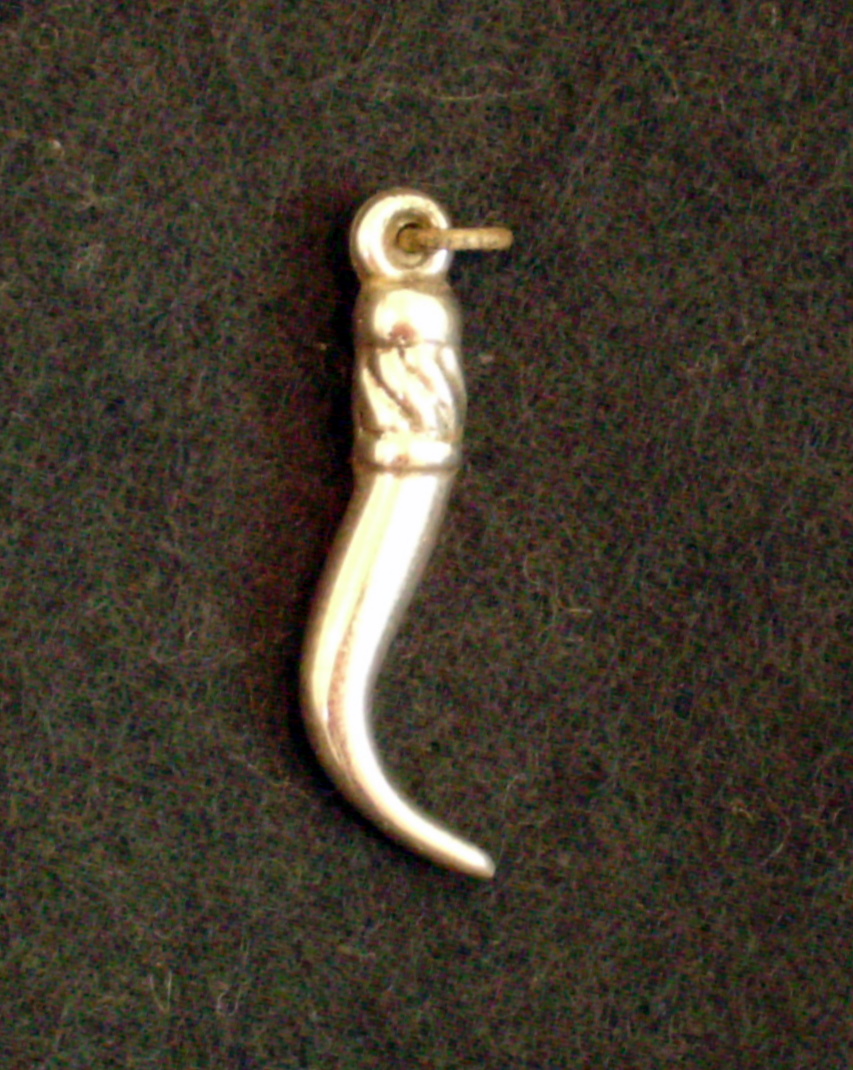 🇮🇹 ItalyCornicello
A twisted horn charm worn in Italy to ward off the evil eye and invite luck.Charm · Protection · Luck and prosperity Living
🇮🇹 ItalyCornicello
A twisted horn charm worn in Italy to ward off the evil eye and invite luck.Charm · Protection · Luck and prosperity Living