
Dodona
In its own language: Δωδώνη
The oldest Greek oracle, where wind in oak leaves revealed the will of Zeus and Dione
Dodona was an ancient sanctuary in Epirus, Greece, renowned as the oldest Hellenic oracle. It served as a site for divination through natural signs, primarily associated with Zeus and the goddess Dione.
- Dodona was the oldest Hellenic oracle, active from the Mycenaean era.
- Divination used rustling oak leaves and clattering bronze objects.
- Zeus and Dione were the primary deities worshipped at the site.
- Over 4,200 lead tablets with questions have been found at Dodona.
- The oracle was closed by Emperor Theodosius in 391–392 CE.
What it is
Dodona stands as the most ancient oracle within the Hellenic world, located in the remote region of Epirus in northwestern Greece. Unlike other major sites, it operated independently of the central city-states. The sanctuary was dedicated to Zeus, who received inquiries from across the Greek world. A secondary deity, Dione, also held prominence here, often appearing alongside Zeus on inscriptions. The site functioned as a center for receiving divine guidance, distinct from the more famous Apollo shrine at Delphi, though it shared similar prestige among ancient seekers.
Where it comes from
Archaeological evidence suggests activity at Dodona dates back to the Mycenaean period, around the 14th and 13th centuries BCE. Early offerings included bronze objects and pottery shards. Homer references the site in the Iliad, describing Zeus as the lord of Dodona. Herodotus recorded a myth that two priestesses were taken from Egypt by Phoenicians, one to Libya and one to Dodona, establishing the oracles there. He also noted a legend of black doves flying from Thebes to settle on an oak tree, declaring the spot sacred. These stories reflect early traditions linking the site to deep antiquity and possibly foreign origins.
How it is done
Divination at Dodona relied on interpreting natural sounds. In the sacred grove, priests and priestesses listened to the rustling of oak or beech leaves. Another interpretation suggests bronze shields or vessels hanging from branches clattered in the wind, creating audible signals. The Selloi, early priests, slept on the ground with unwashed feet to receive these signs. Later, written questions were inscribed on thin lead tablets. These tablets were folded and deposited in the sanctuary, seeking answers regarding personal conduct, war, or colonization.
Tools and materials
The primary tool was the sacred oak tree, whose leaves and branches conveyed messages. Bronze objects, such as shields or cauldrons, hung from the trees to catch the wind and produce sound. Lead tablets served as the medium for written queries. Over 4,200 such tablets have been recovered, containing questions in Greek. The site also featured temples, altars, and a bouleuterion for gatherings. Pilgrims brought votive offerings, including tripods and statues, to honor the deities.
Dodona, drawn and placed
- Living
- Revived
- Fading
- Historical
- Legendary
- Performed
- Lineage
- Ancient Greek religion
What it is for
Seekers consulted Dodona to foresee future events and gain guidance on difficult decisions. Questions ranged from whether to return home safely to military strategies and political alliances. The oracle addressed individuals from various regions, including northern tribes and southern Greek cities. It served as a religious center for the Thesprotians and later the Molossians. The site attracted pilgrims who sought clarity on personal and communal matters through the interpreted signs of the gods.
Who does it
Early practice involved the Selloi, male priests who slept on the earth to interpret omens. Later, priestesses, known as pelaiades or doves, played a significant role. Strabo mentions three old women designated as prophets. The sanctuary was managed by local communities, first the Thesprotians and then the Molossians. Kings like Pyrrhus of Epirus contributed to its upkeep and prestige. Scholars and archaeologists now study the site, analyzing artifacts and inscriptions to understand its history.
Peoples and places
Dodona served the Ancient Greeks, particularly those in Epirus and surrounding areas. The Thesprotians controlled the site initially, followed by the Molossians. Inscriptions reveal visitors from across the Greek world, including colonies. Non-Greek names appear rarely, mostly from Thracian and Illyrian groups. The site maintained strong ties with southern Greek cities during the Archaic period. It remained important until the rise of Christianity, which eventually led to its closure.
At a glance: who, where and when
Belief worlds


What people believe
The worldview centered on Zeus Naios, god of the spring, and Zeus Bouleus, the counselor. Dione was regarded as a mother figure, possibly linked to Rhea or Gaia. The oracle believed that natural phenomena carried divine intent. Wind moving through trees or striking bronze was not random but a message from the gods. The site’s isolation allowed it to preserve older traditions. The connection between the dove legend and the priestesses suggests a belief in female spiritual authority. Zeus was seen as accessible yet distant, residing in a wintry, remote place.
When it is done
Consultations occurred throughout the year, driven by individual needs rather than fixed festivals. However, King Pyrrhus established athletic games, musical contests, and dramas at the site. These events likely drew larger crowds and reinforced the sanctuary’s status. The oracle remained active until the late Roman era. Emperor Theodosius closed pagan temples in 391–392 CE, ending the official practice. The sacred oak was cut down during this suppression.
How scholars and sceptics see it
Herodotus analyzed the Egyptian origin story, suggesting the priestesses’ strange speech sounded like bird calls to locals. Modern archaeologists have excavated the site for over a century, finding Mycenaean artifacts. Inscriptions provide data on personal names and queries. Scholars note the shift from male to female priesthood. The site’s significance is compared to Delphi, though it retained unique features. Researchers examine the role of Dione and the evolution of Zeus worship. The archaeological record confirms continuous use from the Bronze Age to Late Antiquity.
Cautions and what is closed
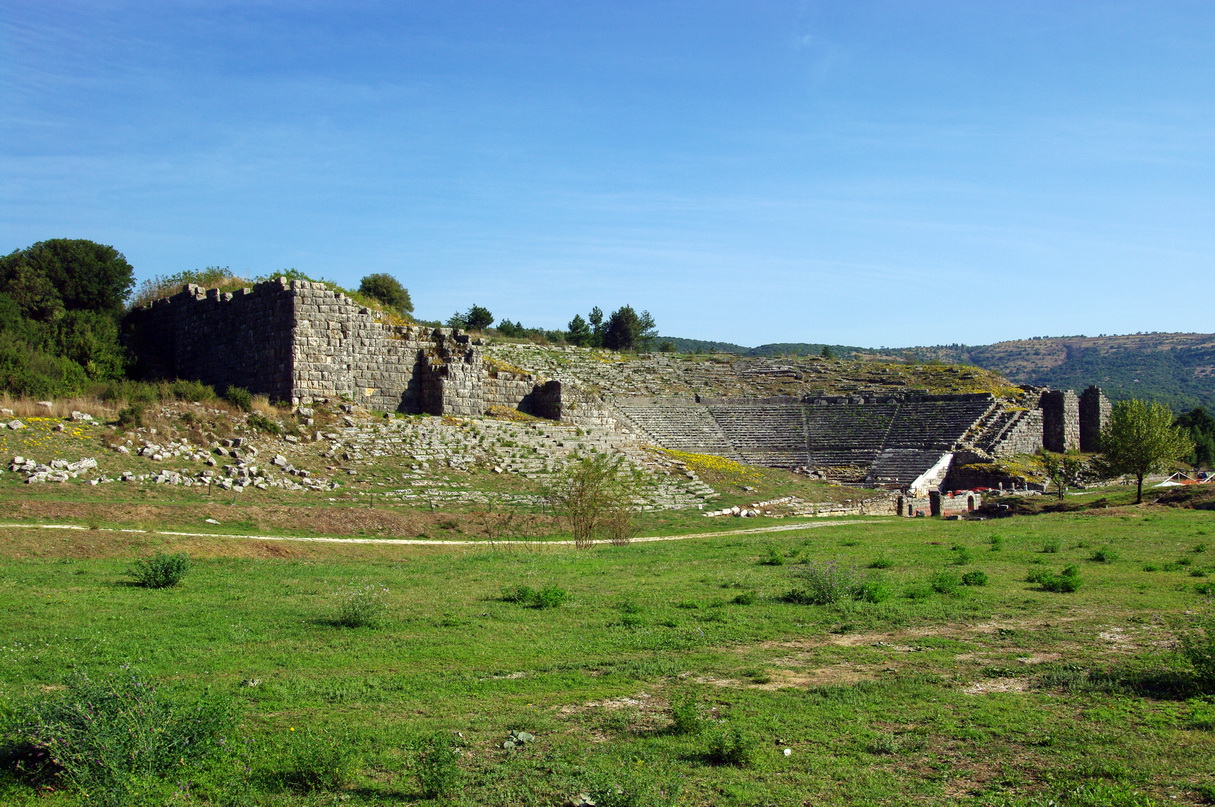
The oracle was closed by imperial decree, marking the end of pagan practices. The site is now a ruin open to the public. Visitors should respect the historical nature of the location. The closure reflects broader religious changes in the Roman Empire.
Compare and confuse
Dodona is often compared to the Oracle of Delphi, the other major Greek divination site. While Delphi focused on Apollo, Dodona centered on Zeus and Dione. The methods differed, with Dodona using natural sounds and lead tablets. Other oracles existed in the ancient world, but Dodona’s age and remote location set it apart. The name Dodona appears in various Greek dialects, reflecting its widespread recognition.
Questions people ask about Dodona
What made Dodona different from other Greek oracles?
Dodona was the oldest Hellenic oracle, located in remote Epirus. It focused on Zeus and Dione rather than Apollo. Divination relied on natural sounds like wind in oak trees and bronze objects, unlike the Pythia’s trance at Delphi.
Who were the priests at Dodona?
Early priests were called Selloi, who slept on the ground. Later, female priestesses known as pelaiades or doves became prominent. They interpreted the signs from the sacred oak and bronze items.
How did people ask questions at Dodona?
Pilgrims wrote questions on thin lead tablets. These were folded and deposited in the sanctuary. Priests interpreted natural signs like leaf rustling or bronze clatter to provide answers.
Why is Dodona associated with Egypt in myths?
Herodotus recorded a story that two priestesses from Egypt founded the oracles at Dodona and Siwa. He suggested this explained the priestesses’ foreign-sounding speech as bird-like cries.
When did Dodona stop functioning as an oracle?
The oracle ceased operations in 391–392 CE when Emperor Theodosius banned pagan activities. The sacred oak was cut down, and temples were closed, ending the ancient tradition.
Good reading and sources
- Dodona on WikipediaEncyclopedia
- More photos on Wikimedia CommonsPhotos and video
- Wikidata recordOpen data
The facts on this page come from the Wikipedia article "Dodona", written by its contributors and used under the CC BY-SA 4.0 licence, and from its Wikidata record (CC0). EveryJaadu rewrote the text in its own words, with AI assistance, and compares every page with the article to make sure no passage is copied. It may be reused under the same CC BY-SA 4.0 licence with a link back.
It may contain mistakes. Names and customs differ from one community to the next, and some knowledge is closed to outsiders and left out here. This page describes belief and practice. It does not say that any of it works, it is not a how-to, and it is not medical advice. If something is wrong, tell us. Last refreshed 2026-10-06.
More from Greece
All the entries from Greece 🇬🇷 Greece and 2 moreAstragalomancy
Divination by casting marked bones, carved rods, or numbered diceOracle · Seeing and foretelling · Speaking with spirits and the dead Living
🇬🇷 Greece and 2 moreAstragalomancy
Divination by casting marked bones, carved rods, or numbered diceOracle · Seeing and foretelling · Speaking with spirits and the dead Living
 🇬🇷 Greece and 5 moreSpodomancy
Divination by reading omens in ashes, soot, and cindersOracle · Seeing and foretelling · Healing Living
🇬🇷 Greece and 5 moreSpodomancy
Divination by reading omens in ashes, soot, and cindersOracle · Seeing and foretelling · Healing Living
 🇬🇷 GreeceCoscinomancy
A divination method using a sieve and shears to reveal guilt or answer questions.Oracle · Seeing and foretelling Historical
🇬🇷 GreeceCoscinomancy
A divination method using a sieve and shears to reveal guilt or answer questions.Oracle · Seeing and foretelling Historical
 🇬🇷 Greece and 1 moreHydromancy
Divination using water to reveal the future or judge legitimacy.Oracle · Seeing and foretelling · Luck and prosperity Historical
🇬🇷 Greece and 1 moreHydromancy
Divination using water to reveal the future or judge legitimacy.Oracle · Seeing and foretelling · Luck and prosperity Historical
Related elsewhere
All oracle 🇮🇳 India and 5 moreAstrology
A divinatory practice that reads human fate through the positions of celestial bodies.Belief · Seeing and foretelling · Luck and prosperity Living
🇮🇳 India and 5 moreAstrology
A divinatory practice that reads human fate through the positions of celestial bodies.Belief · Seeing and foretelling · Luck and prosperity Living
 🇮🇳 India and 2 morePalmistry
A divination method that interprets the lines and shapes of the hand to predict fate or reveal character.Oracle · Seeing and foretelling · Power and authority Living
🇮🇳 India and 2 morePalmistry
A divination method that interprets the lines and shapes of the hand to predict fate or reveal character.Oracle · Seeing and foretelling · Power and authority Living
 🇮🇩 Indonesia and 2 moreDukun
A traditional healer and spirit medium in Indonesian folk practiceTradition · Healing · Seeing and foretelling Living
🇮🇩 Indonesia and 2 moreDukun
A traditional healer and spirit medium in Indonesian folk practiceTradition · Healing · Seeing and foretelling Living
 🇬🇹 Guatemala and 1 moreMaya mythology
The reconstructed tales of the Maya people about gods, heroes, and the creation of the world.Tradition · Seeing and foretelling · Power and authority Historical
🇬🇹 Guatemala and 1 moreMaya mythology
The reconstructed tales of the Maya people about gods, heroes, and the creation of the world.Tradition · Seeing and foretelling · Power and authority Historical