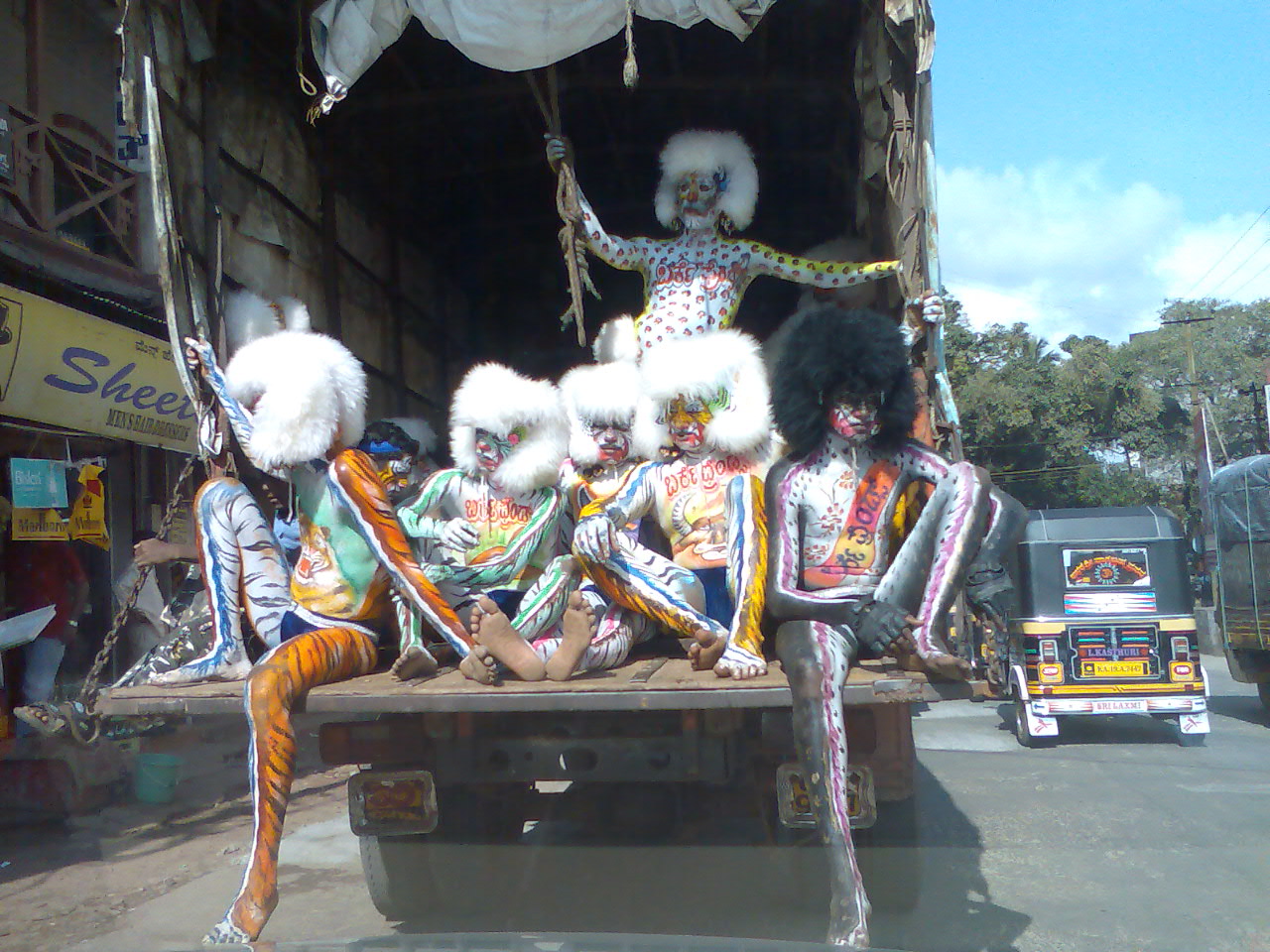
Pili Yesa
In its own language: ಪಿಲಿವೇಷ
from Tulu pili meaning tiger and yesa meaning costume or disguise
A coastal Karnataka folk dance where performers paint themselves as tigers to honour the Goddess Durga
Pili Yesa is a traditional dance form from the Tulu Nadu region of India. Young men dress and paint their bodies to resemble big cats, performing during religious festivals like Navratri to honor the goddess Durga.
- Performers paint their bodies to look like tigers or leopards
- Dances are performed during the Navratri festival in Karnataka
- Troupes collect money from spectators after each performance
- The dance honors the goddess Durga and her vehicle, the tiger
- Origins lie in religious vows made by devotees in Udupi district
What it is
Pili Yesa is a vibrant folk performance found in the coastal districts of Karnataka, India. It involves young men transforming into feline figures through elaborate body painting and costumes. The dancers mimic the movements of tigers, leopards, or cheetahs. This art form is deeply rooted in the cultural identity of the Tulu-speaking communities. Performers move through streets and visit homes to showcase their skills. The act is considered a tribute to the divine feminine energy represented by the goddess Durga. The visual spectacle combines physical endurance with artistic expression.
Where it comes from
The practice likely began as a religious vow undertaken by devotees. Over time, it evolved into a public performance during major festivals. Historical records point to origins in the Udupi district. The dance was initially performed at temples during Krishna Janmashtami and Ganesha Chaturthi. As the tradition spread, it became a central feature of the Mangalore Dasara festival. Local temples such as Mangaladevi and Gokarnanatheshwara now organize processions featuring these troupes. The shift from private vow to public display marks its current living status.
Tools and materials
The primary tools are paints applied directly to the skin. These paints create designs resembling wild cat markings. Performers wear minimal clothing, usually just patterned shorts. Masks made of artificial fur cover the head. Some ensembles include a tail attached to the costume. Musical instruments provide the rhythm for the dance. Drums are played by two or three musicians in the troupe. The paint remains on the body for several days. Performers often retouch the designs as needed throughout the festival period.
Pili Yesa, drawn and placed
- Living
- Revived
- Fading
- Historical
- Legendary
- Performed
- Lineage
- Tulu Nadu folk tradition
- Timing
- during Navratri and other Hindu festivals
What it is for
The dance serves to honor the goddess Durga, whose vehicle is the tiger. It is believed to bring blessings and protection to the households visited. Performers traditionally view the act as fulfilling a religious promise. The physical hardship endured during the process is seen as a sign of devotion. Communities support the troupes by offering money after the show. This financial support helps sustain the artists during the holiday season. The performance reinforces social bonds within the local community.
Who does it
Young males are the primary participants in this tradition. They must possess significant physical stamina to endure the long hours. Training involves learning specific tiger-like dance steps. Many performers come from families with a history in the art. The role requires discipline to manage the physical strain of the paint and acrobatics. Group dynamics are managed by a leader who coordinates the route and schedule. The status of a performer is respected within the village or town context.
Peoples and places
This tradition is specific to the Tulu Nadu region of Karnataka. It is practiced by communities speaking the Tulu language. Cities like Mangalore, Udupi, Moodabidri, and Kundapur host active troupes. The style varies slightly between different towns. Costumes in Mangalore differ from those in Udupi. Despite these variations, the core elements remain consistent. The practice has gained recognition beyond its immediate locality through media appearances.
At a glance: who, where and when
Who does it
Peoples
Belief worlds
Occasions


What people believe
The performance is tied to Hindu devotional practices. It reflects the reverence for animal forms associated with deities. The tiger represents power and ferocity linked to the goddess. Enduring pain from the paint is viewed as a spiritual test. The act is not merely entertainment but a form of worship. Participants believe they channel the spirit of the beast. This connection transforms the dancer into a sacred figure during the ritual period.
When it is done
The main season for Pili Yesa is Navratri. This nine-night festival celebrates the victory of good over evil. Troupes perform daily until the final day of the celebration. Other occasions include Krishna Janmashtami and Ganesha Chaturthi. These festivals provide opportunities for the dancers to showcase their skills. The timing aligns with the agricultural and religious calendar of the region.
How scholars and sceptics see it
Researchers note the unique blend of physical endurance and artistic skill. Anthropologists study the role of the dance in community cohesion. Historians trace its evolution from private vows to public spectacles. The practice offers insights into regional folk traditions. Scholars also examine the economic aspects of the performances. The interaction between performers and spectators highlights social structures. Media coverage has brought academic interest to this coastal art form.
Cautions and what is closed
The body paint used can cause irritation or burning sensations on the skin. Performers accept this discomfort as part of the dedication. There are no reported serious health risks beyond minor skin reactions. The physical demands require good fitness levels. Injuries from acrobatic moves are possible but rare. The tradition respects the boundaries of religious observance. Outsiders are generally welcome to watch but not participate without invitation.
Compare and confuse
Pili Yesa shares similarities with Puli Kali from Kerala. Both involve performers dressing as tigers. However, Puli Kali is often performed during Onam. Pili Yesa is distinct in its association with Navratri. The Tulu Nadu version emphasizes acrobatic feats more heavily. The musical accompaniment also differs between the two traditions. Each form reflects the specific cultural nuances of its region.
Law and persecution
There are no specific laws regulating this folk art. It is recognized as an important part of local heritage. Government bodies sometimes support festivals where the dance is featured. The practice operates within the framework of public gathering permissions. No restrictions exist on the use of body paint or costumes. The tradition thrives under the protection of cultural preservation efforts.
Today
The dance continues to be a popular attraction during festivals. Modern media has helped spread awareness of the tradition. Movies have featured scenes depicting the tiger dance. This exposure has increased participation among younger generations. Troupes still rely on donations from the public for sustenance. The art form adapts to contemporary contexts while maintaining its roots. It remains a vital expression of Tulu cultural identity.
Questions people ask about Pili Yesa
What does Pili Yesa mean?
The name comes from the Tulu words for tiger and costume. It refers to the practice of dressing up as a big cat. This transformation is central to the performance's identity.
Where is this dance performed?
It is primarily found in the coastal regions of Karnataka, India. Towns like Mangalore and Udupi are known for their active troupes. The dance is a key part of local cultural festivals.
Why do performers use body paint?
The paint helps create the illusion of tiger stripes. It is part of the traditional costume required for the role. The application is a ritualistic step in preparing for the performance.
Is it dangerous for the performers?
The paint can cause skin irritation or burning. Performers endure this as a sign of devotion. The physical demands are high, requiring good stamina.
How do performers earn money?
They receive donations from people who watch the show. Spectators often give money after the ten-minute performance. This support helps sustain the troupes during the festival season.
Good reading and sources
- Pili Yesa on WikipediaEncyclopedia
- More photos on Wikimedia CommonsPhotos and video
- Wikidata recordOpen data
The facts on this page come from the Wikipedia article "Pili Yesa", written by its contributors and used under the CC BY-SA 4.0 licence, and from its Wikidata record (CC0). EveryJaadu rewrote the text in its own words, with AI assistance, and compares every page with the article to make sure no passage is copied. It may be reused under the same CC BY-SA 4.0 licence with a link back.
It may contain mistakes. Names and customs differ from one community to the next, and some knowledge is closed to outsiders and left out here. This page describes belief and practice. It does not say that any of it works, it is not a how-to, and it is not medical advice. If something is wrong, tell us. Last refreshed 2026-10-05.
More from India
All the entries from India 🇮🇳 India and 1 moreGarba
A Gujarati circle dance performed around a central symbol during NavaratriIllusion · Power and authority · Luck and prosperity Living
🇮🇳 India and 1 moreGarba
A Gujarati circle dance performed around a central symbol during NavaratriIllusion · Power and authority · Luck and prosperity Living
 🇮🇳 IndiaIndian rope trick
A legendary stage illusion involving a levitating rope and a disappearing boy assistantIllusion · Wonder and entertainment Historical
🇮🇳 IndiaIndian rope trick
A legendary stage illusion involving a levitating rope and a disappearing boy assistantIllusion · Wonder and entertainment Historical
 🇮🇳 India and 1 moreFire eating
A performance art of extinguishing flames in the mouthIllusion · Wonder and entertainment Performed
🇮🇳 India and 1 moreFire eating
A performance art of extinguishing flames in the mouthIllusion · Wonder and entertainment Performed
 🇮🇳 India and 2 morePalmistry
A divination method that interprets the lines and shapes of the hand to predict fate or reveal character.Oracle · Seeing and foretelling · Power and authority Living
🇮🇳 India and 2 morePalmistry
A divination method that interprets the lines and shapes of the hand to predict fate or reveal character.Oracle · Seeing and foretelling · Power and authority Living
Related elsewhere
All illusion 🇨🇳 China and 3 moreChinese dragon龍
A legendary water deity and imperial symbol in East Asian cultureBeing · Protection · Luck and prosperity Historical
🇨🇳 China and 3 moreChinese dragon龍
A legendary water deity and imperial symbol in East Asian cultureBeing · Protection · Luck and prosperity Historical
 🇪🇬 Egypt and 2 moreIsisꜣst (Egyptian)
Egyptian goddess of magic, mourning and kingship, mother of HorusBeing · Protection · Healing Historical
🇪🇬 Egypt and 2 moreIsisꜣst (Egyptian)
Egyptian goddess of magic, mourning and kingship, mother of HorusBeing · Protection · Healing Historical
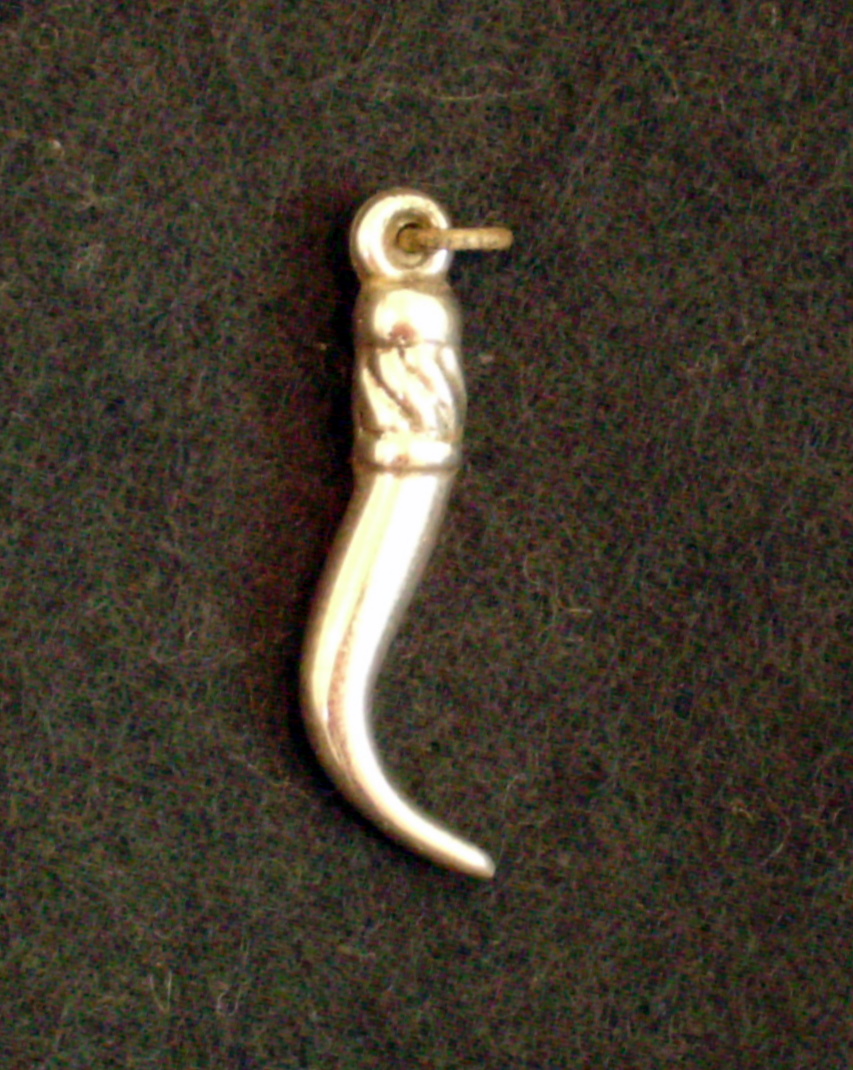 🇮🇹 ItalyCornicello
A twisted horn charm worn in Italy to ward off the evil eye and invite luck.Charm · Protection · Luck and prosperity Living
🇮🇹 ItalyCornicello
A twisted horn charm worn in Italy to ward off the evil eye and invite luck.Charm · Protection · Luck and prosperity Living
 🇪🇬 Egypt and 4 moreAnimal sacrifice
The ritual killing of livestock or wild animals as an offering to deitiesRite · Speaking with spirits and the dead · Power and authority Historical
🇪🇬 Egypt and 4 moreAnimal sacrifice
The ritual killing of livestock or wild animals as an offering to deitiesRite · Speaking with spirits and the dead · Power and authority Historical