
Shugendō
In its own language: 修験道
from the Japanese words for trial and practice, referring to the path of spiritual discipline
A Japanese mountain ascetic path blending Esoteric Buddhism, Shinto, and folk rituals
Shugendō is a syncretic religious tradition from Japan that combines Esoteric Buddhist doctrines with Shinto mountain worship and local folk beliefs. Practitioners, known as Yamabushi or Shugenja, undertake rigorous physical and spiritual trials in sacred mountains to cultivate compassion and supernatural powers.
- En no Gyōja is the patriarch of Shugendō
- Practitioners are called Yamabushi or Shugenja
- Mount Ōmine is a central sacred site
- Zaō Gongen is a key deity in the tradition
- Banned in 1872, revived after WWII
What it is
Shugendō is a Japanese religious system centered on mountain asceticism. It blends Esoteric Buddhist teachings with indigenous Shinto nature worship and older folk traditions. The goal is to achieve spiritual power and compassion through physical endurance and ritual. Practitioners are called Shugenja or Yamabushi, meaning 'mountain prostrators.' They believe that by enduring hardship in sacred peaks, they can alleviate suffering for themselves and others. The tradition is not a single unified church but a collection of lineages and practices shared across different temples and mountain ranges.
Where it comes from
The tradition began evolving in the seventh century. En no Gyōja, a mystic and ascetic, is considered its founding patriarch. He practiced early forms of these mountain disciplines. By the ninth century, elements of Shingon and Tendai Buddhism were integrated into the existing folk and Shinto practices. This created a unique syncretic system. The Tokugawa government later regulated these groups in 1613, forcing them into two main branches. In 1872, the Meiji government banned the practice because it mixed Buddhism and Shinto. After World War II, religious freedom laws allowed the tradition to revive and reorganize.
How it is done
Core practices involve entering the mountains for retreats called nyūbu shugyō. Ascetics perform ceremonies, make offerings, and recite sutras while viewing the mountain as a living mandala. They engage in austerities to receive esoteric knowledge. Advanced practitioners may undergo winter retreats to gain special spiritual abilities. Rituals often focus on Fudō Myōō, a central deity. Initiations based on Buddhist abhiseka are common. Some groups use terms like kanjō to denote completion of training, while others use them for certification as mountain guides. The physical journey itself is a key part of the spiritual work.
Tools and materials
Sacred mountains serve as the primary tools and settings. Specific sites include Mount Ōmine, Kumano Sanzan, and Mount Ishizuchi. Practitioners use ritual objects such as metal canes and swords, which have been found at high altitudes like Mount Tsurugi. These items date back to the Nara period. Sutras are read or buried during ceremonies. Fire ceremonies, known as sokusai goma, are used to avert misfortune. The landscape itself, including caves and springs, is treated as a manifestation of divine power.
Shugendō, drawn and placed
- Living
- Revived
- Fading
- Historical
- Legendary
- Performed
- Lineage
- Esoteric Buddhism and Shinbutsu-shūgō (syncretism of Buddhism and Shinto)
- Timing
- during mountain retreats, initiations, and specific festivals
What it is for
Practitioners seek Siddhi, or supernatural powers, to help all beings. The aim is to cultivate great compassion and reduce suffering. Worship of Zaō Gongen, a deity believed to save people in troubled times, is central. En no Gyōja prayed for a Buddha capable of saving obstinate beings, leading to the revelation of Kongō Zaō Dai-Gongen. The practice is also for personal transformation and receiving esoteric teachings. Laypeople participate in pilgrimages to support the ascetics and gain merit.
Who does it
Shugenja are the trained ascetics who live and practice in the mountains. They are supported by lay confraternities and institutional networks. Training varies by lineage, with some requiring extensive study and others focusing on physical ascent. The tradition includes both ordained priests and lay practitioners. Institutions like Kinpusen-ji and Sanbō-in oversee education and transmission of teachings.
Peoples and places
The tradition is native to Japan and is practiced primarily by Japanese communities. It has historical ties to the nobility of Kyoto during the Heian period, who visited sacred sites like Kumano. Different regions have distinct lineages, such as the Honzan-ha aligned with Tendai Buddhism and the Tōzan-ha aligned with Shingon. Mount Hiko in Kyushu represents a decentralized center with diverse streams. The practice spans multiple mountain ranges, connecting communities across the country through shared pilgrimage routes.
At a glance: who, where and when
Who does it
Peoples


What people believe
Shugendō believes mountains are sacred realms where deities reside and the spiritual world intersects with the ordinary. The doctrine of Honji Suijaku explains that Buddhist figures appear as local kami to guide people. Zaō Gongen is a key figure, representing the union of Buddhist and Shinto deities. En no Gyōja’s visions of deities transforming into fierce forms reflect the belief that gentle manifestations are insufficient for saving beings in a violent age. The universe is seen as a mandala, and the mountain is its center.
When it is done
Practices occur during mountain retreats, which can last for days or weeks. Winter retreats are considered the most advanced and confer special powers. Pilgrimages to sites like Kumano Sanzan were popular among nobles in the Heian period. Festivals and initiation rites mark progress in the tradition. The timing is often tied to the seasons and the specific requirements of the ascetic path, rather than a fixed calendar of holidays.
How scholars and sceptics see it
Scholars note that Shugendō evolved from an amalgamation of beliefs, philosophies, and rituals. There is debate about whether local mountain traditions from the Kamakura period should be fully attributed to Shugendō. Researchers highlight the tension between institutional lineages and independent practice groups. The regulation by the Tokugawa and Meiji governments significantly shaped the modern structure of the tradition. Anthropologists view the practice as a complex interaction between state religion, local folklore, and individual spiritual pursuit.
Cautions and what is closed
The practice involves physical risks due to mountain asceticism. Historical records show that ascetics climbed peaks like Mount Tsurugi over a thousand years ago, facing harsh conditions. The Meiji government’s ban caused significant disruption to the tradition. Modern practitioners must navigate legal and social changes since the revival after World War II. The closed nature of some initiations means that full knowledge is restricted to insiders. Outsiders are generally not privy to the most secret aspects of the rituals.
Compare and confuse
Shugendō is often compared to other syncretic traditions that blend Buddhism and Shinto. It shares similarities with general Japanese folk religion but is distinct in its focus on mountain asceticism. The term Yamabushi is sometimes used interchangeably with Shugenja, though it specifically refers to the mountain prostrators. Other traditions may use similar tools or vocabulary, but Shugendō’s specific lineage structures and deity worship, particularly of Zaō Gongen, set it apart.
Law and persecution
The Tokugawa authorities issued the Shugendo Hatto in 1613 to regulate the tradition. The Meiji government officially forbade Shugendō in 1872 due to its syncretic nature. The post-World War II religious freedoms act allowed lineages to become independent again. Today, many sites associated with Shugendō, such as the Ōmine mountain range, are designated as UNESCO World Heritage Sites. This legal protection helps preserve the cultural and religious significance of the practice.
Today
Shugendō continues to be practiced in Japan, with various lineages maintaining their traditions. The Ōmine mountain range remains a major center for ascetic practice. Tourism and pilgrimage have increased, bringing more attention to the sacred sites. The tradition has adapted to modern legal frameworks while preserving its core rituals. Scholars and practitioners work to document and sustain the diverse lineages that survived the Meiji ban. The revival has led to a renewed interest in the history and philosophy of Shugendō.
Questions people ask about Shugendō
What is Shugendō?
Shugendō is a Japanese religious tradition combining Esoteric Buddhism, Shinto, and folk beliefs. It focuses on mountain asceticism and spiritual discipline to cultivate compassion and power.
Who are the practitioners?
Practitioners are known as Shugenja or Yamabushi. They are ascetics who undergo rigorous training in sacred mountains to achieve spiritual goals and help others.
Where is it practiced?
It is practiced throughout Japan, especially in sacred mountain ranges like Ōmine, Kumano, and Ishizuchi. These sites are considered intersections of the spiritual and physical worlds.
What is the role of Zaō Gongen?
Zaō Gongen is a prominent deity in Shugendō, believed to save beings in troubled times. En no Gyōja received teachings from this figure after intense prayer and austerity.
How did the government affect Shugendō?
The Tokugawa government regulated it in 1613. The Meiji government banned it in 1872 for mixing religions. It was revived after World War II when religious freedom was restored.
Good reading and sources
- Shugendō on WikipediaEncyclopedia
- More photos on Wikimedia CommonsPhotos and video
- Wikidata recordOpen data
The facts on this page come from the Wikipedia article "Shugendō", written by its contributors and used under the CC BY-SA 4.0 licence, and from its Wikidata record (CC0). EveryJaadu rewrote the text in its own words, with AI assistance, and compares every page with the article to make sure no passage is copied. It may be reused under the same CC BY-SA 4.0 licence with a link back.
It may contain mistakes. Names and customs differ from one community to the next, and some knowledge is closed to outsiders and left out here. This page describes belief and practice. It does not say that any of it works, it is not a how-to, and it is not medical advice. If something is wrong, tell us. Last refreshed 2026-10-06.
More from Japan
All the entries from Japan 🇨🇳 China and 5 moreGhost FestivalZhongyuan Festival; Yulanpen Festival
A festival to feed wandering spirits and guide them home during the seventh lunar month.Tradition · Speaking with spirits and the dead · Protection Living
🇨🇳 China and 5 moreGhost FestivalZhongyuan Festival; Yulanpen Festival
A festival to feed wandering spirits and guide them home during the seventh lunar month.Tradition · Speaking with spirits and the dead · Protection Living
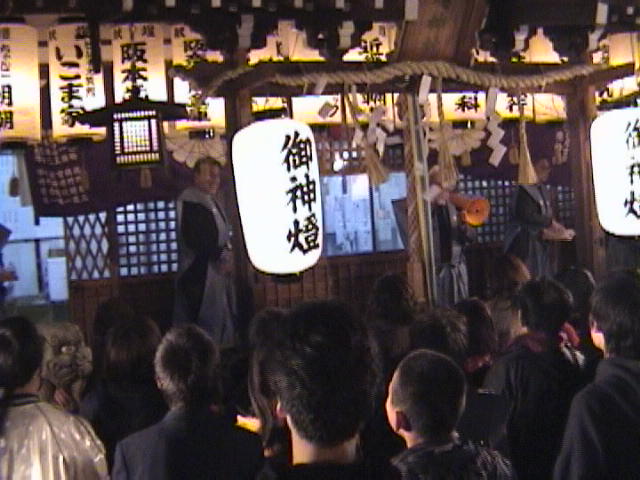 🇯🇵 JapanSetsubun節分
A Japanese seasonal rite to drive away bad luck and welcome spring with roasted beansRite · Protection · Luck and prosperity Living
🇯🇵 JapanSetsubun節分
A Japanese seasonal rite to drive away bad luck and welcome spring with roasted beansRite · Protection · Luck and prosperity Living
 🇯🇵 JapanOnmyōdō陰陽道
A Japanese system of divination and calendar science rooted in yin-yang philosophyTradition · Seeing and foretelling · Protection Revived
🇯🇵 JapanOnmyōdō陰陽道
A Japanese system of divination and calendar science rooted in yin-yang philosophyTradition · Seeing and foretelling · Protection Revived
 🇯🇵 JapanShinto shrine神社 (jinja)
A structure housing kami deities within the Shinto tradition of JapanTradition · Protection · Speaking with spirits and the dead Living
🇯🇵 JapanShinto shrine神社 (jinja)
A structure housing kami deities within the Shinto tradition of JapanTradition · Protection · Speaking with spirits and the dead Living
Related elsewhere
All tradition 🇪🇬 Egypt and 5 moreSacred dance
Movement used in worship to honour deities, heal communities, or connect with the spirit world.Tradition · Protection · Healing Living
🇪🇬 Egypt and 5 moreSacred dance
Movement used in worship to honour deities, heal communities, or connect with the spirit world.Tradition · Protection · Healing Living
 🇮🇳 India and 5 moreSnake worship
Veneration of serpents as divine or ancestral beings across global culturesTradition · Protection · Healing Living
🇮🇳 India and 5 moreSnake worship
Veneration of serpents as divine or ancestral beings across global culturesTradition · Protection · Healing Living
 🇮🇶 Iraq and 5 moreGrimoire
A textbook containing instructions for spells, rituals, and the creation of magical objects.Text · Protection · Healing Historical
🇮🇶 Iraq and 5 moreGrimoire
A textbook containing instructions for spells, rituals, and the creation of magical objects.Text · Protection · Healing Historical
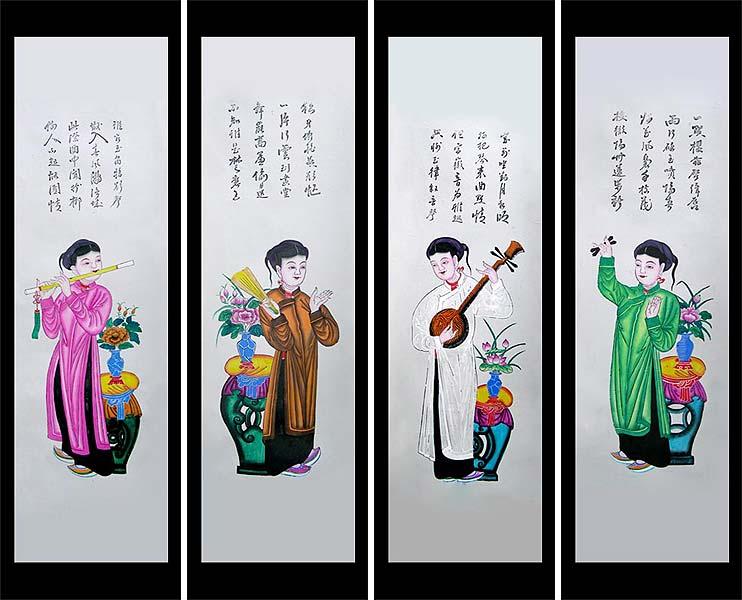 🇻🇳 Vietnam and 1 moreVietnamese folk religiontín ngưỡng dân gian Việt Nam
A collection of local spirit worship and ancestral veneration in VietnamTradition · Protection · Healing Living
🇻🇳 Vietnam and 1 moreVietnamese folk religiontín ngưỡng dân gian Việt Nam
A collection of local spirit worship and ancestral veneration in VietnamTradition · Protection · Healing Living