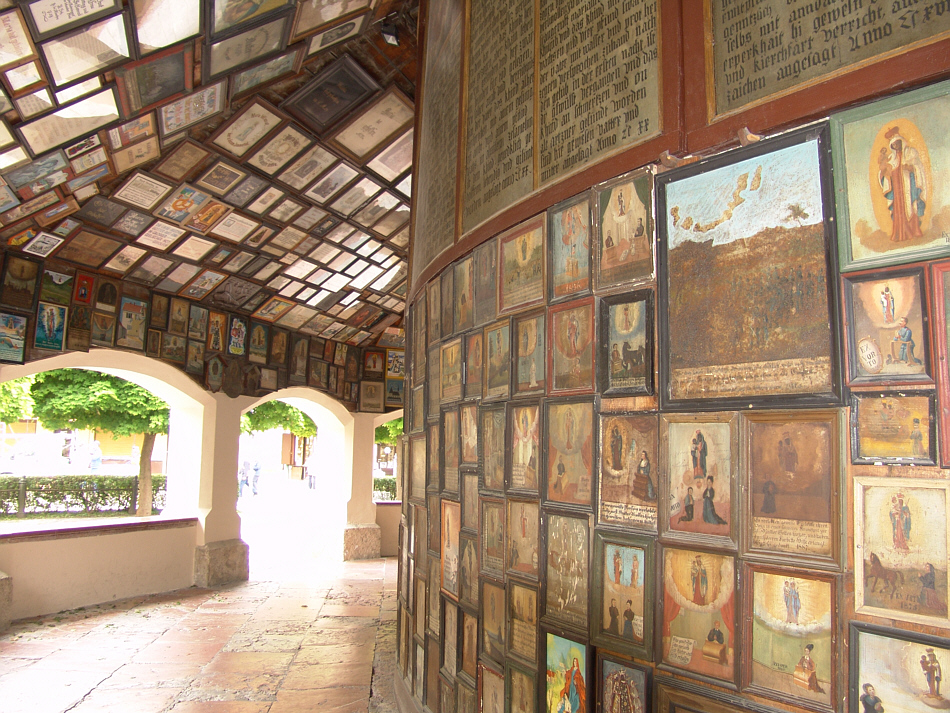
Votive offering
from Latin votum, meaning a vow or wish
Objects left in sacred places to honor a deity or fulfill a vow, never to be recovered.
A votive offering is an item deposited in a holy site without the hope of getting it back. People make these gifts to thank gods for help or to ask for future favor across many cultures and eras.
- Items are deposited without intention of recovery.
- Ancient Greeks filled Delphi with gold and sculptures.
- Curse tablets were hidden in sacred springs.
- Catholics leave silver body parts at shrines.
- Wetlands preserve offerings for thousands of years.
What it is
A votive offering is a physical object placed in a sacred space as a gift to a divine power. The giver does not intend to retrieve the item later. These deposits serve as permanent tokens of gratitude or petitions for aid. They appear in ancient ruins and modern churches alike. The act transforms a personal desire into a public spiritual record.
Where it comes from
The practice stretches back to the Neolithic period in Europe. Early offerings included polished stone axes buried in the ground. By the Bronze Age, people were casting valuable metal weapons and tools into bogs and rivers. Ancient Greeks and Romans filled temples with gold, sculptures, and money. The tradition evolved from simple animal sacrifices to complex human-made artifacts dedicated to specific deities.
How it is done
Offerings are typically broken, burned, or submerged to ensure they cannot be used again. Ships might be sunk in bogs, while weapons are cast into water sources. In temples, items are displayed on shelves or buried in pits. Curse tablets are rolled up and hidden in springs. Modern devotees leave candles, flowers, or small metal replicas of healed body parts at shrines.
Tools and materials
Materials vary by culture and era. Ancient Europeans offered bronze tripods, armor, and pottery. Greeks left inscribed stones and silver models. Catholics use wax figures, paintings, and military decorations. Orthodox Christians offer tamata, which are metal plaques shaped like prayer subjects. Buddhist pilgrims leave terracotta tablets with images of Buddhas.
Votive offering, drawn and placed
- Living
- Revived
- Fading
- Historical
- Legendary
- Performed
- Lineage
- ancient religious practice
- Timing
- after a wish is granted or during a vow
What it is for
People make these gifts to settle a vow made during a crisis or to thank a god after a problem is solved. Sailors donate model ships after surviving storms. Patients leave silver hands or eyes after healing. Some offerings are general gifts with no specific request attached. Others, like curse tablets, aim to invoke divine punishment on thieves or rivals.
Who does it
Any individual can make a votive offering. In ancient Sparta, wealthy elites often dedicated inscribed pottery. In modern times, ordinary households leave candles or coins. Religious specialists may oversee the deposition of large treasures in temples. The act is personal, though the location is communal and sacred.
Peoples and places
Greeks and Romans filled sanctuaries like Delphi with wealth. Mesoamerican cultures deposited items in cenotes. Indian Buddhists built stupas and left tablets. Mexican Catholics paint scenes of danger on tin plates. Swedish Lutherans continue post-Reformation traditions. The practice spans from ancient wetlands to contemporary church floors.
At a glance: who, where and when


What people believe
The underlying belief is that material gifts please supernatural forces. Depositing an item removes it from the human world, giving it permanently to the divine. Broken objects lose their utility, making them pure offerings. Water bodies are seen as portals to the underworld or divine realms. Gratitude is expected to maintain cosmic balance.
How scholars and sceptics see it
Archaeologists distinguish votive deposits from hoards based on intent. Hoards are saved for recovery; votives are discarded forever. Scholars study inscriptions on Spartan pottery to understand literacy rates. Historians analyze curse tablets to learn about Roman provincial law and social tensions. Anthropologists view the practice as a bridge between the personal and the sacred.
Cautions and what is closed
Many ancient offerings are threatened by modern development. Dredging, peat cutting, and drainage destroy wetland sites where items are preserved. Oxidation rapidly deteriorates metals exposed to air after centuries in anaerobic mud. Unauthorized digging by metal detectorists damages archaeological context. Sacred sites remain protected areas for ongoing religious practice.
Questions people ask about Votive offering
What is a votive offering?
It is an object left in a sacred place as a gift to a deity. The giver does not expect to get it back. It serves as a permanent token of faith, gratitude, or a fulfilled vow.
Where did this tradition start?
It dates back to the Neolithic period in Europe. Early people buried stone axes. Later cultures like the Greeks and Romans filled temples with metal, art, and money as gifts to their gods.
How are curse tablets different?
Curse tablets are specific votive deposits inscribed with wishes for misfortune upon others. They are usually rolled up and thrown into springs or buried to invoke divine justice against thieves or rivals.
Do people still make them today?
Yes. Catholics leave candles and silver body parts. Orthodox Christians offer metal plaques. Buddhists leave clay tablets. Modern practices mirror ancient customs of gratitude and petition.
Good reading and sources
- Votive offering on WikipediaEncyclopedia
- More photos on Wikimedia CommonsPhotos and video
- Wikidata recordOpen data
The facts on this page come from the Wikipedia article "Votive offering", written by its contributors and used under the CC BY-SA 4.0 licence, and from its Wikidata record (CC0). EveryJaadu rewrote the text in its own words, with AI assistance, and compares every page with the article to make sure no passage is copied. It may be reused under the same CC BY-SA 4.0 licence with a link back.
It may contain mistakes. Names and customs differ from one community to the next, and some knowledge is closed to outsiders and left out here. This page describes belief and practice. It does not say that any of it works, it is not a how-to, and it is not medical advice. If something is wrong, tell us. Last refreshed 2026-10-05.
More from Greece
All the entries from Greece 🇹🇷 Turkey and 5 moreEvil eye
A curse believed to be cast by a jealous glare and the charms used to stop itBelief · Protection Living
🇹🇷 Turkey and 5 moreEvil eye
A curse believed to be cast by a jealous glare and the charms used to stop itBelief · Protection Living
 🇬🇷 GreeceOrphismὈρφικά
A Greek mystery tradition based on the myth of Dionysus and the soul's journeyTradition Historical
🇬🇷 GreeceOrphismὈρφικά
A Greek mystery tradition based on the myth of Dionysus and the soul's journeyTradition Historical
 🇮🇪 Ireland and 5 moreCairn
A human-made stack of stones used as a marker, memorial, or religious symbol across many cultures.Tradition · Protection · Speaking with spirits and the dead Living
🇮🇪 Ireland and 5 moreCairn
A human-made stack of stones used as a marker, memorial, or religious symbol across many cultures.Tradition · Protection · Speaking with spirits and the dead Living
 🇬🇷 Greece and 5 moreBay Laurelδάφνη
An aromatic Mediterranean plant used in cooking and as a symbol of victory and purification.Substance · Protection · Cleansing and purification Living
🇬🇷 Greece and 5 moreBay Laurelδάφνη
An aromatic Mediterranean plant used in cooking and as a symbol of victory and purification.Substance · Protection · Cleansing and purification Living
Related elsewhere
All tradition 🇰🇷 South Korea and 3 moreKorean shamanism무속
A Korean folk religion centered on ritual specialists who mediate between humans and spiritsTradition · Protection · Healing Living
🇰🇷 South Korea and 3 moreKorean shamanism무속
A Korean folk religion centered on ritual specialists who mediate between humans and spiritsTradition · Protection · Healing Living
 🇹🇭 Thailand and 3 moreThai Buddha amuletsพระเครื่อง (phrakhrueang)
Sacred Buddhist images and relics worn for protection, merit, and fortune in Thailand.Charm · Protection · Luck and prosperity Living
🇹🇭 Thailand and 3 moreThai Buddha amuletsพระเครื่อง (phrakhrueang)
Sacred Buddhist images and relics worn for protection, merit, and fortune in Thailand.Charm · Protection · Luck and prosperity Living
 🇰🇷 South Korea and 1 moreKorean shamanismKorean shamanism (Korean: Korean shamanism)
A traditional practice of ritual specialists who mediate between the human and spirit worlds.Tradition · Healing · Protection Living
🇰🇷 South Korea and 1 moreKorean shamanismKorean shamanism (Korean: Korean shamanism)
A traditional practice of ritual specialists who mediate between the human and spirit worlds.Tradition · Healing · Protection Living
 🇵🇪 Peru and 5 morePachamama
The Andean mother goddess of space-time and the earthBeing · Protection · Healing Living
🇵🇪 Peru and 5 morePachamama
The Andean mother goddess of space-time and the earthBeing · Protection · Healing Living