
Pilgrimage
from Latin peregrinus, meaning traveler or foreigner
A journey to a sacred site for spiritual growth or religious duty
A pilgrimage is a travel ritual to a holy place, often undertaken on foot. Practitioners seek personal transformation, healing, or connection with the divine through this physical movement.
- Term comes from Latin peregrinus, meaning traveler from afar
- Sites include Lumbini, Bodh Gaya, and Jerusalem
- Christian pilgrimages date back to the fourth century
- Bahá'í pilgrimage occurs over nine days in Israel
- Scholars link walking pilgrimages to therapeutic benefits
What it is
A pilgrimage involves traveling to a location held as sacred by a specific faith community. This movement is often physical, requiring the pilgrim to walk or journey to a shrine, temple, or natural site. The act is believed to bring spiritual benefits, such as healing, purification, or a deeper connection with the divine. It serves as a marker of devotion and a means to seek moral or spiritual transformation away from daily routine.
Where it comes from
The practice predates Christianity, appearing in ancient Egypt, Persia, India, China, and Japan. Early Hebrew history records journeys to Shiloh and Jerusalem. Greek and Roman cultures visited oracles like Delphi. In Celtic Christianity, wandering ascetics known as white martyrs left home for unknown destinations. The term itself derives from the Latin word for a traveler from afar.
How it is done
Practitioners typically travel on foot to a designated holy site. The journey may involve visiting multiple locations, such as the four Buddhist sites tied to Gautama Buddha's life. Pilgrims often engage in rituals at shrines, touch relics, or participate in processions. The physical act of walking is central, creating a space for reflection and internal sacredness distinct from tourism.
Tools and materials
Pilgrimages rely on the destination rather than specific objects. Sites include temples, caves, mountains, and cities associated with founders or saints. Relics of holy figures are often venerated. The path itself, such as the Sacred Way in Greece or the Kumano Kodō in Japan, serves as a tool for spiritual progression.
Pilgrimage, drawn and placed
- Living
- Revived
- Fading
- Historical
- Legendary
- Performed
- Lineage
- Abrahamic and Dharmic traditions
- Timing
- lifetime or specific festivals
What it is for
People undertake these journeys for spiritual enlightenment, healing, or prosperity. Some seek answers to personal questions or wish to benefit deceased relatives. The Holy Land attracts Abrahamic believers to confirm their faith through physical contact with holy contexts. Others aim for inner peace or to fulfill a religious duty during their lifetime.
Who does it
Any adherent of the relevant religion can be a pilgrim. No special training is required, though some traditions involve organized groups or ministers. Historically, Christian pilgrims were encouraged by church fathers. In modern times, international Bible Students appointed ministers as pilgrims to visit congregations, a role later renamed traveling overseers.
Peoples and places
Hindus visit sacred rivers and mountains linked to gods. Buddhists travel to sites in India, Nepal, and Sri Lanka connected to the Buddha's life. Christians journey to Rome, Spain, and the Holy Land. Muslims perform the Hajj to Mecca. Bahá'ís visit sites in Israel, though historical sites in Iraq and Iran remain inaccessible to most.
At a glance: who, where and when
Who does it
Belief worlds
Occasions


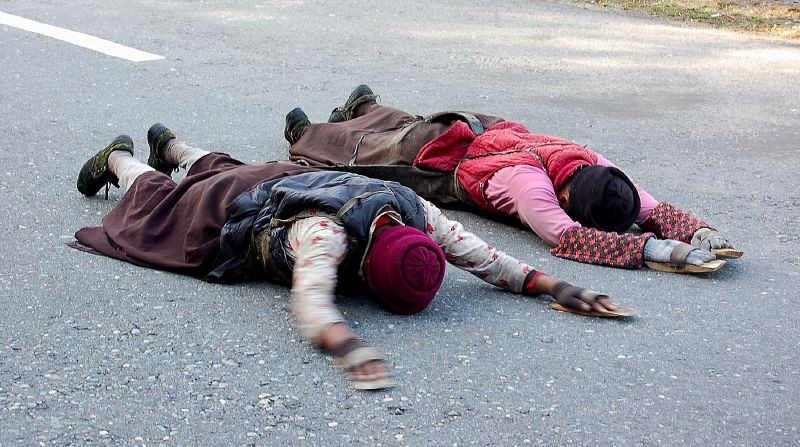
What people believe
Sacred places are viewed as having special spiritual powers or housing the divine. Believers hold that visiting these sites brings grace, conversion, and holiness. The journey mirrors an inner path from wretchedness to beatitude. Physical movement reflects spiritual awakening, and touching holy objects confirms belief in the context of collective excitement.
When it is done
Hindus are encouraged to pilgrimage during their lifetime, often within their local region. Jewish tradition includes three pilgrimage festivals: Passover, Tabernacles, and Shavuot. Christian pilgrimages occur year-round, with combined events every seven years in Europe. Bahá'í pilgrimage lasts nine days. Timing often aligns with religious duties or specific holy periods.
How scholars and sceptics see it
Researchers view pilgrimage as a common human experience with therapeutic benefits. Studies show biological, psychological, and social gains from walking pilgrimages. Wallace Clift proposed it as a Jungian archetype. Scholars note motivations range from spiritual transformation to pragmatic desires for welfare. Anthropologists study how infrastructure changes have shaped these travels since the nineteenth century.
Cautions and what is closed
Pilgrims risk becoming tourists if they focus only on art or history rather than faith. The journey requires leaving the security of home and clan, trusting in divine providence. Historical pilgrimages involved significant physical hardship. Modern travelers must navigate accessibility issues, as some holy sites in Iraq and Iran are closed to most believers.
Compare and confuse
Pilgrimage differs from tourism by its intent to encounter the divine rather than admire scenery. It shares similarities with shamanic journeys but involves established religious sites. The concept of tirtha yatra in Hinduism emphasizes crossing or fording, while Islamic hajj means procession. Both involve physical movement toward a spiritual goal.
Questions people ask about Pilgrimage
What is a pilgrimage?
It is a journey to a holy place, often on foot, undertaken for spiritual growth or religious duty. The traveler seeks transformation, healing, or connection with the divine through this physical movement away from daily life.
Where do people go on pilgrimage?
Locations vary by faith. Hindus visit sacred rivers and mountains. Buddhists travel to sites in India and Nepal. Christians journey to Rome and Spain. Muslims go to Mecca. Bahá'ís visit sites in Israel.
Why do people make pilgrimages?
Believers seek spiritual enlightenment, healing, or prosperity. Some wish to benefit deceased relatives. Others aim to confirm their faith by touching holy objects or fulfilling a religious duty during their lifetime.
Good reading and sources
- Encyclopaedia BritannicaArticle
- BBC NEWS | South AsiaBBC, Article
- Chavin (Archaeological Site)UNESCO, Heritage listing
- Pilgrimage on WikipediaEncyclopedia
- More photos on Wikimedia CommonsPhotos and video
- Wikidata recordOpen data
The facts on this page come from the Wikipedia article "Pilgrimage", written by its contributors and used under the CC BY-SA 4.0 licence, and from its Wikidata record (CC0). EveryJaadu rewrote the text in its own words, with AI assistance, and compares every page with the article to make sure no passage is copied. It may be reused under the same CC BY-SA 4.0 licence with a link back.
It may contain mistakes. Names and customs differ from one community to the next, and some knowledge is closed to outsiders and left out here. This page describes belief and practice. It does not say that any of it works, it is not a how-to, and it is not medical advice. If something is wrong, tell us. Last refreshed 2026-10-06.
More from India
All the entries from India 🇮🇳 IndiaChakraचक्र
Meditation points in the subtle body used in Hindu and Buddhist yogaTradition · Speaking with spirits and the dead · Change and initiation Living
🇮🇳 IndiaChakraचक्र
Meditation points in the subtle body used in Hindu and Buddhist yogaTradition · Speaking with spirits and the dead · Change and initiation Living
 🇮🇳 IndiaMahakaleshwar JyotirlingaMahākāleśvara
A sacred Shiva shrine in Ujjain, India, known for its south-facing idol and ancient origins.Tradition · Protection · Power and authority Living
🇮🇳 IndiaMahakaleshwar JyotirlingaMahākāleśvara
A sacred Shiva shrine in Ujjain, India, known for its south-facing idol and ancient origins.Tradition · Protection · Power and authority Living
 🇮🇳 India and 5 moreKolamகோலம்
A daily geometric floor drawing made with rice flour at the home entrance in South IndiaTradition · Protection · Luck and prosperity Living
🇮🇳 India and 5 moreKolamகோலம்
A daily geometric floor drawing made with rice flour at the home entrance in South IndiaTradition · Protection · Luck and prosperity Living
 🇮🇳 India and 5 moreHoliहोली
A Hindu spring festival marked by coloured powders and bonfires to celebrate love and virtue.Tradition · Love and attraction · Cursing and harm Living
🇮🇳 India and 5 moreHoliहोली
A Hindu spring festival marked by coloured powders and bonfires to celebrate love and virtue.Tradition · Love and attraction · Cursing and harm Living
Related elsewhere
All tradition 🇸🇳 Senegal and 1 moreSerer religionA ƭat Roog
The traditional faith of the Serer people, centred on the supreme deity Roog and ancestral veneration.Tradition · Protection · Speaking with spirits and the dead Living
🇸🇳 Senegal and 1 moreSerer religionA ƭat Roog
The traditional faith of the Serer people, centred on the supreme deity Roog and ancestral veneration.Tradition · Protection · Speaking with spirits and the dead Living
 🇰🇪 Kenya and 1 moreMaasai religion
The spiritual beliefs of the semi-nomadic Maasai people of East AfricaTradition · Protection · Healing Living
🇰🇪 Kenya and 1 moreMaasai religion
The spiritual beliefs of the semi-nomadic Maasai people of East AfricaTradition · Protection · Healing Living
 🇹🇭 Thailand and 3 moreThai Buddha amuletsพระเครื่อง (phrakhrueang)
Sacred Buddhist images and relics worn for protection, merit, and fortune in Thailand.Charm · Protection · Luck and prosperity Living
🇹🇭 Thailand and 3 moreThai Buddha amuletsพระเครื่อง (phrakhrueang)
Sacred Buddhist images and relics worn for protection, merit, and fortune in Thailand.Charm · Protection · Luck and prosperity Living
 🇮🇶 Iraq and 5 moreGrimoire
A textbook containing instructions for spells, rituals, and the creation of magical objects.Text · Protection · Healing Historical
🇮🇶 Iraq and 5 moreGrimoire
A textbook containing instructions for spells, rituals, and the creation of magical objects.Text · Protection · Healing Historical