Hindu and Tantric: magic in this belief world
Mantra, yantra, tantra, puja and the folk goddess cults of India and Nepal.
Hindu practice holds a very large range of ritual: Vedic fire offerings, mantra and yantra, tantra, temple puja, astrology, and the village goddess cults of India and Nepal. Many Hindus would call this worship, not magic, while scholars note that charms, spells and rites of power run through the tradition from the Atharvaveda onward. This page covers the range and the tensions inside it. Hindu communities live in every continent, and their rites differ by language and household.
Mantra, yantra and tantra
A mantra is a sacred sound or phrase, a yantra a diagram, and tantra a family of ritual traditions that use both. Tantric practice is varied: some is household devotion, some is initiatory work under a guru, and some has been sensationalised abroad as sex magic, a picture most practitioners reject. Knowledge is passed through initiation, and many texts are closed to outsiders. Initiation into a mantra is usually given by a guru or family teacher, and the same sound may be said to work only when received in the right way.
Folk and village practice
Beyond the temple, villages have healers, exorcists and mediums who work with goddesses and spirits. Practices against the evil eye include the lemon and chillies, black dots and a rite of waving salt and chillies before a child. Jyotisha, Indian astrology, is consulted for weddings, names and business, and is taught in some universities, which scientists have criticised. Healers and goddess shrines, such as those of Sitala for smallpox and fever and of Bhagavati in Kerala, draw crowds who seek relief and protection.
Gender, caste and law
Access follows caste and gender. Priesthood is largely male and Brahmin, though women lead some rites, and low-caste and Dalit practitioners lead many village cults. Accusations of witchcraft, in India often called dayan or dain, have killed people in states such as Jharkhand and Assam, and several states have passed laws against witch-hunting. Maharashtra and Karnataka have anti-superstition laws. Hindu reformers have also attacked such practice: the Arya Samaj, founded in 1875, opposed idol worship and ritual excess, and rationalist groups in India campaign against godmen who claim miracles.
Diaspora and commerce
Overseas, communities keep household rites and temple worship, and pandits conduct weddings by video. Yoga and tantra are now global industries, and Western teachers have sold forms far from their roots, while Indian reformers and some Hindus object. Scholars point to centuries of overlap between Hindu, Buddhist, Jain and Islamic traditions of charms and healing. Hindu temples in Britain, North America and Southeast Asia now host priests trained in India, and some rites have been adapted to the calendar of working life.
Hindu and Tantric on EveryJaadu
The entries written up so far, best known first.
 🇪🇬 EgyptCurse
A spoken wish for misfortune to befall a person or placeBelief · Cursing and harm · Luck and prosperity Historical
🇪🇬 EgyptCurse
A spoken wish for misfortune to befall a person or placeBelief · Cursing and harm · Luck and prosperity Historical
 🇪🇬 Egypt and 3 moreAmulet
A portable object worn or carried to ward off harm and invite fortuneCharm · Protection · Luck and prosperity Living
🇮🇳 IndiaPashupata Shaivismपाशुपत
An early Hindu ascetic school focused on liberation through ritual and devotion to ShivaTradition · Cursing and harm · Power and authority Historical
🇪🇬 Egypt and 3 moreAmulet
A portable object worn or carried to ward off harm and invite fortuneCharm · Protection · Luck and prosperity Living
🇮🇳 IndiaPashupata Shaivismपाशुपत
An early Hindu ascetic school focused on liberation through ritual and devotion to ShivaTradition · Cursing and harm · Power and authority Historical
 🇳🇬 Nigeria and 5 moreOgunÒgún
A West African deity of iron, war and metalworking found in Yoruba and diaspora traditionsBeing · Protection · Cursing and harm Living
🇳🇬 Nigeria and 5 moreOgunÒgún
A West African deity of iron, war and metalworking found in Yoruba and diaspora traditionsBeing · Protection · Cursing and harm Living
 🇲🇦 Morocco and 5 moreWild rueاسپند
A desert plant whose seeds hold psychoactive alkaloids and serve as incense in the Middle East.Substance · Protection · Speaking with spirits and the dead Living
🇲🇦 Morocco and 5 moreWild rueاسپند
A desert plant whose seeds hold psychoactive alkaloids and serve as incense in the Middle East.Substance · Protection · Speaking with spirits and the dead Living
 🇱🇰 Sri Lanka and 1 moreKataragama templeකතරගම / கதிர்காமம் முருகன் கோயில்
A Sri Lankan shrine shared by Buddhists, Hindus, Muslims and VeddasTradition · Protection · Speaking with spirits and the dead Living
🇱🇰 Sri Lanka and 1 moreKataragama templeකතරගම / கதிர்காமம் முருகன் கோயில்
A Sri Lankan shrine shared by Buddhists, Hindus, Muslims and VeddasTradition · Protection · Speaking with spirits and the dead Living
 🇲🇲 MyanmarBurmese folk religionNat Worship
Animistic worship of nature spirits and ancestors in Myanmar, often practiced alongside Buddhism.Tradition · Protection · Luck and prosperity Living
🇲🇲 MyanmarBurmese folk religionNat Worship
Animistic worship of nature spirits and ancestors in Myanmar, often practiced alongside Buddhism.Tradition · Protection · Luck and prosperity Living
 🇺🇦 Ukraine and 5 moreMugwortчорнобиль (chornóbyl')
An aromatic herb used in folk medicine, cooking, and magical protection across Eurasia.Substance · Protection · Healing Living
🇺🇦 Ukraine and 5 moreMugwortчорнобиль (chornóbyl')
An aromatic herb used in folk medicine, cooking, and magical protection across Eurasia.Substance · Protection · Healing Living
 🇨🇭 SwitzerlandMagic circle
A ritual boundary drawn or visualised to create sacred space and protectionTradition · Protection · Speaking with spirits and the dead Living
🇨🇭 SwitzerlandMagic circle
A ritual boundary drawn or visualised to create sacred space and protectionTradition · Protection · Speaking with spirits and the dead Living
 🇰🇭 Cambodia and 3 moreSak Yantសាក់យ័ន្ត
A Southeast Asian tattoo tradition using sacred geometry for protection and powerTradition · Protection · Luck and prosperity Living
🇨🇳 China and 3 moreQi氣 / 气
A vital force in Chinese philosophy and medicine, believed to flow through all living things.Substance · Healing · Power and authority Living
🇰🇭 Cambodia and 3 moreSak Yantសាក់យ័ន្ត
A Southeast Asian tattoo tradition using sacred geometry for protection and powerTradition · Protection · Luck and prosperity Living
🇨🇳 China and 3 moreQi氣 / 气
A vital force in Chinese philosophy and medicine, believed to flow through all living things.Substance · Healing · Power and authority Living
 🇯🇲 Jamaica and 5 moreObeah
A Caribbean tradition of ritual healing and spell-casting with African rootsTradition · Protection · Healing Living
🇯🇲 Jamaica and 5 moreObeah
A Caribbean tradition of ritual healing and spell-casting with African rootsTradition · Protection · Healing Living
 🇮🇳 India and 2 moreBhootभूत
A restless spirit of the dead in South Asian belief and folkloreBeing · Cursing and harm · Protection Living
🇮🇳 India and 1 moreNeotantraनवतन्त्र (navatantra)
A Western movement blending Tantra with modern views on sacred sexualityTradition · Love and attraction · Change and initiation Living
🇪🇬 Egypt and 5 moreAmulet
A portable object worn or carried to ward off harm and invite protection.Charm · Protection · Healing Living
🇮🇳 India and 2 moreBhootभूत
A restless spirit of the dead in South Asian belief and folkloreBeing · Cursing and harm · Protection Living
🇮🇳 India and 1 moreNeotantraनवतन्त्र (navatantra)
A Western movement blending Tantra with modern views on sacred sexualityTradition · Love and attraction · Change and initiation Living
🇪🇬 Egypt and 5 moreAmulet
A portable object worn or carried to ward off harm and invite protection.Charm · Protection · Healing Living
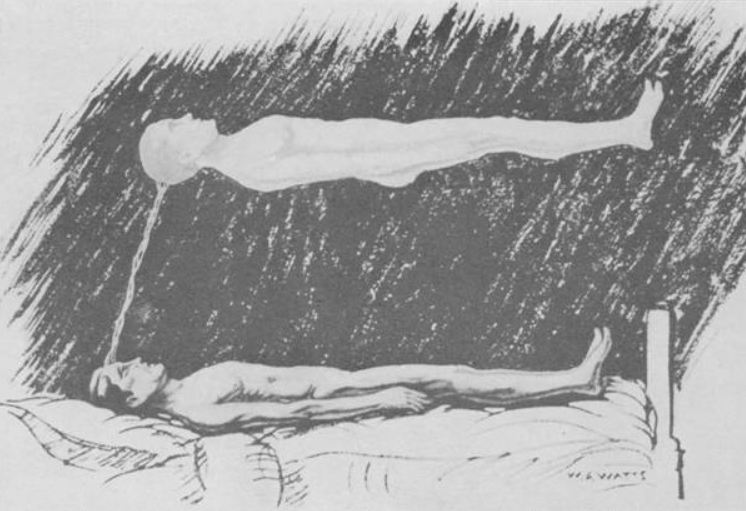 🇮🇳 India and 3 moreAstral projection
An intentional out-of-body experience where consciousness travels through the astral planeTradition · Speaking with spirits and the dead · Change and initiation Living
🇮🇳 India and 3 moreAstral projection
An intentional out-of-body experience where consciousness travels through the astral planeTradition · Speaking with spirits and the dead · Change and initiation Living
 🇮🇳 IndiaShamanism in Ayyavazhi
A divination practice within the Hindu denomination of Ayyavazhi in South India.Rite · Seeing and foretelling · Speaking with spirits and the dead Living
🇮🇳 IndiaShamanism in Ayyavazhi
A divination practice within the Hindu denomination of Ayyavazhi in South India.Rite · Seeing and foretelling · Speaking with spirits and the dead Living
 🇮🇳 IndiaVamacharaवामाचार
A Hindu tantric tradition using unorthodox rituals for spiritual growthTradition · Change and initiation Living
🇮🇳 IndiaVamacharaवामाचार
A Hindu tantric tradition using unorthodox rituals for spiritual growthTradition · Change and initiation Living
Photo credits on this page
The small pictures above come from Wikimedia Commons under free licences. Some are cropped to fit.
- Bhoot: Anilbhardwajnoida, CC BY-SA 3.0, source
- Astral projection: Hereward Carrington, Sylvan Muldoon., Public domain, source
- Amulet: Anonymous ( Egypt ) Unknown author, Public domain, source
- Sak Yant: Mikhailovich, CC BY 3.0, source
- Curse: Katsushika Hokusai, Public domain, source
- Vamachara: painting by an Indian artist. Date [between 1800 and 1899?], Public domain, source
- Obeah: Various, published by David Nutt, Public domain, source
- Ogun: Chado07, CC BY-SA 4.0, source
- Wild rue: Yuriy75, CC BY-SA 3.0, source
- Kataragama temple: Ghostface Buddha, CC BY-SA 2.0, source
- Burmese folk religion: Wagaung ( talk ), CC BY-SA 3.0, source
- Shamanism in Ayyavazhi: Vaikunda Raja, CC BY-SA 3.0, source
- Mugwort: Prahlad balaji, CC BY-SA 4.0, source
- Magic circle: John William Waterhouse, Public domain, source