
Taboo
In its own language: tapu
from the Oceanic word tapu, meaning prohibited or sacred
A cultural prohibition that marks something as forbidden or sacred
A taboo is a social ban on an action or utterance based on its perceived repulsiveness, offensiveness, or sacredness. The concept originates from Polynesian languages and describes rules that maintain group identity and cohesion.
- James Cook recorded the word in 1777 during his visit to Tonga
- The term originates from the Polynesian word tapu meaning forbidden
- Madagascar uses the term fady for local codes of taboo
- Greek myths feature eating, looking, and speaking taboos
- Abrahamic religions include eating taboos in creation narratives
What it is
A taboo functions as a strict social ban on specific behaviors or words. Communities enforce these restrictions because they view the prohibited acts as deeply offensive, repulsive, or holy. Such rules exist in nearly every society to define boundaries between acceptable and unacceptable conduct. They serve to protect individuals and strengthen group identity by creating a shared sense of belonging. When a tribe acknowledges these limits, it distinguishes itself from neighboring groups and maintains its unique cultural character.
Where it comes from
The English term derives from the Polynesian word tapu, which means forbidden or consecrated. British explorer James Cook recorded the word in 1777 after visiting Tonga, where he observed locals refusing to eat food marked by the term. The root appears across Oceanic languages, including Māori tapu and Hawaiian kapu. Linguists trace these terms back to Proto-Oceanic, where the original meaning involved being off-limits due to spiritual awe. In modern Tongan usage, the word still signifies sacredness or protection by custom.
How it is done
Communities enforce taboos through explicit legal systems or implicit social norms. Violations often result in punishment or misfortune, reinforcing the rule. In some cultures, such as Madagascar's fady, these codes change frequently based on local experiences. Each village may establish its own specific restrictions. The enforcement relies on collective agreement rather than physical force, relying instead on fear of spiritual consequences or social exclusion to maintain order.
Tools and materials
Taboos do not require physical tools but rely on language and ritual objects. In religious contexts, specific items like pomegranate seeds or forbidden trees mark the boundary of the prohibition. Words themselves act as the primary mechanism, with certain utterances becoming dangerous if spoken. Sacred spaces or objects are designated as off-limits, serving as tangible reminders of the invisible spiritual forces at work.
Taboo, drawn and placed
- Living
- Revived
- Fading
- Historical
- Legendary
- Performed
- Lineage
- Polynesian custom
What it is for
These prohibitions aim to protect individuals from harm and maintain social cohesion. They help communities manage resources efficiently and preserve their distinct identity against outside influences. In religious narratives, taboos test a person's ability to resist temptation. Failure to observe the rule leads to divine punishment or tragic consequences, reinforcing the importance of obedience to spiritual laws.
Who does it
Ordinary household members and community leaders enforce taboos daily. In religious settings, priests and mythological figures interpret the rules. Myths describe gods setting these boundaries for humans, such as Hades forbidding Orpheus to look back. The practitioner must possess self-control and respect for the sacred. Violation often brings immediate retribution, demonstrating the power of the rule over the individual.
Peoples and places
Tongan, Māori, and Hawaiian cultures use the root tapu to denote sacred restrictions. Fijian and Hiw speakers share similar concepts of forbidden acts. In Madagascar, the fady system creates highly localized rules that vary by region. Abrahamic traditions incorporate eating and behavioral taboos into their religious laws. These diverse groups apply the concept to maintain purity, honor ancestors, or avoid spiritual contamination.
At a glance: who, where and when
Who does it


What people believe
Many believe taboos connect the physical world to spiritual forces. Violating a restriction angers deities or disrupts cosmic balance. Greek myths show gods punishing mortals who break speaking or looking bans. Abrahamic stories frame the first human disobedience as the origin of sin and mortality. The belief system holds that sacred things must remain separate from common use to preserve their power and protect humanity.
When it is done
Taboos operate continuously rather than on specific festival days. They govern daily life, from dining habits to sexual conduct. In some cultures, restrictions change with seasons or life events. The permanence of the rule ensures constant vigilance. Unlike temporary rituals, taboos form the enduring framework of moral and spiritual behavior within the community.
How scholars and sceptics see it
Anthropologists view taboos as mechanisms for social control and group cohesion. Psychologists analyze them as expressions of deep-seated fears or desires. Sigmund Freud suggested universal taboos underpin civilization. Scholars note that ecological and medical factors often shape these customs. Critics argue that taboos can suppress minority groups while strengthening majority identities. The concept has expanded in social sciences to cover any strong moral prohibition.
Cautions and what is closed
Violating a taboo can lead to severe social ostracism or believed spiritual harm. In some cultures, breaking a rule results in immediate misfortune or death. The psychological burden of maintaining strict prohibitions can be heavy. Misunderstandings between cultures can cause conflict when one group ignores another's sacred restrictions. The fear of transgression keeps individuals compliant but can also create anxiety and repression.
Compare and confuse
Taboos differ from general laws by their spiritual or emotional weight. While laws are enforced by the state, taboos are upheld by community consensus and fear of supernatural retribution. They relate to concepts of purity and pollution found in many religions. The term has been applied to biblical ceremonial laws and modern social conventions, showing its broad applicability across different domains of human activity.
Questions people ask about Taboo
What does the word taboo mean?
It comes from the Polynesian word tapu, meaning forbidden or sacred. It describes a social ban on actions or words considered offensive or holy.
Where did the concept originate?
It originated in Oceanic languages, particularly among Polynesian peoples like the Tongans and Māori. James Cook introduced the term to English in 1777.
Why do societies have taboos?
They maintain group identity, ensure social cohesion, and protect individuals from spiritual or physical harm. They mark what is sacred versus common.
Are there famous examples in mythology?
Yes, Greek myths feature Orpheus looking back and Persephone eating seeds. Abrahamic texts describe Adam and Eve eating forbidden fruit.
Good reading and sources
The facts on this page come from the Wikipedia article "Taboo", written by its contributors and used under the CC BY-SA 4.0 licence, and from its Wikidata record (CC0). EveryJaadu rewrote the text in its own words, with AI assistance, and compares every page with the article to make sure no passage is copied. It may be reused under the same CC BY-SA 4.0 licence with a link back.
It may contain mistakes. Names and customs differ from one community to the next, and some knowledge is closed to outsiders and left out here. This page describes belief and practice. It does not say that any of it works, it is not a how-to, and it is not medical advice. If something is wrong, tell us. Last refreshed 2026-10-05.
More from Tonga
All the entries from Tonga 🇻🇺 Vanuatu and 5 moreKava culture
A shared ritual across Oceania where a root brew marks ceremony, respect, and social gathering.Tradition · Speaking with spirits and the dead · Luck and prosperity Living
🇹🇴 Tonga and 2 moreTongan mythologytala-ē-fonua
The myths and legends of the Polynesian island nation of TongaTradition · Wonder and entertainment Historical
🇻🇺 Vanuatu and 5 moreKava culture
A shared ritual across Oceania where a root brew marks ceremony, respect, and social gathering.Tradition · Speaking with spirits and the dead · Luck and prosperity Living
🇹🇴 Tonga and 2 moreTongan mythologytala-ē-fonua
The myths and legends of the Polynesian island nation of TongaTradition · Wonder and entertainment Historical
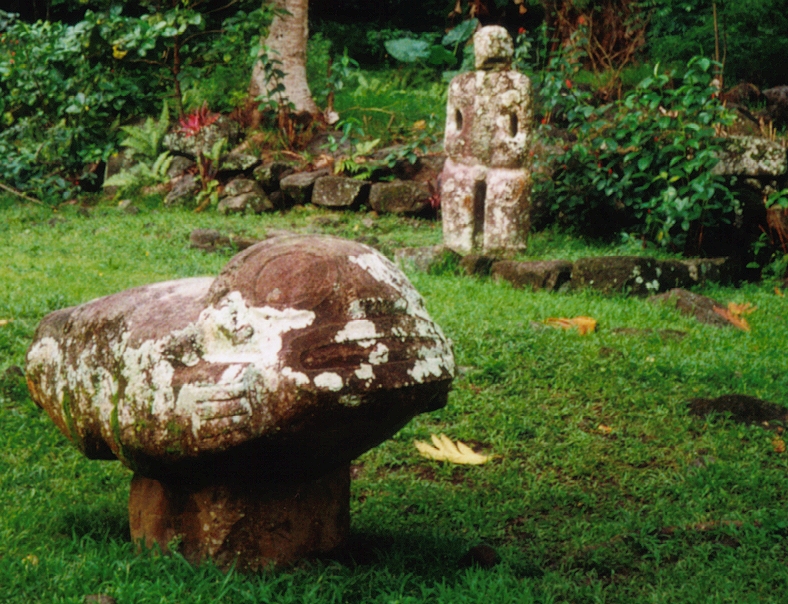 🇳🇿 New Zealand and 2 morePolynesian mythology
The oral traditions and legends of the Polynesian peoples across the PacificTradition · Speaking with spirits and the dead Living
🇳🇿 New Zealand and 2 morePolynesian mythology
The oral traditions and legends of the Polynesian peoples across the PacificTradition · Speaking with spirits and the dead Living
Related elsewhere
All belief 🇲🇦 Morocco and 5 moreWild rueاسپند
A desert plant whose seeds hold psychoactive alkaloids and serve as incense in the Middle East.Substance · Protection · Speaking with spirits and the dead Living
🇲🇦 Morocco and 5 moreWild rueاسپند
A desert plant whose seeds hold psychoactive alkaloids and serve as incense in the Middle East.Substance · Protection · Speaking with spirits and the dead Living
 🇮🇳 India and 2 moreHomaहोम
A fire ritual found across Asian religions where offerings are burned as a votive exchange with the divine.Rite · Protection · Speaking with spirits and the dead Living
🇮🇳 India and 2 moreHomaहोम
A fire ritual found across Asian religions where offerings are burned as a votive exchange with the divine.Rite · Protection · Speaking with spirits and the dead Living
 🇨🇳 China and 1 moreAncestor veneration in China中國傳統宗法性宗教
Rites for dead kin who are thought to watch over the familyTradition · Protection · Speaking with spirits and the dead Living
🇨🇳 China and 1 moreAncestor veneration in China中國傳統宗法性宗教
Rites for dead kin who are thought to watch over the familyTradition · Protection · Speaking with spirits and the dead Living
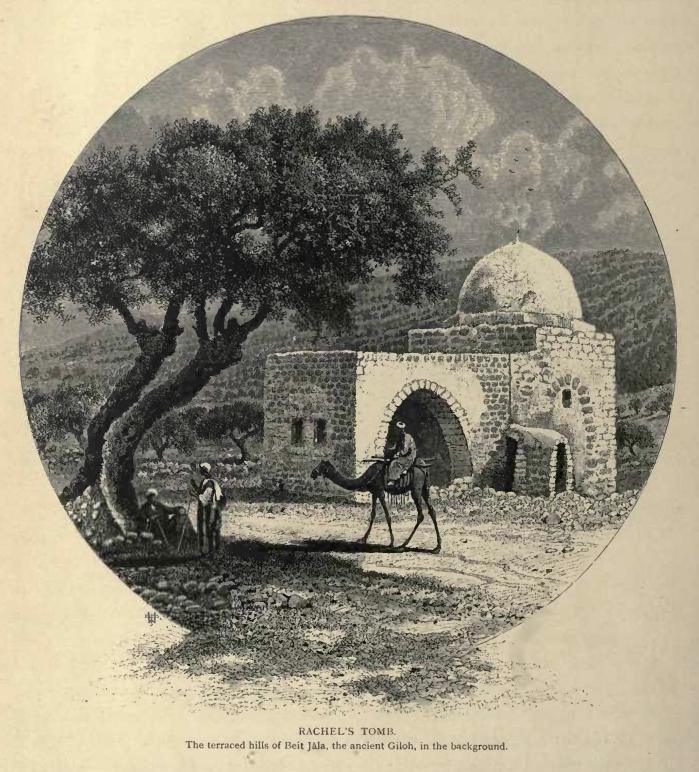 🇵🇸 Palestine and 1 moreRachel's TombQever Raḥel; Qabr Rāḥīl
A shared holy site near Bethlehem revered by Jews, Christians, and MuslimsTradition · Speaking with spirits and the dead · Protection Living
🇵🇸 Palestine and 1 moreRachel's TombQever Raḥel; Qabr Rāḥīl
A shared holy site near Bethlehem revered by Jews, Christians, and MuslimsTradition · Speaking with spirits and the dead · Protection Living