
Orunmila
In its own language: Ọ̀rúnmìlà
Yoruba deity of wisdom and the creator of the Ifá divination system
Orunmila is a principal Orisha in the Yoruba religion, revered as the spirit of wisdom, knowledge, and prophecy. He is credited with establishing the Ifá divination system, which guides practitioners toward moral clarity and understanding of fate.
- Creator of the Ifá divination system
- Orisha of wisdom, fate, and prophecy
- Priests are called babalawos
- Venerated in Yoruba religion and diaspora faiths
- Colors green, yellow, and white
What it is
Orunmila stands as a central figure within the Yoruba spiritual tradition, recognized as an Orisha associated with deep wisdom, comprehensive knowledge, and the unfolding of fate. He is widely regarded as the architect of the Ifá system, a complex framework used for divination and philosophical inquiry. As a primordial being, he exists before human creation and resides in the spiritual realm known as Ọrun. Practitioners view him as a sage who holds the intuitive knowledge placed by the supreme deity, allowing him to witness and interpret destiny. His role extends beyond simple fortune-telling; he embodies enlightenment and the civilizing forces that guide human conduct.
Where it comes from
Scholarly categorization identifies Orunmila as an Irunmọlẹ, a category of deities that predate humanity itself. Within this hierarchy, he is often described as second only to Olodumare in authority, serving as the witness to all fated outcomes. The literary traditions suggest he walked the earth as a prophet, passing down stories and prayers that form the basis of current practices. These narratives establish his authority not through physical conquest but through spiritual insight and the establishment of a structured path for understanding life's complexities.
How it is done
The practice surrounding Orunmila centers on the study and application of the Ifá corpus, which comprises 256 distinct Odu. Each Odu contains a vast archive of stories, poems, and prayers intended to guide ethical living and decision-making. Divination rituals involve casting tools like cowries or seeds onto a sacred tray to reveal specific Odu patterns. The process requires intense memorization and interpretation by initiated priests, who draw upon these ancient texts to advise individuals on their path. The method emphasizes moral rectitude and social responsibility over mere prediction.
Tools and materials
Key artifacts associated with Orunmila include the Opon Ifá, a carved wooden tray used during divination ceremonies. Practitioners also utilize cowries, various seeds, and kolanuts as casting materials or offerings. While he does not wield physical weapons, his power is channeled through spiritual instruments like the Opele chain. These items serve as conduits for accessing the wisdom stored within the Odu, facilitating communication between the practitioner and the divine order of fate.
Orunmila, drawn and placed
- Living
- Revived
- Fading
- Historical
- Legendary
- Performed
- Lineage
- Yoruba religion
- Timing
- third day of the Kọjọda week and Itadogun
What it is for
Devotees seek Orunmila’s guidance to navigate life’s challenges, understand their destiny, and align their actions with cosmic order. The primary aim is to achieve Iwa Pele, or good character, which is considered essential for personal and communal harmony. Through divination, individuals receive advice on how to maintain righteousness and fulfill their civic duties. The practice reinforces the belief that moral behavior is intrinsically linked to one’s well-being and spiritual standing.
Who does it
Initiated priests of Orunmila are known as babalawos, while female initiates are called iyalawos or iyanifas. The title Awo denotes a secret, gender-neutral status granted upon initiation. Historically, some lineages restricted full priesthood to men, particularly in Latin America and parts of West Africa, though other traditions welcome women equally. This diversity reflects regional variations in Ifá history. Both genders participate in major rites, reflecting a worldview where male and female essences are interdependent and necessary for balance.
Peoples and places
The worship of Orunmila is deeply rooted among the Yoruba people of Nigeria and Benin. From these origins, the tradition spread to Latin America through the diaspora, where he is often referred to as Orúnla or Orúla. In these new contexts, he is venerated within syncretic religions such as Santería and Candomblé. The global reach of Ifá has led to varied interpretations of priesthood and ritual, yet the core emphasis on wisdom and moral philosophy remains consistent across different cultural adaptations.
At a glance: who, where and when
Peoples
Belief worlds


What people believe
Central to Orunmila’s theology is the concept of Ori, the inner head or intuitive knowledge placed within every individual by the supreme deity. Orunmila is believed to possess the highest level of Ori, enabling him to intercede effectively in human affairs. The belief system posits that fate is witnessed and recorded, and that living a righteous life is crucial for maintaining harmony with the spiritual world. This worldview integrates religious doctrine with universal ethical principles, emphasizing that moral integrity is the foundation of a meaningful existence.
When it is done
Specific days are dedicated to honoring Orunmila, notably the third day of the traditional Kọjọda week and the festival known as Itadogun. Annual celebrations include the World Ifá Festival and the Orunmila Festival, which bring communities together to celebrate the deity’s contributions to wisdom and civilization. These occasions provide opportunities for public acknowledgment of the Ifá corpus and reinforce the social bonds maintained through shared spiritual practice.
Questions people ask about Orunmila
Who is Orunmila?
Orunmila is a principal Orisha in the Yoruba religion, revered as the spirit of wisdom, knowledge, and prophecy. He is credited with establishing the Ifá divination system, which guides practitioners toward moral clarity and understanding of fate.
What is the Ifá system?
Ifá is a divination system created by Orunmila, consisting of 256 Odu. Each Odu contains stories and prayers used to guide ethical living and decision-making, requiring extensive study by initiated priests.
Who are the priests of Orunmila?
Male priests are called babalawos and female priests are known as iyalawos or iyanifas. The title Awo signifies an initiated priest, a status that can be gender-neutral depending on the specific lineage and region.
Good reading and sources
The facts on this page come from the Wikipedia article "Ọrunmila", written by its contributors and used under the CC BY-SA 4.0 licence, and from its Wikidata record (CC0). EveryJaadu rewrote the text in its own words, with AI assistance, and compares every page with the article to make sure no passage is copied. It may be reused under the same CC BY-SA 4.0 licence with a link back.
It may contain mistakes. Names and customs differ from one community to the next, and some knowledge is closed to outsiders and left out here. This page describes belief and practice. It does not say that any of it works, it is not a how-to, and it is not medical advice. If something is wrong, tell us. Last refreshed 2026-10-05.
More from Nigeria
All the entries from Nigeria 🇳🇬 Nigeria and 4 moreOrishaÒrìṣà
Divine spirits of the Yoruba religion and their diasporic descendants in the Americas.Being · Protection · Healing Living
🇳🇬 Nigeria and 4 moreOrishaÒrìṣà
Divine spirits of the Yoruba religion and their diasporic descendants in the Americas.Being · Protection · Healing Living
 🇳🇬 Nigeria and 5 moreMami Wata
A water spirit of beauty and wealth in African folklore and the Atlantic diasporaBeing · Healing · Luck and prosperity Living
🇳🇬 Nigeria and 5 moreMami Wata
A water spirit of beauty and wealth in African folklore and the Atlantic diasporaBeing · Healing · Luck and prosperity Living
 🇳🇬 Nigeria and 1 moreBoriBòòríí
A traditional Hausa spirit possession system and healing practice in West AfricaTradition · Healing · Luck and prosperity Living
🇿🇦 South Africa and 5 moreMurder for body parts
The killing of people to harvest body parts for traditional medicine or the illegal organ trade.Belief · Cursing and harm · Power and authority Living
🇳🇬 Nigeria and 1 moreBoriBòòríí
A traditional Hausa spirit possession system and healing practice in West AfricaTradition · Healing · Luck and prosperity Living
🇿🇦 South Africa and 5 moreMurder for body parts
The killing of people to harvest body parts for traditional medicine or the illegal organ trade.Belief · Cursing and harm · Power and authority Living
Related elsewhere
All being 🇮🇳 IndiaChakraचक्र
Meditation points in the subtle body used in Hindu and Buddhist yogaTradition · Speaking with spirits and the dead · Change and initiation Living
🇮🇳 IndiaChakraचक्र
Meditation points in the subtle body used in Hindu and Buddhist yogaTradition · Speaking with spirits and the dead · Change and initiation Living
 🇮🇹 ItalyCumaean SibylSibylla Cumana
The priestess of the Apollonian oracle at Cumae, famous in Roman legend for her prophetic books and underworld guidance.Figure · Seeing and foretelling · Speaking with spirits and the dead Legendary
🇮🇹 ItalyCumaean SibylSibylla Cumana
The priestess of the Apollonian oracle at Cumae, famous in Roman legend for her prophetic books and underworld guidance.Figure · Seeing and foretelling · Speaking with spirits and the dead Legendary
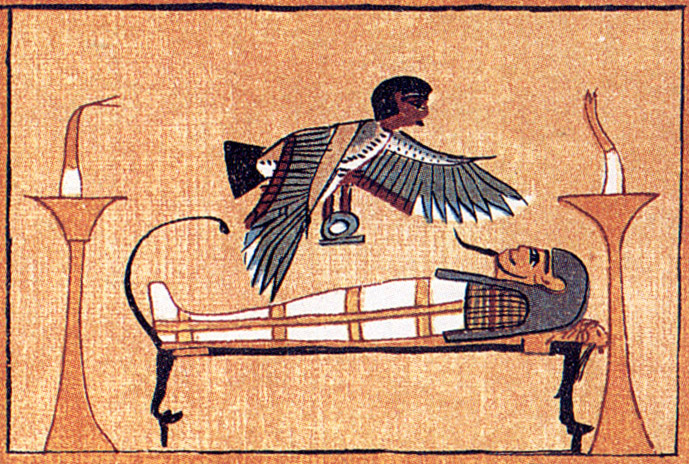 🇸🇪 Sweden and 1 moreSoul flight
A trance practice where the spirit leaves the body to visit other realmsRite · Healing · Seeing and foretelling Historical
🇸🇪 Sweden and 1 moreSoul flight
A trance practice where the spirit leaves the body to visit other realmsRite · Healing · Seeing and foretelling Historical
 🇨🇺 Cuba and 2 moreSanteríaRegla de Ocha
An Afro-Cuban religion blending Yoruba beliefs with Catholicism and SpiritismTradition · Protection · Healing Living
🇨🇺 Cuba and 2 moreSanteríaRegla de Ocha
An Afro-Cuban religion blending Yoruba beliefs with Catholicism and SpiritismTradition · Protection · Healing Living