
An altered state of consciousness attributed to the takeover of a person by spirits, ghosts, or deities. This practice appears in many global traditions, from African diasporic religions to Christianity and Buddhism.
- Found in 74% of 488 societies studied in 1969
- Pacific cultures show highest incidence of belief
- Native Americans report lowest incidence
- Ring Shout uses counterclockwise dancing
- Turmeric and neem cool the possessed body
What it is
This phenomenon describes a condition where a person’s actions and awareness shift under the influence of an outside entity. These entities range from ancestors and deities to demons or angels. The experience often involves a trance-like state where the individual acts differently than usual. Communities view this as a direct interaction with the spiritual world. Some see it as a gift that brings healing or wisdom. Others fear it as a harmful invasion by malevolent forces. The boundary between voluntary invitation and involuntary takeover varies by culture.
Where it comes from
The concept spans numerous societies worldwide. A 1969 study noted its presence in seventy-four percent of surveyed cultures. Pacific islands showed high rates of belief, while Native American groups reported lower incidence. The practice evolved alongside early religious systems. In Africa, it linked to ancestor worship. In the Americas, enslaved peoples adapted these beliefs to new environments, merging them with Christian elements. The tradition continues to adapt as religions spread across continents.
How it is done
Practitioners often use rhythmic drumming and dancing to induce the state. In Haitian Vodou, music invites the Loa to enter the host. In Umbanda, guiding spirits take over willing volunteers during consultations. Ring Shouts involve counterclockwise circle dancing until a participant enters a trance. In Caribbean Shaktism, devotees pray and receive drumming before a priest becomes a vessel. Water and herbal mixtures may be poured on the medium to balance the spiritual heat.
Tools and materials
Drums are central to many rituals, specifically tappu or udukai instruments. Herbal preparations like turmeric and neem leaves help cool the body during intense possession. Masks and regalia are worn in New Orleans Mardi Gras traditions to invite spirits. Sacred spaces are prepared through prayer and chanting. The physical environment is arranged to facilitate the entry of the entity.
Spirit possession, drawn and placed
- Living
- Revived
- Fading
- Historical
- Legendary
- Performed
- Timing
- during ceremonies and prayers
What it is for
People seek possession for healing, guidance, or protection. Spirits provide advice on personal problems and life goals. In some traditions, the possessed act as intermediaries between the living and the divine. They may predict future events or reveal hidden truths. Conversely, exorcisms aim to remove harmful demons that cause illness or distress. The goal is often to restore balance or gain access to supernatural knowledge.
Who does it
Priests, mediums, and ritual specialists lead the ceremonies. In Vodou, the host is called a Chwal or horse. In Umbanda, any volunteer can become a vessel for guardian spirits. Ring Shouters participate in communal dances to reach the state. Exorcists perform rituals to drive out unwanted entities. The role requires deep cultural knowledge and training in handling spiritual energies.
Peoples and places
African diasporic communities maintain strong traditions of possession. Haitians invoke Loa spirits during ceremonies. Afro-Brazilians practice Umbanda with guiding entities. African Americans incorporate possession into Black church services through the Ring Shout. Indo-Caribbean Hindus use trance states in Shakti worship. These groups share roots but express the practice through distinct local customs and theological frameworks.
At a glance: who, where and when

What people believe
Worldviews differ on the nature of the possessing force. Christians often attribute possession to Satan or demons requiring exorcism. Buddhists describe Mara as a delusion or temptation to be overcome. Hindu traditions view deities entering humans as a blessing. African religions see spirits as teachers correcting misconduct. The consensus is that the spiritual realm actively interacts with the physical world.
When it is done
Rituals occur during weekly pujas, festivals, and community gatherings. Mardi Gras Indians dance during carnival season. Ring Shouts happen in regular church services. Daily prayers may invite spiritual contact. Specific times align with lunar cycles or agricultural seasons in various traditions.
How scholars and sceptics see it
Researchers classify possession as an altered state of consciousness. Anthropologists study how it reinforces social norms and provides healing. Psychologists examine the neurological aspects of trance. Skeptics view it as a cultural performance or psychological response. Studies show widespread belief globally, though interpretations vary significantly between secular and religious frameworks.
Cautions and what is closed
Some traditions warn against uncontrolled possession by evil spirits. Exorcisms address cases of perceived demonic harm. Fraudulent healers may exploit vulnerable individuals claiming spiritual authority. Legal issues arise in regions where possession is criminalized or stigmatized. Participants must follow strict protocols to ensure safety and proper conduct.
Compare and confuse
Possession differs from simple meditation or prayer by involving a complete takeover of agency. It shares similarities with shamanic journeying but focuses on external control. Western concepts often equate it with mental illness, while traditional views see it as spiritual communication. The term Mara in Buddhism refers to internal obstacles rather than external spirits.
Rites that involve Spirit possession
Questions people ask about Spirit possession
What is spirit possession?
It is an altered state where a spirit or deity controls a person's body and behavior. This occurs in many cultures, from African traditions to Christianity and Buddhism.
Is possession always bad?
No. Many traditions view it as beneficial. Spirits may offer healing, wisdom, or protection. Only some contexts, like demonic possession in Christianity, are seen as harmful.
How does one become possessed?
Through rituals involving drumming, dancing, and prayer. In Vodou, music invites Loa. In Ring Shouts, circular dancing induces trance. Volunteers often invite guiding spirits.
Where is this practice common?
It is widespread globally. High prevalence exists in Pacific cultures and African diasporic religions. It also appears in Hindu, Buddhist, and Christian traditions worldwide.
Good reading and sources
The facts on this page come from the Wikipedia article "Spirit possession", written by its contributors and used under the CC BY-SA 4.0 licence, and from its Wikidata record (CC0). EveryJaadu rewrote the text in its own words, with AI assistance, and compares every page with the article to make sure no passage is copied. It may be reused under the same CC BY-SA 4.0 licence with a link back.
It may contain mistakes. Names and customs differ from one community to the next, and some knowledge is closed to outsiders and left out here. This page describes belief and practice. It does not say that any of it works, it is not a how-to, and it is not medical advice. If something is wrong, tell us. Last refreshed 2026-10-22.
More from India
All the entries from India 🇮🇳 IndiaChakraचक्र
Meditation points in the subtle body used in Hindu and Buddhist yogaTradition · Speaking with spirits and the dead · Change and initiation Living
 🇮🇳 India and 5 moreMandalaमण्डल
A sacred geometric design used in Indian religions for meditation and spiritual mapping.Tradition · Speaking with spirits and the dead · Wonder and entertainment Living
🇮🇳 IndiaMuhurtamuhūrta
A Hindu unit of time used to select auspicious moments for rituals and daily practiceBelief · Power and authority · Speaking with spirits and the dead Living
 🇮🇳 India and 1 moreŚrāddhaश्राद्ध
A Hindu rite of ancestor worship involving food offerings and fire ritualsRite · Speaking with spirits and the dead · Cleansing and purification Living
Related elsewhere
All belief 🇺🇸 United StatesKahuna
A Hawaiian expert or priest, keeper of hidden knowledge in craft and spiritTradition · Healing · Seeing and foretelling Living
 🇵🇭 PhilippinesBabaylan
Spiritual leaders of pre-colonial Philippines who mediated with the unseen world.Tradition · Healing · Seeing and foretelling Historical
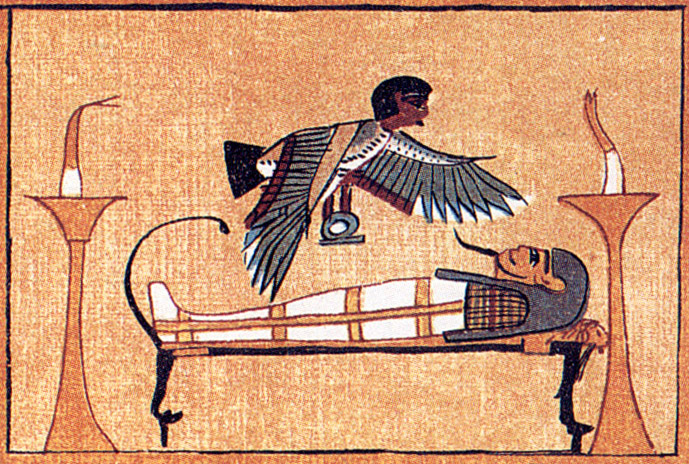 🇪🇬 Egypt and 1 moreSoul flight
A shamanic trance journey in which the soul is said to leave the bodyRite · Healing · Seeing and foretelling Living
🇯🇵 JapanYutaユタ
Okinawan folk shamans who guide families through spirits and fortune-tellingTradition · Protection · Healing Living