Magic in East Asia
Taoist talismans, the I Ching and feng shui, onmyodo and the omamori, and the mudang of Korea. 311 entries on EveryJaadu so far.
Places of magic
Kyoto 5Beijing 3Edo 3Mount Tai 3Shikoku 3Akita 2Asakusa 2Guangdong 2Himeji Castle 2Kifune Shrine 2Kumano Sanzan 2Mount Hiei 2Mount Ōmine 2Mukden 2Nagano Prefecture 2Sado Island 2Sendai 2Seoul 2Shimane Prefecture 2Aikoku Station 1Aizu region 1Akishino-dera 1Amami Ōshima 1Amoy 1Anyang 1Aojiang 1Aomori prefecture 1Ariake Sea 1Asagaya 1Awaji Island 1
Rites of the region
Writing and burning a fu talismanJoss paper and the Hungry Ghost offeringKau cim and jiaobeiThe I Ching and the yarrow stalksFeng shui placementSetsubun bean-throwingHarai, the Shinto rite of purificationOmamori and ofuda renewalOmikuji fortune slipsGut, the Korean shaman rite
Countries
PurposeProtectionHealingSeeing and foretellingLuck and prosperityLove and attractionCursing and harmCleansing and purificationSpeaking with spirits and the deadChange and initiationBinding and oathsPower and authorityWonder and entertainment
WhoShamansFolk healersPriests and ritual specialistsWitches, sorcerers and cunning folkDiviners and readersMediums and the possessedCeremonial magicians and alchemistsHouseholds and ordinary peopleStage magiciansScholars and sceptics
BeliefHindu and TantricBuddhistJainMuslim and SufiJewishChristianSikhZoroastrianShinto and TaoistIndigenous and shamanicAfrican and Afro-diasporicPagan and NeopaganEsoteric and occultFolk and village customSecular and stageOther traditions
 🇨🇳 China and 1 moreDongyue Dadi東嶽大帝
The Chinese mountain god of Mount Tai who rules lifespans and underworld recordsBeing · Speaking with spirits and the dead · Power and authority Living
🇨🇳 China and 1 moreDongyue Dadi東嶽大帝
The Chinese mountain god of Mount Tai who rules lifespans and underworld recordsBeing · Speaking with spirits and the dead · Power and authority Living
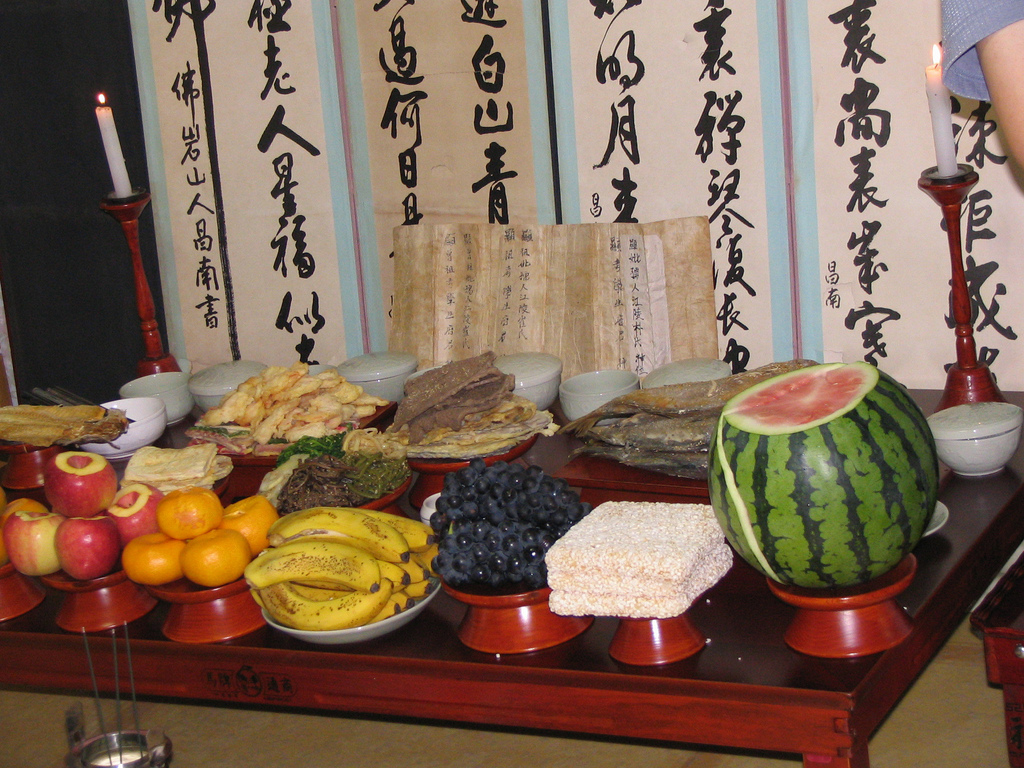 🇰🇷 South KoreaJesa제사
A Korean ancestral memorial rite involving food offerings and ritual bowsRite · Speaking with spirits and the dead · Luck and prosperity Living
🇰🇷 South KoreaJesa제사
A Korean ancestral memorial rite involving food offerings and ritual bowsRite · Speaking with spirits and the dead · Luck and prosperity Living
 🇯🇵 JapanKagura神楽
A Shinto ritual dance where performers embody deities to purify and welcome spiritsTradition · Protection · Speaking with spirits and the dead Living
🇯🇵 JapanKagura神楽
A Shinto ritual dance where performers embody deities to purify and welcome spiritsTradition · Protection · Speaking with spirits and the dead Living
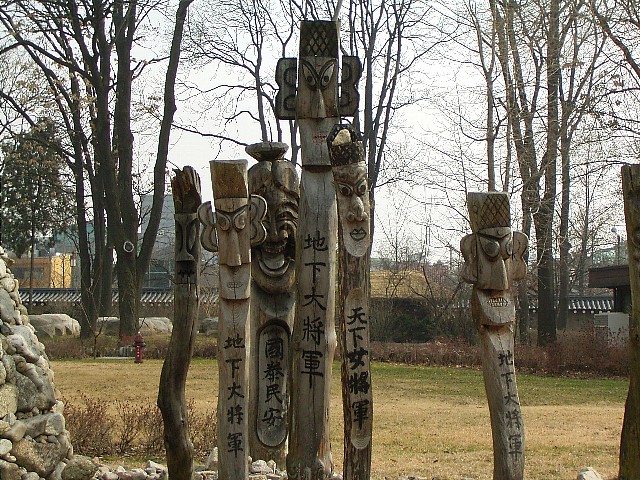 🇰🇷 South Korea and 1 moreJangseung장승
Wooden or stone poles that guard Korean villages and temples from evil spiritsTradition · Protection · Speaking with spirits and the dead Living
🇰🇷 South Korea and 1 moreJangseung장승
Wooden or stone poles that guard Korean villages and temples from evil spiritsTradition · Protection · Speaking with spirits and the dead Living
 🇨🇳 China and 1 moreAncestor veneration in China中國傳統宗法性宗教
Rites for dead kin who are thought to watch over the familyTradition · Protection · Speaking with spirits and the dead Living
🇨🇳 China and 1 moreAncestor veneration in China中國傳統宗法性宗教
Rites for dead kin who are thought to watch over the familyTradition · Protection · Speaking with spirits and the dead Living
 🇰🇷 South KoreaGut굿
Rites performed by Korean shamans to commune with spirits and ensure community welfare.Rite · Protection · Speaking with spirits and the dead Living
🇰🇷 South KoreaGut굿
Rites performed by Korean shamans to commune with spirits and ensure community welfare.Rite · Protection · Speaking with spirits and the dead Living
 🇯🇵 JapanMount Osore恐山
A volcanic pilgrimage site in Japan believed to be a gateway to the underworldTradition · Speaking with spirits and the dead · Protection Living
🇯🇵 JapanMount Osore恐山
A volcanic pilgrimage site in Japan believed to be a gateway to the underworldTradition · Speaking with spirits and the dead · Protection Living
 🇨🇳 China and 5 moreChinese fortune telling算命 (Suànmìng)
Reading faces, palms, birth hours and places to map a person's luck through lifeTradition · Seeing and foretelling · Luck and prosperity Living
🇯🇵 JapanYutaユタ
Okinawan folk shamans who guide families through spirits and fortune-tellingTradition · Protection · Healing Living
🇨🇳 China and 5 moreChinese fortune telling算命 (Suànmìng)
Reading faces, palms, birth hours and places to map a person's luck through lifeTradition · Seeing and foretelling · Luck and prosperity Living
🇯🇵 JapanYutaユタ
Okinawan folk shamans who guide families through spirits and fortune-tellingTradition · Protection · Healing Living
 🇨🇳 China and 3 moreTang-ki童乩 (tóngjī); 乩童 (jītóng)
A Chinese folk-religion medium whose body a deity is held to take overTradition · Speaking with spirits and the dead · Seeing and foretelling Living
🇨🇳 China and 3 moreTang-ki童乩 (tóngjī); 乩童 (jītóng)
A Chinese folk-religion medium whose body a deity is held to take overTradition · Speaking with spirits and the dead · Seeing and foretelling Living
 🇨🇳 China and 5 moreGhost FestivalZhongyuan Festival; Yulanpen Festival
A festival to feed wandering spirits and guide them home during the seventh lunar month.Tradition · Speaking with spirits and the dead · Protection Living
🇨🇳 China and 5 moreGhost FestivalZhongyuan Festival; Yulanpen Festival
A festival to feed wandering spirits and guide them home during the seventh lunar month.Tradition · Speaking with spirits and the dead · Protection Living
 🇨🇳 China and 5 moreQingming Festival清明节
A spring day for sweeping graves, feeding the dead and honouring ancestorsTradition · Speaking with spirits and the dead · Protection Living
🇨🇳 China and 5 moreQingming Festival清明节
A spring day for sweeping graves, feeding the dead and honouring ancestorsTradition · Speaking with spirits and the dead · Protection Living
 🇰🇷 South Korea and 1 moreKorean shamanismKorean shamanism (Korean: Korean shamanism)
A traditional practice of ritual specialists who mediate between the human and spirit worlds.Tradition · Healing · Protection Living
🇰🇷 South Korea and 1 moreChuseok추석 (Chuseok), 한가위 (Hangawi)
A Korean autumn harvest festival marked by ancestral rites and feasting on the full moon.Tradition · Speaking with spirits and the dead · Luck and prosperity Living
🇰🇷 South Korea and 1 moreKorean shamanismKorean shamanism (Korean: Korean shamanism)
A traditional practice of ritual specialists who mediate between the human and spirit worlds.Tradition · Healing · Protection Living
🇰🇷 South Korea and 1 moreChuseok추석 (Chuseok), 한가위 (Hangawi)
A Korean autumn harvest festival marked by ancestral rites and feasting on the full moon.Tradition · Speaking with spirits and the dead · Luck and prosperity Living
 🇨🇳 China and 2 moreDiyu地獄
The underworld realm of trial, atonement, and rebirth in Chinese mythologyBelief · Cleansing and purification · Change and initiation Living
🇨🇳 China and 2 moreDiyu地獄
The underworld realm of trial, atonement, and rebirth in Chinese mythologyBelief · Cleansing and purification · Change and initiation Living
 🇲🇳 Mongolia and 1 moreTsagaan SarЦагаан сар
A Mongol lunisolar new year marked by white clothes and dairy feastsTradition · Luck and prosperity · Speaking with spirits and the dead Living
🇲🇳 Mongolia and 1 moreTsagaan SarЦагаан сар
A Mongol lunisolar new year marked by white clothes and dairy feastsTradition · Luck and prosperity · Speaking with spirits and the dead Living
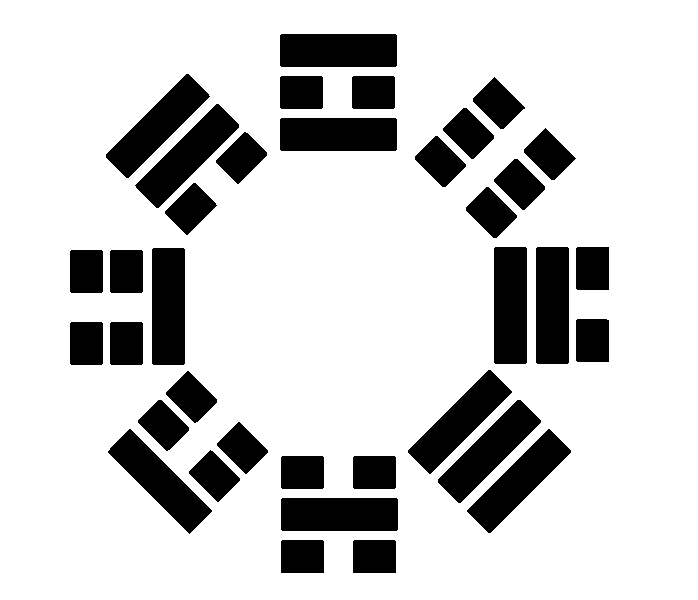 🇨🇳 China and 1 moreBagua八卦
A set of eight trigram symbols from China used in divination, cosmology, and feng shui.Tradition · Seeing and foretelling · Protection Living
🇨🇳 China and 1 moreBagua八卦
A set of eight trigram symbols from China used in divination, cosmology, and feng shui.Tradition · Seeing and foretelling · Protection Living
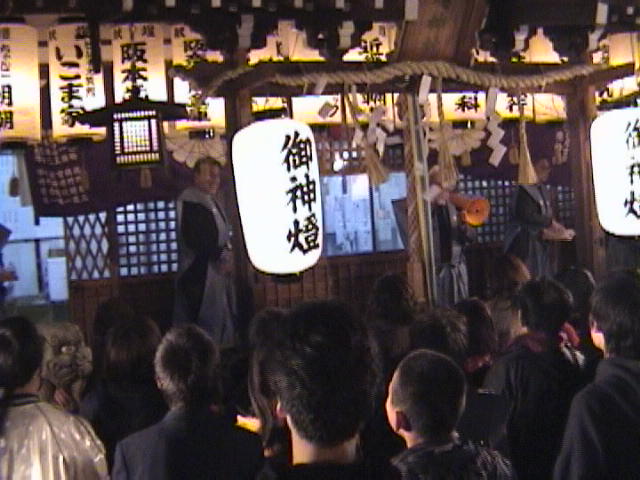 🇯🇵 JapanSetsubun節分
A Japanese seasonal rite to drive away bad luck and welcome spring with roasted beansRite · Protection · Luck and prosperity Living
🇯🇵 JapanSetsubun節分
A Japanese seasonal rite to drive away bad luck and welcome spring with roasted beansRite · Protection · Luck and prosperity Living
 🇯🇵 JapanShinto shrine神社 (jinja)
A structure housing kami deities within the Shinto tradition of JapanTradition · Protection · Speaking with spirits and the dead Living
🇯🇵 JapanShinto shrine神社 (jinja)
A structure housing kami deities within the Shinto tradition of JapanTradition · Protection · Speaking with spirits and the dead Living
 🇰🇷 South Korea and 3 moreKorean shamanism무속
A Korean folk religion centered on ritual specialists who mediate between humans and spiritsTradition · Protection · Healing Living
🇰🇷 South Korea and 3 moreKorean shamanism무속
A Korean folk religion centered on ritual specialists who mediate between humans and spiritsTradition · Protection · Healing Living
 🇨🇳 ChinaNeidan内丹
A Taoist practice using the body as a cauldron to refine inner energies for longevity and immortalityTradition · Healing · Power and authority Living
🇨🇳 ChinaNeidan内丹
A Taoist practice using the body as a cauldron to refine inner energies for longevity and immortalityTradition · Healing · Power and authority Living
 🇯🇵 Japan and 3 moreObonお盆
A Japanese Buddhist festival honoring the spirits of ancestors through dance and offeringsTradition · Speaking with spirits and the dead · Luck and prosperity Living
🇯🇵 Japan and 3 moreObonお盆
A Japanese Buddhist festival honoring the spirits of ancestors through dance and offeringsTradition · Speaking with spirits and the dead · Luck and prosperity Living
 🇨🇳 China and 2 moreMenshen門神
Guardian figures pasted to doors in Chinese folk religion to protect homes from evil.Belief · Protection · Luck and prosperity Living
🇨🇳 China and 2 moreMenshen門神
Guardian figures pasted to doors in Chinese folk religion to protect homes from evil.Belief · Protection · Luck and prosperity Living
 🇯🇵 Japan and 2 moreTanabataたなばた (七夕)
A Japanese celebration of star-crossed lovers and written wishesTradition · Luck and prosperity · Wonder and entertainment Living
🇯🇵 Japan and 2 moreTanabataたなばた (七夕)
A Japanese celebration of star-crossed lovers and written wishesTradition · Luck and prosperity · Wonder and entertainment Living
 🇰🇷 South Korea and 1 moreDaeboreum대보름
A Korean lunar holiday marking the first full moon with nut-cracking and field firesTradition · Protection · Luck and prosperity Living
🇰🇷 South Korea and 1 moreDaeboreum대보름
A Korean lunar holiday marking the first full moon with nut-cracking and field firesTradition · Protection · Luck and prosperity Living
 🇯🇵 JapanTorii鳥居
A traditional Japanese gate marking the boundary between the mundane and sacred spaces of Shinto shrines.Tradition · Speaking with spirits and the dead · Protection Living
🇨🇳 China and 3 moreZi Wei Dou Shu紫微斗數
A Chinese natal astrology system mapping stars across twelve life palacesTradition · Seeing and foretelling Living
🇯🇵 JapanTorii鳥居
A traditional Japanese gate marking the boundary between the mundane and sacred spaces of Shinto shrines.Tradition · Speaking with spirits and the dead · Protection Living
🇨🇳 China and 3 moreZi Wei Dou Shu紫微斗數
A Chinese natal astrology system mapping stars across twelve life palacesTradition · Seeing and foretelling Living
 🇨🇳 China and 3 moreHmong folk religionKev Dab Qhuas
The ethnic religion of the Miao and Hmong peoples, centered on spirit worship and shamanic healing.Tradition · Healing · Protection Living
🇨🇳 China and 3 moreHmong folk religionKev Dab Qhuas
The ethnic religion of the Miao and Hmong peoples, centered on spirit worship and shamanic healing.Tradition · Healing · Protection Living
 🇯🇵 JapanMiko巫女
A Shinto shrine priestess and traditional female medium in JapanTradition · Speaking with spirits and the dead · Protection Living
🇯🇵 JapanMiko巫女
A Shinto shrine priestess and traditional female medium in JapanTradition · Speaking with spirits and the dead · Protection Living
 🇯🇵 JapanShugendō修験道
A Japanese mountain ascetic path blending Esoteric Buddhism, Shinto, and folk ritualsTradition · Protection · Healing Living
🇯🇵 JapanShugendō修験道
A Japanese mountain ascetic path blending Esoteric Buddhism, Shinto, and folk ritualsTradition · Protection · Healing Living
 🇨🇳 China and 5 moreFeng shui風水
A Chinese geomantic practice for aligning structures with cosmic energyTradition · Protection · Luck and prosperity Living
🇨🇳 China and 5 moreFeng shui風水
A Chinese geomantic practice for aligning structures with cosmic energyTradition · Protection · Luck and prosperity Living
 🇨🇳 China and 1 moreChinese shamanism巫教 (Wūjiào)
Spirit-mediums of China who dance and trance to carry messages between people and godsTradition · Speaking with spirits and the dead · Seeing and foretelling Living
🇨🇳 China and 1 moreChinese shamanism巫教 (Wūjiào)
Spirit-mediums of China who dance and trance to carry messages between people and godsTradition · Speaking with spirits and the dead · Seeing and foretelling Living
 🇨🇳 China and 5 moreRegional forms of shamanism
A global overview of indigenous spirit-interaction practices across Asia and the Americas.Tradition · Healing · Speaking with spirits and the dead Living
🇨🇳 China and 5 moreRegional forms of shamanism
A global overview of indigenous spirit-interaction practices across Asia and the Americas.Tradition · Healing · Speaking with spirits and the dead Living
 🇯🇵 JapanChinkon kishin鎮魂帰神
A Japanese spiritual practice combining soul calming with spirit possessionRite · Speaking with spirits and the dead · Healing Living
🇯🇵 JapanChinkon kishin鎮魂帰神
A Japanese spiritual practice combining soul calming with spirit possessionRite · Speaking with spirits and the dead · Healing Living
 🇨🇳 China and 1 moreFalun Gong法轮功
A Chinese cultivation practice blending meditative exercises with moral principlesTradition · Healing · Protection Living
🇨🇳 China and 1 moreFalun Gong法轮功
A Chinese cultivation practice blending meditative exercises with moral principlesTradition · Healing · Protection Living
 🇨🇳 China and 1 moreNuo folk religion傩 (Nuó)
A Chinese exorcistic tradition using wooden masks and ancestor worship to drive away malevolent forcesTradition · Protection · Speaking with spirits and the dead Living
🇨🇳 China and 1 moreNuo folk religion傩 (Nuó)
A Chinese exorcistic tradition using wooden masks and ancestor worship to drive away malevolent forcesTradition · Protection · Speaking with spirits and the dead Living
 🇰🇷 South Korea and 1 moreDaejongism대종교
A Korean faith system centred on the ancestral king Dangun and national identity.Tradition · Power and authority Living
🇰🇷 South Korea and 1 moreDaejongism대종교
A Korean faith system centred on the ancestral king Dangun and national identity.Tradition · Power and authority Living
 🇨🇳 ChinaBenzhuism本主教
The indigenous patron worship of the Bai people in Yunnan, ChinaTradition · Protection · Healing Living
🇰🇷 South KoreaSuunism수운교
A Korean ethnic religion focused on the Great Jade Emperor of Heaven and spiritual reconnection.Tradition · Speaking with spirits and the dead · Change and initiation Living
🇨🇳 ChinaBenzhuism本主教
The indigenous patron worship of the Bai people in Yunnan, ChinaTradition · Protection · Healing Living
🇰🇷 South KoreaSuunism수운교
A Korean ethnic religion focused on the Great Jade Emperor of Heaven and spiritual reconnection.Tradition · Speaking with spirits and the dead · Change and initiation Living
 🇨🇳 ChinaFlying Star Feng Shui
A Chinese feng shui school that charts a building's nine squares for good and bad qiTradition · Seeing and foretelling · Luck and prosperity Living
🇮🇳 India and 3 moreTermaགཏེར་མ
Hidden teachings in Tibetan Buddhism and Bon, revealed by tertöns when the time is right.Text · Speaking with spirits and the dead · Change and initiation Living
🇰🇷 South KoreaMusok eumak무속 음악
Traditional Korean shamanistic music performed during gut rituals to induce tranceTradition · Speaking with spirits and the dead Living
🇨🇳 ChinaFlying Star Feng Shui
A Chinese feng shui school that charts a building's nine squares for good and bad qiTradition · Seeing and foretelling · Luck and prosperity Living
🇮🇳 India and 3 moreTermaགཏེར་མ
Hidden teachings in Tibetan Buddhism and Bon, revealed by tertöns when the time is right.Text · Speaking with spirits and the dead · Change and initiation Living
🇰🇷 South KoreaMusok eumak무속 음악
Traditional Korean shamanistic music performed during gut rituals to induce tranceTradition · Speaking with spirits and the dead Living
 🇨🇳 China and 3 moreFengshui woodland風水林
A protected grove in East Asia believed to shape the local environment and bring luck to nearby communities.Tradition · Protection · Luck and prosperity Living
🇨🇳 China and 3 moreFengshui woodland風水林
A protected grove in East Asia believed to shape the local environment and bring luck to nearby communities.Tradition · Protection · Luck and prosperity Living
 🇹🇼 TaiwanYin miao陰廟
Temples for wandering spirits in Taiwanese folk religionTradition · Protection · Speaking with spirits and the dead Living
🇹🇼 TaiwanYin miao陰廟
Temples for wandering spirits in Taiwanese folk religionTradition · Protection · Speaking with spirits and the dead Living
 🇯🇵 JapanSeimei Shrine晴明神社
A Shinto shrine in Kyoto dedicated to the legendary onmyōji Abe no SeimeiTradition · Speaking with spirits and the dead Living
🇯🇵 JapanSeimei Shrine晴明神社
A Shinto shrine in Kyoto dedicated to the legendary onmyōji Abe no SeimeiTradition · Speaking with spirits and the dead Living
Photo credits on this page
The small pictures above come from Wikimedia Commons under free licences. Some are cropped to fit.
- Chinkon kishin: Tomokiyo Yoshisane (友清歓真), also known as Tomokiyo Kyūgo (友清九吾), Public domain, source
- Tsagaan Sar: User:Chinneeb, CC BY-SA 3.0, source
- Bagua: TarcísioTS at Portuguese Wikipedia, Public domain, source
- Setsubun: Unknown author, CC BY-SA 3.0, source
- Shinto shrine: No machine-readable author provided. Fg2 assumed (based on copyright c, Public domain, source
- Korean shamanism: Steve46814, CC BY-SA 4.0, source
- Neidan: A16898, CC BY-SA 4.0, source
- Obon: Batholith, Public domain, source
- Menshen: Taiwankengo, CC BY-SA 3.0, source
- Tanabata: Laika ac, CC BY-SA 2.0, source
- Daeboreum: hojusaram, CC BY-SA 2.0, source
- Torii: JordyMeow, CC BY-SA 3.0, source
- Hmong folk religion: Thomas Riccio, CC BY 4.0, source
- Miko: Chris Gladis, Flickr user MShades, CC BY 2.0, source
- Shugendō: 唐山健志郎 (Kenshiro Karayama), CC BY-SA 3.0, source
- Feng shui: Unknown author, Public domain, source
- Jesa: by Joseph Steinberg (Baltimoron in Korea) at Flickr, CC BY-SA 2.0, source
- Kagura: Elstner Hilton, Public domain, source
- Jangseung: Yoshiaki Sano, CC BY-SA 2.0, source
- Ancestor veneration in China: Three huntings, CC BY-SA 4.0, source
- Gut: ReSearcher at English Wikipedia, CC BY-SA 3.0, source
- Mount Osore: Douglas P Perkins ( Douglaspperkins ( talk )), CC BY 3.0, source
- Chinese fortune telling: Lai Afong, Public domain, source
- Falun Gong: longtrekhome, CC BY 3.0, source
- Nuo folk religion: Wikiwikiyarou, CC BY-SA 3.0, source
- Daejongism: Berghendorf, CC0, source
- Benzhuism: G41rn8, CC BY-SA 4.0, source
- Chinese shamanism: No machine-readable author provided. +上帝+ assumed (based on copyright, CC BY-SA 3.0, source
- Tang-ki: Bunkichi Chang, CC BY 2.0, source
- Dongyue Dadi: H2v5o68z, CC0, source
- Regional forms of shamanism: Man Sing, Public domain, source
- Ghost Festival: Chong Fat, CC BY-SA 3.0, source
- Qingming Festival: Jacklee ., CC BY-SA 3.0, source
- Korean shamanism: Hyewon Shin Yun-bok (申潤福: 1758-early 19th century) (혜원 신윤복 (申潤福: 1758-, Public domain, source
- Fengshui woodland: 猫猫的日记本 (Cat's diary), CC BY-SA 3.0, source
- Yin miao: Outlookxp, CC BY-SA 4.0, source
- Diyu: ScribblingGeek, CC BY-SA 4.0, source
- Flying Star Feng Shui: Unknown author, Public domain, source
- Seimei Shrine: Naokijp, CC BY-SA 4.0, source