
Tang-ki
In its own language: 童乩 (tóngjī); 乩童 (jītóng)
tong from an Austroasiatic word for dancing in possession, written with the character for 'child'; ji means 'to divine'
A Chinese folk-religion medium whose body a deity is held to take over
A tang-ki, also called tongji or jitong, is a medium of Chinese folk religion. A god known as a shen is held to enter and direct the medium's body, turning the person into a living oracle; studies record the practice in China, Taiwan, Hong Kong and Singapore.
- The syllable tong is traced to an Austroasiatic word for dancing while possessed
- Cantonese speakers say gei-tung or san-daa; Hokkien speakers say tâng-ki
- The wu is said to command spirit forces; the tongji appears commanded by them
- Alan Elliott's 1955 monograph recorded spirit-medium cults in Singapore
- A spirit-medium temple in Kwun Tong, Hong Kong, was studied in the 1970s
What it is
A tang-ki, also written tongji or jitong, is a practitioner of Chinese folk religion whom English renderings call a spirit medium, an oracle or a shaman. The role rests on a single idea: a god, the kind of deity Chinese speech names a shen, or some other spirit is held to take hold of one human being and work through that body. Whoever comes to a tang-ki is understood to be meeting the deity, not the person. Chinese tradition draws the boundary sharply. A wu, a related specialist translated as shaman, healer or spirit medium, is described as someone who gains the upper hand over the unseen world's forces. The tongji stands at the far end of the scale, giving every appearance of being handled by those same forces.
Where it comes from
The name carries a double history. Tong is written with the character for child, youth or boy servant, yet the sound itself is traced to an Austroasiatic verb, one that survives in Vietnamese and Mon and meant to dance while in the grip of possessing spirits. Ji simply means to divine, the same character found in fuji, the Chinese art of planchette writing. Joined together they give the Mandarin names tongji, literally youth diviner, and jitong, divining youth. Region adds its own versions: Hokkien speakers say tâng-ki, while Cantonese speakers use gei-tung or san-daa. A substrate of this kind points to a word layer taken in from outside, so the syllable is likely older than the character that now clothes it.
Tang-ki, drawn and placed
- Living
- Revived
- Fading
- Historical
- Legendary
- Performed
- Lineage
- Chinese folk religion
Who does it
The role is understood as an appointment from the spirit side, not a career anyone applies for. One specific deity, a shen, or another spirit is held to settle on a person and then to act through that body whenever it wishes; the medium's own will plays no part in the arrangement as believers describe it. That passivity is the defining mark of the figure. A wu, the other Chinese specialist in the unseen, is said to master spirit-world forces, while the tongji gives every sign of being mastered by them. David Jordan has written on how a person comes to the role, down to one medium's first trance.
Peoples and places
The practice belongs to Chinese folk religion wherever that faith has carried. Jan Jakob Maria de Groot's six-volume account of China's religious system, published from 1892, took it in as part of the whole. Overseas communities kept it: Alan Elliott studied spirit-medium cults in Singapore in the 1950s, and John Myers wrote reports on a spirit-medium temple in Kwun Tong, a district of Hong Kong, in the 1970s. David Jordan's fieldwork followed folk religion in a Taiwanese village. Language marks the branches: Hokkien communities say tâng-ki, Cantonese ones gei-tung or san-daa, and the written syllable tong has cousins in Vietnamese and Mon.
At a glance: who, where and when
Belief worlds
What people believe
At the centre stands the shen, the Chinese deity, or another spirit that wants a human body to work with. Believers hold that such a being attaches itself to one person and, when it pleases, takes over: the flesh becomes the god's way of making itself known on earth. The forces of the unseen world are the actors here, and the human is what is acted upon. The wu, by contrast, is imagined as a figure who bends those same forces to personal ends. One commands the spirits, the other is commanded by them; the Chinese tradition itself sorts its intermediaries along that line.
How scholars and sceptics see it
Study of the tang-ki has come mostly from anthropology and the history of religion. Jan Jakob Maria de Groot set the practice inside his survey of China's religious system, printed in six volumes between 1892 and 1910. Alan Elliott wrote a social-anthropological monograph on spirit-medium cults in Singapore for the London School of Economics in 1955. John Myers produced reports on a temple in Kwun Tong through the Chinese University of Hong Kong and the Royal Asiatic Society's Hong Kong branch in the mid-1970s. David Jordan followed village religion in Taiwan and titled one essay A Medium's First Trance. Poul Andersen's 2008 entry in The Encyclopedia of Taoism carries the figure into reference scholarship under the name tâng-ki.
Compare and confuse
The nearest neighbour is the wu, the Chinese shaman, healer and spirit medium: both deal in spirits, but the wu commands where the tongji yields. The written word ties the medium to fuji, planchette writing, which shares the character ji for divining. English renderings vary, so the same person may be called a spirit medium, an oracle or a shaman in different books.
Questions people ask about Tang-ki
What is a tang-ki?
A practitioner of Chinese folk religion, also called tongji or jitong. English writers translate the word as spirit medium, oracle or shaman: a deity, a shen, or another spirit is held to take over the person's body and use it as the god's channel.
Where does the name come from?
Tong is written with the character for child, youth or boy servant, but its sound is traced to an Austroasiatic verb, surviving in Vietnamese and Mon, meaning to dance in the grip of possessing spirits. Ji means to divine, as in fuji planchette writing.
How is a tang-ki different from a wu?
Chinese tradition itself separates them. The wu, a figure translated as shaman, healer or spirit medium, is said to gain command of the unseen world's forces. The tongji stands at the other pole, seeming wholly directed by those forces rather than directing them.
Is the practice found outside China?
Yes, among overseas Chinese. Alan Elliott studied spirit-medium cults in Singapore in 1955, and John Myers reported on a spirit-medium temple in Kwun Tong, Hong Kong, in the 1970s. David Jordan's fieldwork followed the practice in a Taiwanese village.
Good reading and sources
- Tongji (spirit medium) on WikipediaEncyclopedia
- More photos on Wikimedia CommonsPhotos and video
- Wikidata recordOpen data
The facts on this page come from the Wikipedia article "Tongji (spirit medium)", written by its contributors and used under the CC BY-SA 4.0 licence, and from its Wikidata record (CC0). EveryJaadu rewrote the text in its own words, with AI assistance, and compares every page with the article to make sure no passage is copied. It may be reused under the same CC BY-SA 4.0 licence with a link back.
It may contain mistakes. Names and customs differ from one community to the next, and some knowledge is closed to outsiders and left out here. This page describes belief and practice. It does not say that any of it works, it is not a how-to, and it is not medical advice. If something is wrong, tell us. Last refreshed 2026-10-06.
More from China
All the entries from China 🇨🇳 ChinaChinese alchemy煉丹術
A Taoist pursuit of longevity through elixirs and internal cultivationTradition · Healing · Speaking with spirits and the dead Historical
🇨🇳 ChinaChinese alchemy煉丹術
A Taoist pursuit of longevity through elixirs and internal cultivationTradition · Healing · Speaking with spirits and the dead Historical
 🇨🇳 China and 5 moreKau chim求籤
A divination practice using numbered bamboo sticks to seek answers from deitiesOracle · Seeing and foretelling · Power and authority Living
🇨🇳 China and 5 moreKau chim求籤
A divination practice using numbered bamboo sticks to seek answers from deitiesOracle · Seeing and foretelling · Power and authority Living
 🇲🇳 Mongolia and 1 moreTsagaan SarЦагаан сар
A Mongol lunisolar new year marked by white clothes and dairy feastsTradition · Luck and prosperity · Speaking with spirits and the dead Living
🇲🇳 Mongolia and 1 moreTsagaan SarЦагаан сар
A Mongol lunisolar new year marked by white clothes and dairy feastsTradition · Luck and prosperity · Speaking with spirits and the dead Living
 🇨🇳 China and 5 moreGhost FestivalZhongyuan Festival; Yulanpen Festival
A festival to feed wandering spirits and guide them home during the seventh lunar month.Tradition · Speaking with spirits and the dead · Protection Living
🇨🇳 China and 5 moreGhost FestivalZhongyuan Festival; Yulanpen Festival
A festival to feed wandering spirits and guide them home during the seventh lunar month.Tradition · Speaking with spirits and the dead · Protection Living
Related elsewhere
All tradition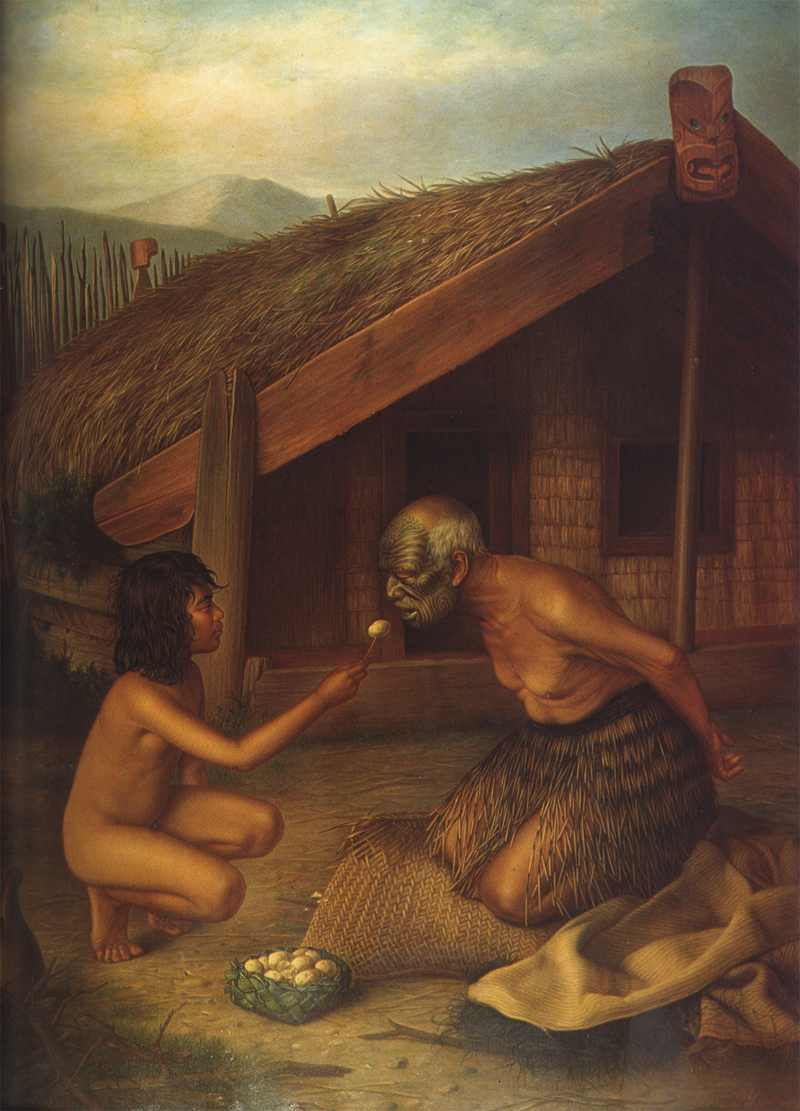 🇳🇿 New ZealandTohunga
A Māori expert practitioner of sacred or secular arts, from priests to carvers.Tradition · Healing · Seeing and foretelling Living
🇳🇿 New ZealandTohunga
A Māori expert practitioner of sacred or secular arts, from priests to carvers.Tradition · Healing · Seeing and foretelling Living
 🇳🇬 NigeriaOrunmilaỌ̀rúnmìlà
Yoruba deity of wisdom and the creator of the Ifá divination systemBeing · Seeing and foretelling · Speaking with spirits and the dead Living
🇳🇬 NigeriaOrunmilaỌ̀rúnmìlà
Yoruba deity of wisdom and the creator of the Ifá divination systemBeing · Seeing and foretelling · Speaking with spirits and the dead Living
 🇮🇹 ItalyEtruscan religion
The polytheistic beliefs and divination practices of the ancient Etruscans of ItalyTradition · Seeing and foretelling · Speaking with spirits and the dead Historical
🇮🇹 ItalyEtruscan religion
The polytheistic beliefs and divination practices of the ancient Etruscans of ItalyTradition · Seeing and foretelling · Speaking with spirits and the dead Historical
 🇮🇹 ItalyCumaean SibylSibylla Cumana
The priestess of the Apollonian oracle at Cumae, famous in Roman legend for her prophetic books and underworld guidance.Figure · Seeing and foretelling · Speaking with spirits and the dead Legendary
🇮🇹 ItalyCumaean SibylSibylla Cumana
The priestess of the Apollonian oracle at Cumae, famous in Roman legend for her prophetic books and underworld guidance.Figure · Seeing and foretelling · Speaking with spirits and the dead Legendary