
Menshen
In its own language: 門神
from Chinese men (gate) and shen (god)
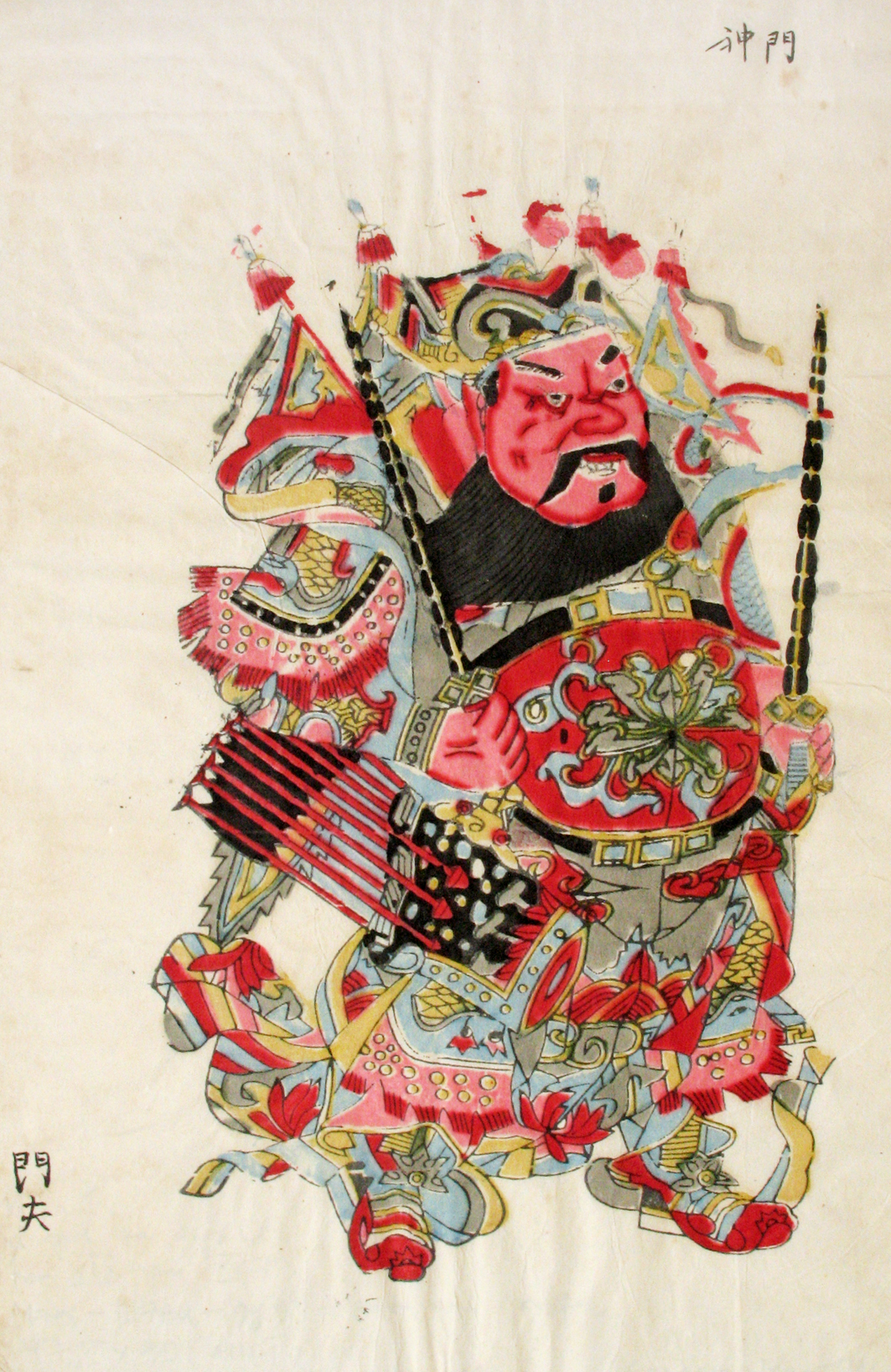
Guardian figures pasted to doors in Chinese folk religion to protect homes from evil.
Menshen are divine guardians of gates and doors in Chinese folk religion. They are believed to ward off negative influences and invite good fortune into the household. The practice originated with ancient spirits but later adopted deified generals as popular protectors.
- Originated with Shenshu and Yulü during the Han dynasty
- Qin Shubao and Yuchi Gong replaced them in the Tang era
- Images are pasted on doors and replaced every Chinese New Year
- Figures must face each other to avoid bad luck
- Korea calls similar guardians Munsin
What it is
Menshen, or door gods, are protective figures found in Chinese folk religion. They serve as divine guardians for the entrances of homes and buildings. Their primary role is to block evil influences while allowing positive energy to enter. These figures represent a long-standing tradition of spiritual protection at the threshold of domestic spaces.
Where it comes from
The concept began with sacrifices to a door spirit recorded in the Book of Rites. By the Han dynasty, this role was filled by the pair Shenshu and Yulü. Their images were painted on peachwood and attached to gates. Later, during the Tang dynasty, deified generals Qin Shubao and Yuchi Gong became more popular after reportedly protecting Emperor Taizong from nightmares.
How it is done
Door gods are typically printed images pasted onto paired doors. They are usually replaced annually during the Chinese New Year. When used, the figures must face each other; placing them back to back is considered bad luck. Occasionally, they appear as relief sculptures or statues flanking a doorway.
Tools and materials
Historically, the names or images of early gods were carved into peachwood. Modern versions are mostly paper prints. In some cases, sculpted figures or statues are placed on either side of an entrance. The materials serve as physical anchors for the spiritual presence.
Menshen, drawn and placed
- Living
- Revived
- Fading
- Historical
- Legendary
- Performed
- Lineage
- Chinese folk religion
- Timing
- during Chinese New Year
What it is for
These figures are intended to protect the household against evil spirits and misfortune. Martial door gods are specifically chosen to ward off bad influences through their military authority. Civil door gods are selected to attract blessings and good fortune to the residents.
Who does it
The practice is maintained by households rather than formal religious clergy. Ordinary people paste the images themselves as part of seasonal maintenance. While not a formal element of Taoism, some temples use specific deities like Mazu's companions as guardians.
Peoples and places
The tradition is central to Chinese culture, where various generals and scholars serve as protectors. It extends to Korea, where similar guardians are called Munsin. Different regions may prefer martial figures for strength or civil figures for prosperity depending on local customs.
At a glance: who, where and when
Who does it
Belief worlds
Occasions


What people believe
The worldview holds that thresholds are vulnerable points for spiritual intrusion. Ancient texts describe spirits haunting those who fail to maintain proper rituals. The belief system integrates folklore, such as the story of Wei Zheng executing a dragon king, which explains why generals guard doors.
When it is done
The most common time for replacement is the Chinese New Year. This annual ritual ensures the guardians remain fresh and effective for the coming year. Older practices involved sacrifices recorded in ancient texts, marking the importance of the door spirit throughout history.
How scholars and sceptics see it
Scholars view menshen as part of broader Chinese folk religion and popular superstition. They analyze the transition from early tree spirits to deified historical figures. Anthropologists note how these beliefs persist despite modernization, often appearing alongside Taoist temple practices.
Cautions and what is closed
Improper placement, such as facing the figures away from each other, is believed to bring bad luck. The tradition relies on correct positioning and respectful treatment of the images. There are no known health risks, but cultural sensitivity is required regarding sacred household items.
Compare and confuse
Menshen are similar to Dvarapala in other Asian traditions. They share functions with Feng shui shields and mirrors used at doorways. Korean Munsin serve a nearly identical purpose in neighboring culture. Both martial and civil types exist across these related traditions.
Law and persecution
There are no specific laws restricting the display of door gods. The practice is protected as part of cultural heritage. It remains a common household activity without legal interference or persecution in modern times.
Today
In modern China, door gods are often seen as traditional decorations rather than strict religious obligations. They remain widely used during festivals. The tradition persists in diaspora communities and influences popular culture, including films and media representations of Chinese mythology.
Days linked to Menshen
Questions people ask about Menshen
What are menshen?
Menshen are guardian figures in Chinese folk religion. They are placed on doors to protect homes from evil spirits and invite good fortune. They represent a long-standing tradition of spiritual boundary keeping.
Where did the tradition come from?
It began with early door spirits in the Book of Rites. Han dynasty texts mention Shenshu and Yulü. Tang dynasty legends popularized general Qin Shubao and Yuchi Gong as protectors after they saved an emperor from nightmares.
How are they used today?
People paste printed images on paired doors. They are typically changed during Chinese New Year. The figures must face each other. Some homes use statues instead of paper prints.
Are there different types?
Yes. Martial door gods are generals who ward off evil. Civil door gods are scholars who bring blessings. Single doors might use Wei Zheng or Zhong Kui. Temples may use specific deity companions.
Good reading and sources
- Menshen on WikipediaEncyclopedia
- More photos on Wikimedia CommonsPhotos and video
- Wikidata recordOpen data
The facts on this page come from the Wikipedia article "Menshen", written by its contributors and used under the CC BY-SA 4.0 licence, and from its Wikidata record (CC0). EveryJaadu rewrote the text in its own words, with AI assistance, and compares every page with the article to make sure no passage is copied. It may be reused under the same CC BY-SA 4.0 licence with a link back.
It may contain mistakes. Names and customs differ from one community to the next, and some knowledge is closed to outsiders and left out here. This page describes belief and practice. It does not say that any of it works, it is not a how-to, and it is not medical advice. If something is wrong, tell us. Last refreshed 2026-10-05.
More from China
All the entries from China 🇨🇳 China and 5 moreGhost FestivalZhongyuan Festival; Yulanpen Festival
A festival to feed wandering spirits and guide them home during the seventh lunar month.Tradition · Speaking with spirits and the dead · Protection Living
🇨🇳 China and 5 moreGhost FestivalZhongyuan Festival; Yulanpen Festival
A festival to feed wandering spirits and guide them home during the seventh lunar month.Tradition · Speaking with spirits and the dead · Protection Living
 🇲🇳 Mongolia and 1 moreTsagaan SarЦагаан сар
A Mongol lunisolar new year marked by white clothes and dairy feastsTradition · Luck and prosperity · Speaking with spirits and the dead Living
🇲🇳 Mongolia and 1 moreTsagaan SarЦагаан сар
A Mongol lunisolar new year marked by white clothes and dairy feastsTradition · Luck and prosperity · Speaking with spirits and the dead Living
 🇨🇳 ChinaChinese alchemy煉丹術
A Taoist pursuit of longevity through elixirs and internal cultivationTradition · Healing · Speaking with spirits and the dead Historical
🇨🇳 ChinaChinese alchemy煉丹術
A Taoist pursuit of longevity through elixirs and internal cultivationTradition · Healing · Speaking with spirits and the dead Historical
 🇨🇳 China and 1 moreAncestor veneration in China中國傳統宗法性宗教
Rites for dead kin who are thought to watch over the familyTradition · Protection · Speaking with spirits and the dead Living
🇨🇳 China and 1 moreAncestor veneration in China中國傳統宗法性宗教
Rites for dead kin who are thought to watch over the familyTradition · Protection · Speaking with spirits and the dead Living
Related elsewhere
All belief 🇧🇪 Belgium and 2 moreHorseshoe
A metal shoe for a horse's hoof and a talisman of good fortuneCharm · Protection · Luck and prosperity Living
🇧🇪 Belgium and 2 moreHorseshoe
A metal shoe for a horse's hoof and a talisman of good fortuneCharm · Protection · Luck and prosperity Living
 🇪🇬 Egypt and 3 moreAmulet
A portable object worn or carried to ward off harm and invite fortuneCharm · Protection · Luck and prosperity Living
🇳🇿 New ZealandKarakia
Māori recitations used for spiritual guidance, protection, and formal greetingsTradition · Protection · Speaking with spirits and the dead Living
🇪🇬 Egypt and 3 moreAmulet
A portable object worn or carried to ward off harm and invite fortuneCharm · Protection · Luck and prosperity Living
🇳🇿 New ZealandKarakia
Māori recitations used for spiritual guidance, protection, and formal greetingsTradition · Protection · Speaking with spirits and the dead Living
 🇮🇳 India and 5 moreKolamகோலம்
A daily geometric floor drawing made with rice flour at the home entrance in South IndiaTradition · Protection · Luck and prosperity Living
🇮🇳 India and 5 moreKolamகோலம்
A daily geometric floor drawing made with rice flour at the home entrance in South IndiaTradition · Protection · Luck and prosperity Living