
Shinto shrine
In its own language: 神社 (jinja)
from jinja, meaning 'kami shrine', with older readings like mori referring to sacred groves
A structure housing kami deities within the Shinto tradition of Japan
A Shinto shrine is a building or sacred site in Japan built to house one or more kami, the spirits of the Shinto religion. These structures range from grand halls to small roadside huts and serve as focal points for worship, festivals, and community rituals.
- The Engi-shiki of 927 CE listed 2,861 shrines and 3,131 kami
- Over 100,000 shrines are estimated to exist in Japan today
- The Unicode character U+26E9 represents a Shinto shrine
- Ōmiwa Shrine enshrines a mountain rather than a building
- Hereditary Shake families historically managed many shrines
What it is
A Shinto shrine serves as a physical home for kami, the deities central to the Shinto faith. The primary building, known as the honden, houses the patron spirit, though some shrines lack this hall if they enshrine natural features like mountains or trees. Worship areas called haiden allow devotees to pray, while portable shrines known as mikoshi carry kami during processions. These sites vary greatly in size, from massive complexes to tiny roadside markers called hokora. They function as anchors for spiritual energy and community identity across Japan.
Where it comes from
Early worship occurred in natural settings like forests and near large trees, which acted as yorishiro to attract spirits. As agriculture developed, temporary structures were built to ensure good harvests. Over time, these evolved into permanent buildings. The first recorded shrine was constructed around 478 CE. Early village councils used these spaces to consult ancestors and kami, establishing a tradition of seeking guidance through ritual and natural connection.
How it is done
Rituals are performed to honor kami and maintain harmony. The Engi-shiki, compiled in the tenth century, codified many ceremonies, including fire prevention and sickness avoidance rites. Festivals involve carrying mikoshi palanquins through streets. Priests conduct prayers and liturgies, while households may visit local shrines for blessings. The practice emphasizes purification and respect for the divine presence within the structure or natural object.
Tools and materials
Shrines utilize specific architectural elements and objects. The honden houses the main deity, while a himorogi acts as a temporary altar. Yorishiro are objects believed to attract spirits, such as sacred ropes called shimenawa that surround trees. Mikoshi serve as mobile shrines for festivals. Materials often include wood and stone, arranged to create a boundary between the mundane and the sacred.
Shinto shrine, drawn and placed
- Living
- Revived
- Fading
- Historical
- Legendary
- Performed
- Lineage
- Shinto religion
- Timing
- during festivals, daily worship, and seasonal rites
What it is for
Devotees visit shrines to seek protection, health, and good fortune. Rites address specific needs, such as preventing fires or epidemics. Communities gather for festivals to strengthen social bonds and honor local spirits. The shrines also serve as tutelary guardians for villages and buildings, providing a sense of security and continuity for the people who live nearby.
Who does it
Historically, hereditary families known as Shake dominated shrine management, a practice that continues at some locations. Priests oversee rituals and maintain the grounds. The Agency for Cultural Affairs tracks many shrines, though some operate independently. Training involves learning liturgical texts and ceremonial procedures established in historical codes. Status within the shrine hierarchy can depend on the importance of the enshrined kami.
Peoples and places
The tradition is native to Japan, where it remains a living practice. Different regions have distinct naming conventions and architectural styles. Some shrines hold high status due to imperial connections, while others serve as local tutelary guardians. The diversity of names reflects the varied roles these sites play in Japanese society, from national centers to neighborhood shrines.
At a glance: who, where and when
Peoples
Belief worlds
Occasions


What people believe
Shinto belief holds that kami inhabit natural phenomena and ancestral spirits. Shrines provide a designated space for these beings to reside and interact with humans. The concept of yorishiro suggests that spirits can be drawn to physical objects. Purity is essential for approaching the divine, and rituals aim to remove impurities. The relationship between humans and kami is reciprocal, involving offerings and reverence in exchange for protection and blessings.
When it is done
Festivals mark important times in the agricultural and lunar calendars. Seasonal rites address harvests and disease prevention. Daily worship occurs at household altars and local shrines. Specific dates in the lunar month trigger official ceremonies, such as fire prevention rites in the sixth and twelfth months. The calendar integrates natural cycles with spiritual observances.
How scholars and sceptics see it
Historians note the formalization of Shinto through state codes like the Taihō Code in the eighth century. Scholars study the Engi-shiki to understand early liturgical practices. Anthropologists examine how shrines function as community centers. Research traces the evolution from natural worship sites to structured religious institutions. Academic work highlights the integration of indigenous beliefs with governmental systems.
Cautions and what is closed
Some shrines maintain closed knowledge, restricting certain rituals to initiated priests. Outsiders may not participate in all ceremonies. Historical tensions exist regarding state-sponsored Shinto and its separation from Buddhism. Modern debates focus on the role of shrines in public life and their relationship with the government. Respect for local customs and restrictions is expected from visitors.
Compare and confuse
Shinto shrines differ from Buddhist temples, though historical blending occurred. Terms like gongen reflect past syncretism. The concept of a sacred grove parallels other nature-worship traditions. Unlike churches or mosques, shrines often lack permanent statues, focusing instead on natural objects or mirrors. The term jinja is specific to Shinto, distinguishing it from general religious buildings.
Law and persecution
The Meiji government issued orders separating Shinto and Buddhism, altering shrine names and practices. Legal codes historically defined shrine structures and rituals. Today, shrines operate under various legal frameworks, with some affiliated with associations and others independent. Persecution or suppression has occurred during periods of state regulation, but the tradition persists. Laws protect religious freedom while regulating public assemblies.
Rites that involve Shinto shrine
Questions people ask about Shinto shrine
What is a Shinto shrine?
It is a structure in Japan built to house kami, the spirits of the Shinto religion. These sites range from large halls to small natural spots, serving as places for worship and community gathering.
Where do Shinto shrines come from?
They originated from ancient worship in natural settings like forests and mountains. Early communities used these spaces to consult ancestors and kami, eventually building permanent structures to house these spirits.
What is the purpose of a shrine?
Shrines provide a space for kami to reside and for people to offer prayers. They are used for protection, health, and good fortune, as well as for community festivals and seasonal rituals.
Who manages Shinto shrines?
Priests oversee rituals and maintenance. Historically, hereditary families held these roles, and some continue this tradition. Many shrines are part of larger associations, while others remain independent.
Good reading and sources
- Shinto shrine on WikipediaEncyclopedia
- More photos on Wikimedia CommonsPhotos and video
- Wikidata recordOpen data
The facts on this page come from the Wikipedia article "Shinto shrine", written by its contributors and used under the CC BY-SA 4.0 licence, and from its Wikidata record (CC0). EveryJaadu rewrote the text in its own words, with AI assistance, and compares every page with the article to make sure no passage is copied. It may be reused under the same CC BY-SA 4.0 licence with a link back.
It may contain mistakes. Names and customs differ from one community to the next, and some knowledge is closed to outsiders and left out here. This page describes belief and practice. It does not say that any of it works, it is not a how-to, and it is not medical advice. If something is wrong, tell us. Last refreshed 2026-10-05.
More from Japan
All the entries from Japan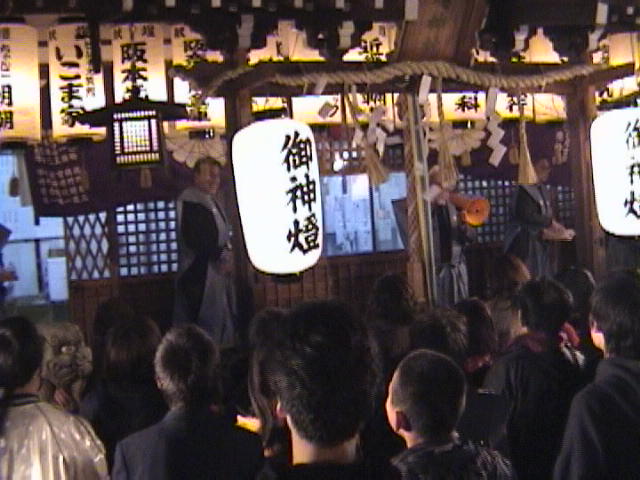 🇯🇵 JapanSetsubun節分
A Japanese seasonal rite to drive away bad luck and welcome spring with roasted beansRite · Protection · Luck and prosperity Living
🇯🇵 JapanSetsubun節分
A Japanese seasonal rite to drive away bad luck and welcome spring with roasted beansRite · Protection · Luck and prosperity Living
 🇨🇳 China and 5 moreGhost FestivalZhongyuan Festival; Yulanpen Festival
A festival to feed wandering spirits and guide them home during the seventh lunar month.Tradition · Speaking with spirits and the dead · Protection Living
🇨🇳 China and 5 moreGhost FestivalZhongyuan Festival; Yulanpen Festival
A festival to feed wandering spirits and guide them home during the seventh lunar month.Tradition · Speaking with spirits and the dead · Protection Living
 🇨🇳 China and 1 moreLuoshu Square洛書
An ancient Chinese three-by-three magic square linked to geomancy and numerologyTradition · Power and authority · Wonder and entertainment Historical
🇨🇳 China and 1 moreLuoshu Square洛書
An ancient Chinese three-by-three magic square linked to geomancy and numerologyTradition · Power and authority · Wonder and entertainment Historical
 🇰🇷 South Korea and 3 moreKorean shamanism무속
A Korean folk religion centered on ritual specialists who mediate between humans and spiritsTradition · Protection · Healing Living
🇰🇷 South Korea and 3 moreKorean shamanism무속
A Korean folk religion centered on ritual specialists who mediate between humans and spiritsTradition · Protection · Healing Living
Related elsewhere
All tradition 🇮🇳 India and 1 moreNavagrahaनवग्रह
A group of nine celestial deities in Hinduism that govern fate and astrologyTradition · Protection · Luck and prosperity Living
🇮🇳 India and 1 moreNavagrahaनवग्रह
A group of nine celestial deities in Hinduism that govern fate and astrologyTradition · Protection · Luck and prosperity Living
 🇮🇳 IndiaBhuta KolaBhūta Kōla
A Tulu folk dance and ritual where spirits are channelled into human performersTradition · Protection · Speaking with spirits and the dead Living
🇮🇳 IndiaBhuta KolaBhūta Kōla
A Tulu folk dance and ritual where spirits are channelled into human performersTradition · Protection · Speaking with spirits and the dead Living
 🇪🇬 Egypt and 2 moreLibation
The ritual pouring of liquid as an offering to spirits or the deadRite · Speaking with spirits and the dead · Protection Living
🇪🇬 Egypt and 2 moreLibation
The ritual pouring of liquid as an offering to spirits or the deadRite · Speaking with spirits and the dead · Protection Living
 🇮🇪 Ireland and 5 moreCairn
A human-made stack of stones used as a marker, memorial, or religious symbol across many cultures.Tradition · Protection · Speaking with spirits and the dead Living
🇮🇪 Ireland and 5 moreCairn
A human-made stack of stones used as a marker, memorial, or religious symbol across many cultures.Tradition · Protection · Speaking with spirits and the dead Living