Charms, amulets and talismans
Made and worn things: the nazar, the hamsa, the omamori, the mojo bag and the witch bottle.
Charms, amulets and talismans are things made or chosen to carry a purpose. The blue glass nazar in Turkey, the hamsa hand across North Africa and the Middle East, the Japanese omamori, the Haitian pwen, the Italian cornicello and the Hoodoo mojo bag all belong here. They are small, portable and personal, and found on every continent. This page looks at what they are said to do and how they are made, sold and understood.
Amulet or talisman
The two words are often used loosely. An amulet is usually said to protect by what it is, such as a blue bead against the evil eye. A talisman is made or empowered for a purpose, often with writing, a name or a date. Islamic, Jewish, Taoist and Hindu traditions all have written talismans: the Taoist fu, the Jewish kame'a, the Hindu yantra and the Muslim hirz. The common thread is that something small and personal is believed to hold a purpose on behalf of its owner.
Making and keeping
Many charms are made by specialists, then blessed or sold at a temple, shrine or market. Others are made at home, such as a red thread, a knotted cord, or a horseshoe nailed over a door. Practitioners usually say a charm should be kept clean, respected and not shown off. In Japan an omamori is returned to its shrine after a year. Charm makers are often women, jewellers, scribes or temple staff, and the person who makes a charm may not be the person who blesses it.
Faith and suspicion
Religious authorities disagree on charms. Some Islamic scholars allow Quranic verses carried as a reminder and reject objects held to work by themselves. Many Christian churches have blessed medals and scapulars while condemning amulets of folk origin. Sikh teaching rejects charms altogether. Anthropologists read them as ways to hold fear and uncertainty in a form a person can carry. Interpretation is divided within religions too, so one family may treat a bead as decoration while a neighbour treats it as a serious shield.
Market and appropriation
Charms are big business. Evil-eye beads sell as fashion on every high street, and the hamsa appears as a decoration far from its homes. Fakes are common, and some sellers promise outcomes in ways that amount to fraud, particularly in expensive gemstone or lottery charm schemes. Sacred designs used as a logo can offend the community they come from. Designers have taken eyes, hands and runes as motifs, and while many communities are glad to see them shared, others ask that sacred symbols not be turned into trivia or used by brands.
Charm on EveryJaadu
The entries written up so far, best known first.
 🇨🇳 China and 5 moreJoss paper金紙
Paper burned as money and goods for ancestors, gods and the deadCharm · Speaking with spirits and the dead · Luck and prosperity Living
 🇨🇳 China and 2 moreFulu符籙
A Taoist magical script used for healing and protectionCharm · Healing · Protection Living
 🇯🇵 Japan and 3 moreManeki-neko招き猫
A Japanese figurine of a beckoning cat believed to bring luck and prosperityCharm · Luck and prosperity · Protection Living
 🇯🇵 JapanOmamori御守/お守り
Japanese amulets sold at shrines and temples for protection and luckCharm · Protection · Luck and prosperity Living
 🇨🇳 China and 5 moreSky lantern天燈
A paper hot air balloon lifted by flame to carry wishes and blessingsRite · Luck and prosperity · Protection Living
 🇨🇳 China and 5 moreChinese guardian lions石獅 (shíshī)
Stone lion pairs placed at entrances to ward off harm and welcome fortuneCharm · Protection · Luck and prosperity Living
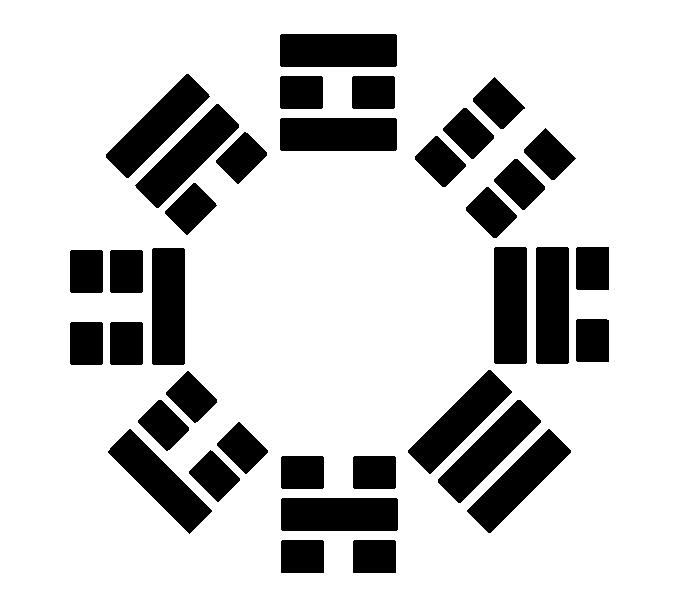 🇨🇳 China and 1 moreBagua八卦
A set of eight trigram symbols from China used in divination, philosophy, and feng shui.Tradition · Seeing and foretelling · Protection Living
 🇯🇵 JapanDaruma doll達磨
A round Japanese talisman that rights itself when knocked overCharm · Luck and prosperity · Power and authority Living
 🇯🇵 JapanOfudaお札/御札
Paper or wood talismans from Japanese shrines and temples believed to hold divine power.Charm · Protection · Cursing and harm Living
🇯🇵 JapanOmamori (sample)お守り
A small shrine charm in a brocade pouch.Charm · Protection · Luck and prosperity Living
 🇯🇵 JapanTeru teru bōzuてるてる坊主
A white paper doll hung outside to ask for sunny weatherCharm · Luck and prosperity Living
 🇯🇵 JapanSaruboboさるぼぼ
A faceless red doll from Japan, given as a charm for family and fortuneCharm · Luck and prosperity · Protection Living
 🇯🇵 Japan and 1 moreGood Luck Flag寄せ書き日の丸 (yosegaki hinomaru)
A Japanese national flag signed by loved ones to wish a soldier safety and victory.Charm · Protection · Luck and prosperity Living
 🇯🇵 JapanKin no unko金のうんこ
A Japanese charm shaped like faeces that is believed to bring good fortuneCharm · Luck and prosperity Living
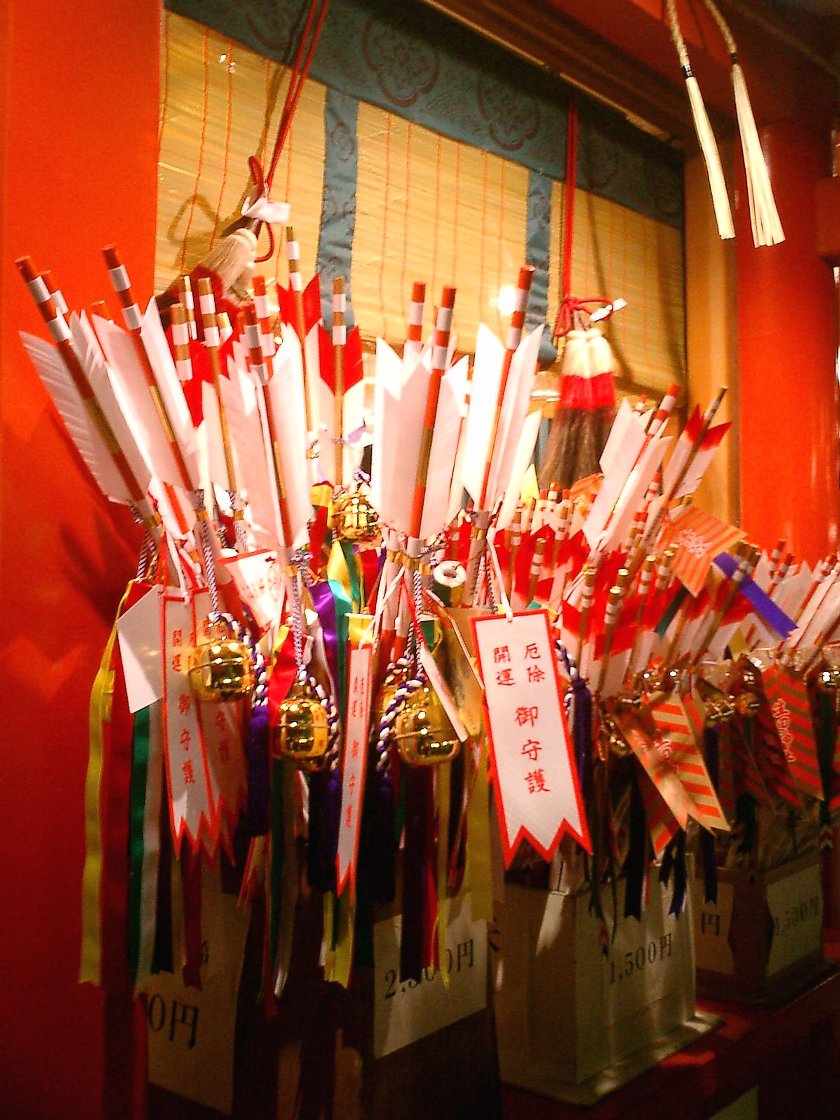 🇯🇵 JapanHamaya破魔矢
A blunt arrow given at shrines to ward off evil and secure good luck for the new yearCharm · Protection · Luck and prosperity Living
 🇨🇳 ChinaPig dragon玉豬龍
A coiled Neolithic jade amulet from Hongshan culture, possibly an early dragon imageCharm · Power and authority Historical
 🇯🇵 JapanFukusuke福助
A kneeling Japanese doll believed to bring wealth and honorCharm · Luck and prosperity · Power and authority Living
 🇨🇳 China and 2 moreCoin-sword辟邪劍 (bì xié jiàn)
A Chinese numismatic talisman made of cash coins strung on a rod to ward off evil spiritsCharm · Protection Living
 🇯🇵 JapanTide jewels潮干る珠 (Shiohiru-tama) and 潮満つ珠 (Shiomitsu-tama)
Two magical gems from Japanese mythology that control the tides to drown or save enemies.Charm · Cursing and harm · Power and authority Legendary
🇨🇳 China and 1 moreZhengde Tongbao正德通寶
A fantasy cash coin used as a Chinese and Vietnamese amulet for luck and protection.Charm · Luck and prosperity · Protection Living
 🇰🇷 South Korea and 3 moreKorean numismatic charm열쇠패
Coin-shaped objects used as protective and decorative charms in Korean cultureCharm · Protection · Luck and prosperity Historical
 🇨🇳 China and 1 moreLei Ting curse charm符咒钱
A numismatic charm invoking the thunder god to banish evil spirits.Charm · Protection · Cursing and harm Historical
 🇨🇳 China and 2 moreBuddhist coin charm佛教品壓勝錢
Amulets shaped like coins that bear Buddhist symbols and prayers for protection.Charm · Protection · Luck and prosperity Historical
🇯🇵 Japan and 2 moreJapanese numismatic charm絵銭
Coin-shaped charms from Japan used for protection, luck, and blessings.Charm · Protection · Luck and prosperity Living
 🇨🇳 China and 1 moreLock charms家锁 / 锁片 (jiā suǒ / suǒ piàn)
A Chinese metal pendant shaped like a lock to protect children from harm and death.Charm · Protection · Luck and prosperity Historical
 🇨🇳 China and 2 moreChinese burial money瘞錢 (yì qián)
Imitations of currency placed in Chinese graves to serve the deceased in the afterlife.Charm · Protection · Luck and prosperity Historical
 🇨🇳 China and 1 moreTaoist coin charm道教品壓生錢
Chinese and Vietnamese numismatic charms used for protection and feng shuiCharm · Protection · Cursing and harm Historical
 🇨🇳 China and 1 moreHorse coin馬錢 (mǎ qián)
A Chinese numismatic charm depicting horses, used as game pieces or gambling tokensCharm · Luck and prosperity · Wonder and entertainment Historical
 🇨🇳 China and 1 moreConfucian coin charms
Amulets bearing Confucian moral teachings and historical storiesCharm · Protection · Luck and prosperity Historical
 🇨🇳 China and 1 moreVault protector coin鎮庫錢 (zhèn kù qián)
Large Chinese numismatic charms cast to guard mint treasuries and attract wealth.Charm · Protection · Luck and prosperity Historical
 🇨🇳 China and 3 moreMarriage coin charm夫婦和合花錢
Coin-shaped amulets from East Asia that celebrate marriage, fertility, and conjugal harmonyCharm · Protection · Luck and prosperity Historical
 🇯🇵 JapanFūrin風鈴
A Japanese summer wind chime, once hung at temples to turn away evil spiritsCharm · Protection · Seeing and foretelling Living
 🇹🇼 Taiwan and 1 moreAuspicious train ticket吉祥語車票
Train tickets with station names that form lucky phrases through wordplay.Charm · Luck and prosperity Living
🇯🇵 JapanHōko這子
A Japanese soft doll used as a protective talisman for mothers and childrenCharm · Protection Historical
 🇯🇵 JapanAkabeko赤べこ
A bobbing papier-mâché toy from Japan believed to ward off illnessCharm · Protection · Healing Living
 🇰🇷 South KoreaMengdu멩두
Brass ritual instruments central to Jeju Island shamanismCharm · Speaking with spirits and the dead · Power and authority Fading
 🇹🇼 Taiwan and 1 moreTiangong censer天公爐
An incense burner for the Jade Emperor in Chinese folk religionCharm · Speaking with spirits and the dead Living
🇯🇵 JapanAzusa Yumi梓弓
A sacred bow made from cherry birch wood, used in Shinto rituals to ward off spirits.Charm · Protection · Wonder and entertainment Living
 🇯🇵 JapanŌnusa大幣
A wand with paper streamers waved in Shinto rites to carry off impuritiesCharm · Cleansing and purification Living
 🇨🇳 China and 2 moreHu笏
A flat ceremonial baton used by East Asian officials and priests for ritual purposes.Charm · Power and authority · Wonder and entertainment Living
 🇯🇵 JapanOkiagari-koboshi起き上がり小法師
A Japanese roly-poly doll that rights itself when knocked overCharm · Luck and prosperity · Power and authority Living
 🇨🇳 China and 3 moreCash方孔錢
A round copper coin with a square hole used in China and East Asia for two millennia.Charm · Luck and prosperity · Speaking with spirits and the dead Living
 🇯🇵 JapanMagatama勾玉
A curved Japanese bead used as jewelry, status symbol, and sacred object in Shinto.Charm · Power and authority · Speaking with spirits and the dead Living
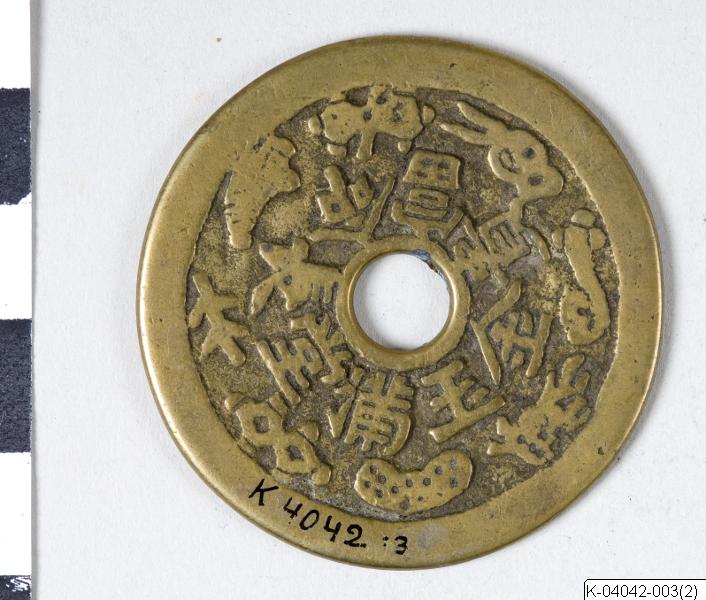 🇨🇳 ChinaEight Treasures八寶 (Bābǎo)
A set of eight symbols in Chinese art and amulets representing good fortune.Charm · Luck and prosperity · Protection Living
 🇯🇵 JapanSuzu鈴
A hollow Japanese bell with inner pellets, used in Shinto rites and shrines.Charm · Protection · Speaking with spirits and the dead Living
 🇯🇵 JapanKomainu狛犬
Stone lion-dog pairs that guard Japanese shrines and ward off evil spirits.Charm · Protection Living
 🇯🇵 JapanAme-no-Nuboko天沼矛
The jewel-decorated spear of Japanese myth, used to stir the sea into landCharm · Protection · Change and initiation Legendary
 🇨🇳 China and 1 moreLuopan罗盘 (luó pán)
A Chinese magnetic compass with concentric rings for feng shui practiceCharm · Power and authority Living
Photo credits on this page
The small pictures above come from Wikimedia Commons under free licences. Some are cropped to fit.
- Auspicious train ticket: SSR2000, CC BY-SA 3.0, source
- Suzu: Unknown author, CC0, source
- Daruma doll: Crisco 1492, Public domain, source
- Ōnusa: 教派研究, CC BY-SA 3.0, source
- Maneki-neko: Su--May, CC BY 2.0, source
- Fukusuke: Nesnad, CC BY-SA 3.0, source
- Sarubobo: Unknown author, CC BY-SA 3.0, source
- Sky lantern: Richy, CC BY-SA 3.0, source
- Korean numismatic charm: Unknown author(s)., Public domain, source
- Akabeko: Wdqh, CC BY-SA 4.0, source
- Teru teru bōzu: Novaric at English Wikipedia, CC BY-SA 3.0, source
- Lei Ting curse charm: Donald_Trung, CC BY-SA 4.0, source
- Pig dragon: Prof. Gary Lee Todd, CC BY-SA 4.0, source
- Ofuda: 教派研究 (Sectarian research), CC BY-SA 3.0, source
- Good Luck Flag: takato marui, CC BY-SA 2.0, source
- Joss paper: Vmenkov, CC BY-SA 3.0, source
- Coin-sword: Etnografiska museet, CC BY 2.5, source
- Buddhist coin charm: Scott Semans, CC BY 3.0, source
- Ame-no-Nuboko: Kobayashi Eitaku, Public domain, source
- Omamori: Leongboy1, Public domain, source
- Komainu: Unknown author, Public domain, source
- Hamaya: Tomomarusan, CC BY 2.5, source
- Lock charms: Scott Semans World Coins (CoinCoin.com)., CC BY 3.0, source
- Fulu: Youle26, CC BY-SA 4.0, source
- Chinese burial money: Gary Todd, CC0, source
- Tide jewels: Shizhao, CC BY-SA 3.0, source
- Marriage coin charm: Scott Semans, CC BY 3.0, source
- Confucian coin charms: Jean-Michel Moullec, CC BY 2.0, source
- Bagua: TarcísioTS at Portuguese Wikipedia, Public domain, source
- Mengdu: National Folk Museum of Korea, CC BY 4.0, source
- Tiangong censer: WiDE, CC BY-SA 3.0, source
- Kin no unko: enmoto, CC BY 2.0, source
- Taoist coin charm: Etnografiska Museet, CC BY 2.5, source
- Okiagari-koboshi: Unknown author, CC BY-SA 3.0, source
- Cash: User 冷玉 on zh.wikipedia, CC BY-SA 3.0, source
- Vault protector coin: 风之清扬, CC BY-SA 3.0, source
- Magatama: Kakidai, CC BY-SA 3.0, source
- Eight Treasures: Etnografiska Museet, CC BY 2.5, source
- Chinese guardian lions: Pvt pauline, CC BY-SA 3.0, source
- Luopan: Pcae18 at English Wikipedia, CC BY-SA 3.0, source
- Fūrin: 100yen 04:47, 28 October 2006 (UTC), CC BY-SA 3.0, source
- Hu: Zhangzhugang, CC BY-SA 4.0, source
- Horse coin: Etnografiska museet, CC BY 2.5, source