
Chinese guardian lions
In its own language: 石獅 (shíshī)
from Chinese shi, likely derived from the Persian word sher
Stone lion pairs placed at entrances to ward off harm and welcome fortune
Chinese guardian lions are stone statues traditionally placed at the gates of palaces, temples, and wealthy homes. Originating in China through Buddhist cultural exchange, they are believed to protect buildings from negative spiritual forces and hostile people.
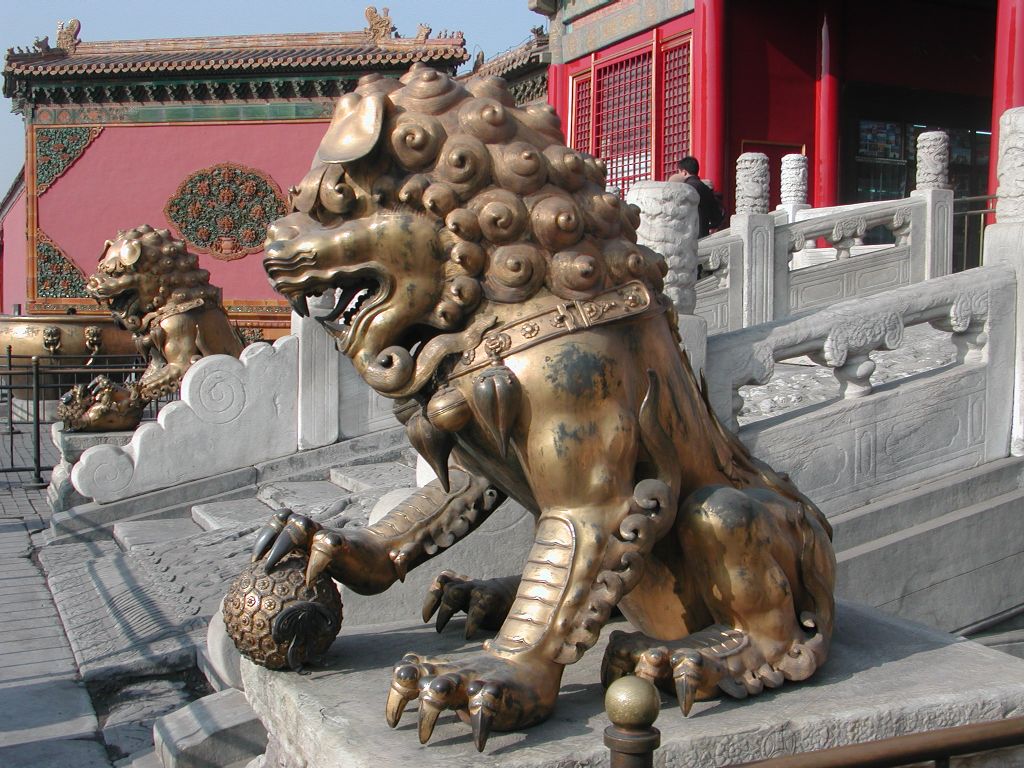
- Male lion holds an embroidered ball representing worldly power
- Female lion protects a cub symbolizing the cycle of life
- Originated from Central Asian tributes during the Han dynasty
- Placed in pairs to balance yin and yang energies
- Known as foo dogs in Western colloquial English
What it is
Chinese guardian lions are traditional architectural ornaments typically carved from stone or cast in metal. They appear as a pair of stylized lions standing at the entrance of a structure. One figure represents the male principle and the other the female principle, embodying the balance of yin and yang. These statues are widely recognized in colloquial English as foo dogs or lion dogs, though these terms are not used in their culture of origin. They serve as permanent guardians for the space they watch over.
Where it comes from
The concept spread to China during the Han dynasty through trade along the Silk Road. Central Asian peoples, including Sogdians and Yuezhi, presented live lions and pelts as tribute to the Han court. Buddhist priests and travelers brought stories that linked these foreign animals to ancient Chinese mythic creatures like the suan-ni. By the sixth century AD, lions were already depicted as protective figures in Chinese art, eventually becoming standardized into their current formal style during the Ming and Qing dynasties.
How it is done
The statues are always installed in pairs on either side of an entrance. When facing the building from the outside, the male stands on the right with his paw on an embroidered ball, while the female stands on the left with a cub beneath her paw. Feng shui principles dictate this specific placement to ensure beneficial effects. Their positioning is intended to balance spiritual and physical protection.
Tools and materials
Artisans use durable materials such as marble, granite, bronze, or iron. The male lion holds an embroidered ball, often carved with geometric patterns, representing worldly power. The female lion rests her paw on a playful cub, symbolizing the element of spirit and continuity. Some variations feature a rolling pearl inside the lion's mouth, sized to stay within but move freely. The open or closed mouths of the figures may also represent the sacred sound om or the breath of life and death.
Chinese guardian lions, drawn and placed
- Living
- Revived
- Fading
- Historical
- Legendary
- Performed
- Lineage
- Chinese Buddhism and folk architecture
- Timing
- permanently at entrances
What it is for
These statues are believed to shield buildings from harmful spiritual influences and dangerous people. They are placed at imperial palaces, tombs, government offices, temples, and the residences of the wealthy. In modern times, they are common at restaurants, hotels, and supermarkets, particularly in Chinatowns worldwide. They are thought to bring protective benefits and maintain harmony within the space they guard.
Who does it
Traditionally, only wealthy families and the imperial elite could afford the expensive stone or bronze required to make them. Placing lions at a home was a symbol of social status and wealth. Today, mass-produced concrete and resin versions have made them accessible to ordinary households and businesses. Skilled artisans carve the stone or cast the metal, following established stylistic rules that vary by region and historical period.
Peoples and places
The tradition originated in China and spread across Asia through cultural and religious exchange. In Japan, they appear as komainu; in Myanmar and Laos, as chinthe; and in Okinawa, as shisa. South Asian Hindu and Buddhist temples in India and Sri Lanka feature similar lion statues, known as singha, guided by Vastu Shastra principles. Each region adapted the design to local artistic styles while maintaining the core function of spiritual guardianship.
At a glance: who, where and when
Who does it
Belief worlds



What people believe
The practice is rooted in Chinese Buddhism and folk beliefs about spiritual balance. The pair represents the duality of yin and yang, with the male guarding external material elements and the female protecting the internal living soul. The lions reflect the imagined emotion and power of the animal rather than biological reality. Their fierce claws and teeth are meant to intimidate negative forces, while their stylized forms convey authority and divine protection.
When it is done
The statues are permanent fixtures and do not follow a specific calendar schedule. They are placed at entrances to provide continuous protection. Their presence is tied to the construction or establishment of a building rather than seasonal festivals or lunar events. They remain in place indefinitely to watch over the inhabitants and visitors.
How scholars and sceptics see it
Scholars note that the Chinese guardian lion reflects an imagined version of the animal, distinct from lifelike Western depictions. The stylization emphasizes power through claws and teeth rather than anatomical accuracy. Researchers trace the iconography to Central Asian tributes and Buddhist texts that identified the lion with mythic Chinese beasts. The spread of the motif illustrates how cultural exchange transformed foreign symbols into local architectural traditions.
Cautions and what is closed
The tradition is primarily architectural and symbolic. While colonial or missionary histories are not detailed in the provided text, the statues themselves are treated as respectful cultural artifacts. There is no indication of restricted knowledge or danger associated with viewing or placing them.
Compare and confuse
Chinese guardian lions are often confused with Western lion statues, which aim for realistic depiction. They are related to other Asian guardian figures like the Japanese komainu, Korean haetae, and Tibetan snow lion. Unlike the winged pixiu or horned nian, these lions are quadrupedal and paired. They share the protective role of Indian dvarapalas and Mesopotamian lamassu but differ in artistic style and specific symbolic attributes.
Questions people ask about Chinese guardian lions
What are Chinese guardian lions?
They are stone or metal statues of lions placed in pairs at entrances to protect buildings from harm and negative spirits. They originate from Chinese tradition and are deeply connected to Buddhist and folk beliefs.
Why are they called foo dogs?
Westerners call them foo dogs due to misidentification or confusion with Japanese terms meaning Korean dog. Chinese speakers never call them dogs; they are referred to as shi, meaning lion.
What do the ball and cub represent?
The male lion rests his paw on a ball symbolizing supremacy over the material world. The female lion holds a cub, representing nurture, the element of spirit, and the cycle of life.
Where did the tradition come from?
It began when Central Asian peoples sent live lions as tribute to the Chinese Han court. Buddhist stories linked these animals to ancient Chinese mythic creatures, leading to their adoption as guardians.
Good reading and sources
- Chinese guardian lions on WikipediaEncyclopedia
- More photos on Wikimedia CommonsPhotos and video
- Wikidata recordOpen data
The facts on this page come from the Wikipedia article "Chinese guardian lions", written by its contributors and used under the CC BY-SA 4.0 licence, and from its Wikidata record (CC0). EveryJaadu rewrote the text in its own words, with AI assistance, and compares every page with the article to make sure no passage is copied. It may be reused under the same CC BY-SA 4.0 licence with a link back.
It may contain mistakes. Names and customs differ from one community to the next, and some knowledge is closed to outsiders and left out here. This page describes belief and practice. It does not say that any of it works, it is not a how-to, and it is not medical advice. If something is wrong, tell us. Last refreshed 2026-10-05.
More from China
All the entries from China 🇨🇳 China and 5 moreJoss paper金紙
Paper burned as money and goods for ancestors, gods and the deadCharm · Speaking with spirits and the dead · Luck and prosperity Living
🇨🇳 China and 5 moreJoss paper金紙
Paper burned as money and goods for ancestors, gods and the deadCharm · Speaking with spirits and the dead · Luck and prosperity Living
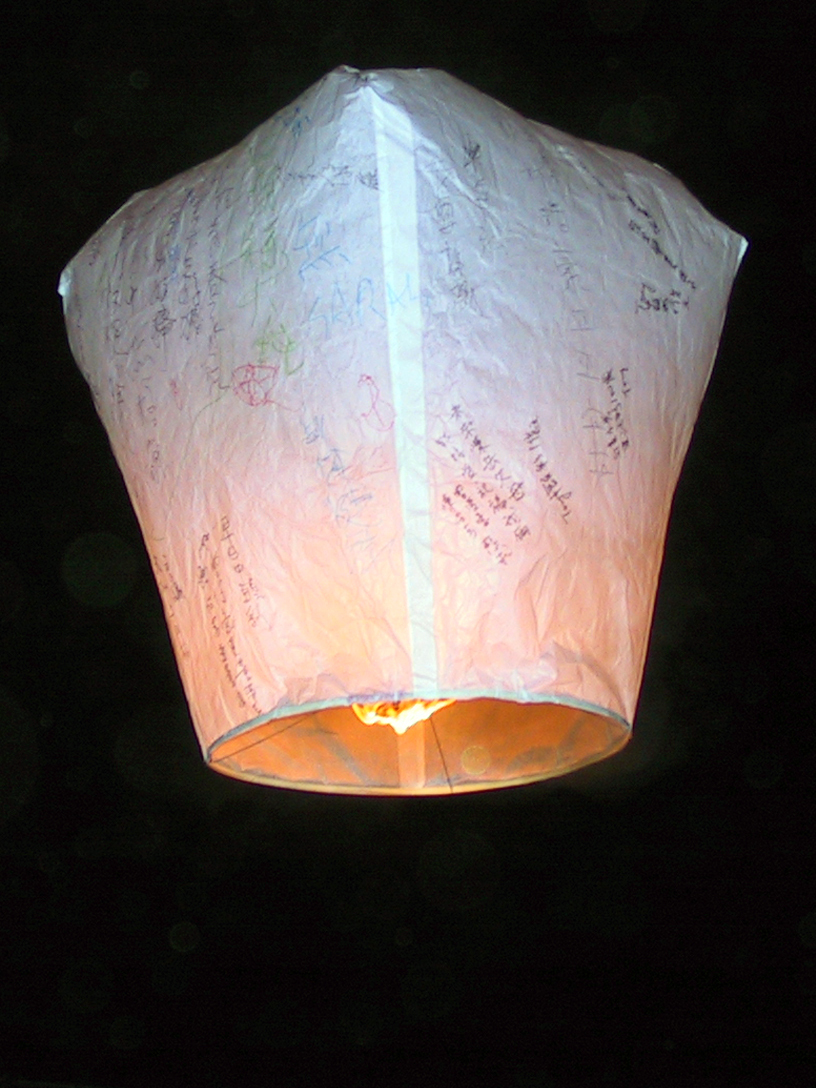 🇨🇳 China and 5 moreSky lantern天燈
A paper hot air balloon lifted by flame to carry wishes and blessingsRite · Luck and prosperity · Protection Living
🇨🇳 China and 5 moreSky lantern天燈
A paper hot air balloon lifted by flame to carry wishes and blessingsRite · Luck and prosperity · Protection Living
 🇨🇳 China and 1 moreFulu符籙
Taoist talismans with cryptic symbols used for healing and protectionCharm · Healing · Protection Living
🇨🇳 China and 1 moreFulu符籙
Taoist talismans with cryptic symbols used for healing and protectionCharm · Healing · Protection Living
 🇯🇵 Japan and 3 moreManeki-neko招き猫
A Japanese figurine of a beckoning cat believed to bring luck and prosperityCharm · Luck and prosperity · Protection Living
🇯🇵 Japan and 3 moreManeki-neko招き猫
A Japanese figurine of a beckoning cat believed to bring luck and prosperityCharm · Luck and prosperity · Protection Living
Related elsewhere
All charm 🇧🇪 Belgium and 2 moreHorseshoe
A metal shoe for a horse's hoof and a talisman of good fortuneCharm · Protection · Luck and prosperity Living
🇧🇪 Belgium and 2 moreHorseshoe
A metal shoe for a horse's hoof and a talisman of good fortuneCharm · Protection · Luck and prosperity Living
 🇪🇬 Egypt and 3 moreAmulet
A portable object worn or carried to ward off harm and invite fortuneCharm · Protection · Luck and prosperity Living
🇪🇬 Egypt and 3 moreAmulet
A portable object worn or carried to ward off harm and invite fortuneCharm · Protection · Luck and prosperity Living
 🇮🇳 India and 5 moreKolamகோலம்
A daily geometric floor drawing made with rice flour at the home entrance in South IndiaTradition · Protection · Luck and prosperity Living
🇮🇳 India and 5 moreKolamகோலம்
A daily geometric floor drawing made with rice flour at the home entrance in South IndiaTradition · Protection · Luck and prosperity Living
 🇫🇷 France and 5 moreYule log
A large wooden log burned in the hearth during winter festivals across Europe and North America.Tradition · Protection · Luck and prosperity Living
🇫🇷 France and 5 moreYule log
A large wooden log burned in the hearth during winter festivals across Europe and North America.Tradition · Protection · Luck and prosperity Living