
Joss paper
In its own language: 金紙
Chinese 金紙 jīnzhǐ, literally gold paper; also 紙錢 zhǐqián, paper money, and 冥幣 míng bì, dark money
Paper burned as money and goods for ancestors, gods and the dead
Joss paper is paper made to be burned as an offering to ancestors and to gods in Chinese practice, and Vietnam's Lên đồng ceremony uses a comparable material. It is held to supply the dead with money and goods in a next life pictured much like this one, and it is burned at festivals, funerals and weddings.
- Folding the paper is said to set it apart from real money and to bring luck to the folder.
- Gold paper goes to gods, silver to ancestors, and cash to the newly dead and the unclaimed.
- In Taiwan, temple income from burning joss paper came to about US$400 million in one year as of 2014.
- Provinces in China have banned the burning over air pollution, and some temples discourage it.
- Modern offerings include paper credit cards, cheques, houses, cars, toiletries and servants.
What it is
Joss paper is paper made to be burned as an offering. Families in Chinese ancestral worship use it to provide for relatives who have died, and the same kind of material appears in rites for deities and in Vietnam's Lên đồng ceremony. It comes as plain sheets or as crafted objects, and it is also burned or buried at funerals across Asia, where the aim is held to be a spirit with enough to live on in the next world. People fold it, stack it or buy it already shaped before it goes into the fire. Offerings of this sort are commonly the closing act of a ceremony for gods or for ancestors.
Where it comes from
The custom sits inside Chinese ancestral worship and the wider body of Chinese popular religion, and Vietnam's Lên đồng ceremony uses a closely related paper. The Hell Bank Note, the best known modern variant, is a recent redesign of the older gold and silver sheets. Two explanations are offered for the English word printed on it: Christian missionaries taught that non-believers and their forebears would be punished after death, and purgatory in some churches offers a parallel, while the other reading takes the term as a translation of an existing Chinese notion of an underworld realm. Taoist cosmology had long counted that realm among the destinations of every soul after death, whatever the person's virtue.
How it is done
Paper is folded before it is burned. Folding separates it from ordinary currency in the minds of practitioners and is said to bring luck to the person doing it; destroying real money would be too costly for most people and is thought unlucky. The fire may be lit in a temple's outdoor furnace, in an earthenware pot or a purpose-built chimney, or within a chalk circle traced on the pavement between homes. Some papers are simply held up to the wind, and at funerals they can be laid in the coffin. Which sheet is burned depends on who is meant to receive it, and the burning usually closes the ceremony.
Tools and materials
The paper itself is normally coarse bamboo stock, which shows the uneven texture of hand work, though rice paper is common as well. Sheets are cut into squares or rectangles and may carry seals, stamps, engraved patterns or patches of a contrasting colour. Higher grades add metal foil or stamped seals, chosen to suit the rank of the deity addressed. Burning happens in red braziers, earthenware pots, purpose-built chimneys or temple furnaces, and some burners now carry a cover that lets in enough air for a complete burn while holding back flying ash.
Joss paper, drawn and placed
- Living
- Revived
- Fading
- Historical
- Legendary
- Performed
- Lineage
- Chinese ancestral worship and Taoist ritual
- Timing
- at festivals, funerals and weddings; every fifteen days for Taiwanese shopkeepers
What it is for
The offering is meant to supply a dead relative with money for the next life, which is pictured much like this one, so that the person can buy comforts and everyday needs. It is also described as a payment to Yanluo Wang, the judge of the dead, in the hope of a shorter stay below or of escaping punishment. Families ask ancestors for help or favours in return, and a groom's household may send paper money to the bride's ancestors. Some people burn generous amounts so that the gift is taken well.
Who does it
Most offerings are made by ordinary families at home or at the graveside. In Taoist rites a priest treats the gift of paper to gods and ancestors as a necessary part of worship. In Taiwan, shopkeepers burn spirit money and set out tables on the pavement for gods and ghosts every fifteen days, following a cycle of twenty-four such periods in the year. Folding is often shared work, and those who do it are said to gain good fortune. Some Chinese Buddhist temples, among them the Singapore Buddhist Lodge and temples linked to Fo Guang Shan in Taiwan, ask worshippers not to burn paper in their ancestral tablet halls.
Peoples and places
The paper is Chinese in origin and is used across mainland China, in Taiwan, Hong Kong and Macau, and in Singapore. Vietnam has its own version, named tiền vàng mã, tiền âm phủ or đồ mã, and it appears in the Lên đồng rite. Regional taste differs: notes in the Hell Bank style are common where Cantonese speakers live and are seldom seen in Taiwan or Macau, which use gold paper. Chinese immigrants have carried the custom to the United States and Britain, where shops serving those communities sell the same kinds of goods.
At a glance: who, where and when


What people believe
Behind the offering lies the belief that the dead stay close to the living world and can sway a family's luck and future. Ancestors are thought to keep a continuing existence, and rites aim at their comfort and at keeping them well disposed, sometimes to ask a favour. The afterlife is imagined on the pattern of earthly life, which is why money, houses and cars are supplied. Three grades of money serve three sets of spirits: gold for gods, silver for ancestors and other spirits, and cash for the recently dead and for spirits with no one to feed them. Mixing them up is held to offend.
When it is done
Burning is tied to the ritual year. It happens at Lunar New Year, Qingming, the Ghost Festival, Mid-Autumn, Dongzhi at the winter solstice, Chongyang, the Dragon Boat Festival and Tin Hau's festival, among others. In Taiwan an old division of the year into twenty-four periods of fifteen days sets the rhythm for shopkeepers, who make offerings to gods and ghosts at each turn. Paper money is also burned at funerals, and at weddings a groom's family may send it to the bride's forebears. The burning generally ends a ceremony rather than opening it.
How scholars and sceptics see it
Writers on Chinese religion have treated paper money as a subject in its own right. Hill Gates published an essay called 'Money for the Gods', Gary Seaman wrote 'Spirit Money: An Interpretation', and surveys of Chinese religious life by Adler, Feuchtwang and Thompson cover the custom. Studies of the smoke and of what is left after burning have also been carried out, and government agencies in several places issue guidance for temples, crematoria and funeral parlours on limiting what the fires release.
Cautions and what is closed
Ash analysis shows a range of metals in the smoke, the dust and the residue left behind, among them aluminium, iron, manganese, copper, lead, zinc and cadmium, and researchers treat the emissions as a health risk. A separate study raises the possibility that the gold and silver papers burned at festivals play a part in Parkinson's disease among older people and in children developing more slowly. A number of provinces have responded with bans, and temples worried about smoke have moved the practice out of their halls.
Compare and confuse
Joss paper is also called incense paper, and the Chinese terms describe what it stands for: 金紙 jīnzhǐ, gold paper; 紙錢 zhǐqián, paper money; 冥幣 míng bì, dark money. Hell Bank Notes are a modern branch of this family, familiar where Cantonese communities live, and they are not the same as the gold paper used in Taiwan and Macau. Related customs include Chinese burial money and coins placed with the dead.
Law and persecution
Regulation has followed the smoke. A number of Chinese provinces have banned the burning of joss paper because of the air pollution it causes. In 2006 Dou Yupei, a deputy minister for civil affairs, said his ministry planned to ban the most outlandish paper items, citing messy offerings such as paper cars, houses and pills. Environmental agencies in several places publish guidance for temples, crematoria and funeral parlours, and some burners now have to be fitted with a cover.
Today
Paper offerings remain part of ordinary religious life. In Taiwan, the money burned at temples brought in about US$400 million in a single year as of 2014, and the range of goods keeps widening: credit cards, cheques, clothes, houses, cars, toiletries, electronics and servants, grouped in Mandarin as zhǐzhā, in designs from plain to bespoke. Concern about smoke has changed how the fires are managed, with covered burners and quieter temple halls. Shops set up by Chinese immigrants in Britain and the United States serve families there; along Mulberry Street in New York's Chinatown, papier-mâché sellers stock goods much like those in Hong Kong.
Rites that involve Joss paper
Days linked to Joss paper
Questions people ask about Joss paper
What is joss paper?
It is paper made to be burned as an offering. Chinese families give it to ancestors and to gods, and Vietnam's Lên đồng ceremony uses a comparable paper. It also appears at funerals across Asia, where it stands for money and goods meant for the dead.
Where does the custom come from?
It belongs to Chinese ancestral worship and Chinese popular religion, and no founding date is recorded for it. The best known modern version, the Hell Bank Note, is a recent redesign; the word on it is explained either by missionary teaching or by the older Chinese idea of an underworld realm.
Why burn money for the dead?
Practitioners hold that the dead need funds in the next world, which is pictured much like this one, so they can buy comforts and everyday needs. The gift is also described as a payment to Yanluo Wang, the judge of the dead, in the hope of a shorter stay or of avoiding punishment.
Is there a right kind of paper for each spirit?
Yes. Gold paper is offered to deities such as the Jade Emperor, silver to ancestors and other spirits, and cash to the recently dead and to spirits with no family. Practitioners say the grades must match the recipient so that no spirit is confused or insulted.
Do all Chinese temples allow it?
No. Some have stopped the practice indoors because of the smoke, including the Singapore Buddhist Lodge and temples linked to Fo Guang Shan in Taiwan, which ask worshippers not to burn paper in their ancestral tablet halls. Several provinces in China have banned the burning outright.
Good reading and sources
- Joss paper on WikipediaEncyclopedia
- More photos on Wikimedia CommonsPhotos and video
- Wikidata recordOpen data
The facts on this page come from the Wikipedia article "Joss paper", written by its contributors and used under the CC BY-SA 4.0 licence, and from its Wikidata record (CC0). EveryJaadu rewrote the text in its own words, with AI assistance, and compares every page with the article to make sure no passage is copied. It may be reused under the same CC BY-SA 4.0 licence with a link back.
It may contain mistakes. Names and customs differ from one community to the next, and some knowledge is closed to outsiders and left out here. This page describes belief and practice. It does not say that any of it works, it is not a how-to, and it is not medical advice. If something is wrong, tell us. Last refreshed 2026-10-05.
More from China
All the entries from China 🇰🇷 South Korea and 1 moreKorean shamanismKorean shamanism (Korean: Korean shamanism)
A traditional practice of ritual specialists who mediate between the human and spirit worlds.Tradition · Healing · Protection Living
🇰🇷 South Korea and 1 moreKorean shamanismKorean shamanism (Korean: Korean shamanism)
A traditional practice of ritual specialists who mediate between the human and spirit worlds.Tradition · Healing · Protection Living
 🇨🇳 China and 1 moreFulu符籙
Taoist talismans with cryptic symbols used for healing and protectionCharm · Healing · Protection Living
🇨🇳 China and 1 moreFulu符籙
Taoist talismans with cryptic symbols used for healing and protectionCharm · Healing · Protection Living
 🇨🇳 China and 1 moreAncestor veneration in China中國傳統宗法性宗教
Rites for dead kin who are thought to watch over the familyTradition · Protection · Speaking with spirits and the dead Living
🇨🇳 China and 1 moreAncestor veneration in China中國傳統宗法性宗教
Rites for dead kin who are thought to watch over the familyTradition · Protection · Speaking with spirits and the dead Living
 🇨🇳 China and 3 moreChinese dragon龍
A legendary water deity and imperial symbol in East Asian cultureBeing · Protection · Luck and prosperity Historical
🇨🇳 China and 3 moreChinese dragon龍
A legendary water deity and imperial symbol in East Asian cultureBeing · Protection · Luck and prosperity Historical
Related elsewhere
All charm 🇬🇷 Greece and 5 moreCrossroads (folklore)
A junction between worlds where spirits are met and deals are madeBelief · Speaking with spirits and the dead · Cursing and harm Living
🇬🇷 Greece and 5 moreCrossroads (folklore)
A junction between worlds where spirits are met and deals are madeBelief · Speaking with spirits and the dead · Cursing and harm Living
 🇪🇬 Egypt and 2 moreLibation
The ritual pouring of liquid as an offering to spirits or the deadRite · Speaking with spirits and the dead · Protection Living
🇪🇬 Egypt and 2 moreLibation
The ritual pouring of liquid as an offering to spirits or the deadRite · Speaking with spirits and the dead · Protection Living
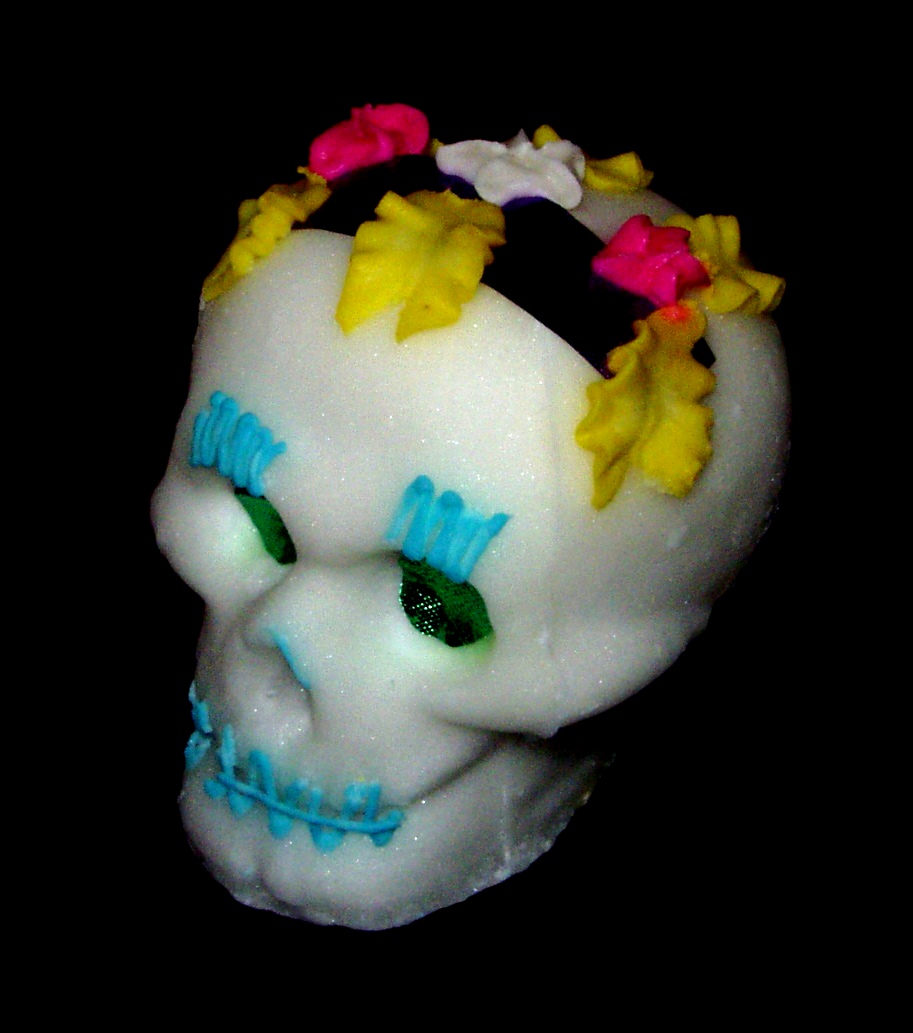 🇲🇽 MexicoCalavera
A sugar or clay skull used in Mexican Day of the Dead celebrations.Charm · Speaking with spirits and the dead · Luck and prosperity Living
🇲🇽 MexicoCalavera
A sugar or clay skull used in Mexican Day of the Dead celebrations.Charm · Speaking with spirits and the dead · Luck and prosperity Living
 🇱🇾 Libya and 4 moreTraditional Berber religionAmazigh religion
Ancient beliefs of Northwest Africa centered on celestial bodies, caves, and ancestors.Tradition · Speaking with spirits and the dead · Luck and prosperity Historical
🇱🇾 Libya and 4 moreTraditional Berber religionAmazigh religion
Ancient beliefs of Northwest Africa centered on celestial bodies, caves, and ancestors.Tradition · Speaking with spirits and the dead · Luck and prosperity Historical