
Pig dragon
In its own language: 玉豬龍
A coiled Neolithic jade amulet from Hongshan culture, possibly an early dragon image
The pig dragon is a jade artifact made by the Hongshan people of Neolithic China. It features a curled body and a snout-like head, often placed in graves.
- Carved from jade by the Hongshan culture
- Features a coiled body and pig-like head
- Found as grave goods in Neolithic burials
- Dates back to 4700-2900 BC
- May be an early representation of the dragon
What it is
This object is a carved piece of jade created during the Neolithic period in what is now China. The Hongshan culture shaped these items into a specific form that combines animal traits. The design includes a rounded head resembling a pig and a long, curved body without legs. The body wraps around to meet the head, creating a shape that some observers compare to a fetus. These artifacts are distinct for their smooth, polished surfaces and symbolic geometry rather than realistic detail.
Where it comes from
The Hongshan culture produced these jades between four thousand seven hundred and two thousand nine hundred years before the common era. This society inhabited parts of northeastern China. Archaeologists have found these items primarily in burial contexts. The presence of pig bones in the same graves suggests the animal held ritual importance for this group. The designs may represent ceremonial symbols rather than literal depictions of animals.
How it is done
Artisans carved these objects from solid jade stones. The process required significant skill to polish the hard stone to a smooth finish. The final product is a dense, heavy amulet. The creators focused on the overall silhouette and the relationship between the head and the tail, leaving out fine anatomical details like eyes or teeth.
Tools and materials
The primary material used is jade. This stone was chosen for its durability and likely its spiritual value. Carvers used abrasive tools to grind and polish the rock. The resulting objects are small enough to hold in one hand but substantial enough to be durable grave markers.
Pig dragon, drawn and placed
- Living
- Revived
- Fading
- Historical
- Legendary
- Performed
- Lineage
- Chinese jade tradition
- Timing
- during burial
What it is for
These items served as grave goods, placed with the deceased. Their presence in tombs indicates they were important for the afterlife or social status. Some researchers speculate they represent an early concept of the dragon in Chinese mythology. Later jade carvings from the Shang dynasty show similar coiled shapes, suggesting a continuous symbolic tradition.
Who does it
No living practitioners create these items today. They are studied by archaeologists and historians who analyze the Hongshan culture. Scholars examine the burial sites to understand the role of jade in Neolithic society. The makers were skilled artisans within the Hongshan community, though their specific names are lost to time.
Peoples and places
The Hongshan culture is the sole group associated with these artifacts. This Neolithic society flourished in northern China. The style is unique to this region and time period. Later Chinese cultures adopted dragon imagery, but the pig dragon remains a distinct feature of Hongshan heritage.
At a glance: who, where and when
Who does it
Peoples
Belief worlds
Occasions


What people believe
The exact beliefs surrounding these objects are not fully recorded. However, their placement in graves suggests they had protective or transitional functions for the dead. The connection to pigs implies a link to agriculture or wealth. The later association with dragons highlights their enduring symbolic power in Chinese art history.
When it is done
There are no known festivals or calendar events tied to these objects. They were used exclusively in funerary contexts. The timing of their creation coincides with the peak of the Hongshan culture.
How scholars and sceptics see it
Academics view these jades as key evidence of early Chinese civilization. Anthropologists study them to understand Neolithic social structures. Historians note the potential link to dragon iconography. Skeptics caution against assuming direct continuity between Hongshan symbols and later mythological dragons without more evidence.
Cautions and what is closed
These artifacts are ancient and fragile. Modern collectors must handle them with care to avoid damage. There are no known health risks associated with viewing or studying them. Replicas exist in museums and markets, so authenticity checks are necessary for buyers.
Compare and confuse
The pig dragon is sometimes compared to other Neolithic jade forms like the bi disc or cong tube. It differs from later dragon amulets by its simpler, more abstract shape. The term 'pig dragon' is a modern descriptor; the original name is unknown.
Law and persecution
These artifacts are protected cultural heritage in China. Exporting genuine pieces is illegal under national laws. Museums and private collectors must ensure provenance is clear to comply with international heritage treaties.
Questions people ask about Pig dragon
What is a pig dragon?
It is a Neolithic jade artifact from China's Hongshan culture. It has a curled body and a head that looks like a pig. These items were placed in graves.
Where did it come from?
It originated in northeastern China during the Neolithic period. The Hongshan people made them between 4700 and 2900 BC.
Why was it made?
It served as a grave good for the deceased. It may have had ritual significance related to pigs or early dragon symbolism.
Good reading and sources
- Pig dragon on WikipediaEncyclopedia
- More photos on Wikimedia CommonsPhotos and video
- Wikidata recordOpen data
The facts on this page come from the Wikipedia article "Pig dragon", written by its contributors and used under the CC BY-SA 4.0 licence, and from its Wikidata record (CC0). EveryJaadu rewrote the text in its own words, with AI assistance, and compares every page with the article to make sure no passage is copied. It may be reused under the same CC BY-SA 4.0 licence with a link back.
It may contain mistakes. Names and customs differ from one community to the next, and some knowledge is closed to outsiders and left out here. This page describes belief and practice. It does not say that any of it works, it is not a how-to, and it is not medical advice. If something is wrong, tell us. Last refreshed 2026-10-06.
More from China
All the entries from China 🇨🇳 China and 5 moreJoss paper金紙
Paper burned as money and goods for ancestors, gods and the deadCharm · Speaking with spirits and the dead · Luck and prosperity Living
🇨🇳 China and 5 moreJoss paper金紙
Paper burned as money and goods for ancestors, gods and the deadCharm · Speaking with spirits and the dead · Luck and prosperity Living
 🇨🇳 China and 5 moreChinese guardian lions石獅 (shíshī)
Stone lion pairs placed at entrances to ward off harm and welcome fortuneCharm · Protection · Luck and prosperity Living
🇨🇳 China and 5 moreChinese guardian lions石獅 (shíshī)
Stone lion pairs placed at entrances to ward off harm and welcome fortuneCharm · Protection · Luck and prosperity Living
 🇨🇳 China and 1 moreFulu符籙
Taoist talismans with cryptic symbols used for healing and protectionCharm · Healing · Protection Living
🇨🇳 China and 1 moreFulu符籙
Taoist talismans with cryptic symbols used for healing and protectionCharm · Healing · Protection Living
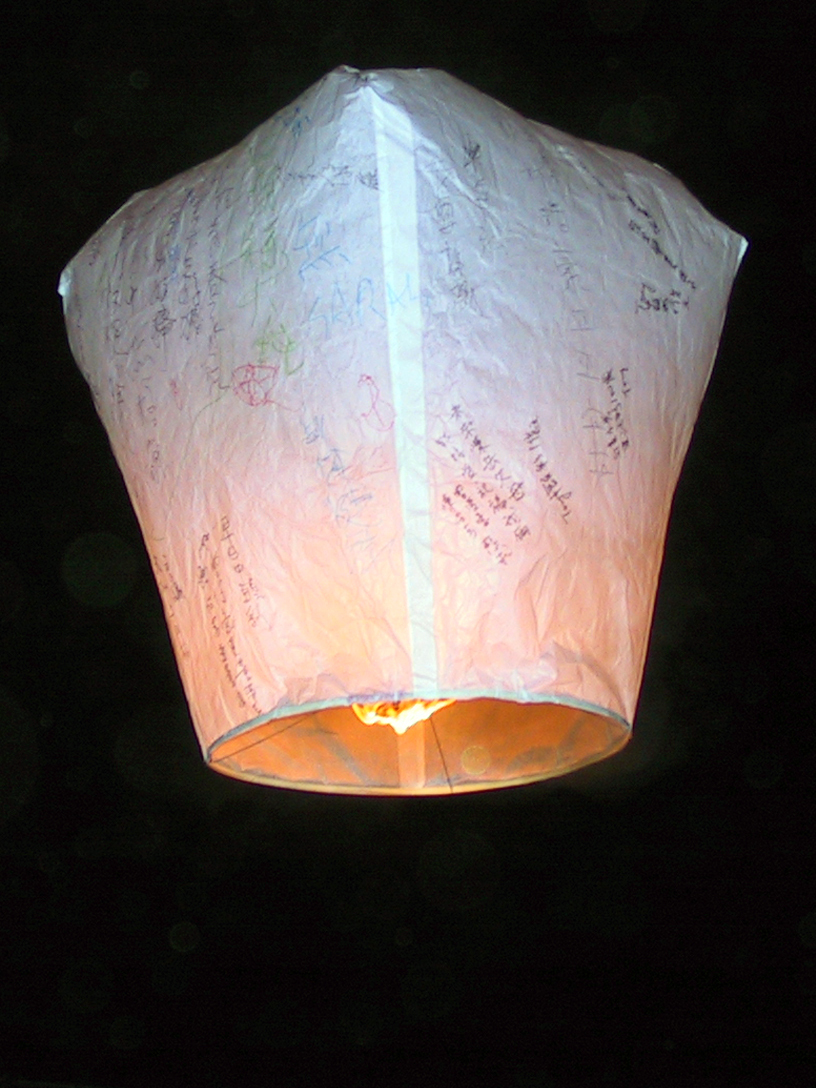 🇨🇳 China and 5 moreSky lantern天燈
A paper hot air balloon lifted by flame to carry wishes and blessingsRite · Luck and prosperity · Protection Living
🇨🇳 China and 5 moreSky lantern天燈
A paper hot air balloon lifted by flame to carry wishes and blessingsRite · Luck and prosperity · Protection Living
Related elsewhere
All charm 🇮🇳 India and 5 moreAstrology
A divinatory practice that reads human fate through the positions of celestial bodies.Belief · Seeing and foretelling · Luck and prosperity Living
🇮🇳 India and 5 moreAstrology
A divinatory practice that reads human fate through the positions of celestial bodies.Belief · Seeing and foretelling · Luck and prosperity Living
 🇬🇧 United Kingdom and 2 moreKing ArthurBrenin Arthur
A legendary British king and folk hero of medieval literature and Welsh mythologyFigure · Power and authority · Wonder and entertainment Legendary
🇬🇧 United Kingdom and 2 moreKing ArthurBrenin Arthur
A legendary British king and folk hero of medieval literature and Welsh mythologyFigure · Power and authority · Wonder and entertainment Legendary
 🇫🇷 FranceHoly GrailSaint Graal
A cup or stone from Arthurian tales that grants healing and eternal lifeFigure · Healing · Luck and prosperity Legendary
🇫🇷 FranceHoly GrailSaint Graal
A cup or stone from Arthurian tales that grants healing and eternal lifeFigure · Healing · Luck and prosperity Legendary
 🇮🇳 India and 2 morePalmistry
A divination method that interprets the lines and shapes of the hand to predict fate or reveal character.Oracle · Seeing and foretelling · Power and authority Living
🇮🇳 India and 2 morePalmistry
A divination method that interprets the lines and shapes of the hand to predict fate or reveal character.Oracle · Seeing and foretelling · Power and authority Living