
Daruma doll
In its own language: 達磨
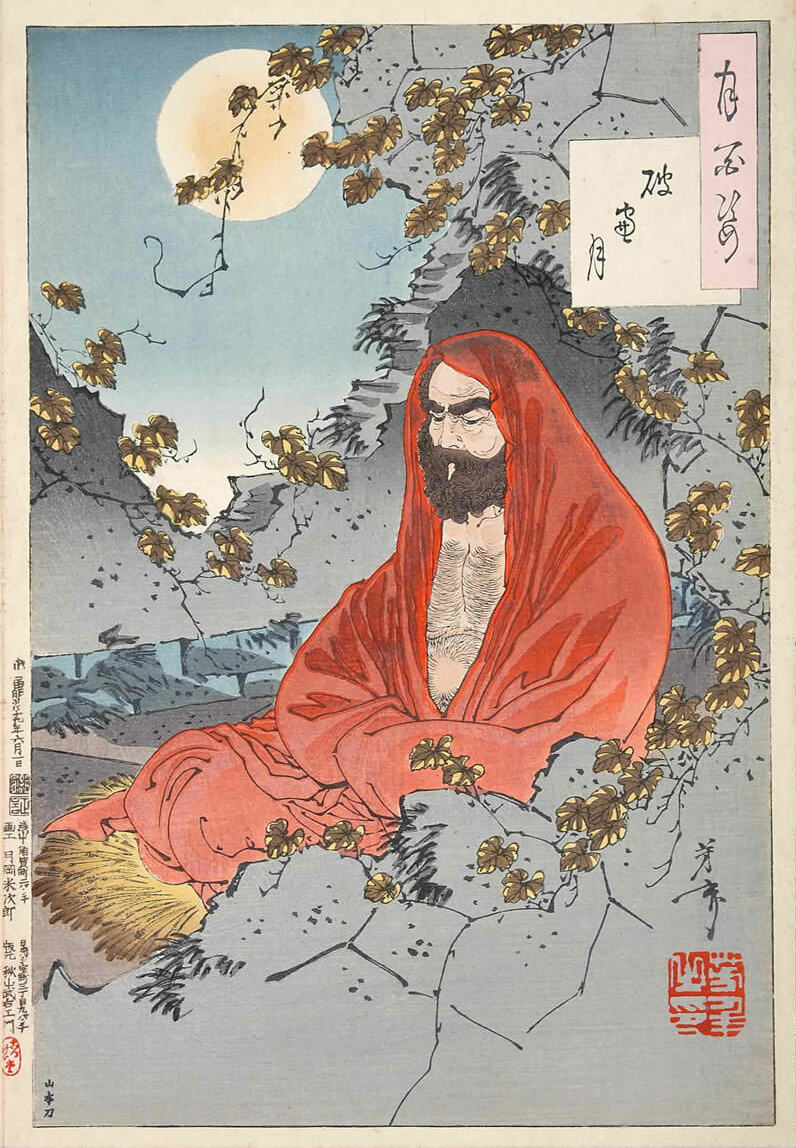
Named after Bodhidharma, the founder of Zen Buddhism
A round Japanese talisman that rights itself when knocked over
The Daruma is a hollow, weighted doll from Japan modeled after the monk Bodhidharma. It serves as a symbol of perseverance and a tool for tracking personal goals through its eye-painting custom.
- Dolls are weighted to always stand upright when tipped over
- Left eye is painted when a goal is set; right eye when achieved
- Used as a symbol of perseverance and good luck in Japan
- Returned to temples annually for a ceremonial burning
- Facial hair represents cranes and tortoises for longevity
What it is
The Daruma is a traditional Japanese figurine designed to represent resilience. Shaped like a heavy-bottomed roly-poly toy, it always returns to an upright position when pushed down. This physical trait makes it a popular talisman for good luck and encouragement. People view the doll as a companion in their efforts to overcome obstacles and achieve success.
Where it comes from
The modern popularity of the Daruma began at Shorinzan Daruma Temple in Takasaki. In the late eighteenth century, the ninth priest created wooden molds for parishioners to make their own papier-mâché charms. These early dolls were sold as annual protective amulets. The design likely evolved from earlier self-righting monk toys known as okiagari-koboshi, which may have originated in China before becoming a distinct Japanese symbol.
How it is done
When bought, the doll has two blank white eyes. The owner chooses a specific goal and paints the left eye with ink. Once the objective is reached, the right eye is filled in. This act marks the completion of the task. At the end of the year, owners return the used dolls to temples for a burning ritual called daruma kuyō, where they are thanked and destroyed to make way for new ones.
Tools and materials
The figure is typically made of paper-mâché and weighted at the base to ensure it stands up on its own. While red is the most common color, linked to high-ranking priests' robes, dolls also appear in gold, blue, yellow, white, and black. The facial features include eyebrows shaped like cranes and cheek hair resembling tortoise shells, symbols of longevity in Asian culture.
Daruma doll, drawn and placed
- Living
- Revived
- Fading
- Historical
- Legendary
- Performed
- Lineage
- Japanese folk tradition and Buddhist symbolism
- Timing
- Purchased at New Year, burned after one year
What it is for
People use the Daruma to focus on personal ambitions and maintain motivation. The blank eyes serve as a visual reminder of what needs to be accomplished. Politicians often display large versions of the doll to pray for election victories. The doll is also associated with health recovery, particularly during historical outbreaks of smallpox, where the red color was believed to appease disease spirits.
Who does it
The doll is primarily used by ordinary households. Traditionally, only the head of the household would paint the eyes to mark a family goal. Various artisans produce different styles, such as the slender Matsukawa Daruma, which comes with painted eyes to watch over a home. Feminine versions, like Hime Daruma, emerged during the Edo period as humorous or respectful variations of the masculine monk image.
Peoples and places
The practice is central to Japanese culture, especially in the Kanto region around Takasaki, which produces the majority of these dolls. An annual festival draws hundreds of thousands of visitors to buy new charms. The tradition reflects broader East Asian values regarding endurance and the cyclical nature of effort and reward, linking Buddhist concepts of enlightenment with everyday folk wishes.
At a glance: who, where and when
Who does it
Peoples
Belief worlds
Occasions


What people believe
The doll embodies the idea of rising after falling, captured in the phrase 'fall seven times, get up eight.' The act of painting the eyes is sometimes linked to the Buddhist concept of enlightenment or full awareness. The physical resilience of the toy is seen as a spiritual metaphor: no matter how many times life knocks you down, you must return to your feet.
When it is done
New purchases are typically made around the New Year to set intentions for the coming twelve months. The dolls are kept throughout the year until the end of December or January. They are then returned to temples for the burning ceremony, which usually takes place shortly after the New Year celebrations conclude.
How scholars and sceptics see it
Researchers note that the Daruma combines religious iconography with secular folk practices. The transformation of a serious Buddhist monk into a commercialized lucky charm illustrates how spiritual symbols adapt to daily life. Historians trace the shift from temple-made charms to mass-produced toys as part of Japan's economic development and changing social structures.
Cautions and what is closed
There are no significant safety risks associated with the doll itself. However, the burning ceremonies involve large-scale fires, which are managed by temple staff. The tradition does not involve harmful rituals or dangerous materials. The focus remains on positive reinforcement and community participation in annual festivals.
Compare and confuse
The Daruma is similar to other self-righting toys found in East Asia, though its specific link to Bodhidharma is unique to Japan. It differs from general lucky charms by requiring active participation from the owner to 'activate' it through eye painting. Other regional variants exist, but the Takasaki style remains the most widely recognized.
Questions people ask about Daruma doll
What is a Daruma doll?
It is a hollow, weighted Japanese doll modeled after the monk Bodhidharma. It is designed to always return to an upright position, symbolizing resilience and the ability to recover from setbacks.
Where does the Daruma tradition come from?
The modern tradition originated in Takasaki, Japan, at Shorinzan Daruma Temple. In the late 1700s, priests provided molds for locals to make their own papier-mâché charms as annual protective amulets.
How do you use a Daruma doll?
You start with blank eyes. When you set a goal, you paint the left eye. Once you achieve that goal, you paint the right eye. This process helps keep your objectives in mind throughout the year.
What happens to the doll at the end of the year?
Owners bring the used dolls back to the temple they purchased them from. A ceremony called daruma kuyō is held where the dolls are burned together as a sign of gratitude and renewal.
Why is the Daruma doll red?
Red is traditionally associated with the robes of high-ranking Buddhist priests. It was also believed to protect against diseases like smallpox, making the red doll a talisman for health and safety.
Good reading and sources
- Daruma doll on WikipediaEncyclopedia
- More photos on Wikimedia CommonsPhotos and video
- Wikidata recordOpen data
The facts on this page come from the Wikipedia article "Daruma doll", written by its contributors and used under the CC BY-SA 4.0 licence, and from its Wikidata record (CC0). EveryJaadu rewrote the text in its own words, with AI assistance, and compares every page with the article to make sure no passage is copied. It may be reused under the same CC BY-SA 4.0 licence with a link back.
It may contain mistakes. Names and customs differ from one community to the next, and some knowledge is closed to outsiders and left out here. This page describes belief and practice. It does not say that any of it works, it is not a how-to, and it is not medical advice. If something is wrong, tell us. Last refreshed 2026-10-05.
More from Japan
All the entries from Japan 🇯🇵 JapanOfudaお札/御札 (ofuda)
Paper and wooden talismans from Japanese Shinto shrines and Buddhist templesCharm · Protection · Cleansing and purification Living
🇯🇵 JapanOfudaお札/御札 (ofuda)
Paper and wooden talismans from Japanese Shinto shrines and Buddhist templesCharm · Protection · Cleansing and purification Living
 🇯🇵 JapanOmamori御守/お守り
Japanese amulets from shrines and temples for luck and protectionCharm · Protection · Luck and prosperity Living
🇯🇵 JapanOmamori御守/お守り
Japanese amulets from shrines and temples for luck and protectionCharm · Protection · Luck and prosperity Living
 🇨🇳 China and 1 moreFulu符籙
Taoist talismans with cryptic symbols used for healing and protectionCharm · Healing · Protection Living
🇨🇳 China and 1 moreFulu符籙
Taoist talismans with cryptic symbols used for healing and protectionCharm · Healing · Protection Living
 🇨🇳 China and 5 moreChinese guardian lions石獅 (shíshī)
Stone lion pairs placed at entrances to ward off harm and welcome fortuneCharm · Protection · Luck and prosperity Living
🇨🇳 China and 5 moreChinese guardian lions石獅 (shíshī)
Stone lion pairs placed at entrances to ward off harm and welcome fortuneCharm · Protection · Luck and prosperity Living
Related elsewhere
All charm 🇮🇳 India and 5 moreAstrology
A divinatory practice that reads human fate through the positions of celestial bodies.Belief · Seeing and foretelling · Luck and prosperity Living
🇮🇳 India and 5 moreAstrology
A divinatory practice that reads human fate through the positions of celestial bodies.Belief · Seeing and foretelling · Luck and prosperity Living
 🇫🇷 FranceHoly GrailSaint Graal
A cup or stone from Arthurian tales that grants healing and eternal lifeFigure · Healing · Luck and prosperity Legendary
🇫🇷 FranceHoly GrailSaint Graal
A cup or stone from Arthurian tales that grants healing and eternal lifeFigure · Healing · Luck and prosperity Legendary
 🇮🇹 ItalyCornicello
A twisted horn charm worn in Italy to ward off the evil eye and invite luck.Charm · Protection · Luck and prosperity Living
🇮🇹 ItalyCornicello
A twisted horn charm worn in Italy to ward off the evil eye and invite luck.Charm · Protection · Luck and prosperity Living
 🇮🇳 India and 1 moreGarba
A Gujarati circle dance performed around a central symbol during NavaratriIllusion · Power and authority · Luck and prosperity Living
🇮🇳 India and 1 moreGarba
A Gujarati circle dance performed around a central symbol during NavaratriIllusion · Power and authority · Luck and prosperity Living