Zhengde Tongbao
In its own language: 正德通寶
from the reign title of the Zhengde Emperor
A fantasy cash coin used as a Chinese and Vietnamese amulet for luck and protection.
The Zhengde Tongbao is a non-circulating charm bearing the reign title of a Ming emperor. People in China and Vietnam use these coins as lucky objects to bring wealth, protect against water dangers, and support marriage.
- Never officially minted as currency by the Ming government.
- Used as a charm to protect pregnant women and babies.
- Dragon and fenghuang designs symbolize marriage or imperial power.
- Given as lucky money during Chinese New Year.
- Believed to help gamblers win games and ensure safe sea travel.
What it is
The Zhengde Tongbao is a fantasy cash coin that never served as official currency. It functions as a numismatic charm and amulet within Chinese and Vietnamese traditions. The object bears an inscription linked to a specific Ming dynasty ruler. People treat it as a powerful lucky token rather than money. Its primary role involves bringing good fortune and offering spiritual protection to the holder.
Where it comes from
No government minted these coins during the reign of the Zhengde Emperor between 1505 and 1521. They appeared later, mainly from the late Ming through the early Qing periods. Craftsmen created them as superstitious items due to the popularity of the era name. A widespread myth claimed only two and a half genuine examples existed, which increased their perceived magical value. Modern reproductions remain common today.
How it is done
These charms are worn or placed in homes to invite prosperity. They are often given as lucky money during the Chinese New Year festival. Couples may exchange them as part of wedding rituals to symbolize union. Gamblers carry them to improve their chances of winning games. Some people keep them near water to ensure safe passage across rivers or seas.
Tools and materials
The charms feature standard cash coin shapes with specific inscriptions. Common designs include a dragon and a fenghuang on the reverse side. These creatures represent either imperial power or marital harmony depending on the interpretation. Other variants show two dragons chasing a wish-granting pearl. Some simpler versions display only the character wen on the back.
Zhengde Tongbao, drawn and placed
- Living
- Revived
- Fading
- Historical
- Legendary
- Performed
- Lineage
- Chinese numismatic charms
- Timing
- at weddings and during Chinese New Year
What it is for
Users seek material wealth and honor through possession of these coins. Traditional sayings promise ten thousand years of riches for households that keep one. They also serve protective roles for pregnant women and unborn children. Water travelers rely on them to avoid danger from big waves. Their presence is believed to influence gambling outcomes positively.
Who does it
Ordinary households use these charms in daily life without specialized training. Families display them during festivals or give them as gifts. Gamblers carry them personally for advantage. Brides and grooms incorporate them into marriage customs. No specific priestly class manages their distribution or blessing.
Peoples and places
The tradition is strongest in China where the Ming dynasty originated. Vietnamese communities also adopt these charms under local names. Scholars note forty-one distinct variants exist in collections. The practice spans centuries from the Qing dynasty to modern times. Diaspora communities continue to value them as cultural heritage items.
At a glance: who, where and when
Who does it
Peoples
Belief worlds
Occasions
What people believe
Many believed the emperor was the reincarnation of a swimming dragon. This connection led to the idea that the coin protects against aquatic dangers. The phrase translates to circulating coinage of true virtue. People view the scarcity myth as proof of its potency. The dragon and phoenix pairing represents either state authority or conjugal bliss.
When it is done
These coins are prominent during Chinese New Year celebrations. They appear as new year's lucky money gifts. Weddings utilize them as symbols of union and fertility. Daily life incorporates them for general luck and gambling success. There are no specific lunar phases tied exclusively to their use.
How scholars and sceptics see it
Researchers like Edgar J. Mandel catalog numerous variants in academic texts. Gary Ashkenazy interprets the dragon and phoenix as matrimonial symbols. Mandel argues they instead represent the emperor and empress. Historians confirm no official minting occurred during the specified reign. Anthropologists study them as examples of folk superstition and numismatic art.
Cautions and what is closed
There are no known health risks associated with handling these charms. Fraudulent sellers may pass off modern reproductions as antique artifacts. Buyers should verify authenticity if seeking historical pieces. The coins themselves pose no physical danger to users or carriers.
Compare and confuse
Similar Chinese numismatic charms exist with different inscriptions. Other lucky coins focus solely on wealth without protective qualities. Vietnamese versions share the same basic design principles but use local script variations. Unlike official currency, these items hold value only through belief and tradition.
Days linked to Zhengde Tongbao
Questions people ask about Zhengde Tongbao
What is the Zhengde Tongbao?
It is a fantasy cash coin used as a Chinese and Vietnamese amulet. It bears the reign title of a Ming emperor but was never official currency. People use it for luck, protection, and marriage rituals.
Where does this charm come from?
It originates from China during the Ming dynasty period. Although not minted then, they were produced later as lucky charms. Vietnamese culture also adopted similar numismatic traditions using this inscription.
Why is it considered lucky?
A saying promises ten thousand years of wealth for households possessing one. Believers think it protects against water dangers and helps in gambling. The myth of extreme rarity also boosts its perceived magical value.
How is it used in weddings?
The dragon and phoenix imagery on the reverse symbolizes union. Couples may exchange these coins as tokens of matrimony. They represent the harmonious joining of man and woman in traditional beliefs.
Good reading and sources
- Zhengde Tongbao on WikipediaEncyclopedia
- More photos on Wikimedia CommonsPhotos and video
- Wikidata recordOpen data
The facts on this page come from the Wikipedia article "Zhengde Tongbao", written by its contributors and used under the CC BY-SA 4.0 licence, and from its Wikidata record (CC0). EveryJaadu rewrote the text in its own words, with AI assistance, and compares every page with the article to make sure no passage is copied. It may be reused under the same CC BY-SA 4.0 licence with a link back.
It may contain mistakes. Names and customs differ from one community to the next, and some knowledge is closed to outsiders and left out here. This page describes belief and practice. It does not say that any of it works, it is not a how-to, and it is not medical advice. If something is wrong, tell us. Last refreshed 2026-10-06.
More from China
All the entries from China 🇨🇳 China and 5 moreJoss paper金紙
Paper burned as money and goods for ancestors, gods and the deadCharm · Speaking with spirits and the dead · Luck and prosperity Living
🇨🇳 China and 5 moreJoss paper金紙
Paper burned as money and goods for ancestors, gods and the deadCharm · Speaking with spirits and the dead · Luck and prosperity Living
 🇨🇳 China and 5 moreChinese guardian lions石獅 (shíshī)
Stone lion pairs placed at entrances to ward off harm and welcome fortuneCharm · Protection · Luck and prosperity Living
🇨🇳 China and 5 moreChinese guardian lions石獅 (shíshī)
Stone lion pairs placed at entrances to ward off harm and welcome fortuneCharm · Protection · Luck and prosperity Living
 🇨🇳 China and 1 moreFulu符籙
Taoist talismans with cryptic symbols used for healing and protectionCharm · Healing · Protection Living
🇨🇳 China and 1 moreFulu符籙
Taoist talismans with cryptic symbols used for healing and protectionCharm · Healing · Protection Living
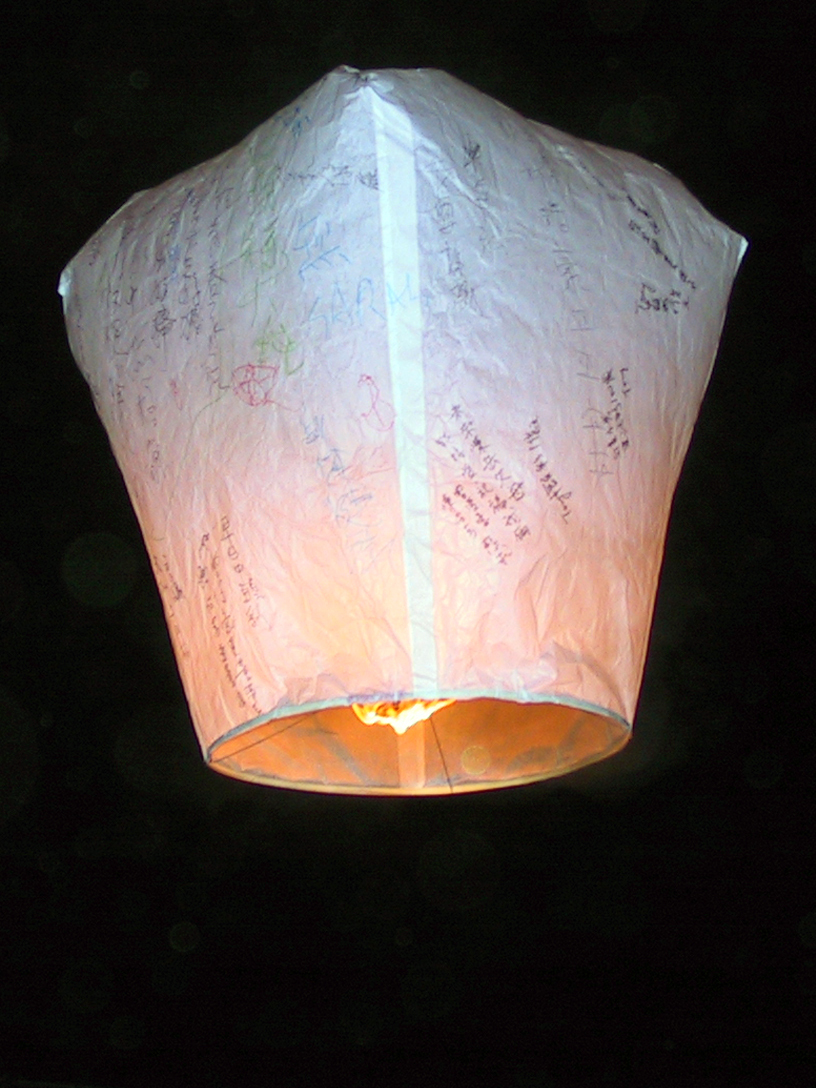 🇨🇳 China and 5 moreSky lantern天燈
A paper hot air balloon lifted by flame to carry wishes and blessingsRite · Luck and prosperity · Protection Living
🇨🇳 China and 5 moreSky lantern天燈
A paper hot air balloon lifted by flame to carry wishes and blessingsRite · Luck and prosperity · Protection Living
Related elsewhere
All charm 🇪🇬 Egypt and 5 moreTalisman
An object believed to channel specific forces for protection, healing, or influence.Charm · Protection · Healing Historical
🇪🇬 Egypt and 5 moreTalisman
An object believed to channel specific forces for protection, healing, or influence.Charm · Protection · Healing Historical
 🇦🇷 Argentina and 5 moreGauchito Gil
A folk saint from Argentina who protects the poor and outcastsBeing · Protection · Healing Living
🇧🇷 Brazil and 1 moreQuimbanda
An Afro-Brazilian religion focused on male and female street spirits for worldly mattersTradition · Protection · Luck and prosperity Living
🇦🇷 Argentina and 5 moreGauchito Gil
A folk saint from Argentina who protects the poor and outcastsBeing · Protection · Healing Living
🇧🇷 Brazil and 1 moreQuimbanda
An Afro-Brazilian religion focused on male and female street spirits for worldly mattersTradition · Protection · Luck and prosperity Living
 🇮🇳 India and 1 moreSantoshi Mataसंतोषी माता
A Hindu goddess of contentment worshipped through a Friday ritual fast.Being · Protection · Luck and prosperity Living
🇮🇳 India and 1 moreSantoshi Mataसंतोषी माता
A Hindu goddess of contentment worshipped through a Friday ritual fast.Being · Protection · Luck and prosperity Living