
Tiangong censer
In its own language: 天公爐
from Chinese terms meaning Heaven Public Censer
An incense burner for the Jade Emperor in Chinese folk religion
The Tiangong censer is a ritual vessel used to honor the Jade Emperor in Chinese folk religion. It serves as a symbolic altar where prayers and offerings are made without physical statues of the deity.
- Used exclusively for the Jade Emperor
- Avoids physical statues of the deity
- Hoklo Taiwanese hang it from beams
- Zhangzhou descendants use three chains
- Hakka people view it as anti-Qing symbol
What it is
This object is a specialized incense burner dedicated to the Jade Emperor. He is the highest deity in traditional Chinese cosmology. Worshipers do not use statues for him. Instead, they use this burner as a focal point. It acts as a symbolic presence for the supreme god. The vessel holds burning incense during prayers. This practice is central to Chinese folk religion. It allows people to connect with celestial powers without physical idols.
Where it comes from
The tradition comes from Chinese folk religion. It developed as a way to worship the Jade Emperor. People avoid making statues of him. They prefer symbolic representations instead. The censer became the main focus for these rituals. It represents stability and cosmic harmony. The design often includes dragons and pearls. These motifs show power and balance. The form varies by region and custom.
How it is done
Families place the censer in specific spots. Hoklo Taiwanese hang it from beams. They use four chains to represent directions. Zhangzhou descendants use three chains. This symbolizes the three realms of heaven, earth, and water. Hakka people put it near doors. They write titles on red paper. Matsu people place it on the left side. Fishermen use fish-shaped burners. Educators use scroll shapes. Temples set them outdoors under the sky.
Tools and materials
The burner usually has three legs. This shape shows harmony between realms. Some have square bases too. Handles often feature ascending dragons. These symbols link earth and heaven. Red paper covers parts of the vessel. Chains hold hanging versions in place. Incense sticks are burned inside. The materials vary by local custom. Iron cans are sometimes wrapped in red.
Tiangong censer, drawn and placed
- Living
- Revived
- Fading
- Historical
- Legendary
- Performed
- Lineage
- Chinese folk religion
- Timing
- during daily prayer and offerings
What it is for
People use it to honor the Jade Emperor. It serves as an altar for prayers. Families seek blessings and protection. The setup invites divine attention. It replaces the need for a statue. Worshippers offer incense regularly. The act connects them to the cosmos. It maintains spiritual order in the home. The placement follows strict traditional rules.
Who does it
Households perform these daily rituals. Different groups follow unique customs. Hoklo families hang the vessel high. Zhangzhou groups adjust the chain count. Hakka communities place it outside. They view it as a symbol of resistance. Matsu residents position it carefully. They consider the dragon side important. Temple priests also maintain larger versions. They ensure the sky remains visible.
Peoples and places
Hoklo Taiwanese hang censers from beams. They use four chains for directions. Zhangzhou descendants use three chains. This honors the Three Great Officials. Hakka people call it wall Buddha. They place it near doorways. Matsu people use iron cans. They decorate them with paper flowers. Each group adapts the ritual locally. The core purpose remains the same.
At a glance: who, where and when
Who does it
Belief worlds
Occasions

What people believe
The Jade Emperor rules the cosmos. He is the supreme deity. Worshipers believe he watches over them. The censer acts as his earthly seat. Dragons symbolize communication with heaven. The tripod represents stability. Chains connect the ground to the sky. Red paper protects the sacred space. The placement follows ancient cosmological rules. It maintains balance in the household.
When it is done
Worship happens every day. Families offer incense regularly. Specific days may require extra care. Festivals might involve larger vessels. Temples set up outdoor altars. The ritual follows lunar cycles. Life events may trigger special prayers. The practice is continuous and routine. It marks the passage of time.
How scholars and sceptics see it
Researchers study these practices as part of folk religion. They note the avoidance of statues. Scholars analyze the regional variations. They examine the symbolism of dragons. Studies focus on the cultural identity aspects. Hakka practices show historical resistance. They track changes in modern times.
Cautions and what is closed
Some beliefs warn against floor-standing tripods. Placing them indoors may attract spirits. This is considered dangerous folklore. Only temples should use large metal versions. Historical censers were often melted down. Modern replacements follow traditional forms. Improper placement is seen as disrespectful. The ritual requires careful adherence.
Compare and confuse
It differs from standard incense burners. Those often serve various deities. This one is specific to the Jade Emperor. Other cultures use statues for worship. This tradition avoids physical idols. The hanging style is unique to Taiwan. The three-chain variation is distinct. It shares features with other Asian censers.
Law and persecution
No specific laws restrict this practice. It is a common folk tradition. Religious freedom allows its continuation. Historical objects were sometimes destroyed. Modern practitioners recreate traditional forms. There are no legal penalties. The practice is widely accepted. It is part of cultural heritage.
Today
The tradition continues in Taiwan. Families still hang or place censers. New vessels replace old ones. The practice adapts to modern homes. Scholars document the surviving customs. Diaspora communities maintain the ritual. The cultural significance remains strong. It is a living part of identity.
Questions people ask about Tiangong censer
What is a Tiangong censer?
It is an incense burner used to honor the Jade Emperor in Chinese folk religion. It serves as a symbolic altar since statues of the deity are not created.
Where is it placed in a home?
Hoklo Taiwanese hang it from ceiling beams. Hakka people place it near doorways. Matsu residents put it on the left side of the entrance.
Why do some use three chains?
Zhangzhou descendants use three chains to symbolize the three realms: heaven, earth, and water. This honors the Three Great Emperor-Officials who manage these domains.
What does the tripod shape mean?
The three legs represent stability and harmony between heaven, earth, and humanity. It reflects the cosmic balance sought in worship.
Good reading and sources
- Tiangong censer on WikipediaEncyclopedia
- More photos on Wikimedia CommonsPhotos and video
- Wikidata recordOpen data
The facts on this page come from the Wikipedia article "Tiangong censer", written by its contributors and used under the CC BY-SA 4.0 licence, and from its Wikidata record (CC0). EveryJaadu rewrote the text in its own words, with AI assistance, and compares every page with the article to make sure no passage is copied. It may be reused under the same CC BY-SA 4.0 licence with a link back.
It may contain mistakes. Names and customs differ from one community to the next, and some knowledge is closed to outsiders and left out here. This page describes belief and practice. It does not say that any of it works, it is not a how-to, and it is not medical advice. If something is wrong, tell us. Last refreshed 2026-10-14.
More from Taiwan
All the entries from Taiwan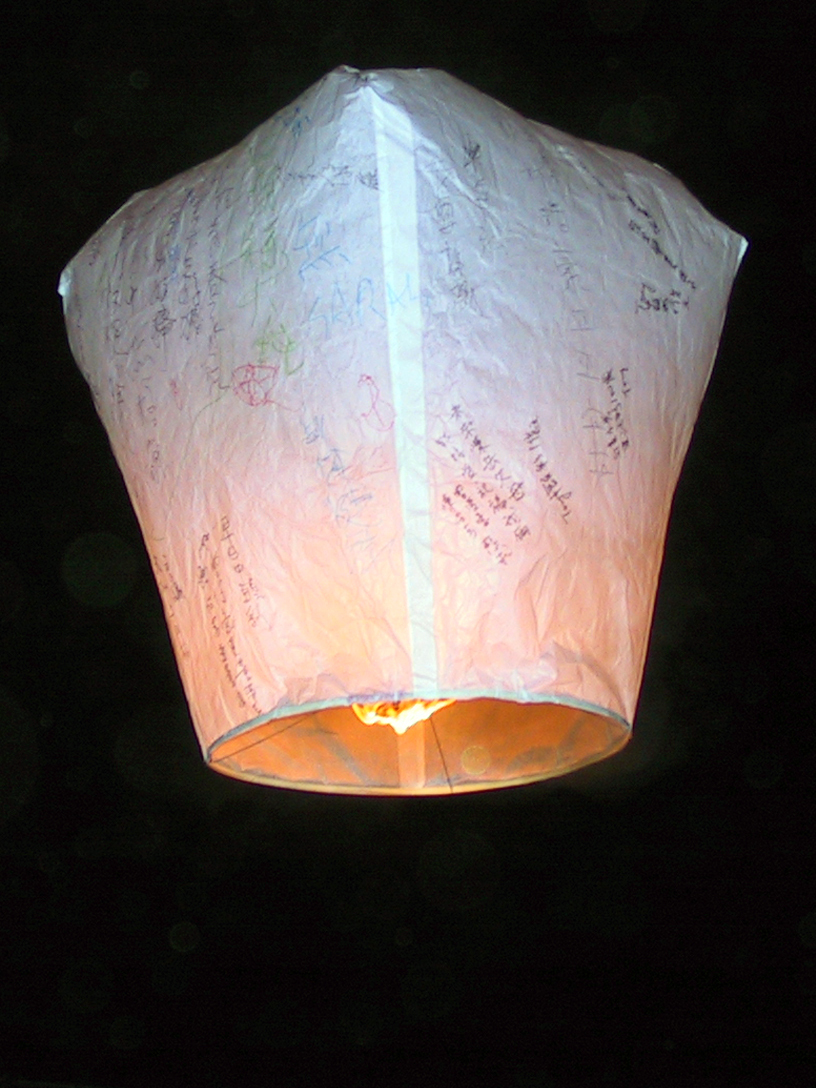 🇨🇳 China and 5 moreSky lantern天燈
A paper hot air balloon lifted by flame to carry wishes and blessingsRite · Luck and prosperity · Protection Living
🇨🇳 China and 5 moreSky lantern天燈
A paper hot air balloon lifted by flame to carry wishes and blessingsRite · Luck and prosperity · Protection Living
 🇨🇳 China and 5 moreJoss paper金紙
Paper burned as money and goods for ancestors, gods and the deadCharm · Speaking with spirits and the dead · Luck and prosperity Living
🇨🇳 China and 5 moreJoss paper金紙
Paper burned as money and goods for ancestors, gods and the deadCharm · Speaking with spirits and the dead · Luck and prosperity Living
 🇹🇼 Taiwan and 1 moreAuspicious train ticket吉祥語車票
Train tickets with station names that form lucky phrases through wordplay.Charm · Luck and prosperity Living
🇹🇼 Taiwan and 1 moreAuspicious train ticket吉祥語車票
Train tickets with station names that form lucky phrases through wordplay.Charm · Luck and prosperity Living
 🇨🇳 China and 1 moreAncestor veneration in China中國傳統宗法性宗教
Rites for dead kin who are thought to watch over the familyTradition · Protection · Speaking with spirits and the dead Living
🇨🇳 China and 1 moreAncestor veneration in China中國傳統宗法性宗教
Rites for dead kin who are thought to watch over the familyTradition · Protection · Speaking with spirits and the dead Living
Related elsewhere
All charm 🇮🇳 IndiaChakraचक्र
Meditation points in the subtle body used in Hindu and Buddhist yogaTradition · Speaking with spirits and the dead · Change and initiation Living
🇮🇳 IndiaChakraचक्र
Meditation points in the subtle body used in Hindu and Buddhist yogaTradition · Speaking with spirits and the dead · Change and initiation Living
 🇫🇷 France and 5 moreKabbalahקַבָּלָה
An esoteric school of thought within Judaism focused on the hidden meanings of scripture and the divine.Tradition · Speaking with spirits and the dead · Change and initiation Living
🇫🇷 France and 5 moreKabbalahקַבָּלָה
An esoteric school of thought within Judaism focused on the hidden meanings of scripture and the divine.Tradition · Speaking with spirits and the dead · Change and initiation Living
 🇮🇹 ItalyEtruscan religion
The polytheistic beliefs and divination practices of the ancient Etruscans of ItalyTradition · Seeing and foretelling · Speaking with spirits and the dead Historical
🇮🇹 ItalyEtruscan religion
The polytheistic beliefs and divination practices of the ancient Etruscans of ItalyTradition · Seeing and foretelling · Speaking with spirits and the dead Historical
 🇮🇶 Iraq and 5 moreGrimoire
A textbook containing instructions for spells, rituals, and the creation of magical objects.Text · Protection · Healing Historical
🇮🇶 Iraq and 5 moreGrimoire
A textbook containing instructions for spells, rituals, and the creation of magical objects.Text · Protection · Healing Historical