
Chinese burial money
In its own language: 瘞錢 (yì qián)
from Chinese yì qián, meaning burial coins, or míng qián, meaning dark coins
Imitations of currency placed in Chinese graves to serve the deceased in the afterlife.
Chinese burial money consists of replica coins and shells buried with the dead. Originating in the Shang dynasty, these items were believed to provide wealth for the spirit world or deter grave robbers from disturbing the tomb.
- Shang dynasty graves contained thousands of cowrie shells as burial money.
- Clay imitations replaced real coins to deter grave robbers.
- Mawangdui tombs held 100,000 clay Ban Liang cash coins.
- Bronze charms inscribed 'rù tǔ wéi ān' were placed in mouths.
- Practice ended in late 19th century with rise of joss paper.
What it is
Chinese burial money comprises imitation currencies placed in graves to support the deceased in the afterlife. The practice began with cowrie shells during the Shang dynasty, later evolving into clay and metal replicas of real coinage. These items served dual purposes: providing spiritual wealth for the dead and deterring grave robbers by offering worthless substitutes. Over centuries, the materials shifted from natural objects to manufactured imitations, reflecting changing beliefs about the spirit world's needs and the practical concerns of tomb preservation.
Where it comes from
The custom dates to the Shang dynasty, around 1300 BCE, when cowrie shells were buried as bribes for Yan Wang, the king of the underworld. Early forms included actual valuable items, which attracted thieves. To protect graves, the Chinese began creating clay and earthenware copies. This shift marked a transition from using real wealth to symbolic surrogates, ensuring the dead received their due without endangering the tomb's integrity through robbery.
How it is done
Burial money was placed directly in the grave alongside the deceased. In wealthy tombs, thousands of clay Ban Liang cash coins were found strung together in containers. Some charms, like the 'Laid to Rest' bronze pieces, were placed in the mouths of the dead. The items mimicked contemporary circulation currency, including spade, knife, and ring-shaped coins, but were made from fragile or cheap materials like clay, lead, or thin bronze to discourage theft.
Tools and materials
Materials evolved from cowrie shells, bone, and stone to clay, bronze, and lead. Clay money, known as ní qián, became common during the Han dynasty. Specific types included clay versions of gold plate money from the State of Chu and Wu Zhu cash coins. Bronze funerary charms bearing the inscription 'rù tǔ wéi ān' ('to be laid to rest') were also used, though they are often avoided by collectors due to taboos surrounding their placement in the dead.
Chinese burial money, drawn and placed
- Living
- Revived
- Fading
- Historical
- Legendary
- Performed
- Lineage
- Chinese funerary tradition
- Timing
- at burial
What it is for
The money was intended to ensure comfort and favorable treatment in the afterlife. It could bribe Yan Wang for a better destination, pay debts to the hell government, or purchase luxury items. Later beliefs viewed the afterlife as a mirror of the living world, where the dead needed currency for taxes and daily expenses. The imitation nature of the coins also served to protect the tomb from robbers who sought real value.
Who does it
Ordinary households prepared burial money for their deceased relatives. Both wealthy and impoverished families used clay imitations, as they were inexpensive to produce. The practice was widespread across social classes, with wealthy individuals sometimes burying large quantities of clay coins alongside genuine artifacts. Funerary specialists or family members would place the items in the tomb according to tradition.
Peoples and places
The tradition is primarily associated with China, with evidence found in tombs across various dynasties. Similar customs existed in ancient Greece and Rome, where coins were paid to ferrymen of the underworld. The Chinese practice uniquely evolved from natural shells to complex ceramic and metal replicas, reflecting a detailed bureaucratic view of the afterlife. Variations include specific regional styles and the use of local currency designs as models for the imitations.
At a glance: who, where and when
Who does it
Peoples
Belief worlds
Occasions


What people believe
Ancient Chinese cosmology held that the earth was square and the heavens round. Cash coins symbolized this cosmic order and could guide spirits to immortality. The character 'Zhu' in Wu Zhu coins was linked to the mythical fusang tree, an auspicious guide for the dead. Beliefs shifted over time, from viewing the afterlife as a place requiring bribes to seeing it as a continuation of earthly life, complete with debts and taxes owed to otherworldly authorities.
When it is done
Burial money was used specifically at funerals and burials. The practice persisted from the Shang dynasty through the late 19th century, when joss paper and hell money replaced physical imitations. No specific festivals or lunar days are tied to its use; it was strictly a funerary object placed with the body upon interment.
How scholars and sceptics see it
Archaeologists have uncovered vast quantities of burial money, such as the 100,000 clay Ban Liang coins in the Mawangdui tombs. Scholars note the transition from real currency to surrogates reflects both economic pragmatism and evolving spiritual beliefs about the afterlife's structure and needs.
Cautions and what is closed
Some burial charms, like the bronze 'Laid to Rest' coins, are considered unlucky and disturbing by collectors because they were placed in the mouths of the dead. Taboos surround these items, leading many numismatic reference books to exclude them. The practice of burying wealth also historically posed risks, as real valuables attracted grave robbers, prompting the shift to worthless imitations to protect the sanctity of the tomb.
Compare and confuse
The Chinese practice parallels ancient Greek and Roman customs of burying coins to pay for passage to the underworld. However, Chinese burial money expanded into a vast array of imitation currencies, reflecting a more complex bureaucratic afterlife. Unlike the single coin for the ferryman, Chinese tombs often contained thousands of replicas, serving multiple spiritual and protective functions.
Questions people ask about Chinese burial money
What is Chinese burial money?
It is imitation currency, such as clay coins or shells, placed in graves to serve the deceased in the afterlife. The practice originated in the Shang dynasty and continued until the late 19th century.
Why were fake coins used instead of real ones?
Real valuables attracted grave robbers. Imitations provided spiritual wealth for the dead while protecting the tomb from theft, as robbers would ignore worthless clay or thin metal copies.
What materials were used for burial money?
Early forms used cowrie shells, bone, and stone. Later periods saw clay, bronze, and lead replicas of circulating coins like Ban Liang and Wu Zhu cash coins.
How did beliefs about the afterlife influence burial money?
Beliefs evolved from bribing underworld judges to paying earthly-style taxes and debts. Coins were seen as guides to heaven or tools for comfort in a spirit world mirroring human society.
Good reading and sources
- Chinese burial money on WikipediaEncyclopedia
- More photos on Wikimedia CommonsPhotos and video
- Wikidata recordOpen data
The facts on this page come from the Wikipedia article "Chinese burial money", written by its contributors and used under the CC BY-SA 4.0 licence, and from its Wikidata record (CC0). EveryJaadu rewrote the text in its own words, with AI assistance, and compares every page with the article to make sure no passage is copied. It may be reused under the same CC BY-SA 4.0 licence with a link back.
It may contain mistakes. Names and customs differ from one community to the next, and some knowledge is closed to outsiders and left out here. This page describes belief and practice. It does not say that any of it works, it is not a how-to, and it is not medical advice. If something is wrong, tell us. Last refreshed 2026-10-06.
More from China
All the entries from China 🇨🇳 China and 5 moreJoss paper金紙
Paper burned as money and goods for ancestors, gods and the deadCharm · Speaking with spirits and the dead · Luck and prosperity Living
🇨🇳 China and 5 moreJoss paper金紙
Paper burned as money and goods for ancestors, gods and the deadCharm · Speaking with spirits and the dead · Luck and prosperity Living
 🇨🇳 China and 5 moreChinese guardian lions石獅 (shíshī)
Stone lion pairs placed at entrances to ward off harm and welcome fortuneCharm · Protection · Luck and prosperity Living
🇨🇳 China and 5 moreChinese guardian lions石獅 (shíshī)
Stone lion pairs placed at entrances to ward off harm and welcome fortuneCharm · Protection · Luck and prosperity Living
 🇨🇳 China and 1 moreFulu符籙
Taoist talismans with cryptic symbols used for healing and protectionCharm · Healing · Protection Living
🇨🇳 China and 1 moreFulu符籙
Taoist talismans with cryptic symbols used for healing and protectionCharm · Healing · Protection Living
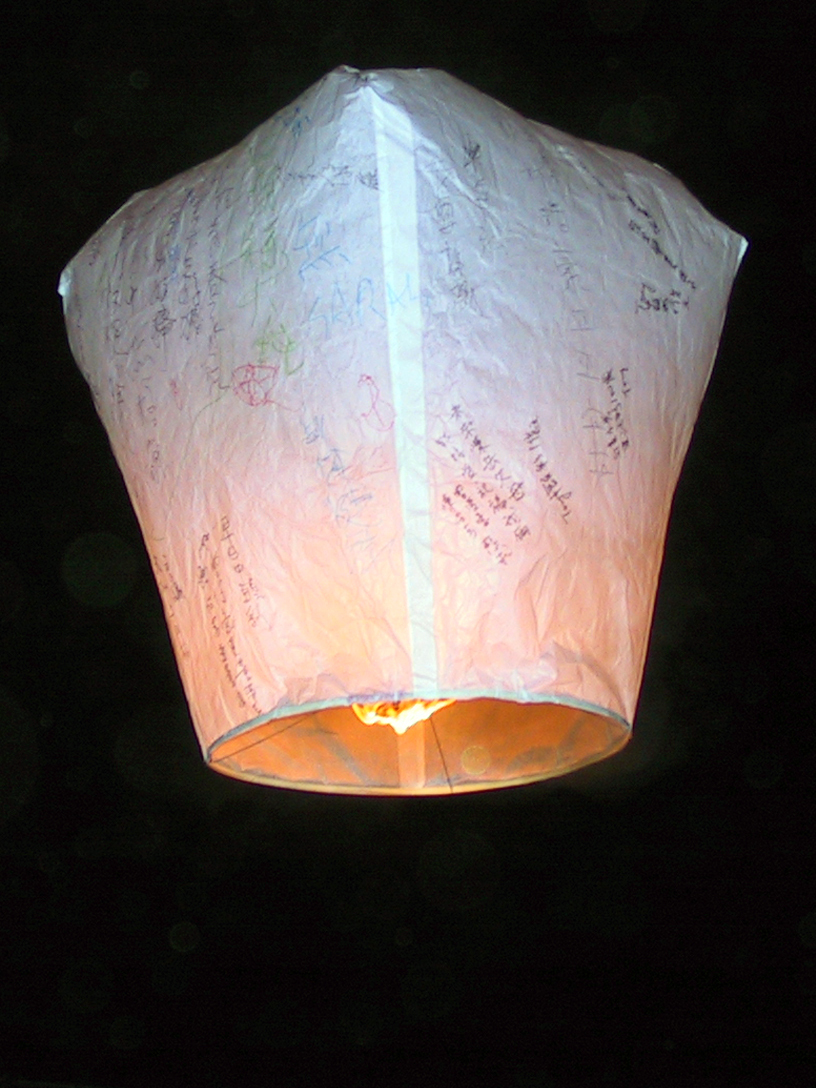 🇨🇳 China and 5 moreSky lantern天燈
A paper hot air balloon lifted by flame to carry wishes and blessingsRite · Luck and prosperity · Protection Living
🇨🇳 China and 5 moreSky lantern天燈
A paper hot air balloon lifted by flame to carry wishes and blessingsRite · Luck and prosperity · Protection Living
Related elsewhere
All charm 🇧🇪 Belgium and 2 moreHorseshoe
A metal shoe for a horse's hoof and a talisman of good fortuneCharm · Protection · Luck and prosperity Living
🇧🇪 Belgium and 2 moreHorseshoe
A metal shoe for a horse's hoof and a talisman of good fortuneCharm · Protection · Luck and prosperity Living
 🇪🇬 Egypt and 3 moreAmulet
A portable object worn or carried to ward off harm and invite fortuneCharm · Protection · Luck and prosperity Living
🇪🇬 Egypt and 3 moreAmulet
A portable object worn or carried to ward off harm and invite fortuneCharm · Protection · Luck and prosperity Living
 🇮🇳 India and 5 moreKolamகோலம்
A daily geometric floor drawing made with rice flour at the home entrance in South IndiaTradition · Protection · Luck and prosperity Living
🇮🇳 India and 5 moreKolamகோலம்
A daily geometric floor drawing made with rice flour at the home entrance in South IndiaTradition · Protection · Luck and prosperity Living
 🇫🇷 France and 5 moreYule log
A large wooden log burned in the hearth during winter festivals across Europe and North America.Tradition · Protection · Luck and prosperity Living
🇫🇷 France and 5 moreYule log
A large wooden log burned in the hearth during winter festivals across Europe and North America.Tradition · Protection · Luck and prosperity Living