
Auspicious train ticket
In its own language: 吉祥語車票
from Chinese characters meaning auspicious words on a train ticket
Train tickets with station names that form lucky phrases through wordplay.
Auspicious train tickets are paper travel documents where the departure and arrival station names combine to create a pun or phrase of good fortune. This practice originated in Japan and was adopted in Taiwan, where collectors seek them for luck and historical value.
- Originated in Japan in 1973 with Kōfuku and Aikoku stations.
- Introduced to Taiwan in 1993 by researcher Ming-xun Hsieh.
- Uses homophonic puns in Mandarin and Hokkien for luck.
- Tickets from 2010 featured the lucky date 99-09-09.
- Collectors seek them for good fortune and historical value.
What it is
An auspicious train ticket is a physical token used as a charm for good fortune. It consists of a standard railway ticket where the names of the starting and ending stations are chosen because their combined characters form a positive phrase or pun. In East Asian languages like Mandarin and Hokkien, many words sound alike. Collectors and travelers use these tickets to invoke blessings such as peace, health, or long-lasting happiness by carrying the lucky words with them.
Where it comes from
The custom began in Japan. In 1973, a television program highlighted tickets from Kōfuku Station and Aikoku Station. The characters for these places were interpreted to mean 'happiness' and 'country of love.' This discovery caused a sudden increase in tourists wanting these specific tickets. The idea crossed to Taiwan in 1993. After restoration work at Bao'an railway station, a researcher named Ming-xun Hsieh suggested selling special tickets from Yongkang station. He hoped to replicate the Japanese success to boost tourism.
How it is done
Passengers purchase tickets where the route creates a desired linguistic effect. The characters from the origin and destination are read together. Sometimes the order is shuffled or read in a specific direction, such as clockwise, to reveal the hidden message. For example, the Yongkang route spells out 'Yongbao Ankang,' which translates to 'peace and health forever.' The charm relies entirely on the phonetic similarity of the station names to common lucky words.
Tools and materials
The primary tool is the Edmondson ticket, a durable paper card used for rail travel. In Taiwan, limited edition versions were printed on thicker paper to distinguish them as collectibles. The content depends on the station names printed on the ticket, such as the date stamps. Specific dates can also add to the charm if the numbers align with lucky homophones, like the number nine representing longevity.
Auspicious train ticket, drawn and placed
- Living
- Revived
- Fading
- Historical
- Legendary
- Performed
- Lineage
- folk wordplay tradition
- Timing
- when purchasing travel tickets
What it is for
People acquire these tickets primarily for luck and as souvenirs. Collectors in Taiwan seek them out not just for travel but to keep as talismans. They are also used to promote historic sites and attract visitors to lesser-known stations. The practice turns a mundane transaction into an opportunity to gain symbolic protection or prosperity for the journey ahead or for life in general.
Who does it
The practice involves ordinary travelers and hobbyist collectors. No special training is required to buy or hold the ticket. However, researchers and railway administrators sometimes initiate the trend by designing specific routes or printing special editions. Ming-xun Hsieh, a railway researcher, played a key role in establishing the Taiwanese version of this custom by proposing the strategic use of station names for cultural promotion.
Peoples and places
The tradition is most prominent in Taiwan and Japan. In Japan, it started with specific stations in Hokkaido. In Taiwan, it became a widespread collector's item after the 1993 introduction. The practice relies on the linguistic features of Mandarin and Hokkien, where tonal similarities allow for creative reinterpretation of place names. Different regions may have different popular combinations depending on their local railway networks and dialects.
At a glance: who, where and when
Who does it
What people believe
The underlying belief is that language has power over reality through sound. By associating the journey with words for health or happiness, the traveler invites those qualities into their experience. The Minguo calendar date '99-09-09' was considered especially powerful because the number nine sounds like 'long time.' This numerical homophone reinforced the wish for enduring luck, making tickets from that day highly prized among believers in the charm's efficacy.
How scholars and sceptics see it
Scholars and researchers view this as a form of folk linguistics and cultural marketing. Ming-xun Hsieh analyzed the psychological appeal of the Japanese tickets and applied that logic to Taiwanese infrastructure. Anthropologists might see this as a modern adaptation of traditional talismanic practices, where everyday objects are imbued with spiritual significance through wordplay rather than ritual consecration.
Cautions and what is closed
There are no known dangers associated with holding these tickets. The main risk is financial, as limited edition prints can sell out quickly or become expensive for collectors. There is no superstition about bad luck from incorrect readings; the charm only works if the passenger intends the positive meaning. Fraud is unlikely as the tickets are official railway documents.
Compare and confuse
This practice is similar to other forms of linguistic magic found in East Asia, such as choosing house numbers or phone numbers with lucky sounds. It differs from formal religious rituals because it requires no priest or ceremony. It is also distinct from stage magic, as there is no illusion or trickery involved, only a clever use of language and perception.
Law and persecution
Railway administrations in both countries officially support or tolerate the practice. In Taiwan, the TRA actively promoted the tickets to aid tourism. There are no legal restrictions on buying or selling these tickets. They remain valid forms of payment for travel, even when sought after for their symbolic value rather than their utility.
Today
The tradition continues in Taiwan, where collectors still hunt for rare dates and routes. The 2010 '99-09-09' tickets remain a benchmark for popularity. While the initial surge may have settled, the practice persists as a niche hobby. It serves as a reminder of how modern infrastructure can intersect with ancient desires for good fortune through simple word games.
Questions people ask about Auspicious train ticket
What makes a train ticket auspicious?
It becomes auspicious when the names of the departure and arrival stations combine to form a phrase or pun that sounds like a lucky word, such as 'peace' or 'health,' in Mandarin or Hokkien.
Where did this tradition start?
The tradition started in Japan in 1973 when a TV show highlighted tickets from Kōfuku and Aikoku stations. It was later adapted in Taiwan in 1993 to promote tourism.
Why were tickets from 2010 so popular?
Tickets printed on September 9, 2010, showed the date '99-09-09' on the Minguo calendar. The number nine sounds like 'long time,' making it a symbol of longevity and extreme good luck.
How do people use these tickets today?
People use them as charms for good luck during travel. Collectors also buy them to keep as talismans or historical items, often seeking specific routes or rare date stamps.
Good reading and sources
The facts on this page come from the Wikipedia article "Auspicious train ticket", written by its contributors and used under the CC BY-SA 4.0 licence, and from its Wikidata record (CC0). EveryJaadu rewrote the text in its own words, with AI assistance, and compares every page with the article to make sure no passage is copied. It may be reused under the same CC BY-SA 4.0 licence with a link back.
It may contain mistakes. Names and customs differ from one community to the next, and some knowledge is closed to outsiders and left out here. This page describes belief and practice. It does not say that any of it works, it is not a how-to, and it is not medical advice. If something is wrong, tell us. Last refreshed 2026-10-07.
More from Taiwan
All the entries from Taiwan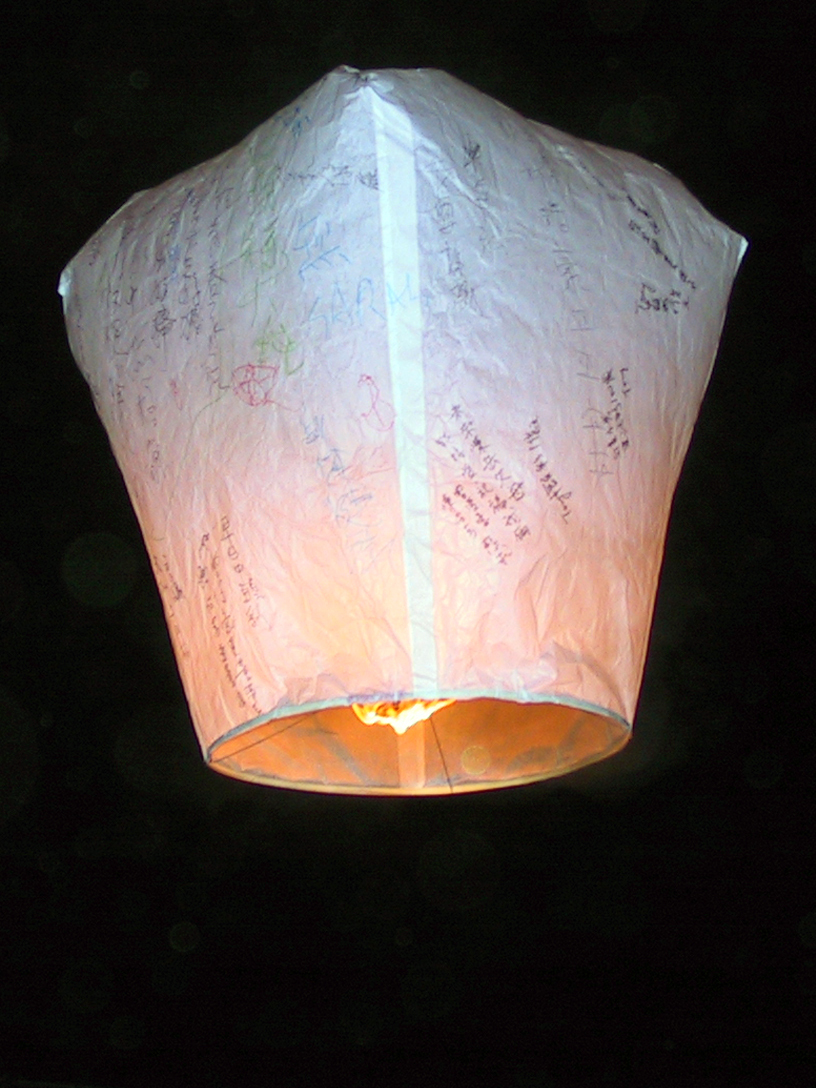 🇨🇳 China and 5 moreSky lantern天燈
A paper hot air balloon lifted by flame to carry wishes and blessingsRite · Luck and prosperity · Protection Living
🇨🇳 China and 5 moreSky lantern天燈
A paper hot air balloon lifted by flame to carry wishes and blessingsRite · Luck and prosperity · Protection Living
 🇨🇳 China and 5 moreJoss paper金紙
Paper burned as money and goods for ancestors, gods and the deadCharm · Speaking with spirits and the dead · Luck and prosperity Living
🇨🇳 China and 5 moreJoss paper金紙
Paper burned as money and goods for ancestors, gods and the deadCharm · Speaking with spirits and the dead · Luck and prosperity Living
 🇨🇳 China and 1 moreAncestor veneration in China中國傳統宗法性宗教
Rites for dead kin who are thought to watch over the familyTradition · Protection · Speaking with spirits and the dead Living
🇨🇳 China and 1 moreAncestor veneration in China中國傳統宗法性宗教
Rites for dead kin who are thought to watch over the familyTradition · Protection · Speaking with spirits and the dead Living
 🇨🇳 China and 1 moreMoon blocks筊杯
Two crescent blocks thrown to a deity for a yes or noOracle · Seeing and foretelling Living
🇨🇳 China and 1 moreMoon blocks筊杯
Two crescent blocks thrown to a deity for a yes or noOracle · Seeing and foretelling Living
Related elsewhere
All charm 🇮🇳 India and 5 moreAstrology
A divinatory practice that reads human fate through the positions of celestial bodies.Belief · Seeing and foretelling · Luck and prosperity Living
🇮🇳 India and 5 moreAstrology
A divinatory practice that reads human fate through the positions of celestial bodies.Belief · Seeing and foretelling · Luck and prosperity Living
 🇷🇸 Serbia and 5 moreVampire
An undead creature from folklore that feeds on the blood or life force of the livingBeing · Cursing and harm · Luck and prosperity Legendary
🇷🇸 Serbia and 5 moreVampire
An undead creature from folklore that feeds on the blood or life force of the livingBeing · Cursing and harm · Luck and prosperity Legendary
 🇪🇬 EgyptCurse
A spoken wish for misfortune to befall a person or placeBelief · Cursing and harm · Luck and prosperity Historical
🇪🇬 EgyptCurse
A spoken wish for misfortune to befall a person or placeBelief · Cursing and harm · Luck and prosperity Historical
 🇧🇪 Belgium and 2 moreHorseshoe
A metal shoe for a horse's hoof and a talisman of good fortuneCharm · Protection · Luck and prosperity Living
🇧🇪 Belgium and 2 moreHorseshoe
A metal shoe for a horse's hoof and a talisman of good fortuneCharm · Protection · Luck and prosperity Living