
Buddhist coin charm
In its own language: 佛教品壓勝錢
from Chinese terms for Buddhist items and victory coins
Amulets shaped like coins that bear Buddhist symbols and prayers for protection.
Buddhist coin charms are amulets found in China, Japan, Korea, and Vietnam. They imitate cash coins but display religious imagery or inscriptions. Practitioners wear them to seek blessings, protection, and spiritual merit from the Buddha.
- Ming dynasty cloisonné charms feature white lotus blossoms.
- Hongwu Tongbao charms depict Emperor Zhu Yuanzhang's life.
- Japanese charms often honor Ākāśagarbha Bodhisattva.
- Vietnamese amulets use Devanagari script for mantras.
- Lotus charms symbolize continuous harmony and fertility.
What it is
Buddhist coin charms are small amulets designed to resemble traditional cash coins. They feature Buddhist symbols, mantras, or inscriptions rather than standard currency markings. These objects serve as portable talismans for devotees across East Asia. They often incorporate imagery from Mahayana Buddhism, such as the Amitābha Buddha or Bodhisattvas. Some charms blend Buddhist themes with Taoist or Confucian elements. The designs range from simple text to complex narrative scenes depicting historical or religious figures.
Where it comes from
These charms originated in China during various dynastic periods. Early examples include temple coins from the Yuan dynasty. Significant production occurred during the Ming dynasty, where cloisonné versions appeared. After the Xinhai revolution in 1912, charms depicting Emperor Zhu Yuanzhang became common. This shift allowed public circulation of imperial imagery that was previously forbidden. Japanese and Vietnamese traditions developed similar numismatic charms, often borrowing Chinese scripts and motifs.
How it is done
Practitioners wear these charms around the neck or on their person. The charms are crafted through casting metal or applying enamel techniques. Inscriptions are carved or stamped onto the surface. Some charms feature open-work designs allowing light to pass through. Wearers may recite associated mantras while holding the object. The physical handling of the charm is part of its devotional practice.
Tools and materials
Artisans use brass, bronze, or cloisonné enamel to create these charms. Common symbols include the lotus flower, representing purity and detachment. The fenghuang bird appears on some pieces, symbolizing peace. Sanskrit mantras like 'Om mani padme hum' are inscribed on many variants. Chinese characters convey blessings and protective prayers. Specific tools like molds are used to cast the metal shapes.
Buddhist coin charm, drawn and placed
- Living
- Revived
- Fading
- Historical
- Legendary
- Performed
- Lineage
- East Asian numismatic tradition
- Timing
- worn as personal amulets
What it is for
Devotees use these charms for protection and spiritual merit. They seek blessings from the Buddha for safety and well-being. Some charms aim to improve fertility through puns on lotus seeds. Others represent hope for social mobility, inspired by humble emperors. Wearing a charm is believed to accumulate positive karma. The objects also serve as reminders of Buddhist teachings and meditation practices.
Who does it
Ordinary households commission and wear these charms. Monks may bless or distribute temple coins to followers. Artisans specialize in crafting the intricate metalwork and enamel details. Scholars study the historical context of the inscriptions. The practice involves both laypeople seeking protection and religious specialists providing the objects.
Peoples and places
Chinese communities produce the widest variety of these charms. Japanese versions often feature specific Bodhisattvas and local legends. Vietnamese charms sometimes use pseudo-Sanskrit inscriptions borrowed from Chinese monks. Korean traditions also utilize similar numismatic forms. Each culture adapts the basic design to reflect local religious preferences and artistic styles.
At a glance: who, where and when
What people believe
The charms operate within a framework of Buddhist cosmology. Mantras are believed to purify the mind and realms. Symbols like the lotus represent spiritual growth from worldly mud. Wearing a charm connects the user to the compassion of Bodhisattvas. The objects are thought to ward off negative influences. Believers hold that the merit generated by the charm benefits the wearer's future lives.
When it is done
These charms are worn daily as personal protective items. Temple coins were often offered during religious festivals. Specific charms may be given during life events like births or weddings. The Hongwu Tongbao charms gained popularity after political changes in 1912. There are no fixed annual dates for their creation, but they appear in markets year-round.
Questions people ask about Buddhist coin charm
What is a Buddhist coin charm?
It is an amulet shaped like a traditional cash coin. It bears Buddhist inscriptions or symbols instead of currency values. People wear it for protection and spiritual merit.
Where do these charms come from?
They originate primarily in China, Japan, and Vietnam. Chinese examples date back to the Yuan and Ming dynasties. Other regions adopted and adapted the design over time.
Why are lotus flowers common on these charms?
The lotus symbolizes purity rising from mud. In Chinese, the word for lotus sounds like 'continuous.' This creates a wish for ongoing harmony or children.
What does the Hongwu Tongbao charm represent?
It depicts Emperor Zhu Yuanzhang's rise from poverty. It represents hope that humble beginnings can lead to great success. Many commoners wore them for this aspirational meaning.
Good reading and sources
- Buddhist coin charm on WikipediaEncyclopedia
- More photos on Wikimedia CommonsPhotos and video
- Wikidata recordOpen data
The facts on this page come from the Wikipedia article "Buddhist coin charm", written by its contributors and used under the CC BY-SA 4.0 licence, and from its Wikidata record (CC0). EveryJaadu rewrote the text in its own words, with AI assistance, and compares every page with the article to make sure no passage is copied. It may be reused under the same CC BY-SA 4.0 licence with a link back.
It may contain mistakes. Names and customs differ from one community to the next, and some knowledge is closed to outsiders and left out here. This page describes belief and practice. It does not say that any of it works, it is not a how-to, and it is not medical advice. If something is wrong, tell us. Last refreshed 2026-10-06.
More from China
All the entries from China 🇨🇳 China and 5 moreJoss paper金紙
Paper burned as money and goods for ancestors, gods and the deadCharm · Speaking with spirits and the dead · Luck and prosperity Living
🇨🇳 China and 5 moreJoss paper金紙
Paper burned as money and goods for ancestors, gods and the deadCharm · Speaking with spirits and the dead · Luck and prosperity Living
 🇨🇳 China and 5 moreChinese guardian lions石獅 (shíshī)
Stone lion pairs placed at entrances to ward off harm and welcome fortuneCharm · Protection · Luck and prosperity Living
🇨🇳 China and 5 moreChinese guardian lions石獅 (shíshī)
Stone lion pairs placed at entrances to ward off harm and welcome fortuneCharm · Protection · Luck and prosperity Living
 🇨🇳 China and 1 moreFulu符籙
Taoist talismans with cryptic symbols used for healing and protectionCharm · Healing · Protection Living
🇨🇳 China and 1 moreFulu符籙
Taoist talismans with cryptic symbols used for healing and protectionCharm · Healing · Protection Living
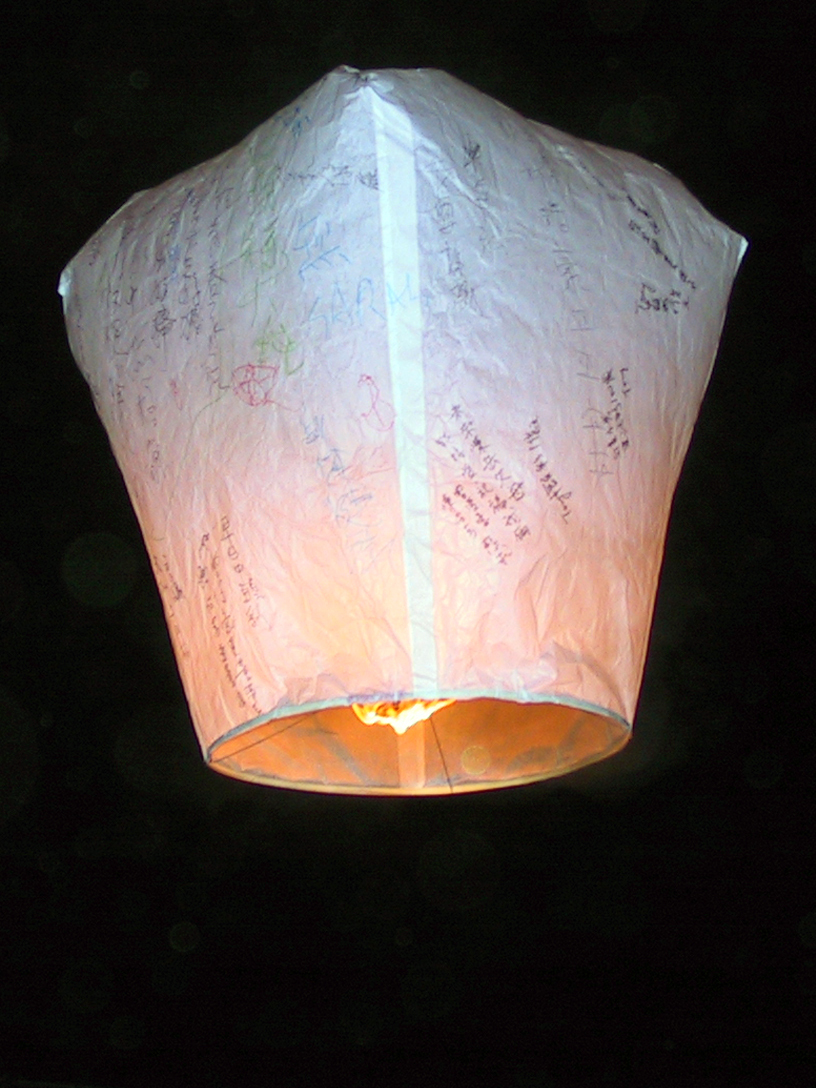 🇨🇳 China and 5 moreSky lantern天燈
A paper hot air balloon lifted by flame to carry wishes and blessingsRite · Luck and prosperity · Protection Living
🇨🇳 China and 5 moreSky lantern天燈
A paper hot air balloon lifted by flame to carry wishes and blessingsRite · Luck and prosperity · Protection Living
Related elsewhere
All charm 🇹🇭 Thailand and 3 moreThai Buddha amuletsพระเครื่อง (phrakhrueang)
Sacred Buddhist images and relics worn for protection, merit, and fortune in Thailand.Charm · Protection · Luck and prosperity Living
🇹🇭 Thailand and 3 moreThai Buddha amuletsพระเครื่อง (phrakhrueang)
Sacred Buddhist images and relics worn for protection, merit, and fortune in Thailand.Charm · Protection · Luck and prosperity Living
 🇬🇧 United Kingdom and 1 moreWell dressing
A rural English custom of decorating water sources with natural designsTradition · Protection · Speaking with spirits and the dead Living
🇳🇿 New ZealandKarakia
Māori recitations used for spiritual guidance, protection, and formal greetingsTradition · Protection · Speaking with spirits and the dead Living
🇬🇧 United Kingdom and 1 moreWell dressing
A rural English custom of decorating water sources with natural designsTradition · Protection · Speaking with spirits and the dead Living
🇳🇿 New ZealandKarakia
Māori recitations used for spiritual guidance, protection, and formal greetingsTradition · Protection · Speaking with spirits and the dead Living
 🇪🇬 Egypt and 2 moreLibation
The ritual pouring of liquid as an offering to spirits or the deadRite · Speaking with spirits and the dead · Protection Living
🇪🇬 Egypt and 2 moreLibation
The ritual pouring of liquid as an offering to spirits or the deadRite · Speaking with spirits and the dead · Protection Living