Spirits, creatures and beings
Djinn, fairies, orisha, golems and the other powers that magic deals with.
Beings are the powers that magic deals with: spirits, ancestors, gods, djinn, fairies, orisha, nats, kami, demons, golems, ghosts and the many kinds of household and landscape spirit. People in most cultures have described a world shared with unseen others, who may help, trouble or ask for respect. This page covers what these beings are said to be and the very different ways communities relate to them. They are always described here as what communities believe, not as established fact.
Different kinds of beings
A being can be a god with a priesthood, such as an orisha served in Yoruba religion, Cuba and Brazil. It can be an ancestor, honoured in China, Africa and Mexico. It can belong to a place, such as the kami of Shinto, the Thai phi or the Burmese nats. It can be a trouble-maker, like the djinn of Arabic and Islamic tradition, formed from smokeless fire, or the fairies of Ireland, whom people avoided naming.
Relationship, not command
In many traditions, a person does not command a being but enters a relationship with it, through offerings, promises and respect. Possession and mediumship are forms of that relationship, as in Vodou, Candomblé, Korean mudang rites and Sufi gatherings. In ceremonial magic of the European grimoires, by contrast, the magician summons spirits by name and authority, which the Church condemned as demon-raising. The same being may be loved in one household and feared in the next, and a spirit helpful to its servant can be harmful to a stranger.
Religions and renaming
Dominant religions often absorbed beings by relabelling them. Christian missionaries called many African and Indigenous spirits demons. Islam reads the djinn as real creatures, some of whom are Muslim, and Hindu and Buddhist traditions fold local deities into their own pantheons. Pagan and fairy beliefs were sometimes recast as the devil's work, which fed witch trials in Europe. Churches and mosques have sometimes divided beings into good and evil in ways the older traditions did not, so that a neutral local spirit became a demon on the day a missionary arrived.
Harm and interpretation
Belief in harmful spirits has been used to accuse people. Children in parts of West and Central Africa have been branded as witches possessed by evil spirits, and some have been abused by pastors or families in the name of deliverance. Scholars read spirit beliefs as ways to make sense of illness, loss and conflict, and many communities see them simply as neighbours. That is why accusations tied to spirit beliefs fall hardest on children and the vulnerable, and why many agencies train local leaders to challenge them.
Being on EveryJaadu
The entries written up so far, best known first.
 🇮🇶 Iraq and 1 moreRabisu
A wind spirit in Akkadian myth sent to correct human transgressionsBeing · Cursing and harm · Cleansing and purification Historical
🇷🇴 Romania and 2 moreStrigoi
A Romanian undead spirit linked to witchcraft and vampirismBeing · Cursing and harm Historical
🇮🇶 Iraq and 1 moreRabisu
A wind spirit in Akkadian myth sent to correct human transgressionsBeing · Cursing and harm · Cleansing and purification Historical
🇷🇴 Romania and 2 moreStrigoi
A Romanian undead spirit linked to witchcraft and vampirismBeing · Cursing and harm Historical
 🇩🇪 Germany and 3 moreMare
A spirit that sits on sleepers to cause nightmares and physical distressBeing · Cursing and harm Historical
🇩🇪 Germany and 3 moreMare
A spirit that sits on sleepers to cause nightmares and physical distressBeing · Cursing and harm Historical
 🇩🇪 GermanyAlp
A Germanic spirit that presses on sleepers and drinks milkBeing · Cursing and harm · Luck and prosperity Historical
🇩🇪 GermanyAlp
A Germanic spirit that presses on sleepers and drinks milkBeing · Cursing and harm · Luck and prosperity Historical
 🇮🇳 India and 1 moreYoginiयोगिनी
A female master of yoga and tantra, or a fierce goddess aspect in Indian temples.Tradition · Power and authority · Protection Historical
🇮🇳 India and 1 moreDaayanदायन
A vengeful female spirit from Indian folklore, often blamed for misfortune and witchcraft accusations.Being · Cursing and harm · Luck and prosperity Living
🇮🇳 India and 1 moreYoginiयोगिनी
A female master of yoga and tantra, or a fierce goddess aspect in Indian temples.Tradition · Power and authority · Protection Historical
🇮🇳 India and 1 moreDaayanदायन
A vengeful female spirit from Indian folklore, often blamed for misfortune and witchcraft accusations.Being · Cursing and harm · Luck and prosperity Living
 🇷🇺 Russia and 2 moreUpiórупіор
A demonic spirit from Slavic and Turkic folklore that is believed to return from the dead to feed on the living.Being · Cursing and harm Historical
🇮🇱 Israel and 2 moreBelialבְּלִיַּעַל
A Hebrew term for worthlessness that evolved into a demon of darkness in Jewish and Christian texts.Being · Cursing and harm Historical
🇷🇺 Russia and 2 moreUpiórупіор
A demonic spirit from Slavic and Turkic folklore that is believed to return from the dead to feed on the living.Being · Cursing and harm Historical
🇮🇱 Israel and 2 moreBelialבְּלִיַּעַל
A Hebrew term for worthlessness that evolved into a demon of darkness in Jewish and Christian texts.Being · Cursing and harm Historical
 🇸🇪 Sweden and 2 moreMjölnirMjǫllnir
The hammer of the Norse thunder god Thor, used as a weapon and for blessingsBeing · Cursing and harm · Protection Historical
🇸🇪 Sweden and 2 moreMjölnirMjǫllnir
The hammer of the Norse thunder god Thor, used as a weapon and for blessingsBeing · Cursing and harm · Protection Historical
 🇨🇦 CanadaNanabozhoᓇᓇᐳᔓ
A shapeshifting spirit and trickster in Anishinaabe storytelling from North AmericaBeing · Cursing and harm · Power and authority Living
🇨🇦 CanadaNanabozhoᓇᓇᐳᔓ
A shapeshifting spirit and trickster in Anishinaabe storytelling from North AmericaBeing · Cursing and harm · Power and authority Living
 🇦🇺 AustraliaRainbow Serpent
A creator spirit of water and land in Aboriginal Australian mythologyBeing · Healing · Cursing and harm Living
🇵🇪 Peru and 1 morePishtacoñañaq; kharisiri
An Andean bogeyman said to steal human fat for oil and medicineBeing · Cursing and harm · Power and authority Living
🇦🇺 AustraliaRainbow Serpent
A creator spirit of water and land in Aboriginal Australian mythologyBeing · Healing · Cursing and harm Living
🇵🇪 Peru and 1 morePishtacoñañaq; kharisiri
An Andean bogeyman said to steal human fat for oil and medicineBeing · Cursing and harm · Power and authority Living
 🇷🇺 Russia and 4 moreLady MiddayPoludnitsa
A Slavic noon spirit who watches over fields and punishes those who work during the hottest hours.Being · Cursing and harm · Protection Historical
🇷🇺 Russia and 4 moreLady MiddayPoludnitsa
A Slavic noon spirit who watches over fields and punishes those who work during the hottest hours.Being · Cursing and harm · Protection Historical
 🇮🇸 Iceland and 1 moreNornsnornir
Fate-weaving figures from Norse myth who shape human destiny and tend the world tree.Being · Cursing and harm · Luck and prosperity Historical
🇮🇸 Iceland and 1 moreNornsnornir
Fate-weaving figures from Norse myth who shape human destiny and tend the world tree.Being · Cursing and harm · Luck and prosperity Historical
 🇬🇧 United KingdomBoggart
A malevolent household spirit from northern English folkloreBeing · Cursing and harm Historical
🇬🇧 United KingdomBoggart
A malevolent household spirit from northern English folkloreBeing · Cursing and harm Historical
 🇯🇵 JapanTsukumogami付喪神
Household objects that gain a spirit after reaching their hundredth year in Japanese folklore.Being · Cursing and harm Historical
🇯🇵 JapanTsukumogami付喪神
Household objects that gain a spirit after reaching their hundredth year in Japanese folklore.Being · Cursing and harm Historical
 🇮🇳 India and 3 moreDakiniḍākinī
A goddess figure in Hinduism and Buddhism, ranging from flesh-eating demoness to enlightened energy.Being · Cursing and harm · Power and authority Historical
🇮🇳 India and 3 moreDakiniḍākinī
A goddess figure in Hinduism and Buddhism, ranging from flesh-eating demoness to enlightened energy.Being · Cursing and harm · Power and authority Historical
 🇮🇱 Israel and 2 moreLeviathanלִוְיָתָן (Livyaṯān)
A primordial sea monster from ancient Near Eastern myth and biblical textBeing · Cursing and harm · Power and authority Historical
🇮🇱 Israel and 2 moreLeviathanלִוְיָתָן (Livyaṯān)
A primordial sea monster from ancient Near Eastern myth and biblical textBeing · Cursing and harm · Power and authority Historical
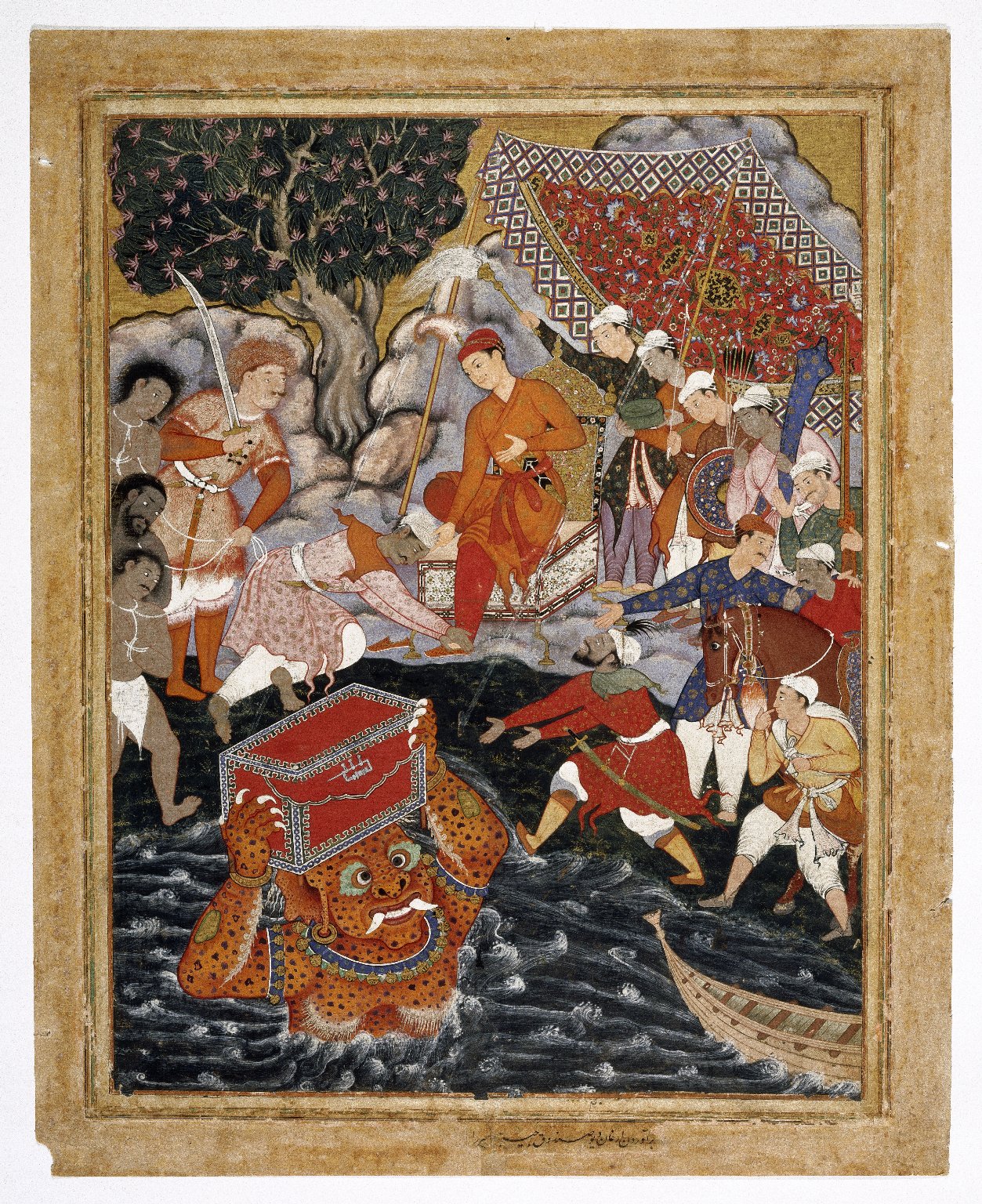 🇪🇬 Egypt and 3 moreIfritعفريت
A class of powerful chthonic spirits in Islamic tradition and folkloreBeing · Cursing and harm · Power and authority Historical
🇪🇬 Egypt and 3 moreIfritعفريت
A class of powerful chthonic spirits in Islamic tradition and folkloreBeing · Cursing and harm · Power and authority Historical
Photo credits on this page
The small pictures above come from Wikimedia Commons under free licences. Some are cropped to fit.
- Rabisu: editor Austen Henry Layard , drawing by L. Gruner, Public domain, source
- Mare: Henry Fuseli, Public domain, source
- Alp: Henry Fuseli, Public domain, source
- Yogini: Soumendra Barik, CC BY-SA 3.0, source
- Upiór: Віщун, CC BY-SA 4.0, source
- Mjölnir: Mårten Eskil Winge, Public domain, source
- Nanabozho: D. Gordon E. Robertson, CC BY-SA 3.0, source
- Rainbow Serpent: unknown (as drawn by an Aboriginal), Public domain, source
- Lady Midday: Віщун, CC BY-SA 4.0, source
- Norns: file: James Steakley ; artwork: Gustav Heidenreich, Public domain, source
- Boggart: Katolophyromai, CC BY-SA 4.0, source
- Tsukumogami: Unknown author, Public domain, source
- Dakini: Didier Descouens, Public domain, source
- Leviathan: Gustave Doré, Public domain, source
- Ifrit: Unknown author, Public domain, source