
Qareen
In its own language: قرين
from Arabic qarīn, meaning 'constant companion'
A spiritual companion or double assigned to every human in Islamic belief
The qareen is a spirit from the jinn kind that accompanies each person throughout their life. It serves as a constant companion, often tempting individuals toward sin while an angelic counterpart encourages virtue.
- A qareen is a jinn companion assigned to every human.
- It tempts people toward sin while an angel urges good.
- Amulets are used in Egypt to guard against jealousy.
- The term means 'constant companion' in Arabic.
- Pre-Islamic poetry used the word metaphorically for fear.
What it is
A qareen is a spiritual entity linked to every human being. It belongs to the jinn, a realm of beings made from smokeless fire in Islamic cosmology. While distinct from other jinn, it acts as a personal shadow or double. The concept suggests that each person has a permanent companion influencing their path. This companion can manifest as either a malevolent devil or a benevolent angel. Most traditions emphasize its role as a tempter urging humans toward wrongdoing. Scholars note parallels with older Near Eastern ideas of personal spirits, such as the Egyptian ka. The term should not be confused with the qarinah, a separate figure associated with childbirth dangers.
Where it comes from
The word appears in the Quran as 'companion' without demonic connotations, referring to earthly friends or satanic influences. The specific idea of a personal spiritual double emerges clearly in hadith literature. Early interpretations viewed it as a test of faith granted by God. Pre-Islamic Arabian poetry used the term metaphorically for fear or reputation. Some scholars suggest the concept evolved from earlier regional beliefs about personal deities or spirits. The shift from neutral companion to negative tempter occurred gradually within Islamic monotheism.
Tools and materials
In Egyptian folk practice, amulets are used to protect against the qareen, particularly if it becomes jealous. Rituals often involve the number seven. Pregnant women may consult female healers to ensure the qarina does not harm the unborn child. Brides in Upper Egypt wear protective charms against their qareen. These practices blend Islamic belief with local customs to manage the perceived influence of the spirit.
Qareen, drawn and placed
- Living
- Revived
- Fading
- Historical
- Legendary
- Performed
- Lineage
- Islamic theology and folklore
- Timing
- throughout life
What it is for
The qareen exists to test human faith and moral choices. It whispers evil suggestions, known as waswas, to lead people astray. Conversely, an angelic counterpart advises good deeds. The struggle between these two companions defines the spiritual journey. Believers seek refuge in God to resist the qareen's negative influence. The entity serves as a mirror for inner desires and lower faculties.
Who does it
Scholars and theologians analyze the nature of the qareen through religious texts. Folk practitioners, such as sheikhas in Egypt, offer rituals to mitigate its harm. The tradition holds that even prophets had a qareen, though they mastered their own desires. Ordinary believers interact with the concept through daily prayers and protection rituals. Gender roles appear in folk healing, where women seek counsel from female specialists regarding childbirth spirits.
Peoples and places
Belief in the qareen varies across the Muslim world. It is more prevalent in Egypt than in Sudan. Both Copts and Muslims in Egypt acknowledge the spirit, sometimes believing it transforms into animals at night. Russian and Turkish Muslims often view the qareen as present from the womb. The concept reflects local cultural adaptations of Islamic theology, blending universal doctrine with regional folklore about spirits and protection.
At a glance: who, where and when
What people believe
Islamic theology posits that every human is assigned a jinn companion. This being whispers evil thoughts, testing the believer's devotion. An angel also accompanies the person, offering guidance toward righteousness. The qareen is not an independent force but operates under divine permission. It represents the internal struggle between base instincts and spiritual discipline. Some interpret the qareen as the 'other self,' integral to human psychology rather than an external entity.
How scholars and sceptics see it
Researchers trace the term's evolution from Quranic usage to hadith-based theology. Hans Alexander Winkler noted early references to earthly companions. Modern scholars distinguish the qareen from the qarinah and guardian angels. Anthropologists observe how folk beliefs in Egypt preserve older concepts like the ka. Theological debates continue regarding whether the qareen is solely demonic or includes angelic aspects. Psychological interpretations compare it to the shadow self or subconscious drives.
Compare and confuse
The qareen resembles the Greek daimon and the Christian guardian angel in function. It differs from the qarinah, which is a female demon linked to pregnancy. Unlike the tulpa, which is mentally constructed, the qareen is believed to be externally assigned. It shares traits with the familiar spirit but lacks the contractual relationship. The concept aligns with the idea of a personal deity in Babylonian thought.
Today
The belief remains active in Egyptian folk culture and broader Islamic communities. Amulets and rituals persist among those seeking protection from spiritual harm. The concept adapts to modern contexts, often discussed in paranormal and occult circles. Diaspora communities maintain varying degrees of belief depending on local integration. The qareen continues to serve as a framework for understanding moral temptation and spiritual companionship.
Questions people ask about Qareen
What is a qareen?
A qareen is a spiritual companion from the jinn kind assigned to every human. It acts as a constant presence, influencing behavior through whispers.
Where does the concept come from?
The term originates in Arabic, meaning companion. It appears in the Quran and hadith, evolving from pre-Islamic ideas of personal spirits.
Is the qareen always evil?
No. While often depicted as a tempter, some traditions say each person has both a demonic qareen and an angelic one.
How do people protect themselves?
Believers use prayers, amulets, and rituals. In Egypt, pregnant women and brides often wear charms to ward off harmful influences.
Good reading and sources
- Qareen on WikipediaEncyclopedia
- More photos on Wikimedia CommonsPhotos and video
- Wikidata recordOpen data
The facts on this page come from the Wikipedia article "Qareen", written by its contributors and used under the CC BY-SA 4.0 licence, and from its Wikidata record (CC0). EveryJaadu rewrote the text in its own words, with AI assistance, and compares every page with the article to make sure no passage is copied. It may be reused under the same CC BY-SA 4.0 licence with a link back.
It may contain mistakes. Names and customs differ from one community to the next, and some knowledge is closed to outsiders and left out here. This page describes belief and practice. It does not say that any of it works, it is not a how-to, and it is not medical advice. If something is wrong, tell us. Last refreshed 2026-10-06.
More from Egypt
All the entries from Egypt 🇪🇬 Egypt and 1 moreSphinx
A mythical hybrid with a human head and lion body, serving as guardian or riddler in Egyptian and Greek traditions.Being · Protection · Wonder and entertainment Legendary
🇪🇬 Egypt and 1 moreSphinx
A mythical hybrid with a human head and lion body, serving as guardian or riddler in Egyptian and Greek traditions.Being · Protection · Wonder and entertainment Legendary
 🇮🇱 Israel and 2 moreLeviathanלִוְיָתָן (Livyaṯān)
A primordial sea monster from ancient Near Eastern myth and biblical textBeing · Cursing and harm · Power and authority Historical
🇮🇱 Israel and 2 moreBelialבְּלִיַּעַל
A Hebrew term for worthlessness that evolved into a demon of darkness in Jewish and Christian texts.Being · Cursing and harm Historical
🇮🇱 Israel and 2 moreLeviathanלִוְיָתָן (Livyaṯān)
A primordial sea monster from ancient Near Eastern myth and biblical textBeing · Cursing and harm · Power and authority Historical
🇮🇱 Israel and 2 moreBelialבְּלִיַּעַל
A Hebrew term for worthlessness that evolved into a demon of darkness in Jewish and Christian texts.Being · Cursing and harm Historical
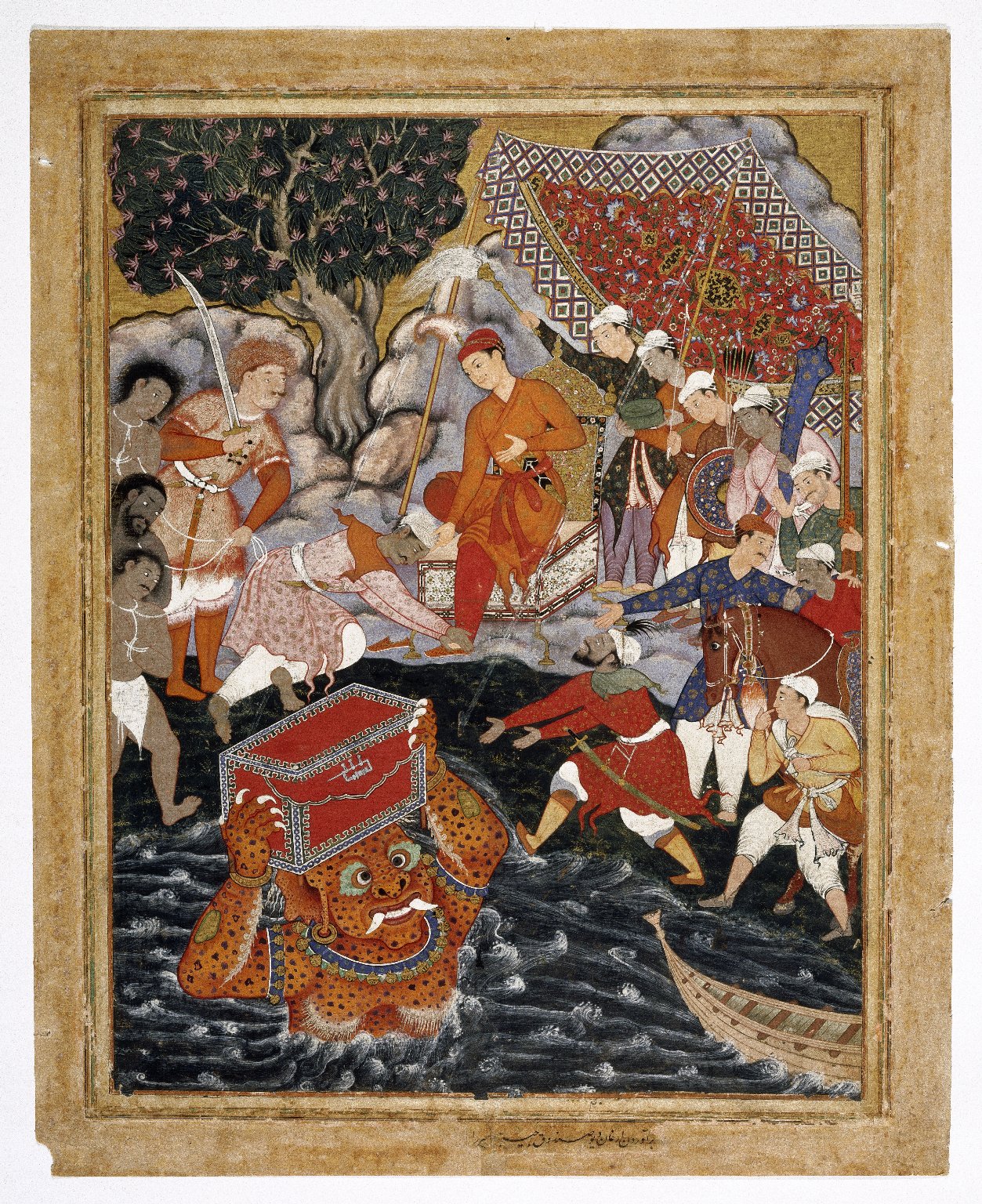 🇪🇬 Egypt and 3 moreIfritعفريت
A class of powerful chthonic spirits in Islamic tradition and folkloreBeing · Cursing and harm · Power and authority Historical
🇪🇬 Egypt and 3 moreIfritعفريت
A class of powerful chthonic spirits in Islamic tradition and folkloreBeing · Cursing and harm · Power and authority Historical
Related elsewhere
All being 🇿🇦 South AfricaSympathetic magic
A magical principle based on imitation and contact to influence the worldTradition · Protection · Healing Historical
🇿🇦 South AfricaSympathetic magic
A magical principle based on imitation and contact to influence the worldTradition · Protection · Healing Historical
 🇮🇸 Iceland and 2 moreSeiðr
A Norse magic of fate and spirit, practiced by seers and sorcerers in the Viking Age.Tradition · Seeing and foretelling · Cursing and harm Revived
🇮🇸 Iceland and 2 moreSeiðr
A Norse magic of fate and spirit, practiced by seers and sorcerers in the Viking Age.Tradition · Seeing and foretelling · Cursing and harm Revived
 🇮🇳 India and 4 moreTantraतन्त्र
An esoteric yogic tradition from India focusing on ritual, mantra, and body-based spiritual practices.Tradition · Power and authority · Change and initiation Living
🇿🇦 South Africa and 5 moreMurder for body parts
The killing of people to harvest body parts for traditional medicine or the illegal organ trade.Belief · Cursing and harm · Power and authority Living
🇮🇳 India and 4 moreTantraतन्त्र
An esoteric yogic tradition from India focusing on ritual, mantra, and body-based spiritual practices.Tradition · Power and authority · Change and initiation Living
🇿🇦 South Africa and 5 moreMurder for body parts
The killing of people to harvest body parts for traditional medicine or the illegal organ trade.Belief · Cursing and harm · Power and authority Living