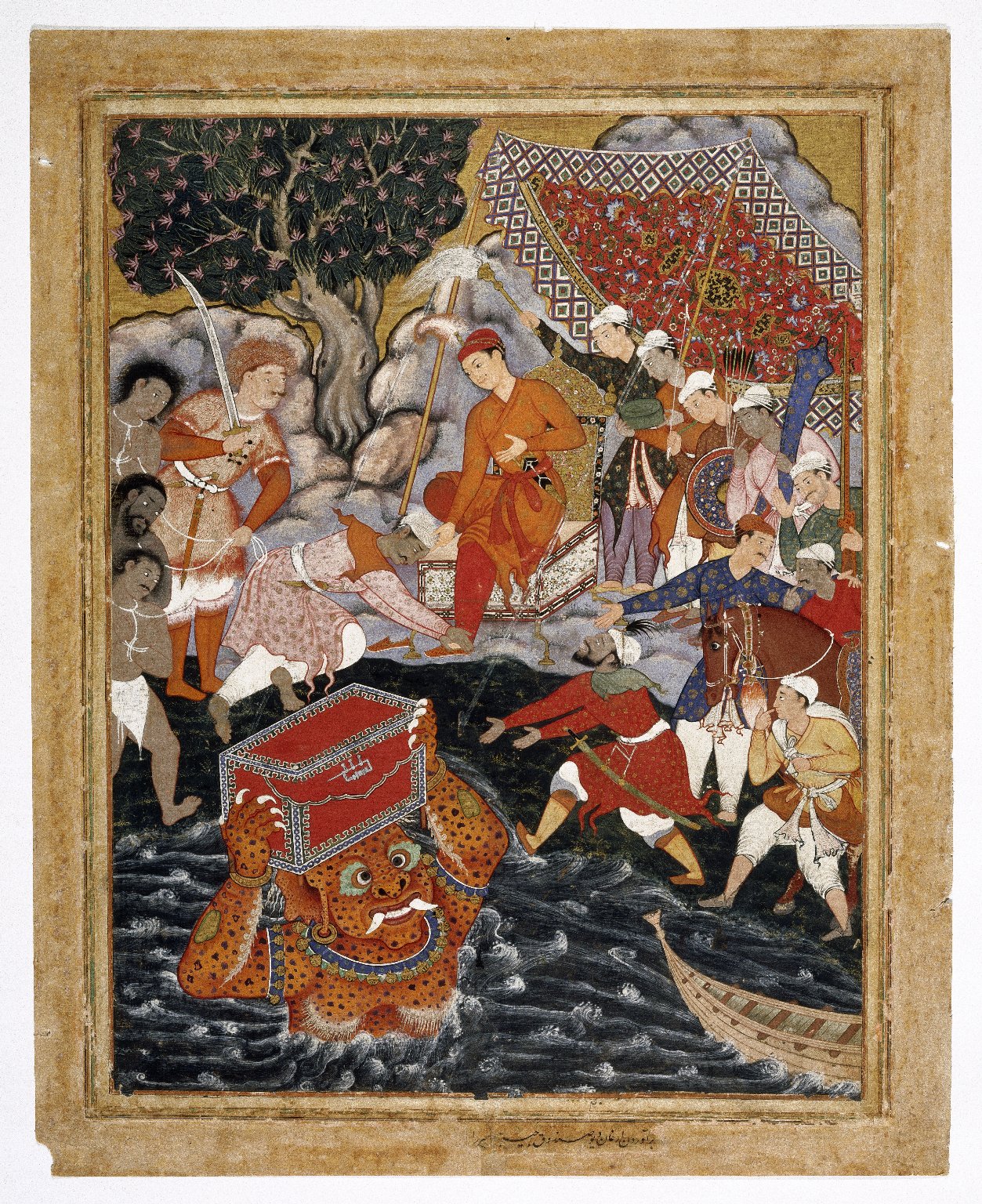
Ifrit
In its own language: عفريت
from Arabic 'afara, meaning to rub with dust
A class of powerful chthonic spirits in Islamic tradition and folklore
The ifrit is a type of demon or spirit described in Islamic scripture and popular belief. It is often linked to the underworld, fire, and the souls of those who died violently. The term appears in the Quran as an epithet for a strong jinn.
- The term appears in the Quran as an epithet for a strong jinn
- Folklore links ifrits to the souls of those killed violently
- They are often described as being made of smoke and fire
- Moroccan tales depict them with monstrous physical deformities
- The word likely derives from Arabic meaning to roll in dust
What it is
The ifrit is a powerful spirit or demon within Islamic culture. It is often described as chthonic, meaning it belongs to the earth or underworld. These beings are frequently associated with fire and smoke. In religious texts, the word serves as an adjective describing a strong or malicious jinn. Folklore treats them as independent entities that inhabit ruins or desolate places. They are sometimes identified with the ghosts of the dead, particularly those who suffered violent ends.
Where it comes from
The term appears in the Quran, specifically in Surah an-Naml, where it describes a powerful jinn offering to bring the throne of Sheba. It is not found in pre-Islamic poetry, though similar words exist. Scholars debate its roots. Some link it to the Persian word for creation. Others suggest a Zoroastrian origin from the Avestan word for a spirit. Traditional Arab scholars trace it to a verb meaning to roll in dust, implying cunning or malice.
Tools and materials
Beliefs describe ifrits as being formed from smoke and fire. In Moroccan tales, they might be compelled by magical rings to carry heavy loads. Egyptian folklore suggests driving a nail into blood can stop the formation of a malevolent ifrit. They are often depicted with monstrous features like flaming eyes or clawed hands.
Ifrit, drawn and placed
- Living
- Revived
- Fading
- Historical
- Legendary
- Performed
- Lineage
- Islamic demonology
What it is for
In scripture, ifrits act as agents of testing or torment. One story involves a jinn trying to interrupt prayer. Another describes spirits tormenting the prophet Job. In folklore, they may seek revenge for murder or serve as guardians of moral order. They are also seen as sources of power for those who summon them, though this often leads to madness.
Peoples and places
The concept varies across regions. In Egypt, ifrits are linked to the soul of the dead, wandering cemeteries until judgment day. Only those killed violently become dangerous spirits. In Morocco, they are seen as large, shapeshifting demons with physical deformities. Among the Shabak people of Kurdistan, a specific ifrit was chained by Ali for its wickedness before creation. Turkish usage distinguishes them from surface demons.
At a glance: who, where and when
Who does it

What people believe
Islamic theology views ifrits as part of the unseen world, created from fire. They are not inherently evil but can be ruthless. They operate under God's will, even when causing harm. Folklore expands this view, portraying them as moral enforcers or vengeful ghosts. They are distinct from jinn in their specific traits, often being more grounded or chthonic.
How scholars and sceptics see it
Philologists analyze the word's linguistic roots, debating between Arabic and Persian origins. Historians note its evolution from a scriptural epithet to a distinct folkloric class. Anthropologists study how different cultures, like Egyptians and Moroccans, adapt the concept to explain death and violence. Sceptics view these beliefs as cultural narratives about the unknown.
Compare and confuse
The ifrit is related to other demonic figures like the marid or shaytan. It shares traits with European genii locorum or spirits of place. In Western media, it is often confused with the wish-granting genie, a misinterpretation of the jar-bound spirits from One Thousand and One Nights.
Today
The ifrit appears in modern fiction, including video games like Final Fantasy and novels like American Gods. These portrayals often emphasize its fiery nature and power. It remains a subject of academic interest in Islamic studies and comparative mythology.
Questions people ask about Ifrit
What is an ifrit?
An ifrit is a powerful spirit or demon in Islamic tradition. It is often described as chthonic and associated with fire. The term appears in the Quran as an adjective for a strong jinn.
Where does the word come from?
Scholars trace it to the Arabic word for rolling in dust. Some suggest foreign roots in Persian or Zoroastrian languages. It first appeared in the Quran as a descriptive term.
Are ifrits always evil?
Not necessarily. In scripture, they act under God's will. Folklore portrays them as ruthless or vengeful, but they can also serve as moral guardians or sources of power.
How do they differ from jinn?
The term ifrit is often used as an epithet for a specific type of jinn. They are typically seen as more powerful, chthonic, and associated with the underworld or fire.
Good reading and sources
- Ifrit on WikipediaEncyclopedia
- More photos on Wikimedia CommonsPhotos and video
- Wikidata recordOpen data
The facts on this page come from the Wikipedia article "Ifrit", written by its contributors and used under the CC BY-SA 4.0 licence, and from its Wikidata record (CC0). EveryJaadu rewrote the text in its own words, with AI assistance, and compares every page with the article to make sure no passage is copied. It may be reused under the same CC BY-SA 4.0 licence with a link back.
It may contain mistakes. Names and customs differ from one community to the next, and some knowledge is closed to outsiders and left out here. This page describes belief and practice. It does not say that any of it works, it is not a how-to, and it is not medical advice. If something is wrong, tell us. Last refreshed 2026-10-05.
More from Egypt
All the entries from Egypt 🇪🇬 Egypt and 1 moreSphinx
A mythical hybrid with a human head and lion body, serving as guardian or riddler in Egyptian and Greek traditions.Being · Protection · Wonder and entertainment Legendary
🇪🇬 Egypt and 1 moreSphinx
A mythical hybrid with a human head and lion body, serving as guardian or riddler in Egyptian and Greek traditions.Being · Protection · Wonder and entertainment Legendary
 🇮🇱 Israel and 2 moreLeviathanלִוְיָתָן (Livyaṯān)
A primordial sea monster from ancient Near Eastern myth and biblical textBeing · Cursing and harm · Power and authority Historical
🇮🇱 Israel and 2 moreBelialבְּלִיַּעַל
A Hebrew term for worthlessness that evolved into a demon of darkness in Jewish and Christian texts.Being · Cursing and harm Historical
🇮🇱 Israel and 2 moreLeviathanלִוְיָתָן (Livyaṯān)
A primordial sea monster from ancient Near Eastern myth and biblical textBeing · Cursing and harm · Power and authority Historical
🇮🇱 Israel and 2 moreBelialבְּלִיַּעַל
A Hebrew term for worthlessness that evolved into a demon of darkness in Jewish and Christian texts.Being · Cursing and harm Historical
 🇪🇬 EgyptAbraxasἈβράξας
A Gnostic archon and the name on ancient protective gemstonesBeing · Protection Historical
🇪🇬 EgyptAbraxasἈβράξας
A Gnostic archon and the name on ancient protective gemstonesBeing · Protection Historical
Related elsewhere
All being 🇮🇸 Iceland and 2 moreSeiðr
A Norse magic of fate and spirit, practiced by seers and sorcerers in the Viking Age.Tradition · Seeing and foretelling · Cursing and harm Revived
🇮🇸 Iceland and 2 moreSeiðr
A Norse magic of fate and spirit, practiced by seers and sorcerers in the Viking Age.Tradition · Seeing and foretelling · Cursing and harm Revived
 🇿🇦 South AfricaSympathetic magic
A magical principle based on imitation and contact to influence the worldTradition · Protection · Healing Historical
🇿🇦 South AfricaSympathetic magic
A magical principle based on imitation and contact to influence the worldTradition · Protection · Healing Historical
 🇮🇳 India and 4 moreTantraतन्त्र
An esoteric yogic tradition from India focusing on ritual, mantra, and body-based spiritual practices.Tradition · Power and authority · Change and initiation Living
🇿🇦 South Africa and 5 moreMurder for body parts
The killing of people to harvest body parts for traditional medicine or the illegal organ trade.Belief · Cursing and harm · Power and authority Living
🇮🇳 India and 4 moreTantraतन्त्र
An esoteric yogic tradition from India focusing on ritual, mantra, and body-based spiritual practices.Tradition · Power and authority · Change and initiation Living
🇿🇦 South Africa and 5 moreMurder for body parts
The killing of people to harvest body parts for traditional medicine or the illegal organ trade.Belief · Cursing and harm · Power and authority Living