
Leviathan
In its own language: לִוְיָתָן (Livyaṯān)
From the Hebrew root for twisting or winding into folds
A primordial sea monster from ancient Near Eastern myth and biblical text
Leviathan is a colossal sea serpent rooted in Hebrew scripture and older Canaanite legends. It represents chaotic forces that are ultimately subdued by divine power.
- Derived from Ugaritic Lôtān, defeated by Hadad
- Described in Job with fire-breathing and iron scales
- Female slain to save world; flesh saved for righteous
- Associated with envy in Christian demonology
- Mentioned in Psalms, Isaiah, and Book of Enoch
What it is
Leviathan stands as a massive aquatic creature within theological narratives. It originates from ancient Hebrew texts and earlier Canaanite traditions. The entity embodies untamed natural chaos. In scriptural accounts, it serves as a symbol for hostile earthly powers like Babylon. Later interpretations cast it as a demonic force or a representation of envy. Its physical form is described as having fire-breathing capabilities and armor-like scales.
Where it comes from
The concept traces back to Ugaritic myths featuring Lôtān, a servant of the sea god Yammu. This figure was defeated by the storm god Hadad. Similar motifs appear in Sumerian tales of Tiamat and Egyptian stories of Apep versus Ra. These narratives share a common structure where a creator deity defeats a primordial sea monster to establish cosmic order. The Hebrew tradition adapted these older pagan myths into monotheistic frameworks.
Tools and materials
The creature is depicted with specific physical traits. It possesses scales that cannot be penetrated. It breathes fire and emits intense heat. Some texts mention a small worm called kilbit that can harm it. Its eyes are said to shine with great light. These features emphasize its overwhelming power and supernatural nature.
Leviathan, drawn and placed
- Living
- Revived
- Fading
- Historical
- Legendary
- Performed
- Lineage
- Ancient Near Eastern chaos mythology
- Timing
- End of time
What it is for
In early texts, Leviathan functions as a metaphor for political enemies. It illustrates the struggle between divine order and chaotic destruction. In later Jewish mysticism, it becomes part of an eschatological banquet. The flesh of the beast is reserved for the righteous in the future age. This transforms the monster from a threat into a source of reward.
Who does it
Scholars and theologians analyze Leviathan as a literary and mythological figure. Ancient scribes recorded its attributes in sacred texts. Medieval commentators interpreted its symbolism within religious doctrine. Modern researchers compare it to other global serpent myths to understand cultural exchanges in the ancient Mediterranean world.
Peoples and places
The Hebrew Bible mentions Leviathan multiple times. Ugaritic texts describe its predecessor Lôtān. Syrian seals depict similar serpent battles. Egyptian mythology features parallel chaos monsters. These cultures shared mythological tropes across the ancient Near East. The imagery evolved differently in Jewish and Christian traditions over centuries.
At a glance: who, where and when


What people believe
Jewish midrash describes Leviathan as a male and female pair. God killed the female to prevent overpopulation. Her remains are saved for a future messianic feast. Christian theology often links it to the devil or the seven deadly sins. It represents the ultimate defeat of evil at the end of time. The beast's annihilation signals the arrival of peace.
When it is done
References to Leviathan appear in prayers during Sukkot. A prayer asks for dwelling in the tent made from its skin. It is also mentioned in poems recited on Shavuot. These occasions connect the mythical beast to communal religious observance and hope for divine intervention.
How scholars and sceptics see it
Philologists debate the word's origin, linking it to roots meaning twisted or joined. Historians note parallels with Mesopotamian and Canaanite creation myths. Some scholars view it as a reference to real animals like crocodiles or whales. Others see it purely as a symbolic representation of chaos and divine power.
Compare and confuse
Leviathan shares traits with Tiamat, Jörmungandr, and Vritra. All are serpentine chaos figures defeated by order-bringing deities. The term Tannin appears in similar contexts. Different cultures used sea monsters to explain the origins of the world and the limits of human power.
Today
Leviathan remains a subject of biblical study and comparative mythology. It appears in literature and art as a symbol of primal forces. The concept influences discussions on theodicy and cosmic order. It continues to be referenced in modern interpretations of ancient texts.
Questions people ask about Leviathan
What is Leviathan?
It is a giant sea serpent from Hebrew Bible and ancient Near Eastern myth, representing chaos and powerful enemies.
Where does the name come from?
It likely comes from a Hebrew root meaning to twist or wind, describing a creature coiled in folds.
Is it a real animal?
Some scholars suggest it refers to crocodiles or whales, but it is primarily a mythological symbol of chaos.
What happens to Leviathan?
It is slain by God at the end of time, and its flesh is served as a feast to the righteous.
Good reading and sources
- Leviathan on WikipediaEncyclopedia
- More photos on Wikimedia CommonsPhotos and video
- Wikidata recordOpen data
The facts on this page come from the Wikipedia article "Leviathan", written by its contributors and used under the CC BY-SA 4.0 licence, and from its Wikidata record (CC0). EveryJaadu rewrote the text in its own words, with AI assistance, and compares every page with the article to make sure no passage is copied. It may be reused under the same CC BY-SA 4.0 licence with a link back.
It may contain mistakes. Names and customs differ from one community to the next, and some knowledge is closed to outsiders and left out here. This page describes belief and practice. It does not say that any of it works, it is not a how-to, and it is not medical advice. If something is wrong, tell us. Last refreshed 2026-10-05.
More from Israel
All the entries from Israel 🇸🇾 Syria and 5 moreBaetyl
A sacred stone, often a meteorite, believed to house a deity in ancient Near Eastern and Mediterranean traditions.Charm · Power and authority · Speaking with spirits and the dead Historical
🇮🇱 Israel and 2 moreBelialבְּלִיַּעַל
A Hebrew term for worthlessness that evolved into a demon of darkness in Jewish and Christian texts.Being · Cursing and harm Historical
🇸🇾 Syria and 5 moreBaetyl
A sacred stone, often a meteorite, believed to house a deity in ancient Near Eastern and Mediterranean traditions.Charm · Power and authority · Speaking with spirits and the dead Historical
🇮🇱 Israel and 2 moreBelialבְּלִיַּעַל
A Hebrew term for worthlessness that evolved into a demon of darkness in Jewish and Christian texts.Being · Cursing and harm Historical
 🇮🇱 IsraelNumber of the beastἈριθμὸς τοῦ θηρίου
A biblical number linked to a prophetic figure and interpreted through ancient letter values.Belief · Cursing and harm Historical
🇮🇱 IsraelNumber of the beastἈριθμὸς τοῦ θηρίου
A biblical number linked to a prophetic figure and interpreted through ancient letter values.Belief · Cursing and harm Historical
 🇮🇱 Israel and 1 moreAzazelעזאזל
A desert place and fallen angel linked to the Yom Kippur scapegoat ritualFigure · Cursing and harm · Cleansing and purification Historical
🇮🇱 Israel and 1 moreAzazelעזאזל
A desert place and fallen angel linked to the Yom Kippur scapegoat ritualFigure · Cursing and harm · Cleansing and purification Historical
Related elsewhere
All being 🇮🇸 Iceland and 2 moreSeiðr
A Norse magic of fate and spirit, practiced by seers and sorcerers in the Viking Age.Tradition · Seeing and foretelling · Cursing and harm Revived
🇮🇸 Iceland and 2 moreSeiðr
A Norse magic of fate and spirit, practiced by seers and sorcerers in the Viking Age.Tradition · Seeing and foretelling · Cursing and harm Revived
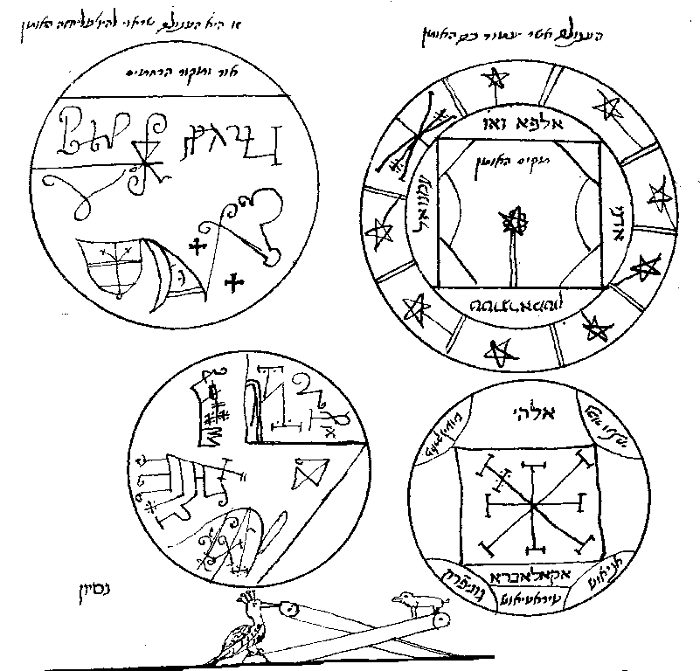 🇮🇹 Italy and 2 moreKey of SolomonClavicula Salomonis
A Renaissance grimoire attributed to King Solomon, detailing ritual preparations and invocations.Text · Cursing and harm · Love and attraction Historical
🇮🇹 Italy and 2 moreKey of SolomonClavicula Salomonis
A Renaissance grimoire attributed to King Solomon, detailing ritual preparations and invocations.Text · Cursing and harm · Love and attraction Historical
 🇮🇳 India and 4 moreTantraतन्त्र
An esoteric yogic tradition from India focusing on ritual, mantra, and body-based spiritual practices.Tradition · Power and authority · Change and initiation Living
🇮🇳 India and 4 moreTantraतन्त्र
An esoteric yogic tradition from India focusing on ritual, mantra, and body-based spiritual practices.Tradition · Power and authority · Change and initiation Living
 🇿🇦 South AfricaSympathetic magic
A magical principle based on imitation and contact to influence the worldTradition · Protection · Healing Historical
🇿🇦 South AfricaSympathetic magic
A magical principle based on imitation and contact to influence the worldTradition · Protection · Healing Historical