Speaking with spirits and the dead
Mediumship, ancestor rites, possession and the offerings made to the unseen.
Speaking with spirits and the dead is the aim of mediumship, ancestor rites, possession and necromancy. It runs from the spirit mediums of Korea and Brazil to Vodou possession, Chinese ancestor offerings, the Mexican Day of the Dead, Victorian spiritualism and the Witch of Endor of the Bible. It is a central practice in some living religions and a frequent target of fraud in others. This page covers who speaks to the dead and how they are judged.
Ways of contact
Methods differ. In possession, a spirit or deity is said to speak through the body of a medium, as in Vodou, Candomblé, Haitian and Brazilian rites, and in Korean gut. In trance or dream, a shaman travels to the spirit world. In offerings and festivals, families feed and talk to ancestors, as in the Hungry Ghost month in China and the ofrenda in Mexico. Spiritualism added the seance and the table-rapping of the 1840s.
Who may
In many societies, women lead: Korean mudang, Okinawan yuta, Brazilian mães de santo and the Western spiritualist mediums of the nineteenth century, who found in mediumship a public role denied elsewhere. Elsewhere, the role is for elders and ancestors' descendants. Some traditions require initiation, and some say contact with the dead is not for outsiders to attempt. Spirits and ancestors are not always friendly: mediums report angry, hungry or lost beings, and rites exist for settling them, such as offerings for neglected ancestors in China and Vietnam.
Authority and fear
Religions disagree. Christianity, Judaism and Islam each forbid certain contact with the dead while honouring prayer for them. Spiritist movements around Kardec in Brazil and France treat communication as a doctrine. Colonial authorities banned possession cults in many places, often labelling them devil worship, and some Pentecostal churches today condemn them in the same terms. The rites are widely found in Africa too, where ancestors are consulted at the family shrine and are held to watch over the living.
Fraud, grief and study
Grieving people are vulnerable. Fraudulent mediums, from the Fox sisters, who confessed in 1888, to modern cold readers, have taken money by exploiting loss. Researchers point to cold reading and to the ideomotor effect behind the Ouija board. Many bereaved people also report real comfort from rites that keep a bond with the dead, and counsellors acknowledge that continuing bonds are common. Doctors and psychologists note that a grief reaction can include hearing or sensing the dead, which is common and not in itself a sign of illness.
Speaking with spirits and the dead on EveryJaadu
The entries written up so far, best known first.
 🇮🇳 IndiaKamakhya Templekamakhya mondir
A Hindu temple in Assam known for its yoni shrine and the Ambubachi Mela festivalTradition · Protection · Healing Living
🇮🇳 IndiaKamakhya Templekamakhya mondir
A Hindu temple in Assam known for its yoni shrine and the Ambubachi Mela festivalTradition · Protection · Healing Living
 🇦🇴 Angola and 2 moreKongo religionBukongo
The animistic beliefs and ancestor veneration of the Bakongo people in Central AfricaTradition · Speaking with spirits and the dead · Protection Living
🇦🇴 Angola and 2 moreKongo religionBukongo
The animistic beliefs and ancestor veneration of the Bakongo people in Central AfricaTradition · Speaking with spirits and the dead · Protection Living
 🇵🇪 Peru and 1 moreQuyllurit'iQoyllur Rit'i
A syncretic Andean pilgrimage celebrating the Pleiades and the Lord of Star SnowTradition · Protection · Healing Living
🇵🇪 Peru and 1 moreQuyllurit'iQoyllur Rit'i
A syncretic Andean pilgrimage celebrating the Pleiades and the Lord of Star SnowTradition · Protection · Healing Living
 🇧🇴 Bolivia and 2 moreYatiri
A lightning-struck healer in Aymara communities who restores balance with nature and ancestorsTradition · Healing · Speaking with spirits and the dead Living
🇧🇴 Bolivia and 2 moreYatiri
A lightning-struck healer in Aymara communities who restores balance with nature and ancestorsTradition · Healing · Speaking with spirits and the dead Living
 🇨🇱 Chile and 1 moreMapuche religion
The traditional spiritual practice of the Mapuche people of Chile and ArgentinaTradition · Protection · Healing Living
🇨🇱 Chile and 1 moreMapuche religion
The traditional spiritual practice of the Mapuche people of Chile and ArgentinaTradition · Protection · Healing Living
 🇨🇱 Chile and 1 moreCultrunkultrung
A ceremonial drum central to Mapuche spiritual practice and identity in Chile and ArgentinaTradition · Healing · Protection Living
🇨🇱 Chile and 1 moreCultrunkultrung
A ceremonial drum central to Mapuche spiritual practice and identity in Chile and ArgentinaTradition · Healing · Protection Living
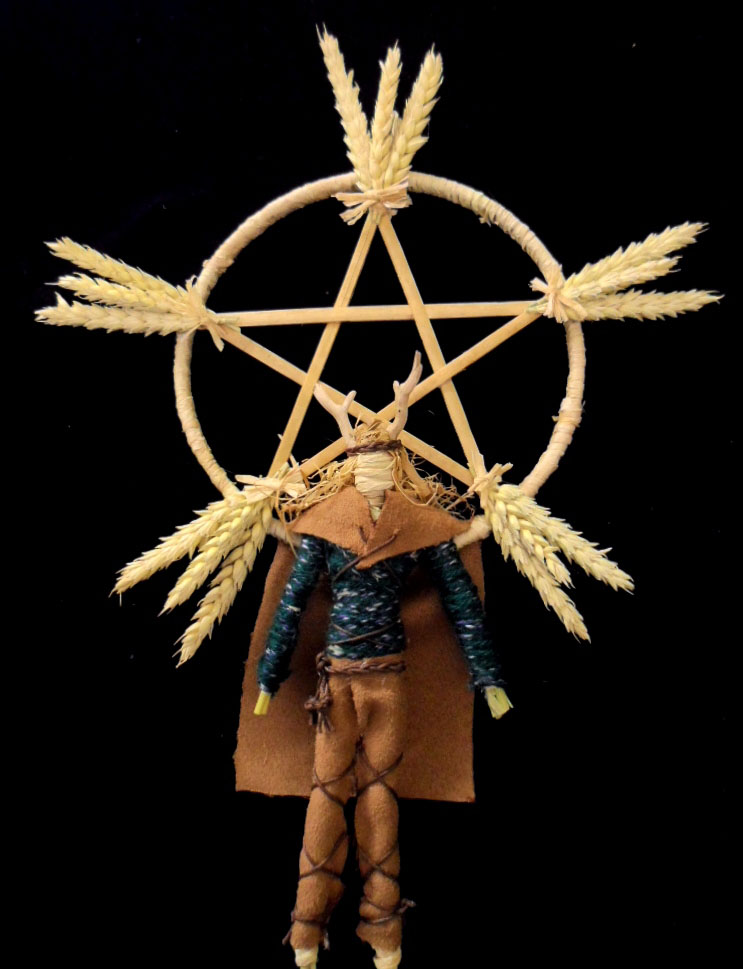 🇮🇪 Ireland and 1 moreLughnasadhLúnasa
A Gaelic harvest festival marking the beginning of the grain gathering seasonTradition · Luck and prosperity · Speaking with spirits and the dead Living
🇮🇪 Ireland and 1 moreLughnasadhLúnasa
A Gaelic harvest festival marking the beginning of the grain gathering seasonTradition · Luck and prosperity · Speaking with spirits and the dead Living
 🇮🇳 India and 5 morePilgrimage
A journey to a sacred site for spiritual growth or religious dutyTradition · Healing · Speaking with spirits and the dead Living
🇮🇳 India and 5 morePilgrimage
A journey to a sacred site for spiritual growth or religious dutyTradition · Healing · Speaking with spirits and the dead Living
 🇬🇧 United Kingdom and 5 moreDruidry
A modern nature religion inspired by ancient Celtic priests and Romantic idealsTradition · Protection · Speaking with spirits and the dead Living
🇬🇧 United Kingdom and 5 moreDruidry
A modern nature religion inspired by ancient Celtic priests and Romantic idealsTradition · Protection · Speaking with spirits and the dead Living
 🇩🇪 Germany and 5 moreAnthroposophy
A spiritual movement founded by Rudolf Steiner to explore the intellectual side of the unseen worldTradition · Speaking with spirits and the dead · Change and initiation Living
🇭🇹 HaitiVodou veve (sample)Vèvè
Ground drawings that call the lwa.Tradition · Speaking with spirits and the dead Living
🇩🇪 Germany and 5 moreAnthroposophy
A spiritual movement founded by Rudolf Steiner to explore the intellectual side of the unseen worldTradition · Speaking with spirits and the dead · Change and initiation Living
🇭🇹 HaitiVodou veve (sample)Vèvè
Ground drawings that call the lwa.Tradition · Speaking with spirits and the dead Living
 🇮🇳 IndiaSanamahismꯁꯅꯥꯃꯍꯤ ꯂꯥꯏꯅꯤꯡ
The polytheistic ethnic religion of the Meitei people of Manipur, IndiaTradition · Protection · Speaking with spirits and the dead Living
🇮🇳 IndiaSanamahismꯁꯅꯥꯃꯍꯤ ꯂꯥꯏꯅꯤꯡ
The polytheistic ethnic religion of the Meitei people of Manipur, IndiaTradition · Protection · Speaking with spirits and the dead Living
 🇨🇳 China and 1 moreChinese shamanism巫教 (Wūjiào)
Spirit-mediums of China who dance and trance to carry messages between people and godsTradition · Speaking with spirits and the dead · Seeing and foretelling Living
🇨🇳 China and 1 moreChinese shamanism巫教 (Wūjiào)
Spirit-mediums of China who dance and trance to carry messages between people and godsTradition · Speaking with spirits and the dead · Seeing and foretelling Living
 🇱🇦 Laos and 3 moreTai folk religionສາສະໜາຜີ
Spirits, ancestor rites, and soul-calling ceremonies of the Tai peoplesTradition · Protection · Healing Living
🇱🇦 Laos and 3 moreTai folk religionສາສະໜາຜີ
Spirits, ancestor rites, and soul-calling ceremonies of the Tai peoplesTradition · Protection · Healing Living
 🇺🇸 United States and 5 moreNeoshamanism
A modern spiritual practice adapting shamanic techniques for Western seekersTradition · Healing · Speaking with spirits and the dead Living
🇺🇸 United States and 5 moreNeoshamanism
A modern spiritual practice adapting shamanic techniques for Western seekersTradition · Healing · Speaking with spirits and the dead Living
 🇮🇹 ItalyArcheosofica
A school of esoteric Christianity founded in Rome that teaches ascetic disciplines and magical theory.Tradition · Power and authority · Speaking with spirits and the dead Living
🇮🇹 ItalyArcheosofica
A school of esoteric Christianity founded in Rome that teaches ascetic disciplines and magical theory.Tradition · Power and authority · Speaking with spirits and the dead Living
 🇷🇺 RussiaReindeer in Siberian shamanism
The role of reindeer as spirit helpers, ritual tools, and burial vehicles in the shamanic traditions of Northern AsiaTradition · Healing · Speaking with spirits and the dead Living
🇷🇺 RussiaReindeer in Siberian shamanism
The role of reindeer as spirit helpers, ritual tools, and burial vehicles in the shamanic traditions of Northern AsiaTradition · Healing · Speaking with spirits and the dead Living
 🇹🇹 Trinidad and Tobago and 4 moreTrinidad Orisha
A syncretic Afro-Caribbean faith blending Yoruba spirit work with Christian and other traditions in Trinidad.Tradition · Speaking with spirits and the dead · Healing Living
🇹🇹 Trinidad and Tobago and 4 moreTrinidad Orisha
A syncretic Afro-Caribbean faith blending Yoruba spirit work with Christian and other traditions in Trinidad.Tradition · Speaking with spirits and the dead · Healing Living
 🇨🇳 China and 5 moreRegional forms of shamanism
A global overview of indigenous spirit-interaction practices across Asia and the Americas.Tradition · Healing · Speaking with spirits and the dead Living
🇵🇰 PakistanShamanism in Pakistan
A shamanic tradition of the Hunza region where spirit guides select healers who enter trance states through music and riTradition · Seeing and foretelling · Speaking with spirits and the dead Living
🇨🇳 China and 5 moreRegional forms of shamanism
A global overview of indigenous spirit-interaction practices across Asia and the Americas.Tradition · Healing · Speaking with spirits and the dead Living
🇵🇰 PakistanShamanism in Pakistan
A shamanic tradition of the Hunza region where spirit guides select healers who enter trance states through music and riTradition · Seeing and foretelling · Speaking with spirits and the dead Living
 🇯🇵 JapanChinkon kishin鎮魂帰神
A Japanese spiritual practice combining soul calming with spirit possessionRite · Speaking with spirits and the dead · Healing Living
🇯🇵 JapanChinkon kishin鎮魂帰神
A Japanese spiritual practice combining soul calming with spirit possessionRite · Speaking with spirits and the dead · Healing Living
 🇨🇺 Cuba and 1 moreHaitian Vodou in CubaVodú Haitiano
A Caribbean religious tradition brought by migrants and maintained in eastern CubaTradition · Speaking with spirits and the dead · Protection Living
🇨🇺 Cuba and 1 moreHaitian Vodou in CubaVodú Haitiano
A Caribbean religious tradition brought by migrants and maintained in eastern CubaTradition · Speaking with spirits and the dead · Protection Living
 🇺🇸 United States and 2 moreBlack Hebrew Israelites
A religious movement claiming African Americans are descendants of ancient IsraelitesTradition · Speaking with spirits and the dead Living
🇺🇸 United StatesFive-Percent Nation
A New York movement teaching that Black people are the original gods and earth of civilizationTradition · Power and authority · Speaking with spirits and the dead Living
🇺🇸 United States and 2 moreBlack Hebrew Israelites
A religious movement claiming African Americans are descendants of ancient IsraelitesTradition · Speaking with spirits and the dead Living
🇺🇸 United StatesFive-Percent Nation
A New York movement teaching that Black people are the original gods and earth of civilizationTradition · Power and authority · Speaking with spirits and the dead Living
 🇺🇸 United StatesAshtar
A channeled extraterrestrial figure central to mid-century American ufology and New Age spiritualityBeing · Speaking with spirits and the dead · Seeing and foretelling Living
🇺🇸 United StatesAshtar
A channeled extraterrestrial figure central to mid-century American ufology and New Age spiritualityBeing · Speaking with spirits and the dead · Seeing and foretelling Living
 🇷🇺 Russia and 5 moreRinging Cedars' Anastasianismдвижение «Анастасия»
A Russian new religious movement based on books about a Siberian mystic and nature worshipTradition · Protection · Speaking with spirits and the dead Living
🇮🇳 India and 5 moreWestern Sufism
Adaptations of Islamic mysticism in Europe and North AmericaTradition · Speaking with spirits and the dead · Power and authority Living
🇷🇺 Russia and 5 moreRinging Cedars' Anastasianismдвижение «Анастасия»
A Russian new religious movement based on books about a Siberian mystic and nature worshipTradition · Protection · Speaking with spirits and the dead Living
🇮🇳 India and 5 moreWestern Sufism
Adaptations of Islamic mysticism in Europe and North AmericaTradition · Speaking with spirits and the dead · Power and authority Living
 🇨🇳 China and 1 moreNuo folk religion傩 (Nuó)
A Chinese exorcistic tradition using wooden masks and ancestor worship to drive away malevolent forcesTradition · Protection · Speaking with spirits and the dead Living
🇮🇪 IrelandFellowship of Isis𓊨𓏏𓁐𓌞𓋴𓅱𓂻𓏥
An international spiritual fellowship honouring the Divine Feminine and the goddess IsisTradition · Speaking with spirits and the dead · Change and initiation Living
🇷🇺 Russia and 3 moreYehowistsильинцы
A Russian Spiritual Christian group founded by Nikolai Ilyin in the 1840sTradition · Protection · Speaking with spirits and the dead Living
🇨🇳 China and 1 moreNuo folk religion傩 (Nuó)
A Chinese exorcistic tradition using wooden masks and ancestor worship to drive away malevolent forcesTradition · Protection · Speaking with spirits and the dead Living
🇮🇪 IrelandFellowship of Isis𓊨𓏏𓁐𓌞𓋴𓅱𓂻𓏥
An international spiritual fellowship honouring the Divine Feminine and the goddess IsisTradition · Speaking with spirits and the dead · Change and initiation Living
🇷🇺 Russia and 3 moreYehowistsильинцы
A Russian Spiritual Christian group founded by Nikolai Ilyin in the 1840sTradition · Protection · Speaking with spirits and the dead Living
 🇺🇸 United States and 5 moreSpiritualist church
A worship service led by a medium to communicate with the deceasedTradition · Speaking with spirits and the dead · Healing Living
🇺🇸 United States and 5 moreSpiritualist church
A worship service led by a medium to communicate with the deceasedTradition · Speaking with spirits and the dead · Healing Living
 🇰🇪 Kenya and 5 moreLegio Maria
A Kenyan church blending Catholic rites with beliefs in a Black Christ and visionary apparitionsTradition · Protection · Healing Living
🇱🇨 Saint Lucia and 1 moreKélé
An Afro-Saint Lucian faith rooted in Yoruba traditions and secret practiceTradition · Speaking with spirits and the dead · Power and authority Living
🇰🇷 South KoreaSuunism수운교
A Korean ethnic religion focused on the Great Jade Emperor of Heaven and spiritual reconnection.Tradition · Speaking with spirits and the dead · Change and initiation Living
🇰🇪 Kenya and 5 moreLegio Maria
A Kenyan church blending Catholic rites with beliefs in a Black Christ and visionary apparitionsTradition · Protection · Healing Living
🇱🇨 Saint Lucia and 1 moreKélé
An Afro-Saint Lucian faith rooted in Yoruba traditions and secret practiceTradition · Speaking with spirits and the dead · Power and authority Living
🇰🇷 South KoreaSuunism수운교
A Korean ethnic religion focused on the Great Jade Emperor of Heaven and spiritual reconnection.Tradition · Speaking with spirits and the dead · Change and initiation Living
 🇩🇿 Algeria and 5 moreZawiyaزاوية
A Sufi building and institution for worship, education, and community life in the Islamic world.Tradition · Speaking with spirits and the dead · Healing Living
🇺🇸 United States and 3 moreBuilders of the Adytum
A Western mystery school teaching tarot and Qabalah through correspondenceTradition · Speaking with spirits and the dead · Power and authority Living
🇩🇿 Algeria and 5 moreZawiyaزاوية
A Sufi building and institution for worship, education, and community life in the Islamic world.Tradition · Speaking with spirits and the dead · Healing Living
🇺🇸 United States and 3 moreBuilders of the Adytum
A Western mystery school teaching tarot and Qabalah through correspondenceTradition · Speaking with spirits and the dead · Power and authority Living
 🇲🇦 Morocco and 1 moreTweezaتويزة
A North African Sufi tradition of communal labor and mutual aidTradition · Protection · Speaking with spirits and the dead Living
🇰🇷 South KoreaMusok eumak무속 음악
Traditional Korean shamanistic music performed during gut rituals to induce tranceTradition · Speaking with spirits and the dead Living
🇲🇦 Morocco and 1 moreTweezaتويزة
A North African Sufi tradition of communal labor and mutual aidTradition · Protection · Speaking with spirits and the dead Living
🇰🇷 South KoreaMusok eumak무속 음악
Traditional Korean shamanistic music performed during gut rituals to induce tranceTradition · Speaking with spirits and the dead Living
 🇩🇿 AlgeriaMawsimموسم
Annual Maghrebi festival blending Sufi veneration with social and economic gatheringTradition · Speaking with spirits and the dead · Luck and prosperity Living
🇩🇿 AlgeriaMawsimموسم
Annual Maghrebi festival blending Sufi veneration with social and economic gatheringTradition · Speaking with spirits and the dead · Luck and prosperity Living
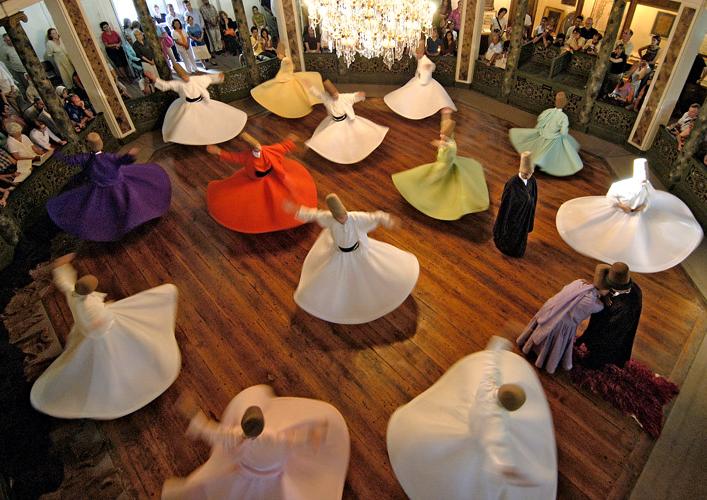 🇹🇷 Turkey and 4 moreSufi whirlingSemazen
A spinning meditation practiced by Sufi dervishes to reach spiritual connection through music and movement.Rite · Speaking with spirits and the dead · Change and initiation Living
🇹🇷 Turkey and 4 moreSufi whirlingSemazen
A spinning meditation practiced by Sufi dervishes to reach spiritual connection through music and movement.Rite · Speaking with spirits and the dead · Change and initiation Living
 🇯🇵 JapanSeimei Shrine晴明神社
A Shinto shrine in Kyoto dedicated to the legendary onmyōji Abe no SeimeiTradition · Speaking with spirits and the dead Living
🇮🇳 IndiaTawajjuh
A Sufi practice of transmitting spiritual energy from a master to a studentTradition · Speaking with spirits and the dead · Power and authority Living
🇯🇵 JapanSeimei Shrine晴明神社
A Shinto shrine in Kyoto dedicated to the legendary onmyōji Abe no SeimeiTradition · Speaking with spirits and the dead Living
🇮🇳 IndiaTawajjuh
A Sufi practice of transmitting spiritual energy from a master to a studentTradition · Speaking with spirits and the dead · Power and authority Living
 🇬🇧 United KingdomGorsedd stonesCerrig yr Orsedd
Stone circles built for the National Eisteddfod of Wales to host druidic ceremonies.Tradition · Speaking with spirits and the dead · Power and authority Living
🇬🇧 United KingdomGorsedd stonesCerrig yr Orsedd
Stone circles built for the National Eisteddfod of Wales to host druidic ceremonies.Tradition · Speaking with spirits and the dead · Power and authority Living
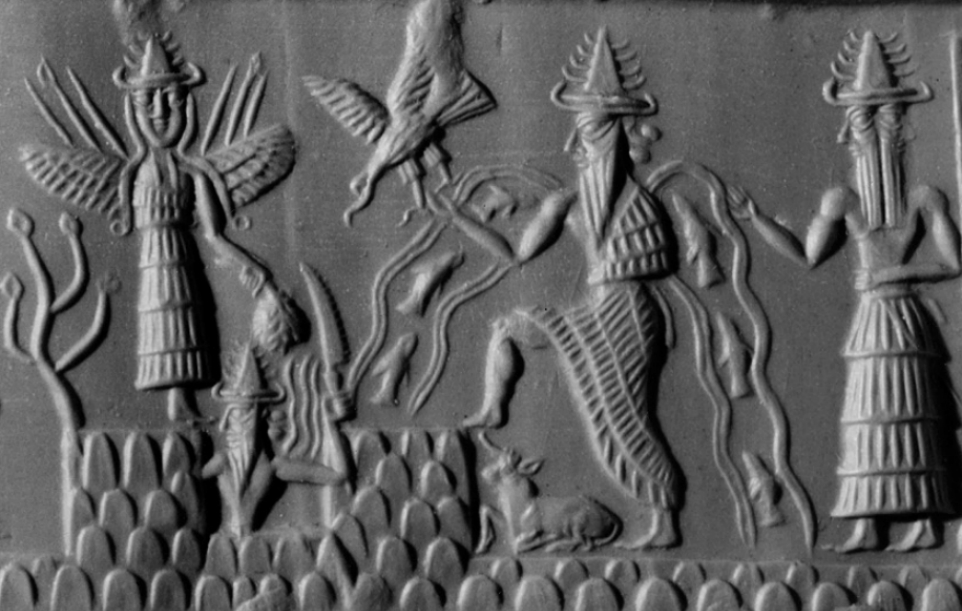 🇺🇸 United StatesJoy of Satan Ministries
An occult movement combining theistic Satanism with esoteric and extraterrestrial loreTradition · Power and authority · Speaking with spirits and the dead Living
🇺🇸 United StatesJoy of Satan Ministries
An occult movement combining theistic Satanism with esoteric and extraterrestrial loreTradition · Power and authority · Speaking with spirits and the dead Living
 🇮🇷 Iran and 2 moreSuperstitions in Muslim societies
Beliefs in supernatural forces and charms found across the Islamic worldTradition · Protection · Healing Living
🇮🇷 IranPersian mysticism
A spiritual tradition in Iran blending ancient beliefs with Sufi practice and poetic thought.Tradition · Speaking with spirits and the dead · Change and initiation Living
🇮🇷 Iran and 2 moreSuperstitions in Muslim societies
Beliefs in supernatural forces and charms found across the Islamic worldTradition · Protection · Healing Living
🇮🇷 IranPersian mysticism
A spiritual tradition in Iran blending ancient beliefs with Sufi practice and poetic thought.Tradition · Speaking with spirits and the dead · Change and initiation Living
 🇺🇸 United StatesQuviasukvikᖁᕕᐊᓲᑎᖃᕐᕕᒃ
An Arctic festival marking the new year with sunrise rituals and community gatherings.Tradition · Luck and prosperity · Speaking with spirits and the dead Living
🇺🇸 United StatesQuviasukvikᖁᕕᐊᓲᑎᖃᕐᕕᒃ
An Arctic festival marking the new year with sunrise rituals and community gatherings.Tradition · Luck and prosperity · Speaking with spirits and the dead Living
 🇿🇦 South Africa and 1 moreSacred caves of the Basotho
Cave networks in South Africa and Lesotho used by the Basotho for ancestral rituals and healingTradition · Healing · Protection Living
🇿🇦 South Africa and 1 moreSacred caves of the Basotho
Cave networks in South Africa and Lesotho used by the Basotho for ancestral rituals and healingTradition · Healing · Protection Living
Photo credits on this page
The small pictures above come from Wikimedia Commons under free licences. Some are cropped to fit.
- Sanamahism: Kayia N, CC BY-SA 4.0, source
- Anthroposophy: Wladyslaw, CC BY-SA 3.0, source
- Chinkon kishin: Tomokiyo Yoshisane (友清歓真), also known as Tomokiyo Kyūgo (友清九吾), Public domain, source
- Tai folk religion: ( เทวประภาส มากคล้าย ), Tevaprapas, Public domain, source
- Quviasukvik: Jodie Wilson, CC BY 2.0, source
- Nkisi: MiddleOfAfrica, CC BY-SA 4.0, source
- Neoshamanism: Carptrash, CC BY-SA 4.0, source
- Egungun: Ìṣẹ̀ṣeAssembly, CC BY-SA 4.0, source
- Archeosofica: Unknown author, Public domain, source
- Kamakhya Temple: JyotiPN, CC BY-SA 4.0, source
- Haitian Vodou in Cuba: Dr. Anthony R. Picciolo, NOAA NODC, Public domain, source
- Yatiri: EEJCC, CC BY-SA 4.0, source
- Quyllurit'i: AgainErick, CC BY-SA 3.0, source
- Mapuche religion: Gary Todd, CC0, source
- Cultrun: Universidad Nacional de La Plata, CC BY 3.0, source
- Lughnasadh: Mountainash333, CC BY-SA 3.0, source
- Pilgrimage: Ali Mansuri, CC BY-SA 2.5, source
- Druidry: TheJaySpearing, CC BY-SA 4.0, source
- Black Hebrew Israelites: Elvert Barnes, CC BY-SA 2.0, source
- Ashtar: Evedawn99, Public domain, source
- Nuo folk religion: Wikiwikiyarou, CC BY-SA 3.0, source
- Chinese shamanism: No machine-readable author provided. +上帝+ assumed (based on copyright, CC BY-SA 3.0, source
- Gorsedd stones: Robin Drayton, CC BY-SA 2.0, source
- Mawsim: Beghdadi Walid, CC BY-SA 4.0, source
- Tweeza: Demeester, CC BY-SA 3.0, source
- Legio Maria: Comondi, CC BY-SA 4.0, source
- Superstitions in Muslim societies: Unknown author, CC0, source
- Ringing Cedars' Anastasianism: Лобачев Владимир, CC BY-SA 3.0, source
- Reindeer in Siberian shamanism: Unknown author, Public domain, source
- Regional forms of shamanism: Man Sing, Public domain, source
- Sama: myself, Public domain, source
- Zawiya: Schneders, CC BY-SA 4.0, source
- Seimei Shrine: Naokijp, CC BY-SA 4.0, source
- Joy of Satan Ministries: Unknown author, Public domain, source
- Spiritualist church: Jim.henderson, CC0, source
- Sacred caves of the Basotho: JMK, CC BY-SA 3.0, source