
Yatiri
from the Aymara verb yatiña, meaning "to know"
A lightning-struck healer in Aymara communities who restores balance with nature and ancestors
Yatiri are community healers among the Aymara people of Bolivia, Chile, and Peru. They are believed to be called by a lightning strike and trained by elders to repair relationships between patients, their community, and the spiritual world.
- Yatiri are called by a lightning strike, marking them as purita
- They use human skulls called riwutu to communicate with ancestors
- Training requires finding a ch'amakani, an elder master
- They are full community members, not isolated practitioners
- Bolivian officials now support their presence in public events
What it is
The yatiri is a specialized medical practitioner within Aymara society in the Andes. While all traditional healers are known as qulliri, the yatiri holds a distinct status marked by a specific calling. This role involves restoring health by mending broken ties between individuals, their neighbors, and the natural world. The practice relies on symbols and materials like coca leaves to diagnose and treat ailments that are viewed as relational or spiritual imbalances rather than purely physical defects.
Where it comes from
The position of yatiri is not chosen but assigned through a dramatic event: being struck by lightning. Those struck are called purita, meaning "one who has arrived" or been called. This strike signifies death and rebirth into the healer's role. The individual must then find a ch'amakani, an elder master, to undergo training. Without this specific initiation and the lightning sign, one cannot become a yatiri, even if they possess other healing knowledge.
How it is done
Healing ceremonies take place at home or at ritual sites when a patient requests help. The yatiri uses coca leaves for reading signs and interacts with achachilas, or spiritual ancestors. A key tool is the riwutu, a human skull representing dead elders, which acts as an intermediary between the living and the dead. Other items include saxra bullets fused by lightning and cloth touched by the patient. The process focuses on negotiation and offering to restore harmony.
Tools and materials
Coca leaves serve as the primary medium for divination and communication. The riwutu, or ancestral skull, provides spiritual authority and connection to the dead. Saxra bullets, small metal or stone pieces fused by lightning, are used alongside tari llama wool. In cases involving lost objects or theft, candles may also be incorporated into the ritual setup to aid in discovery and resolution.
Yatiri, drawn and placed
- Living
- Revived
- Fading
- Historical
- Legendary
- Performed
- Lineage
- Aymara traditional healing
- Timing
- when requested by a patient
What it is for
The yatiri addresses health crises by repairing relationships with nature, community members, and ancestors. Patients seek them out when they perceive illness as a disruption of these bonds. The goal is not just symptom relief but the restoration of social and spiritual equilibrium. The practice also extends to finding lost items or identifying thieves, serving as a comprehensive guide for community well-being.
Who does it
Yatiri are full community members who continue agricultural and social duties alongside their healing work. They do not live in isolation like some shamanic traditions. Both men and women can hold the role, determined by birth season, patron saints, and godparents. Training occurs under a ch'amakani, and the healer never initiates treatment but waits for a formal request from the afflicted party.
Peoples and places
This tradition is central to the Aymara peoples of Bolivia, Chile, and Peru. It differs significantly from Central Asian shamanism, as yatiri remain integrated in daily life rather than practicing in isolation. The term qulliri is often used by outsiders to describe them, but internally, they are distinguished by their specific initiation and the lightning strike that marks their unique spiritual authority.
At a glance: who, where and when
Who does it
Peoples
Belief worlds
Occasions

What people believe
Health is understood as a state of right relationship with the environment and ancestors. Lightning strikes are seen as divine calls to service, marking the recipient as purita. The practice involves communicating with achachilas, non-biological ancestors who offer guidance. The riwutu skulls represent elders who bridge the gap between the human world and the realm of the dead, facilitating the flow of spiritual power needed for healing.
When it is done
There are no fixed calendar dates for yatiri practices. Healing occurs whenever a community member experiences a crisis or ailment. The timing is driven by need rather than seasonal festivals. However, the initial calling is influenced by the season of birth and the individual's patron saint, embedding the role within the broader cycles of Aymara life and Catholic syncretism.
How scholars and sceptics see it
Anthropologists note that labeling yatiri as "shamans" is inaccurate due to differences in social integration and initiation methods. Research highlights their role in maintaining community cohesion against Western individualism. Studies show how they adapt to modern pressures while preserving core Aymara concepts of health as relational balance, often blending indigenous rituals with Catholic prayers in practices like the cha'lla blessing.
Cautions and what is closed
Historically, the Christian church ostracized yatiri, viewing their practices as pagan or superfluous. Colonial influences introduced pressure from Western notions of individualism. Today, while some government officials support their presence, they still face cultural marginalization. Misunderstandings persist, with outsiders sometimes conflating them with harmful practitioners like the layqa, who use different methods for malevolent purposes.
Compare and confuse
The yatiri is often confused with shamans, but they differ in social structure and training. Unlike isolated shamans who undergo private ecstatic initiations, yatiri are embedded in community life and learn from masters. They are also distinct from layqa, who are marginalized figures using frogs and snakes for harm. The term qulliri serves as a broader category encompassing both, but only those struck by lightning become yatiri.
Law and persecution
Legal status varies by region. In Bolivia, recent political shifts have led to greater official recognition, with yatiri invited to events previously reserved for Catholic chaplains. This reflects a rejection of globalization and Western cultural dominance. However, historical tensions with the Church and colonial legacies mean they still navigate a complex landscape where their authority is sometimes contested or misunderstood by external authorities.
Questions people ask about Yatiri
What is a Yatiri?
A Yatiri is a specialized healer among the Aymara people of Bolivia, Chile, and Peru. They are distinguished by being struck by lightning, which calls them to service, and by undergoing training from an elder master to restore spiritual and social balance.
How does one become a Yatiri?
One becomes a Yatiri by being struck by lightning, an event that marks the person as purita. This call cannot be refused. The individual must then find a ch'amakani, an experienced elder, to receive training and permission from ancestral spirits before practicing.
What tools do they use?
Yatiri use coca leaves for divination, human skulls called riwutu to connect with ancestors, and saxra bullets fused by lightning. They may also use tari llama wool and candles to help find lost items or resolve conflicts within the community.
Are Yatiri the same as shamans?
No. While outsiders often use the term shaman, Yatiri differ because they remain active members of their communities. They do not live in isolation or undergo private ecstatic initiations. Their role is integrated into daily social and agricultural life.
Good reading and sources
The facts on this page come from the Wikipedia article "Yatiri", written by its contributors and used under the CC BY-SA 4.0 licence, and from its Wikidata record (CC0). EveryJaadu rewrote the text in its own words, with AI assistance, and compares every page with the article to make sure no passage is copied. It may be reused under the same CC BY-SA 4.0 licence with a link back.
It may contain mistakes. Names and customs differ from one community to the next, and some knowledge is closed to outsiders and left out here. This page describes belief and practice. It does not say that any of it works, it is not a how-to, and it is not medical advice. If something is wrong, tell us. Last refreshed 2026-10-06.
More from Bolivia
All the entries from Bolivia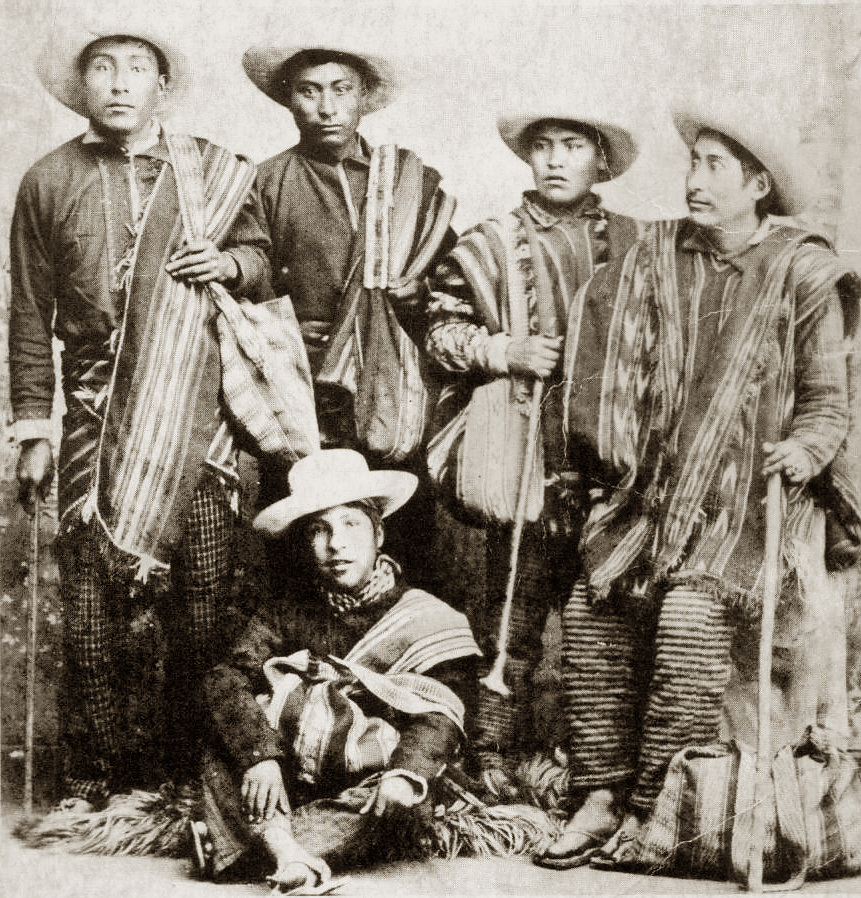 🇧🇴 Bolivia and 5 moreKallawaya
An itinerant group of traditional Andean healers known for their medicinal plant knowledge and ritual practicesTradition · Healing · Protection Living
🇵🇪 Peru and 1 morePishtacoñañaq; kharisiri
An Andean bogeyman said to steal human fat for oil and medicineBeing · Cursing and harm · Power and authority Living
🇧🇴 Bolivia and 5 moreKallawaya
An itinerant group of traditional Andean healers known for their medicinal plant knowledge and ritual practicesTradition · Healing · Protection Living
🇵🇪 Peru and 1 morePishtacoñañaq; kharisiri
An Andean bogeyman said to steal human fat for oil and medicineBeing · Cursing and harm · Power and authority Living
 🇵🇪 Peru and 1 moreApu
Sacred mountain spirits in Andean tradition that protect communities and control natural resourcesBeing · Protection · Healing Living
🇵🇪 Peru and 1 moreApu
Sacred mountain spirits in Andean tradition that protect communities and control natural resourcesBeing · Protection · Healing Living
Related elsewhere
All tradition 🇸🇳 Senegal and 1 moreSerer religionA ƭat Roog
The traditional faith of the Serer people, centred on the supreme deity Roog and ancestral veneration.Tradition · Protection · Speaking with spirits and the dead Living
🇸🇳 Senegal and 1 moreSerer religionA ƭat Roog
The traditional faith of the Serer people, centred on the supreme deity Roog and ancestral veneration.Tradition · Protection · Speaking with spirits and the dead Living
 🇰🇪 Kenya and 1 moreMaasai religion
The spiritual beliefs of the semi-nomadic Maasai people of East AfricaTradition · Protection · Healing Living
🇰🇪 Kenya and 1 moreMaasai religion
The spiritual beliefs of the semi-nomadic Maasai people of East AfricaTradition · Protection · Healing Living
 🇹🇭 Thailand and 3 moreThai Buddha amuletsพระเครื่อง (phrakhrueang)
Sacred Buddhist images and relics worn for protection, merit, and fortune in Thailand.Charm · Protection · Luck and prosperity Living
🇹🇭 Thailand and 3 moreThai Buddha amuletsพระเครื่อง (phrakhrueang)
Sacred Buddhist images and relics worn for protection, merit, and fortune in Thailand.Charm · Protection · Luck and prosperity Living
 🇮🇶 Iraq and 5 moreGrimoire
A textbook containing instructions for spells, rituals, and the creation of magical objects.Text · Protection · Healing Historical
🇮🇶 Iraq and 5 moreGrimoire
A textbook containing instructions for spells, rituals, and the creation of magical objects.Text · Protection · Healing Historical