
Mapuche religion
from Mapudungun for "people of the land"
The traditional spiritual practice of the Mapuche people of Chile and Argentina
Mapuche religion is the indigenous belief system of the Mapuche people in south-central Chile and southwest Argentina. It features a complex cosmology with multiple spirit realms and deities, centered on maintaining cosmic balance through communal rituals like the ngillatun.
- Ngillatun is the main communal ritual involving animal sacrifice
- Machi are ritual specialists chosen by spirits through dreams
- Cosmology features three vertical planes: sky, earth, underworld
- Ngünechen is a deity often equated with the Christian God
- Tradition varies significantly among Mapuche subgroups
What it is
Mapuche religion is the indigenous spiritual framework of the Mapuche people, rooted in south-central Chile and southwest Argentina. It is not a centralized institution but a collection of practices passed down orally. The tradition focuses on maintaining harmony between the living community and the spirit world. Beliefs include a pantheon of deities and nature spirits that influence daily life, health, and fortune. Rituals are performed to honor ancestors and deities, seeking protection, healing, and good harvests. The cosmology divides the universe into three vertical planes: the upper sky realm of goodness, the earthly plane of struggle, and the underworld of destruction. This structure guides moral behavior and ritual obligations.
Where it comes from
The term "Mapuche" means "people of the land" in their native language. Historically, Spanish colonizers referred to them as Araucanians. Before European contact, beliefs were transmitted orally, leaving no written records of ancient myths. The tradition has evolved through contact with Christianity, leading to syncretism where Mapuche beliefs merged with Catholic practices. For example, the deity Ngünechen was introduced in the 19th century, possibly influenced by Chilean national hierarchies, and is often equated with the Christian God by some practitioners. Despite these influences, core elements like ancestor veneration and nature spirit worship remain central.
How it is done
The primary ritual is the ngillatun, a communal ceremony held in consecrated fields. Participants gather around the ngillatuwe, an altar pole carved with faces of deities or ancestors, facing east. Prayers are offered in Mapudungu or Spanish, accompanied by offerings of maize, beans, and muday. Animal sacrifices, typically sheep, are performed to maintain cosmic balance. The machi, a ritual specialist, may enter a trance to communicate with spirits if the community faces danger. Dances occur in rows and circles, with men on horseback performing the awün to imitate the sun's path. Taboos often prohibit photographing these sacred events.
Tools and materials
The ngillatuwe serves as the central altar, representing an axis mundi. It is a pole carved with the face of Ngünechen or an ancestor, often blessed by a Catholic priest. White and blue crosses symbolizing sky powers are planted nearby. Offerings include agricultural products like maize and beans, along with muday, a fermented drink. Animal sacrifices provide blood and life force for the rituals. Special locations such as waterfalls, lakes, volcanoes, and rocks are also utilized for their spiritual power by the machi.
Mapuche religion, drawn and placed
- Living
- Revived
- Fading
- Historical
- Legendary
- Performed
- Lineage
- Mapuche traditional spirituality
- Timing
- before and after harvest, during crises
What it is for
Rituals aim to preserve cosmic wholeness and prevent catastrophe. The ngillatun ensures balance among cosmic forces, particularly before and after harvests. Practitioners seek protection from evil spirits like wekufe, which can cause illness or death. Healing and divination are key functions of the machi, who address spiritual causes of physical ailments. Ancestor veneration maintains mutual dependence between the living and the dead, preventing ancestral spirits from returning to disturb the living due to neglect. Offerings propitiate deities for wealth, fertility, and good harvests.
Who does it
The machi is the dominant ritual specialist, responsible for healing, divination, and leading ceremonies. Traditionally, spirits call individuals to this role through dreams and visions, sometimes causing an illness called machikutran. Machi draw power from natural sites and ancestral spirits. Historically, other specialists existed, such as the ngenpin (orators) and ampivoe (healers), but many roles disappeared by the 20th century. Machi operate on a spectrum of good and evil, using their powers for community benefit or personal gain. They are chosen by spiritual forces rather than formal training.
Peoples and places
The Mapuche people inhabit south-central Chile and southwest Argentina. Their religious practices vary among ethnic groups, families, and villages, reflecting internal diversity. Syncretism with Chilean and Argentine folklore has altered some beliefs, integrating them into broader regional cultures. Contemporary efforts aim to preserve these traditions, though they coexist with widespread Catholicism. The Mapuche language, Mapudungun, remains vital for rituals, though Spanish is commonly used alongside it. Tourism and revitalization movements since the 1990s have increased visibility of Mapuche spirituality.
At a glance: who, where and when
Who does it
Peoples
Belief worlds



What people believe
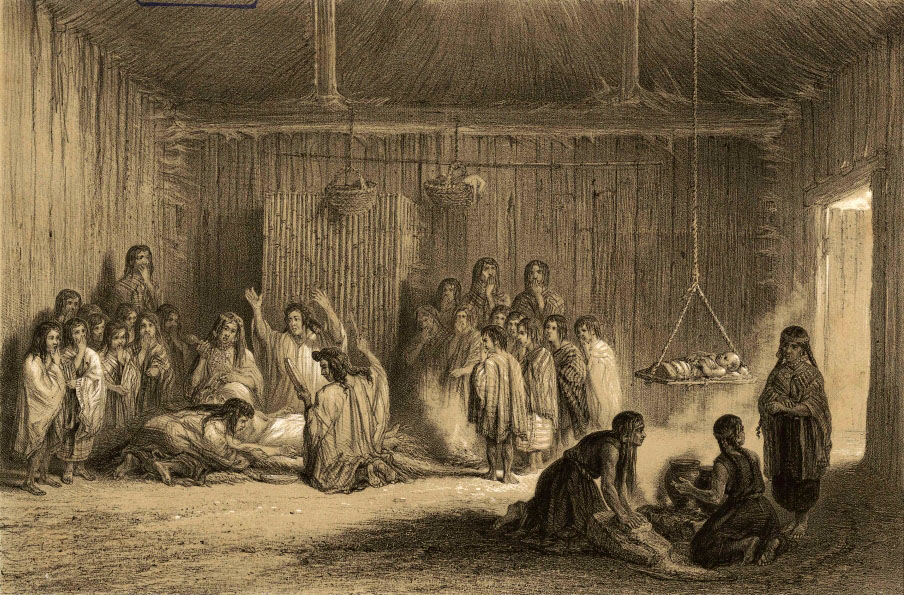
Cosmology consists of three planes: wenu mapu (sky, goodness, white/yellow/blue), mapu (earth, struggle, green/red), and munche mapu (underworld, evil, red/black). Deities like Ngünechen and nature spirits called ngen inhabit these realms. Spirits can grant blessings or inflict punishment based on adherence to admapu (social norms). Wekufe spirits cause harm, while ancestral spirits require regular acknowledgment. The soul comprises a living essence (püllü) and a post-death spirit (am). Witches and wekufe can capture souls, necessitating proper disposal of the dead. Morality emphasizes modesty and kinship obligations, with transgressions leading to social and individual illness.
When it is done
The ngillatun is performed before and after the harvest to ensure cosmic balance. It is also conducted during crises when the community seeks guidance or protection. The ritual spans over two days, involving extensive prayer, dance, and sacrifice. Participation is communal, reinforcing social cohesion and spiritual connection.
How scholars and sceptics see it
Scholars note the oral transmission of Mapuche beliefs and the lack of pre-colonial written records. Anthropologists describe the machi as shamans, though definitions vary. Ricardo Latcham suggested historical shifts in ritual specialist roles, such as ngenpin replacing voiguebuyes. Researchers highlight syncretism with Christianity and integration into Chilean folklore. Debates exist regarding the significance of ancestor worship. Scholars observe internal variations in beliefs across different Mapuche subgroups and territories, reflecting the non-homogeneous nature of the tradition.
Cautions and what is closed
Wekufe spirits pose risks by killing humans or stealing souls. Witches can capture and pollute ancestral spirits if not properly dispatched. Transgression of admapu leads to illness, scarcity, or infertility. The destruction of the ngillatuwe is believed to bring catastrophe to the community. Photographing rituals is taboo. The machi's power exists on a spectrum, with potential for misuse. Historical persecution by Chilean military and forced conversion attempts suppressed practices, though revitalization efforts continue.
Compare and confuse
Mapuche religion shares parallels with Central Andean peoples and Inca religion, particularly in sun and moon worship. Terms for sun and moon in Mapudungun, Quechua, and Aymara suggest borrowing from the Puquina language, tracing back to the Tiwanaku Empire. Unlike institutionalized religions, Mapuche spirituality lacks formal leadership. Syncretism with Catholicism distinguishes it from purely pre-contact traditions. The term "Araucanian" is a colonial exonym, whereas "Mapuche" is the self-designation.
Questions people ask about Mapuche religion
What is Mapuche religion?
It is the indigenous spiritual practice of the Mapuche people in Chile and Argentina, focusing on cosmic balance, ancestor veneration, and nature spirits, without a central authority.
Who performs the rituals?
The machi is the primary ritual specialist, tasked with healing and divination. They are chosen by spirits through dreams and illnesses, drawing power from ancestral and natural sources.
What is the main ritual called?
The ngillatun is the central ceremony, held in sacred fields around the ngillatuwe altar. It involves prayers, offerings, and animal sacrifices to maintain cosmic harmony.
How does it relate to Christianity?
Syncretism has occurred, with some Mapuche equating the deity Ngünechen with the Christian God. Catholic priests may bless traditional altars, blending indigenous and colonial beliefs.
Good reading and sources
- Mapuche religion on WikipediaEncyclopedia
- More photos on Wikimedia CommonsPhotos and video
- Wikidata recordOpen data
The facts on this page come from the Wikipedia article "Mapuche religion", written by its contributors and used under the CC BY-SA 4.0 licence, and from its Wikidata record (CC0). EveryJaadu rewrote the text in its own words, with AI assistance, and compares every page with the article to make sure no passage is copied. It may be reused under the same CC BY-SA 4.0 licence with a link back.
It may contain mistakes. Names and customs differ from one community to the next, and some knowledge is closed to outsiders and left out here. This page describes belief and practice. It does not say that any of it works, it is not a how-to, and it is not medical advice. If something is wrong, tell us. Last refreshed 2026-10-06.
More from Chile
All the entries from Chile 🇨🇱 Chile and 1 moreMachi
Mapuche spiritual authorities and healers who bridge herbal knowledge and spirit realmsTradition · Healing · Speaking with spirits and the dead Living
🇧🇷 Brazil and 3 moreBatuque
An Afro-Brazilian religion with spirit possession and a pantheon of Orixás and encantadosTradition · Speaking with spirits and the dead Living
🇨🇱 ChileChilean mythology
The myths and legends of Chile, blending indigenous roots with colonial influences.Tradition · Wonder and entertainment Living
🇨🇱 Chile and 1 moreMachi
Mapuche spiritual authorities and healers who bridge herbal knowledge and spirit realmsTradition · Healing · Speaking with spirits and the dead Living
🇧🇷 Brazil and 3 moreBatuque
An Afro-Brazilian religion with spirit possession and a pantheon of Orixás and encantadosTradition · Speaking with spirits and the dead Living
🇨🇱 ChileChilean mythology
The myths and legends of Chile, blending indigenous roots with colonial influences.Tradition · Wonder and entertainment Living
 🇵🇪 Peru and 2 moreInca religion
The polytheistic beliefs and rites of the Inca Empire across the AndesTradition · Protection · Luck and prosperity Historical
🇵🇪 Peru and 2 moreInca religion
The polytheistic beliefs and rites of the Inca Empire across the AndesTradition · Protection · Luck and prosperity Historical
Related elsewhere
All tradition 🇰🇷 South Korea and 3 moreKorean shamanism무속
A Korean folk religion centered on ritual specialists who mediate between humans and spiritsTradition · Protection · Healing Living
🇰🇷 South Korea and 3 moreKorean shamanism무속
A Korean folk religion centered on ritual specialists who mediate between humans and spiritsTradition · Protection · Healing Living
 🇹🇭 Thailand and 3 moreThai Buddha amuletsพระเครื่อง (phrakhrueang)
Sacred Buddhist images and relics worn for protection, merit, and fortune in Thailand.Charm · Protection · Luck and prosperity Living
🇹🇭 Thailand and 3 moreThai Buddha amuletsพระเครื่อง (phrakhrueang)
Sacred Buddhist images and relics worn for protection, merit, and fortune in Thailand.Charm · Protection · Luck and prosperity Living
 🇰🇷 South Korea and 1 moreKorean shamanismKorean shamanism (Korean: Korean shamanism)
A traditional practice of ritual specialists who mediate between the human and spirit worlds.Tradition · Healing · Protection Living
🇰🇷 South Korea and 1 moreKorean shamanismKorean shamanism (Korean: Korean shamanism)
A traditional practice of ritual specialists who mediate between the human and spirit worlds.Tradition · Healing · Protection Living
 🇵🇪 Peru and 1 moreApu
Sacred mountain spirits in Andean tradition that protect communities and control natural resourcesBeing · Protection · Healing Living
🇵🇪 Peru and 1 moreApu
Sacred mountain spirits in Andean tradition that protect communities and control natural resourcesBeing · Protection · Healing Living