Yehowists
In its own language: ильинцы
A Russian Spiritual Christian group founded by Nikolai Ilyin in the 1840s
Yehowists are a millenarian religious movement originating in the Russian Empire during the mid-nineteenth century. Followers believe in two equal deities, Yehowah and Satan, and seek physical immortality through strict moral codes and the distribution of Nikolai Ilyin's writings.
- Founded by Nikolai Ilyin in the 1840s
- Believes in two equal ManGods: Yehowah and Satan
- Seeks physical immortality through moral perfection
- Prohibits verbal preaching and military service
- Uses handwritten booklets to spread teachings
What it is
Yehowism is a Russian Spiritual Christian movement established in the 1840s by Nikolai Ilyin. The group identifies as the Sect of the Right-hand Brotherhood and holds that Yehowah and Satan are two equal ManGods fighting for control of the Solar System. Members reject the Trinity and traditional Christian doctrines. They believe humans can achieve physical immortality by following Ilyin’s teachings and avoiding spiritual corruption. The movement focuses on preparing for a final battle called Armageddon, after which Yehowah will establish a thousand-year kingdom of abundance.
Where it comes from
Nikolai Ilyin, a retired army officer and thinker, founded the movement in the 1840s within the Russian Empire. Early groups formed across the empire, with the Ural region serving as the main center before the Revolution. Followers distributed booklets widely to spread the message. Periodic persecution led to exile in Central Asia, where settlers found greater religious freedom. Individual communities also emerged in Transcaucasia, the Northern Caucasus, and Ukraine.
How it is done
Worship occurs in closed meetings available only to members. These gatherings include prayers, singing from Ilyin’s hymnbook, reading scriptures, and burning incense. Meetings typically begin Friday night and continue into Saturday. Verbal preaching is strictly forbidden based on prophecy. Instead, followers distribute printed or handwritten booklets containing Ilyin’s works to anyone willing to take them. This method avoids debate and prevents distortion of the message.
Tools and materials
The primary tools are religious texts, specifically Ilyin’s booklets and the secret Book from Heaven. Members reproduce these texts using old Russian spelling to prevent textual distortions. A hymnbook written by Ilyin guides musical worship. Incense is used during services. The group rejects the standard Bible, considering it distorted by Satan, and relies entirely on Ilyin’s edited revelations for guidance.
Yehowists, drawn and placed
- Living
- Revived
- Fading
- Historical
- Legendary
- Performed
- Lineage
- Russian Spiritual Christianity
- Timing
- Saturday evenings
What it is for
The goal is physical immortality and survival of the coming apocalyptic conflict. Followers seek to align with Yehowah by observing moral laws and distributing holy literature. They aim to avoid the mortal fate assigned to Satan’s followers. The community seeks to prepare for the thousand-year reign of Yehowah. Members strive for self-perfection and adherence to last-days commands given through Ilyin.
Who does it
The movement is led by lay members who distribute literature and attend closed meetings. There is no formal clergy structure mentioned. Members value secular education but avoid theological, legal, military, and theatrical degrees, which they view as Satan’s sciences. Most members are ethnic Russians, though non-Russian converts are increasing. The group remains closed, providing no internal data or population estimates to outsiders.
Peoples and places
The movement originated among Russians in the Russian Empire. Today, it persists in former Soviet states, including Kazakhstan, Kyrgyzstan, Southern Russia, and Ukraine. Most adherents are ethnic Russians, but conversion rates among other groups are rising. The diaspora nature of the community allows it to survive in regions with varying levels of religious tolerance. Internet forums facilitate communication and translation of texts into multiple languages.
At a glance: who, where and when
Who does it
Peoples
Belief worlds
Occasions
What people believe
Yehowism teaches that Yehowah and Satan are equal ManGods in human form. Yehowah is identified with Jesus Christ and Hebrew God figures. Satan leads mortals and traditional religions. The group denies the soul, paradise, and hell. They believe the Bible is corrupted and rely on Ilyin’s revelations. Historical figures like John Huss and Confucius are seen as early Yehowists. The ultimate victory of Yehowah will renew the Earth permanently.
When it is done
Saturday is the day of rest and worship, observed less strictly than in Judaism. Christmas, Easter, and other Christian holidays are prohibited. Common celebrations like New Year and birthdays serve as informal gathering times. The calendar centers on the anticipation of Armageddon and the subsequent thousand-year kingdom. No specific dates for these events are provided by Ilyin.
How scholars and sceptics see it
Scholarly information is scarce due to the group’s closed nature. Soviet-era publications often contained incorrect data, claiming the movement had ceased or was linked to Jehovah’s Witnesses. Modern researchers note the difficulty in obtaining accurate demographic data. The group’s secrecy limits anthropological study. Critics point to intolerance toward other religions, while supporters emphasize the group’s peaceful stance toward individuals.
Cautions and what is closed
The group is unregistered and believes state authorities belong to Satan. Young men have faced criminal prosecution or capital punishment for refusing military service. The community provides no public statistics on membership size. Internal life and activities remain hidden from outsiders. The group prohibits participation in other religious buildings or worship, leading to accusations of intolerance.
Compare and confuse
Yehowists are sometimes confused with Jehovah’s Witnesses due to name similarities. However, their theology regarding dual gods and physical immortality differs significantly. The group shares some dietary restrictions with Judaism, such as avoiding pork and seafood. Like many sects, they reject mainstream Christian doctrines like the Trinity. Their use of booklets mirrors other evangelical traditions but excludes verbal preaching.
Law and persecution
The movement has faced historical persecution, including arrests and confiscation of literature during the Soviet period. Refusal to serve in the army resulted in severe legal consequences. Currently, the group operates without official registration. Authorities do not recognize it as a legal religious organization. Members navigate legal risks by maintaining a low profile and using digital platforms for dissemination.
Questions people ask about Yehowists
What is the core belief of Yehowists?
They believe in two equal deities, Yehowah and Satan, who fight for the Solar System. Humans can achieve physical immortality by following Ilyin's teachings and avoiding Satan's influence.
Where did the movement originate?
It started in the Russian Empire in the 1840s under Nikolai Ilyin. Centers formed in the Urals, with followers spreading to Ukraine, Transcaucasia, and Central Asia.
How do they share their faith?
They distribute printed or handwritten booklets containing Ilyin's works. Verbal preaching is forbidden to prevent debate and distortion of the message.
Is the group open to outsiders?
No, it is a closed group. Worship meetings are private, and members do not release population statistics or internal details about their community life.
Good reading and sources
The facts on this page come from the Wikipedia article "Yehowists", written by its contributors and used under the CC BY-SA 4.0 licence, and from its Wikidata record (CC0). EveryJaadu rewrote the text in its own words, with AI assistance, and compares every page with the article to make sure no passage is copied. It may be reused under the same CC BY-SA 4.0 licence with a link back.
It may contain mistakes. Names and customs differ from one community to the next, and some knowledge is closed to outsiders and left out here. This page describes belief and practice. It does not say that any of it works, it is not a how-to, and it is not medical advice. If something is wrong, tell us. Last refreshed 2026-10-06.
More from Russia
All the entries from Russia 🇷🇺 Russia and 4 moreFolk Orthodoxyнародное православие
A blend of Eastern Orthodox doctrine and pre-Christian pagan beliefs in Slavic communitiesTradition · Protection · Luck and prosperity Living
🇷🇺 Russia and 4 moreFolk Orthodoxyнародное православие
A blend of Eastern Orthodox doctrine and pre-Christian pagan beliefs in Slavic communitiesTradition · Protection · Luck and prosperity Living
 🇷🇴 Romania and 5 moreVampire folklore
Global legends of blood-drinking spirits and undead revenantsBelief · Cursing and harm · Protection Historical
🇷🇺 RussiaSlavic folklore
The traditional beliefs and stories of the Slavic peoplesTradition Living
🇷🇴 Romania and 5 moreVampire folklore
Global legends of blood-drinking spirits and undead revenantsBelief · Cursing and harm · Protection Historical
🇷🇺 RussiaSlavic folklore
The traditional beliefs and stories of the Slavic peoplesTradition Living
 🇷🇺 Russia and 5 moreSlavic religion
The pre-Christian beliefs of the Slavic peoples before their conversion to Christianity.Tradition · Protection · Healing Revived
🇷🇺 Russia and 5 moreSlavic religion
The pre-Christian beliefs of the Slavic peoples before their conversion to Christianity.Tradition · Protection · Healing Revived
Related elsewhere
All tradition 🇮🇳 India and 2 moreHomaहोम
A fire ritual found across Asian religions where offerings are burned as a votive exchange with the divine.Rite · Protection · Speaking with spirits and the dead Living
🇮🇳 India and 2 moreHomaहोम
A fire ritual found across Asian religions where offerings are burned as a votive exchange with the divine.Rite · Protection · Speaking with spirits and the dead Living
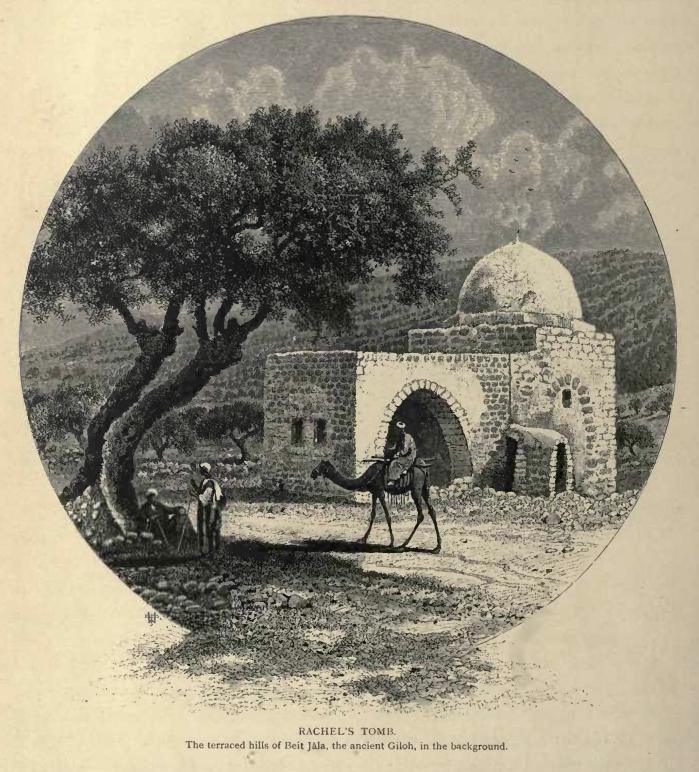 🇵🇸 Palestine and 1 moreRachel's TombQever Raḥel; Qabr Rāḥīl
A shared holy site near Bethlehem revered by Jews, Christians, and MuslimsTradition · Speaking with spirits and the dead · Protection Living
🇨🇳 China and 4 moreKitchen God灶君
The Chinese hearth deity who reports domestic conduct to the Jade EmperorBeing · Protection · Luck and prosperity Living
🇵🇸 Palestine and 1 moreRachel's TombQever Raḥel; Qabr Rāḥīl
A shared holy site near Bethlehem revered by Jews, Christians, and MuslimsTradition · Speaking with spirits and the dead · Protection Living
🇨🇳 China and 4 moreKitchen God灶君
The Chinese hearth deity who reports domestic conduct to the Jade EmperorBeing · Protection · Luck and prosperity Living