Tawajjuh is a system within Sufism where spiritual energy is passed directly from a teacher to a disciple. It focuses on the Lataif-e-Sitta, subtle centers in the body, and uses specific Divine Names for silent meditation.
- Tawajjuh transfers spiritual energy from master to student
- Focuses on Lataif-e-Sitta, subtle body centers
- Uses physical touch and Divine Names for initiation
- Student practices silent dhikr with visualization
- Transmission occurs in four ways: Islahi, Alqai, Ittehadi, Qalabi
What it is
Tawajjuh is a method used in Sufism to transfer spiritual energy from a master to a student. This heart-to-heart connection aims to awaken subtle centers in the body known as Lataif-e-Sitta. The process involves direct guidance and the sharing of sacred knowledge between teacher and disciple.
Where it comes from
The practice originates within the broader framework of Sufism, particularly noted in India. It is described as a system where energy moves from a Master to a student through specific channels. The tradition holds that this transmission occurs in four distinct ways: Islahi for correction, Alqai for subtle influence, Ittehadi for unity, and Qalabi for spiritual depth.
How it is done
A master may use physical touch, excluding women, to initiate the transmission. The teacher reveals a specific Name of God linked to a particular Latifa. The student then practices silent dhikr, focusing attention on the location of that center. Visualization of the Name, a prophet, or the teacher often accompanies this meditation.
Tools and materials
The primary tools are the Lataif-e-Sitta, which are subtle spiritual centers. Masters use the Names of God in Islam as focal points. Physical contact serves as a conduit in some cases. Silent repetition of divine names and mental imagery support the student's internal work.
Tawajjuh, drawn and placed
- Living
- Revived
- Fading
- Historical
- Legendary
- Performed
- Lineage
- Sufism
- Timing
- during instruction and daily dhikr
What it is for
Practitioners seek to receive spiritual energy and awaken inner centers. The goal is to deepen one's connection to the divine through guided meditation. Students aim to align their focus with specific divine attributes shared by their master.
Who does it
A master initiates the process by transferring energy to a student. Training relies on personal guidance and direct instruction. The master selects specific divine names and methods suited to the disciple's needs. Physical touch is part of the initiation but excludes female students in this description.
Peoples and places
The practice is identified with Sufism in India. It represents a lineage of spiritual teaching where masters guide disciples through structured transmission. The community values the direct link between teacher and student for spiritual growth.
At a glance: who, where and when
What people believe
Sufis believe spiritual energy can be transmitted directly between individuals. The Lataif-e-Sitta are viewed as real centers that respond to divine names. The four modes of transmission, corrective, subtle, unifying, and spiritual, are seen as pathways to higher states.
When it is done
The practice is integrated into daily life through silent dhikr. It does not appear tied to specific festivals but rather to ongoing personal discipline and regular instruction from a master.
How scholars and sceptics see it
Information on scholarly analysis is limited in the provided sources. The text presents it as an established system within Sufi tradition without external critique or historical debate.
Cautions and what is closed
The practice is presented as a standard spiritual discipline within its context.
Compare and confuse
It is related to the Lataif-e-Sitta system and Sufism in India.
Law and persecution
No legal status or persecution is mentioned. The practice appears to operate within the normal bounds of religious tradition in its regions.
Questions people ask about Tawajjuh
What is Tawajjuh?
It is a Sufi system where spiritual energy is transmitted from a master to a student. The practice aims to awaken subtle centers in the body called Lataif-e-Sitta through direct guidance and sacred names.
Where does it come from?
It originates in Sufism, particularly within the Indian context. It is a traditional method of spiritual instruction passed down from masters to disciples to facilitate inner awakening.
How is it practiced?
A master may use touch or reveal a Divine Name associated with a specific center. The student then engages in silent dhikr, focusing on that location and visualizing the name or a prophet.
Good reading and sources
The facts on this page come from the Wikipedia article "Tawajjuh", written by its contributors and used under the CC BY-SA 4.0 licence, and from its Wikidata record (CC0). EveryJaadu rewrote the text in its own words, with AI assistance, and compares every page with the article to make sure no passage is copied. It may be reused under the same CC BY-SA 4.0 licence with a link back.
It may contain mistakes. Names and customs differ from one community to the next, and some knowledge is closed to outsiders and left out here. This page describes belief and practice. It does not say that any of it works, it is not a how-to, and it is not medical advice. If something is wrong, tell us. Last refreshed 2026-10-09.
More from India
All the entries from India 🇮🇳 IndiaChakraचक्र
Meditation points in the subtle body used in Hindu and Buddhist yogaTradition · Speaking with spirits and the dead · Change and initiation Living
🇮🇳 IndiaChakraचक्र
Meditation points in the subtle body used in Hindu and Buddhist yogaTradition · Speaking with spirits and the dead · Change and initiation Living
 🇮🇳 IndiaMahakaleshwar JyotirlingaMahākāleśvara
A sacred Shiva shrine in Ujjain, India, known for its south-facing idol and ancient origins.Tradition · Protection · Power and authority Living
🇮🇳 IndiaMahakaleshwar JyotirlingaMahākāleśvara
A sacred Shiva shrine in Ujjain, India, known for its south-facing idol and ancient origins.Tradition · Protection · Power and authority Living
 🇮🇳 India and 5 moreHoliहोली
A Hindu spring festival marked by coloured powders and bonfires to celebrate love and virtue.Tradition · Love and attraction · Cursing and harm Living
🇮🇳 India and 5 moreHoliहोली
A Hindu spring festival marked by coloured powders and bonfires to celebrate love and virtue.Tradition · Love and attraction · Cursing and harm Living
 🇮🇳 India and 5 moreKolamகோலம்
A daily geometric floor drawing made with rice flour at the home entrance in South IndiaTradition · Protection · Luck and prosperity Living
🇮🇳 India and 5 moreKolamகோலம்
A daily geometric floor drawing made with rice flour at the home entrance in South IndiaTradition · Protection · Luck and prosperity Living
Related elsewhere
All tradition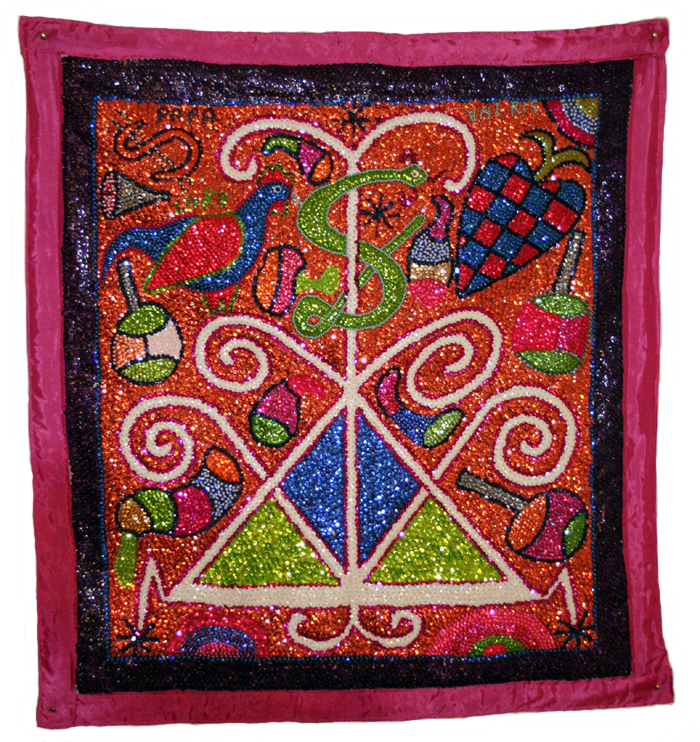 🇭🇹 Haiti and 2 moreHaitian VodouVodou
An Afro-Haitian religion blending West African traditions with Catholicism and FreemasonryTradition · Protection · Healing Living
🇭🇹 Haiti and 2 moreHaitian VodouVodou
An Afro-Haitian religion blending West African traditions with Catholicism and FreemasonryTradition · Protection · Healing Living
 🇮🇶 Iraq and 5 moreGrimoire
A textbook containing instructions for spells, rituals, and the creation of magical objects.Text · Protection · Healing Historical
🇮🇶 Iraq and 5 moreGrimoire
A textbook containing instructions for spells, rituals, and the creation of magical objects.Text · Protection · Healing Historical
 🇫🇷 France and 2 moreÉliphas Lévi
A French writer who shaped modern occult thought and ceremonial magic.Text · Power and authority · Speaking with spirits and the dead Historical
🇫🇷 France and 2 moreÉliphas Lévi
A French writer who shaped modern occult thought and ceremonial magic.Text · Power and authority · Speaking with spirits and the dead Historical