
Anthroposophy
from Greek anthropos (human) and sophia (wisdom)
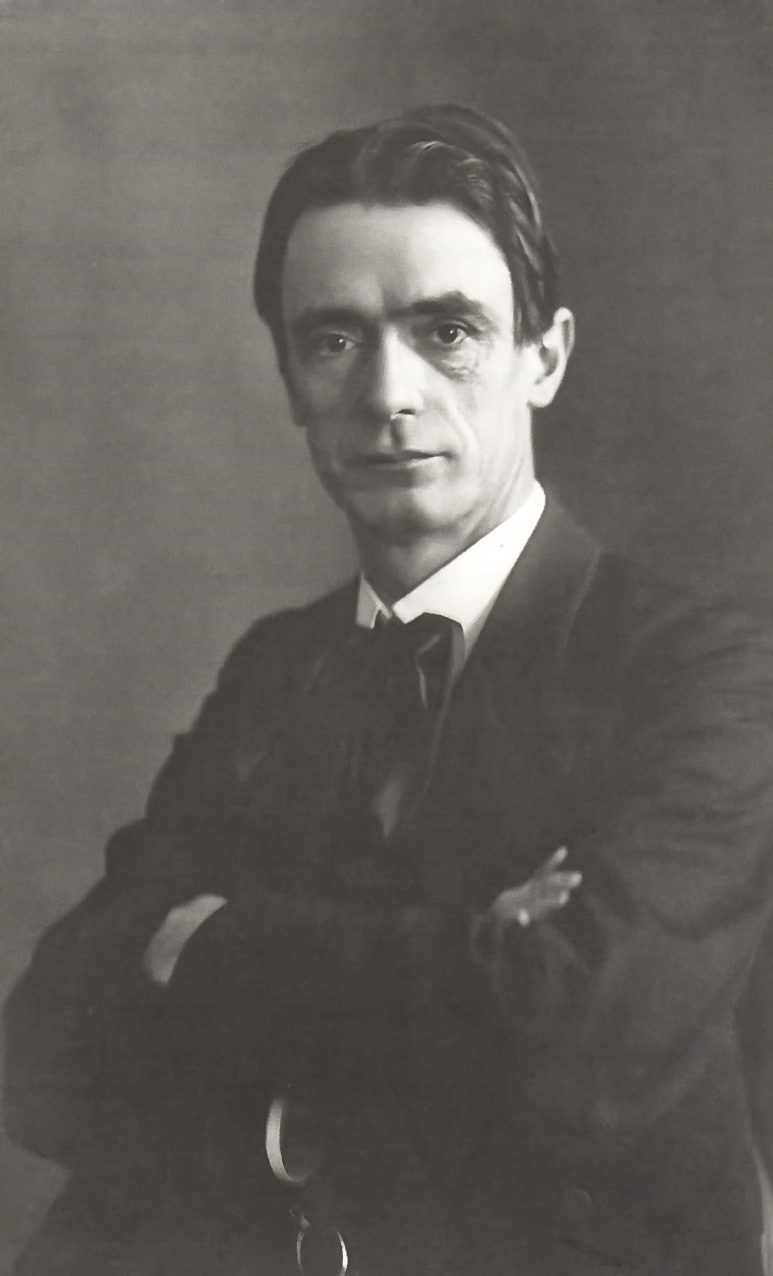
A spiritual movement founded by Rudolf Steiner to explore the intellectual side of the unseen world
Founded in the early twentieth century by Rudolf Steiner, anthroposophy is a spiritual new religious movement. It posits that an objective spiritual world exists and can be understood through disciplined thought rather than sensory experience.
- Founded by Rudolf Steiner in the early 20th century
- Headquarters at the Goetheanum in Dornach, Switzerland
- Applied in Waldorf education and biodynamic agriculture
- Banned by the Nazi regime but survived through collaboration
- Considered pseudoscience by many experts and scientists
What it is
Anthroposophy is a spiritual movement that claims to reveal an objective spiritual world accessible to human intellect. Its founder, Rudolf Steiner, described it as a scientific exploration of the spiritual realm. Followers believe they can engage in spiritual discovery using a mode of thought independent of physical senses. Proponents argue their ideas are verifiable through rational discourse, seeking precision similar to natural sciences. However, experts in epistemology and skeptics often classify these concepts as pseudoscience. The movement encompasses various cultural applications, including education, agriculture, medicine, and the arts. It is considered a new religious movement within the broader context of Western esotericism.
Where it comes from
Steiner developed his initial ideas in Philosophy of Freedom, focusing on free will and creative thought. He joined the Theosophical Society in 1902, becoming its German secretary and expanding its membership significantly. A split occurred around 1907 due to differences in orientation; Steiner favored Christianity and natural science, while the Society leaned toward Eastern traditions. The break became final when Annie Besant identified Jiddu Krishnamurti as the reincarnated Christ, a claim Steiner rejected. In 1912, he founded the independent Anthroposophical Society. After World War I, members began applying these ideas to social and cultural movements.
How it is done
Practitioners pursue spiritual development through rigorous ethical and cognitive self-discipline. This involves concentration and meditation to develop what Steiner called sound vision. He believed moral development must precede spiritual growth. Steiner claimed direct access to the Akashic Records, a spiritual chronicle of history and future events. He taught that anyone could attain comparable experiences through dedicated inner work. The Foundation Stone Meditation serves as a central touchstone for these practices. The approach emphasizes intuitive thinking as a path to spiritual activity.
Tools and materials
The primary tools are mental and spiritual disciplines rather than physical objects. Practitioners use meditation and concentration to achieve clarity. Ethical self-discipline is considered essential for progress. Steiner spoke of clairvoyance and astral projection as methods to perceive the spiritual world. These abilities were said to allow communication with the dead and observation of past lives. The Akashic Records function as a conceptual tool for understanding cosmic history. No specific ritual implements are mandated for general practice.
Anthroposophy, drawn and placed
- Living
- Revived
- Fading
- Historical
- Legendary
- Performed
- Lineage
- Western esotericism
- Timing
- daily practice of inner development
What it is for
The goal is to understand the spiritual world intellectually and experientially. It aims to provide a basis for cultural renewal in education, farming, and medicine. Supporters seek to bridge the gap between science and spirituality. The movement addresses social transformation and individual inner development. Applications include Waldorf schools and biodynamic agriculture. Critics argue these applications lack scientific validity. The purpose is to create a holistic worldview that integrates spiritual insights into daily life and institutional structures.
Who does it
Rudolf Steiner was the primary teacher and founder. He was regarded as a spiritual expert and occultist. Followers include writers, painters, and educators who apply his ideas. The movement has attracted individuals from diverse professional backgrounds. Training involves personal study and meditation under Steiner's guidance. The Anthroposophical Society provides organizational structure. Leadership has historically included figures like Marie Steiner and Günther Wachsmuth. Membership varies by region, with significant presence in Europe and growing numbers globally.
Peoples and places
The movement originated in Germany and spread internationally. It has branches in fifty countries as of 2007. Significant communities exist in Switzerland, where the headquarters is located. Applications are found in Australia, the Netherlands, India, and the United States. The movement faced suppression in Nazi Germany but survived through collaboration or tolerance. Different national branches adapt the core ideas to local contexts. Cultural institutions like Waldorf schools operate worldwide. The global network includes approximately ten thousand institutions working on anthroposophical principles.
At a glance: who, where and when
Who does it
Peoples
Belief worlds

What people believe
Anthroposophy postulates an objective spiritual reality separate from the physical world. It views the universe as interconnected through spiritual laws. Steiner taught that humans can evolve consciousness to perceive this realm. The Akashic Records contain the spiritual history of humanity. Reincarnation and karma are implied through the concept of spiritual evolution. The movement blends Christian elements with Eastern esoteric ideas. It rejects materialist science as incomplete without spiritual dimensions. Believers hold that spiritual science offers a more comprehensive understanding of existence.
When it is done
The Foundation Stone Meditation marks a key ritual event for the community. It was written in 1923 to unify the movement after internal schisms. Specific festivals are not widely documented in general sources. Life events such as births and deaths may incorporate anthroposophical rites. The movement observes Goethean science days related to Steiner's teachings. Institutional calendars often align with educational terms in Waldorf schools. There is no single universal calendar for all practitioners.
How scholars and sceptics see it
Historian Olav Hammer calls it the most important esoteric society in European history. Scientists and philosophers criticize its medical and agricultural claims as dangerous. Experts label concepts like clairvoyance and racial evolution as pseudoscientific. Critics point out contradictions in Steiner's views on race and nationality. Supporters maintain that their methods are rational and verifiable. Academic study focuses on its historical impact and cultural applications. Skeptics argue that the movement lacks empirical evidence for its spiritual claims.
Cautions and what is closed
The movement faced bans during the Nazi era due to its esoteric nature. Some leaders collaborated with the regime to ensure survival. Steiner's writings contain controversial statements on race and antisemitism. Critics warn against the dangers of anthroposophical medicine and biology. Fraudulent claims by some practitioners have been reported. The movement is closed to outsiders in some initiatory aspects. Legal status varies by country, with recognition in some places and scrutiny in others.
Compare and confuse
Anthroposophy evolved from Theosophy but diverged significantly. It shares roots with German idealism and Western esotericism. It is distinct from mainstream Christianity despite using Christian terminology. Comparisons are often made to other new religious movements. Some link it to Ariosophy and völkisch ideologies due to historical overlaps. It differs from secular humanism by asserting spiritual realities. The term is sometimes confused with general spirituality but has specific doctrinal content.
Law and persecution
The Nazi regime banned the Anthroposophical Society and its applications. Enforcement was inconsistent, with some officials protecting the movement. Collaborating leaders helped mitigate persecution for Gentile members. Post-war, the movement regained legal status in Germany and Switzerland. It operates freely in many democracies today. Some countries regulate anthroposophical medical practices. Legal challenges arise regarding educational funding and medical claims. The movement maintains international organizations to coordinate activities.
Questions people ask about Anthroposophy
What is anthroposophy?
It is a spiritual movement founded by Rudolf Steiner that seeks to understand the spiritual world through disciplined thought and meditation, claiming it is accessible to human intellect.
Where did it originate?
It originated in Germany in the early 1900s, evolving from Steiner's work with the Theosophical Society before he established the independent Anthroposophical Society in 1912.
Is it considered science?
Proponents call it spiritual science, but experts in epistemology and many scientists classify its claims as pseudoscience due to lack of empirical evidence and methodological issues.
How does it relate to religion?
It is classified as a new religious movement that blends Christian elements with Eastern esoteric ideas, emphasizing personal spiritual development and inner experience.
What are its main applications?
It is applied in education through Waldorf schools, agriculture via biodynamic methods, medicine, and the arts, aiming to integrate spiritual insights into practical life.
Good reading and sources
- Anthroposophy on WikipediaEncyclopedia
- More photos on Wikimedia CommonsPhotos and video
- Wikidata recordOpen data
The facts on this page come from the Wikipedia article "Anthroposophy", written by its contributors and used under the CC BY-SA 4.0 licence, and from its Wikidata record (CC0). EveryJaadu rewrote the text in its own words, with AI assistance, and compares every page with the article to make sure no passage is copied. It may be reused under the same CC BY-SA 4.0 licence with a link back.
It may contain mistakes. Names and customs differ from one community to the next, and some knowledge is closed to outsiders and left out here. This page describes belief and practice. It does not say that any of it works, it is not a how-to, and it is not medical advice. If something is wrong, tell us. Last refreshed 2026-10-06.
More from Germany
All the entries from Germany 🇩🇪 Germany and 2 moreFranz Anton Mesmer
A German physician who proposed a universal fluid of natural energy and founded mesmerism.Tradition · Healing Historical
🇩🇪 Germany and 2 moreFranz Anton Mesmer
A German physician who proposed a universal fluid of natural energy and founded mesmerism.Tradition · Healing Historical
 🇩🇪 Germany and 5 moreMaypoleMaibaum
A tall wooden pole raised for European spring festivals, accompanied by dance and celebration.Tradition · Luck and prosperity · Love and attraction Living
🇩🇪 Germany and 5 moreMaypoleMaibaum
A tall wooden pole raised for European spring festivals, accompanied by dance and celebration.Tradition · Luck and prosperity · Love and attraction Living
 🇬🇧 United Kingdom and 5 moreAleister Crowley
English occultist and founder of the religion of ThelemaText · Power and authority · Change and initiation Living
🇬🇧 United Kingdom and 5 moreAleister Crowley
English occultist and founder of the religion of ThelemaText · Power and authority · Change and initiation Living
 🇸🇪 Sweden and 4 moreEmanuel Swedenborg
An 18th-century Swedish scientist who became a mystic and claimed to visit the afterlife.Text · Speaking with spirits and the dead · Change and initiation Living
🇸🇪 Sweden and 4 moreEmanuel Swedenborg
An 18th-century Swedish scientist who became a mystic and claimed to visit the afterlife.Text · Speaking with spirits and the dead · Change and initiation Living
Related elsewhere
All tradition 🇮🇳 IndiaChakraचक्र
Meditation points in the subtle body used in Hindu and Buddhist yogaTradition · Speaking with spirits and the dead · Change and initiation Living
🇮🇳 IndiaChakraचक्र
Meditation points in the subtle body used in Hindu and Buddhist yogaTradition · Speaking with spirits and the dead · Change and initiation Living
 🇳🇬 NigeriaOrunmilaỌ̀rúnmìlà
Yoruba deity of wisdom and the creator of the Ifá divination systemBeing · Seeing and foretelling · Speaking with spirits and the dead Living
🇳🇬 NigeriaOrunmilaỌ̀rúnmìlà
Yoruba deity of wisdom and the creator of the Ifá divination systemBeing · Seeing and foretelling · Speaking with spirits and the dead Living
 🇮🇳 India and 2 moreKalachakraདུས་ཀྱི་འཁོར་ལོ།
A Tibetan Buddhist tantric deity and system of yogic time cyclesTradition · Change and initiation · Speaking with spirits and the dead Living
🇮🇳 India and 2 moreKalachakraདུས་ཀྱི་འཁོར་ལོ།
A Tibetan Buddhist tantric deity and system of yogic time cyclesTradition · Change and initiation · Speaking with spirits and the dead Living
 🇮🇱 Israel and 4 moreIsaac Luriaיִצְחָק בן שלמה אשכנזי לוּרְיָא
A sixteenth-century rabbi who founded modern Kabbalah through oral teachings in Safed.Text · Speaking with spirits and the dead · Change and initiation Living
🇮🇱 Israel and 4 moreIsaac Luriaיִצְחָק בן שלמה אשכנזי לוּרְיָא
A sixteenth-century rabbi who founded modern Kabbalah through oral teachings in Safed.Text · Speaking with spirits and the dead · Change and initiation Living