Sufi whirling
In its own language: Semazen
from Persian sama-zan, meaning listener or doer of listening
A spinning meditation practiced by Sufi dervishes to reach spiritual connection through music and movement.
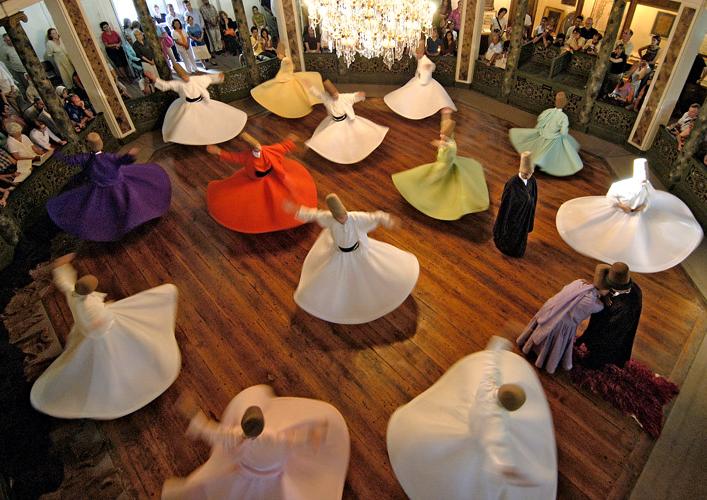
Sufi whirling is a form of active meditation performed by certain Sufi orders. Dervishes spin in repetitive circles while listening to music to abandon their ego and connect with God. The practice originated in the thirteenth century and spread across Islamic lands.
- Dervishes spin on their left foot while keeping the right foot grounded.
- The white skirt represents a shroud for the ego during the ritual.
- UNESCO recognized the Mevlevi Sema Ceremony as intangible heritage.
- Egyptian tanoura dancers use colorful skirts to enhance balance and visuals.
- Pakistani Dhamaal honors saints with drumming and communal trance dancing.
What it is
Sufi whirling is a physical meditation used by certain Sufi groups. Practitioners spin in circles while listening to music to focus on God and shed personal desires. The act mimics planets orbiting the sun. It remains a core ritual for the Mevlevi order and others.
Where it comes from
The practice began in the thirteenth century with the poet Rumi. Early Sufi groups formed around masters to build trust and follow strict rules. Each group traces its lineage back to the Prophet through a chain of teachers. The custom spread from Baghdad to Persia, Turkey, and India by the ninth century.
How it is done
Dervishes wear a white sleeveless frock and a black overcoat they remove before starting. They place a felt hat on their head and begin spinning on their left foot. The right foot provides the push for each turn. Arms open wide: the right hand points up to receive blessings, while the left hand faces down to share them. A leader guides the pace and stops anyone who becomes too overwhelmed.
Tools and materials
The outfit includes a tall camel hair hat symbolizing a tombstone for the ego. The white skirt acts as a burial shroud. Removing the black cloak marks a spiritual rebirth. In Pakistan, drums and bells accompany the dance. An Egyptian variant uses a bright, multi-layered skirt to aid balance and create visual flair.
Sufi whirling, drawn and placed
- Living
- Revived
- Fading
- Historical
- Legendary
- Performed
- Lineage
- Sufi orders
- Timing
- at Sufi festivals and during dhikr ceremonies
What it is for
Participants seek a state of ecstasy to hear subtle sounds from the spiritual realm. The spinning helps them abandon their ego and connect directly with Allah. Some view the movement as a bridge to divine love. Others see it as a way to nourish the soul through focused listening.
Who does it
Traditionally led by a male sheikh, the ritual involves both monks and lay followers. Historically, women practiced alone or in separate female branches. Today, some communities allow women to join the circle. Performers train their inner ears to avoid dizziness during long sessions.
Peoples and places
The Mevlevi order keeps the tradition alive in Turkey. In Egypt, the style evolved into tanoura, a folk dance often performed by non-Sufis. Pakistani devotees call the practice Dhamaal and perform it at shrines to honor saints like Lal Shahbaz Qalandar. Variations exist across different regions and orders.
At a glance: who, where and when
Belief worlds
Occasions


What people believe
The ritual reflects a worldview where sound and movement unlock spiritual truth. Whirling represents the universe revolving around a center. Listening to music allows the heart to understand divine revelation. The ego must die so the spirit can live and love others.
When it is done
The ceremony occurs during dhikr gatherings and Sufi festivals. In Turkey, the government once allowed performances only during two tourist weeks. Daily practice varies by order, with some focusing on prayer and others adding music or trance elements.
How scholars and sceptics see it
Anthropologists note the practice builds community trust and emotional expression. Skeptics sometimes dismiss the ecstatic states as mere performance. Western observers have historically mislabeled the movements as strange dancing. Researchers study how training reduces vertigo and improves balance.
Cautions and what is closed
Government bans in the twentieth century forced many orders underground. Some theologians criticize the use of music and spinning as un-Islamic. Tourist shows sometimes strip the ritual of its religious meaning. Performers risk dizziness and falls if they lose focus.
Compare and confuse
The Egyptian tanoura focuses on costume and visual spectacle rather than deep meditation. Pakistani Dhamaal involves communal participation and faster rhythms. Western belly dancers sometimes adopt the spinning technique for balance without the spiritual context.
Law and persecution
Turkey dissolved all Sufi groups in nineteen twenty-five. The Mevlevi order survived in villages and later gained permission for limited public shows. Other regions maintain varying levels of state control over religious gatherings.
Today
The practice continues in Turkey, Egypt, and Pakistan. Tanoura has become a popular stage performance for international audiences. Records for continuous spinning have been set by trained athletes. The tradition adapts to modern tourism while keeping its roots in Sufi devotion.
Questions people ask about Sufi whirling
What is Sufi whirling?
Sufi whirling is a spinning meditation practiced by certain Sufi orders. Dervishes rotate in circles while listening to music to focus on God and shed their ego. The ritual aims to create a direct spiritual connection through movement and sound.
Where did this practice originate?
The tradition began in the thirteenth century with the poet Rumi. It spread from Baghdad to Persia, Turkey, and India by the ninth century. Different regions developed unique styles like the Egyptian tanoura and Pakistani Dhamaal.
What does the clothing symbolize?
The tall hat stands for a tombstone marking the death of the ego. The white skirt acts as a burial shroud. Removing the black cloak signifies a rebirth toward spiritual truth and divine love.
How do dancers avoid getting dizzy?
Training targets the inner ear to improve balance and reduce motion sickness. Performers use specific footwork and psychological techniques to maintain stability during long spinning sessions.
Good reading and sources
- Sufi whirling on WikipediaEncyclopedia
- More photos on Wikimedia CommonsPhotos and video
- Wikidata recordOpen data
The facts on this page come from the Wikipedia article "Sufi whirling", written by its contributors and used under the CC BY-SA 4.0 licence, and from its Wikidata record (CC0). EveryJaadu rewrote the text in its own words, with AI assistance, and compares every page with the article to make sure no passage is copied. It may be reused under the same CC BY-SA 4.0 licence with a link back.
It may contain mistakes. Names and customs differ from one community to the next, and some knowledge is closed to outsiders and left out here. This page describes belief and practice. It does not say that any of it works, it is not a how-to, and it is not medical advice. If something is wrong, tell us. Last refreshed 2026-10-10.
More from Turkey
All the entries from Turkey 🇮🇷 Iran and 4 moreChaharshanbe Suriچهارشنبهسوری
An Iranian fire festival marking the transition from winter to springTradition · Luck and prosperity · Speaking with spirits and the dead Living
🇮🇷 Iran and 4 moreChaharshanbe Suriچهارشنبهسوری
An Iranian fire festival marking the transition from winter to springTradition · Luck and prosperity · Speaking with spirits and the dead Living
 🇹🇷 TurkeyKhirqaخرقه
An initiatory cloak in Sufism that passes spiritual lineage and blessings from teacher to student.Tradition · Speaking with spirits and the dead · Power and authority Living
🇹🇷 TurkeyKhirqaخرقه
An initiatory cloak in Sufism that passes spiritual lineage and blessings from teacher to student.Tradition · Speaking with spirits and the dead · Power and authority Living
 🇹🇷 Turkey and 2 moreHadraحضرة
A collective Sufi ritual of remembrance and chanting to experience Divine PresenceRite · Speaking with spirits and the dead · Power and authority Living
🇹🇷 Turkey and 3 moreSamaسماع
A Sufi ritual of listening, music, and whirling to reach spiritual ecstasyRite · Speaking with spirits and the dead · Change and initiation Living
🇹🇷 Turkey and 2 moreHadraحضرة
A collective Sufi ritual of remembrance and chanting to experience Divine PresenceRite · Speaking with spirits and the dead · Power and authority Living
🇹🇷 Turkey and 3 moreSamaسماع
A Sufi ritual of listening, music, and whirling to reach spiritual ecstasyRite · Speaking with spirits and the dead · Change and initiation Living
Related elsewhere
All rite 🇮🇳 IndiaChakraचक्र
Meditation points in the subtle body used in Hindu and Buddhist yogaTradition · Speaking with spirits and the dead · Change and initiation Living
🇮🇳 IndiaChakraचक्र
Meditation points in the subtle body used in Hindu and Buddhist yogaTradition · Speaking with spirits and the dead · Change and initiation Living
 🇳🇬 NigeriaOrunmilaỌ̀rúnmìlà
Yoruba deity of wisdom and the creator of the Ifá divination systemBeing · Seeing and foretelling · Speaking with spirits and the dead Living
🇳🇬 NigeriaOrunmilaỌ̀rúnmìlà
Yoruba deity of wisdom and the creator of the Ifá divination systemBeing · Seeing and foretelling · Speaking with spirits and the dead Living
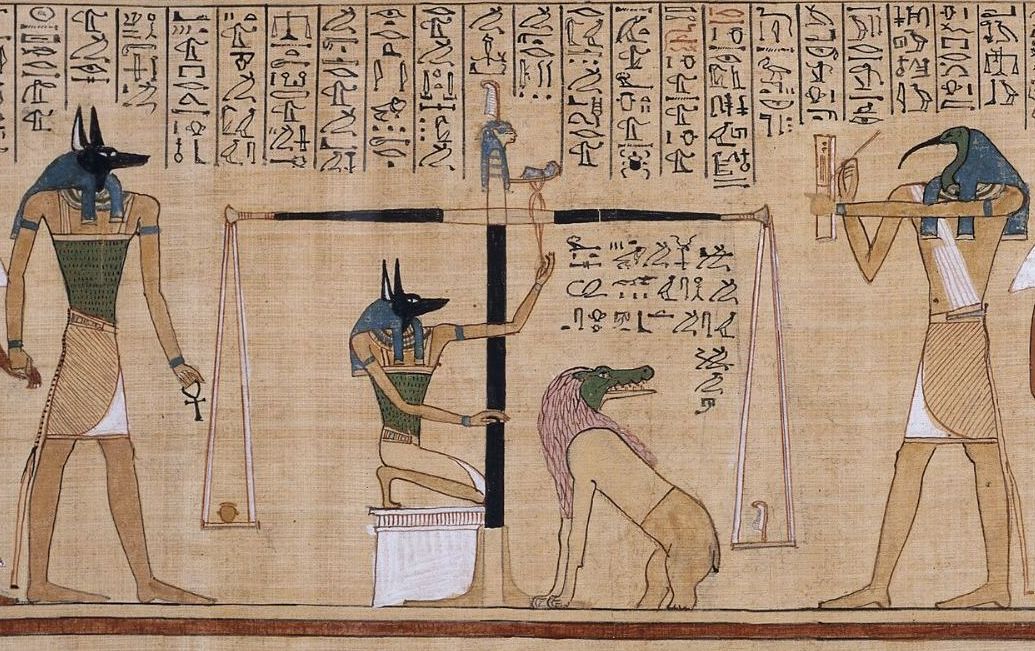 🇪🇬 EgyptAncient Egyptian afterlife beliefs
A system of rituals and texts guiding the soul through the underworld to eternal rebirthTradition · Protection · Speaking with spirits and the dead Historical
🇪🇬 EgyptAncient Egyptian afterlife beliefs
A system of rituals and texts guiding the soul through the underworld to eternal rebirthTradition · Protection · Speaking with spirits and the dead Historical
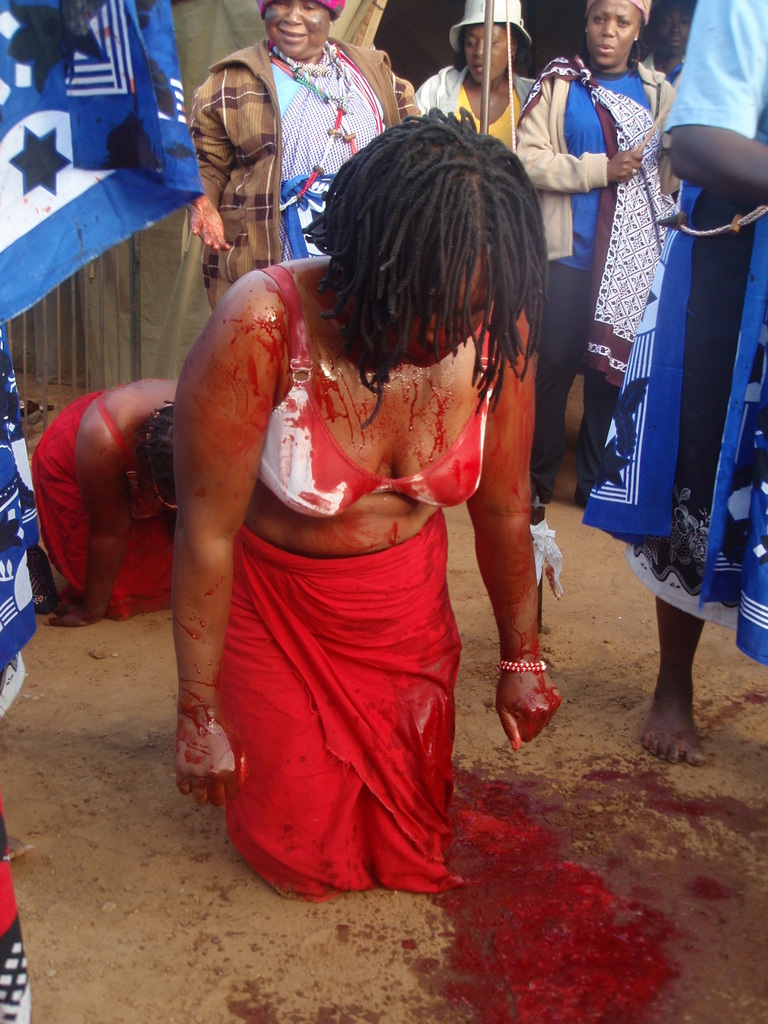 🇿🇦 South AfricaUkuthwasa
A spiritual calling and initiation process for traditional healers in Southern Africa.Rite · Healing · Speaking with spirits and the dead Living
🇿🇦 South AfricaUkuthwasa
A spiritual calling and initiation process for traditional healers in Southern Africa.Rite · Healing · Speaking with spirits and the dead Living