🇨🇳 Magic in China
247 entries from China, best known first, across 80 places of magic.
Chinese folk religion is a syncretic blend of ancestral veneration, spirit worship, and teachings from Buddhism, Confucianism, and Taoism. It lacks a centralized structure but forms the cultural bedrock for Han Chinese communities worldwide.
- Syncretic blend of Buddhism, Confucianism, and Taoism emerged by the Song dynasty
- Core concepts include yin-yang balance and moral reciprocity (bao ying)
- Government classifies it as cultural heritage rather than an official religion
- Ancestor veneration and spirit worship form the basis of daily practice
- Participation depends on community belonging rather than formal conversion
Overview
This tradition weaves together local customs with broader philosophical systems. It centers on honoring ancestors and worshipping spirits that inhabit places or represent natural forces. The practices merged significantly during the Song dynasty, creating a flexible religious landscape. Unlike organized faiths with strict memberships, it relies on community participation and kinship ties. Core ideas include the balance of yin and yang energies and the concept of moral reciprocity. This worldview influences daily life, health practices, and environmental harmony, serving as a shared cultural heritage rather than a formal institution.
Practices and beliefs
Devotees engage in ancestor veneration and offer prayers to deities associated with specific locations or family lineages. Common activities include consulting feng shui principles to align living spaces with natural energies. Traditional medicine and acupuncture reflect these cosmological beliefs by balancing bodily forces. People also seek blessings from gods like Caishen for wealth or Mazu for safe travel. Oracles and divination tools help interpret fate and divine will. These practices are deeply integrated into social interactions and household routines.
Rites and charms
Ceremonies often involve offerings of food, incense, and paper items at home altars or local temples. Rituals mark life events such as births, marriages, and deaths, ensuring spiritual protection for the community. Pilgrimages to sacred sites strengthen local bonds and honor specific deities. Festivals feature processions, performances, and communal feasts dedicated to local gods. Sweeping rituals and seasonal offerings maintain harmony between humans and the spirit world. These acts reinforce social cohesion and respect for ancestral traditions.
Who practises
Leadership is typically informal, rooted in local temple committees or lineage elders. Shamans or mediums may facilitate communication with spirits during ceremonies. Healers use traditional methods based on cosmological theories rather than formal medical degrees. Participation does not require conversion or official initiation. Instead, belonging to a village or kinship group defines one's involvement. Scholars and community elders preserve ritual knowledge and guide religious activities without hierarchical authority.
Regions and communities
Practices vary significantly across provinces and villages, reflecting local environments and histories. Coastal areas often emphasize sea deities like Mazu, while inland regions focus on agricultural gods. Urban centers integrate folk beliefs with modern lifestyles, whereas rural areas maintain more traditional structures. Diaspora communities adapt these practices to new contexts, blending them with local cultures. Despite regional differences, core concepts like ancestor worship and energy balance remain consistent throughout Han Chinese societies.
The calendar
Festivals align with lunar cycles and agricultural seasons, marking times for offering and celebration. Key events include Qingming for honoring ancestors and Mid-Autumn Festival for family reunion. Births, weddings, and funerals follow specific ritual calendars to ensure spiritual well-being. Seasonal transitions prompt rituals to balance yin and yang energies within households. These temporal markers structure community life and reinforce connections to nature and ancestry.
Law and the state
The government recognizes five official religions but classifies folk religion as cultural heritage due to its diffuse nature. Authorities tolerate popular movements but suppress large organizations perceived as threats to stability. Historical campaigns labeled these practices as feudal superstition, though attitudes have softened recently. Modern revival efforts benefit from state interest in preserving traditional culture. Legal ambiguity allows flexibility but limits formal institutional recognition compared to recognized faiths.
Today
Folk religion experiences revival through cultural preservation initiatives and diaspora connections. Migration spreads practices globally, adapting them to diverse contexts. Commercialization appears in tourism and religious goods, though core rituals remain community-focused. Scholars view these traditions positively as vital cultural elements. Digital platforms facilitate sharing of knowledge among practitioners. The tradition continues to evolve while maintaining its foundational emphasis on harmony and ancestral respect.
The facts in this overview come from the Wikipedia article "Chinese folk religion", written by its contributors and used under the CC BY-SA 4.0 licence. EveryJaadu rewrote the text in its own words, with AI assistance, and compares every page with the article to make sure no passage is copied. It may be reused under the same CC BY-SA 4.0 licence with a link back.
Places of magic in China
 🇨🇳 ChinaHe Xiangu何仙姑
A female immortal from Chinese Taoist legend known for divination and lotus magicFigure · Seeing and foretelling · Healing Legendary
 🇨🇳 ChinaLan Caihe藍采和
An ambiguous Taoist immortal known for a flower basket and wandering songsBeing · Wonder and entertainment Legendary
 🇨🇳 ChinaHundun混沌
A faceless being and the primordial void in Chinese cosmology and myth.Being · Wonder and entertainment Legendary
🇨🇳 ChinaNian年兽 (Nián shòu)
A mythical creature linked to Chinese New Year customs and the lion danceFigure · Cursing and harm · Wonder and entertainment Legendary
 🇬🇧 United Kingdom and 2 moreWheel of the Year
An annual cycle of eight seasonal festivals observed by modern pagans.Tradition · Speaking with spirits and the dead · Power and authority Living
 🇯🇵 Japan and 2 moreTanabataたなばた (七夕)
A Japanese celebration of star-crossed lovers and written wishesTradition · Luck and prosperity · Wonder and entertainment Living
 🇮🇳 India and 5 moreMandalaमण्डल
A sacred geometric design used in Indian religions for meditation and spiritual mapping.Tradition · Speaking with spirits and the dead · Wonder and entertainment Living
 🇨🇳 ChinaNüwa女媧
A Chinese mother goddess who created humanity and repaired the skyFigure · Wonder and entertainment Legendary
 🇨🇳 ChinaZhang Guolao張果老
A Taoist immortal known for his white donkey and fish drum, said to be a bat spirit.Figure · Wonder and entertainment · Change and initiation Legendary
 🇬🇷 Greece and 4 moreSword swallowing
A performance art where a blade is passed down the throat into the stomachIllusion · Wonder and entertainment Living
 🇯🇵 Japan and 1 moreHyakumonogatari Kaidankai百物語怪談会
An Edo period Japanese parlour game of telling ghost stories while extinguishing candlesTradition · Cursing and harm · Wonder and entertainment Historical
 🇩🇪 Germany and 5 moreBiodynamic agriculture
An organic farming system with esoteric roots and spiritual practicesTradition · Healing · Power and authority Living
 🇨🇳 ChinaElemental
Mythic beings linked to earth, water, air, and fire in Renaissance occultism.Being · Wonder and entertainment Historical
 🇨🇳 China and 1 moreHorse coin馬錢 (mǎ qián)
A Chinese numismatic charm depicting horses, used as game pieces or gambling tokensCharm · Luck and prosperity · Wonder and entertainment Historical
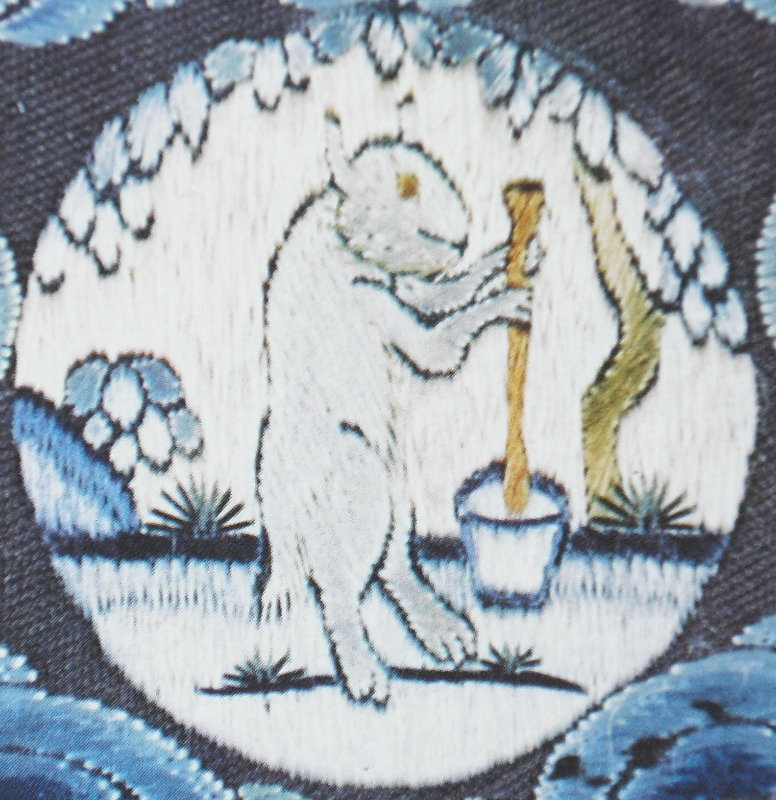 🇨🇳 China and 5 moreMoon rabbit月兔 (yuètù)
A mythical figure seen in lunar markings, pounding elixirs or rice cakes across Asia and the Americas.Being · Wonder and entertainment Living
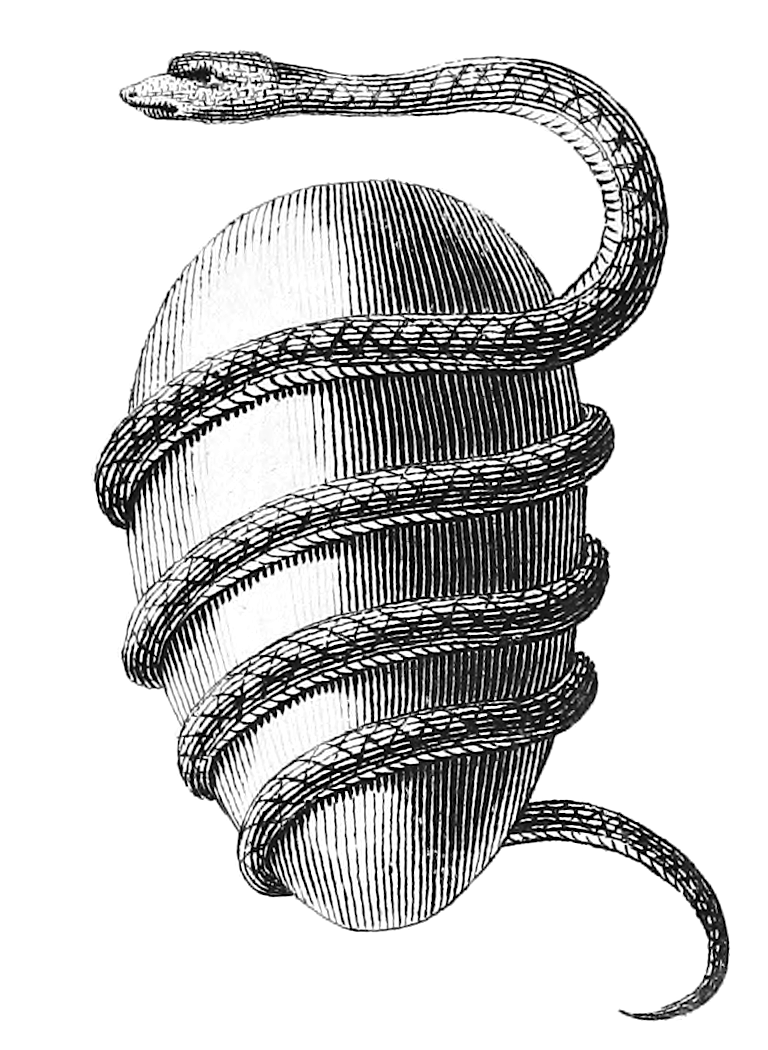 🇧🇫 Burkina Faso and 5 moreCosmic egg
A mythological motif where the universe or a creator emerges from a primordial egg.Belief · Wonder and entertainment Historical
 🇨🇳 ChinaYeren野人
A Chinese cryptid apeman reported in remote mountains since ancient timesBelief · Wonder and entertainment Legendary
🇨🇳 China and 2 moreShen蜃
A sea creature from Chinese mythology said to create mirages through shape-shiftingBeing · Wonder and entertainment Legendary
 🇨🇳 ChinaKui夔 (kuí)
A one-legged mountain spirit and ancient music master from Chinese mythologyBeing · Power and authority · Wonder and entertainment Legendary
 🇨🇳 China and 1 moreFengli风狸 / 風狸
A legendary flying mammal from Chinese lore, said to carry a magic wand and resist death.Figure · Wonder and entertainment Legendary
 🇨🇳 China and 1 moreShuihu水虎
A legendary water creature from Chinese folklore, later adopted into Japanese myth.Being · Wonder and entertainment Legendary
🇨🇳 China and 4 moreHuoshu火鼠
A legendary fire-resistant rat from Chinese folklore said to yield self-cleaning cloth.Being · Wonder and entertainment Legendary
🇰🇷 South Korea and 1 moreDokkaebi도깨비
A one-legged supernatural being from Korean folklore, often linked to household objects and magical items.Being · Wonder and entertainment · Luck and prosperity Legendary
 🇨🇳 ChinaLuduan甪端
A mythical Chinese creature said to speak every language and travel vast distances in a single dayBeing · Wonder and entertainment Legendary
🇨🇳 ChinaChinese creation myths
A collection of ancient Chinese stories explaining how the universe and humanity beganBelief · Wonder and entertainment Historical
 🇨🇭 Switzerland and 5 moreFédération Internationale des Sociétés Magiques
Global body uniting magic clubs and organizing world competitionsTradition · Wonder and entertainment Living
 🇨🇳 China and 2 moreHu笏
A flat ceremonial baton used by East Asian officials and priests for ritual purposes.Charm · Power and authority · Wonder and entertainment Living
 🇺🇸 United States and 4 moreHaunted house
A house said to hold the spirits of its dead, and how the scares are investigatedBelief · Speaking with spirits and the dead · Wonder and entertainment Living
 🇯🇵 Japan and 1 moreBake-danuki化け狸
A shape-shifting raccoon dog spirit from Japanese folklore known for pranks and illusions.Being · Cursing and harm · Luck and prosperity Legendary
 🇨🇳 ChinaAo鰲
A colossal sea turtle of Chinese myth whose legs support the skyBeing · Protection · Wonder and entertainment Legendary
 🇳🇿 New Zealand and 4 moreFeather cloak
A garment of feathers worn by royalty and gods across cultures to signal rank or enable flightCharm · Power and authority · Wonder and entertainment Historical
🇨🇳 ChinaDilang地狼
A legendary underground canine from Chinese folkloreBeing · Wonder and entertainment Legendary
Photo credits on this page
The small pictures above come from Wikimedia Commons under free licences. Some are cropped to fit.
- Ao: David Jackson, CC BY-SA 2.0 uk, source
- Tanabata: Laika ac, CC BY-SA 2.0, source
- Mandala: Marion Golsteijn, CC BY-SA 3.0, source
- Moon rabbit: An artist, Public domain, source
- Lan Caihe: Internet Archive Book Images, No restrictions, source
- Biodynamic agriculture: Martist, CC BY-SA 4.0, source
- Zhang Guolao: Hong Zicheng, Public domain, source
- He Xiangu: Zhang Lu, Public domain, source
- Bake-danuki: Poposhka at English Wikipedia, Public domain, source
- Hyakumonogatari Kaidankai: Katsushika Hokusai, Public domain, source
- Hundun: Oldie~commonswiki, CC BY-SA 3.0, source
- Fengli: Anonymous (1603), Public domain, source
- Feather cloak: Lusanaherandraton, CC BY-SA 4.0, source
- Luduan: Gisling, CC BY 2.5, source
- Shuihu: Author: b. 1654, Public domain, source
- Nüwa: 山胖z, CC BY 3.0, source
- Yeren: Rolf Müller, CC BY-SA 3.0, source
- Cosmic egg: James Basire, 1730–1802 (engraver), Public domain, source
- Kui: Dave Pape, Public domain, source
- Sword swallowing: Jeff Kubina, CC BY-SA 2.0, source
- Elemental: No machine-readable author provided. Ragesoss assumed (based on copyri, Public domain, source
- Fédération Internationale des Sociétés Magiques: Jack de Nijs for Anefo, CC BY-SA 3.0 nl, source
- Wheel of the Year: Sunblade1500, CC BY-SA 3.0, source
- Hu: Zhangzhugang, CC BY-SA 4.0, source
- Horse coin: Etnografiska museet, CC BY 2.5, source
- Haunted house: John Anster Fitzgerald, Public domain, source
The weekly digest
Every Monday: seven entries you may not know, what is on the calendar this week, and one rite drawn step by step.